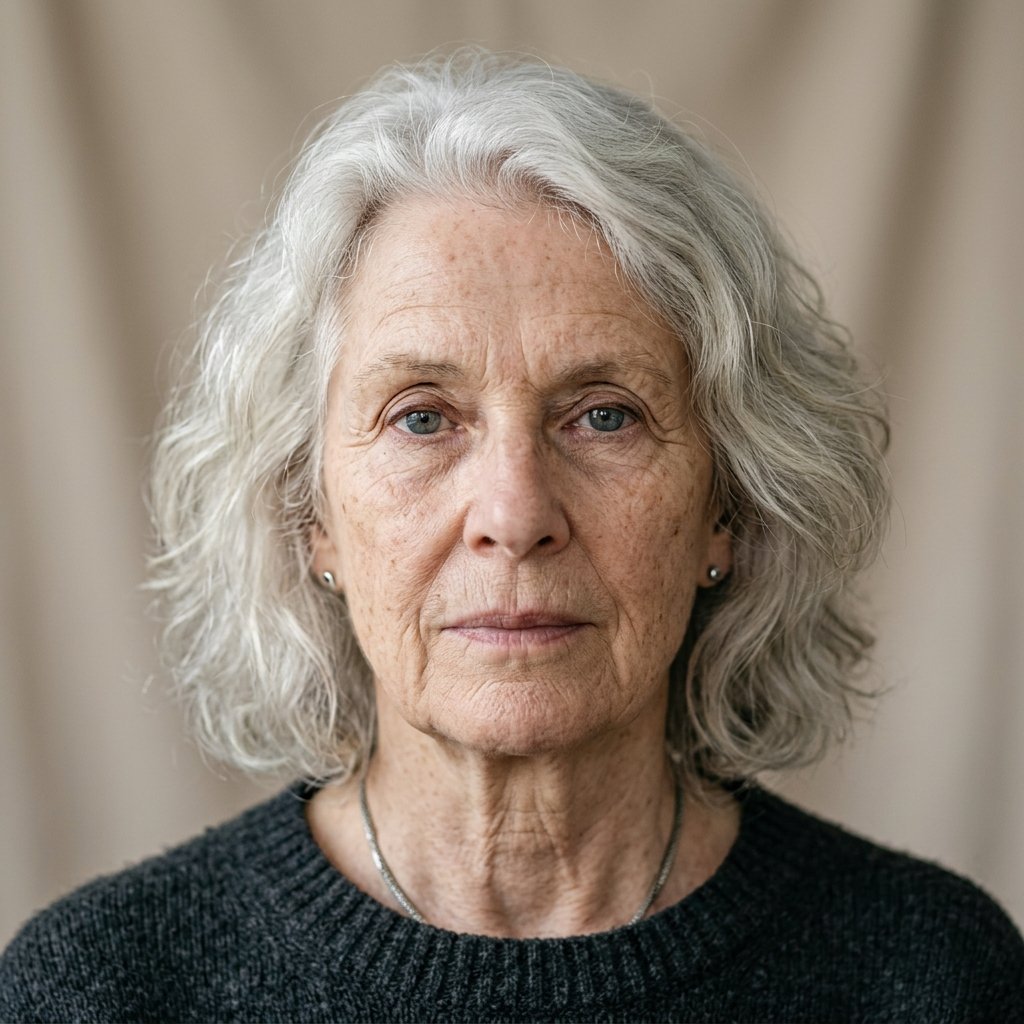
I was twenty-nine years old, a widow, and so tired of grief that I used to count the cracks in my rented room just to feel something move.
The morning I saw the notice for a cook was the morning the wind in Broken Horn, Montana turned bitter, and I could feel the end of my money pressing against my ribs like a cold hand.
My name is Margaret Vance, but everyone called me Maggie, and there had not been much softness in my life since my Edward passed.
I saw the sign three times before I had the courage to pull it down.
It was nailed to the post office wall with straight, hard nails, as if the man who put it there did not want it to fall.
It said only three things.
Cook needed.
Good pay.
No complications.
The paper was cream colored and a little wrinkled at one corner, and it smelled like dust and old wood, and it made me think of my own hands, which had not known a real job in months.
The rent for my small room had already been demanded with warnings.
I stood under that sign while people walked past me, and I could feel them looking at my patched coat and my cracked shoes, and I could hear the soft clicking of their tongues, and I knew exactly what they were thinking.
Poor Maggie Vance.
She used to be somebody’s wife, and now she is just a woman with more sad days than dresses.
I held the sign with trembling hands and read the bold letters again, and for one second I wanted to put it back, to forget the whole thing, to walk away and disappear into the quiet little room that was shrinking around me.
But then I thought of Edward, and I thought of all the years we had dreamed together, and I said to myself that I still knew how to cook, I still knew how to stretch a dollar, and I still knew how to give meaning to a home, even if I had to start again from nothing.
So I folded the sign carefully and placed it inside my mother’s old recipe book, and I walked home to pack my small suitcase.
That night I did not sleep much.
I sat on the edge of my narrow bed and looked at the one good dress hanging from a nail on the wall.
It was plain but dignified, the color of a blue morning sky, and it had been washed so many times that the fabric had grown soft as a whisper.
I had worn it to church, to funerals, and to every interview where a woman with no husband might ask for honest work.
In the dim light it looked like the only brave thing I owned.
I mended the hem one more time, even though there was nothing wrong with it, because I needed to keep my hands busy.
I thought about my mother, who had taught me that a clean apron and a kind voice could bring order to the most broken kitchen.
She used to say, Margaret, the bread knows if you are crying, so you dry your eyes before you touch the dough.
I had not baked bread since Edward passed, and the thought of it made my chest ache in a way I had no words for.
But I told myself that tomorrow I would walk to the edge of town, and I would knock on a stranger’s door, and I would ask for a chance.
The next morning I got up while the sky was still gray and cold, and I put on my blue dress with slow, careful hands.
I combed my hair and pinned it back the way my mother had shown me, and I looked at myself in the cracked mirror.
I did not see a young woman with her whole life ahead of her.
I saw a thin face and tired eyes, but I also saw something else, something I had almost forgotten, a small hard shine that said I had survived everything so far and I was not finished yet.
I picked up my suitcase and my mother’s recipe book, and I walked out the door.
The road to Silas McCall’s cabin led to the very edge of Broken Horn, where the houses thinned out and the land opened up like a wide, lonely hand.
Each step kicked up dust and memories, and I could hear my own breathing in the cold air, and I could feel the weight of the suitcase pulling on my arm.
Children stopped playing when I passed their yards, and a few women looked at me from behind their curtains, and I knew they were wondering where a widow with no prospects could possibly be going.
I kept my eyes straight ahead and my chin raised, because I had learned that dignity is sometimes the only thing a woman can carry when she has lost everything else.
I thought about Edward as I walked.
We had been married for six years, and for the first three of them we had been happy in a way that felt as solid as stone.
He had been a quiet man with wide hands and a slow laugh, and he used to call me his little bird, not because I was weak, but because I sang while I worked.
We had dreamed of owning a home with a porch and a garden and a kitchen that always smelled like something good.
Instead, the lung sickness took him piece by piece, and I spent everything we had on medicine and doctors and finally on a funeral that left me with nothing but a handful of receipts and a black dress I could not bear to wear again.
The town offered their condolences.
They brought casseroles and soft words and pats on my shoulder, and then they turned their backs, and the casseroles stopped coming, and I became a story people told in low voices when they thought I could not hear.
I do not blame them.
Grief makes people uncomfortable, and a poor widow is a reminder of all the things that can go wrong in a life.
Still, I learned that kindness has a season, and mine had ended.
By the time I reached Silas McCall’s gate, my thoughts were as heavy as the suitcase in my hand.
I stopped there for a moment and looked at the cabin.
It was clean, but without flowers, without curtains, without any sign that a woman had ever lived there.
The porch boards sagged slightly, as if they too bore the weight of loneliness, and the only sound was the wind moving through the dry grass like a slow, sorry prayer.
There were no chickens, no dog, no rocking chair, no welcome mat.
Just a cabin and a gate and a man the whole town feared.
I had heard the stories about Silas McCall.
He was enormous, people said, with hands that could tame any wild horse, and eyes so quiet that children hid behind their mothers when he passed.
He lived alone out here, eating cold beans in a silent cabin where the echo was his only companion.
Some people said he was dangerous.
Others said he was just broken in a way that could not be fixed.
I did not know what to believe, but standing at his gate, I understood something the town did not seem to understand.
A man who nails a notice asking for a cook is not hiding from the world.
He is asking for help in the only way his pride will allow.
I opened the gate with a firm hand, and the hinges made a low sound like an old man clearing his throat.
I walked up the path to the porch, and each step felt like a decision I could not take back.
My shoes left small marks in the dust, and I remember thinking that I had not been invited, that I did not belong here, that I should turn around and go back before I made a fool of myself.
But then I looked at the window, and I saw a faint shadow moving inside, and I thought of my empty room and my empty stomach and my empty future, and I raised my hand and knocked.
Inside the cabin, Silas McCall was following his routine with the precision of a man who had been alone too long.
He had made bitter coffee, and the smell of it hung in the air like a warning.
He had set out stale biscuits from the day before, and a tin mug that had been his father’s, and one chair, and one plate.
He had made his narrow bed with military neatness, and he had looked at the old photograph of his parents on the shelf, serious people with serious eyes, like everything else in his life.
He was a mountain of a man, broad and tall, with big hands that looked like they could snap a fence post in two, but when the knock came, he did not move quickly.
He set down the tin mug and turned toward the door with slow, cautious steps, the way a man moves when he is not used to visitors.
The floor creaked under his boots, and he paused once, as if he were listening for something, as if he expected the knock to disappear if he waited long enough.
But I knocked again, and the sound was crisp in the cold air, and something in him shifted.
He opened the door a little way at first, and then wider, and then there I was, standing on his porch in my blue dress with my suitcase and my mother’s recipe book, and I could see the surprise in his eyes.
He was bigger than I had imagined, with a jaw like a cliff and shoulders like a barn door, but his eyes were the loneliest thing I had ever seen.
They were not dangerous.
They were empty in a way that made me want to cry.
I looked at him for a long moment, and he looked at me, and neither of us spoke.
The wind came up behind me and pushed at my skirt, and I felt the cold bite through my coat, but I did not shiver, because I was too busy trying to keep my voice steady.
Finally I said, I have come for the cook’s position.
My voice came out louder than I expected, and I was grateful for that, because it made me sound braver than I felt.
Silas McCall said nothing for a few seconds.
I thought for a moment that he was going to close the door in my face, and I braced myself for the shame of walking all the way back to town with nothing to show for my courage.
But he did not close the door.
He stepped back and gestured for me to come inside, and I did, and the warmth of the cabin settled around me like a heavy blanket.
The first thing I noticed was the smell.
It was a mixture of old coffee, stale bread, and wood smoke, and underneath it there was something else, something clean but cold, the smell of a place that had no life in it.
I stood in the middle of his kitchen and studied everything with careful, practiced eyes.
The shelves were lined with old preserves, dusted and forgotten, and there was a lone chair pushed up against the wall as if it had never been used for company.
There was no bread, no butter, no bowl of apples, no curtain on the window, no tablecloth, no warmth.
It was the kind of kitchen where a man ate to stay alive, not to be nourished.
It was the kind of kitchen where hope had never been invited to sit down.
I could feel Silas McCall watching me from the doorway, and I could feel the weight of his silence, but I did not look at him right away.
I set my suitcase down on the floor, and I placed my mother’s recipe book on the table with both hands, the way you place a Bible on a nightstand.
Then I turned to him, and I asked, How long has it been since you ate something hot, Mr. McCall?
He blinked at me, and for a moment I saw something move behind his eyes, something old and buried, and he opened his mouth as if to answer, but no words came out.
I pressed further, gently, the way I would press a hand against a wound to stop the bleeding.
How long has it been since you smelled fresh bread?
Still he said nothing, and his silence was its own reply.
I said, Or a decent stew, the kind that stays with you on a cold night?
He looked down at his boots, then out the window, then back at me, and I saw the truth in his face.
He had forgotten what it felt like to have someone ask about him.
He had forgotten what it felt like to be seen not as a giant, not as a danger, but as a man with a hunger that food alone could not fix.
I took a slow breath, and I rolled up the sleeves of my blue dress, and I began inspecting his utensils and pantry shelves with the same careful movements my mother had taught me long ago.
It was clear to him, I think, that this was not the first time I had brought order to someone else’s kitchen.
I checked the stove, and I opened the cupboard doors, and I lifted the lids on a few old pots, and all the while I could feel his eyes on me, but his watching did not make me nervous.
It made me sad.
I thought about how many years this man had lived in this clean, cold cabin, eating the same stale biscuits, drinking the same bitter coffee, and never once complaining, never once asking for more, because he did not believe he deserved more.
And I thought about my own life, and how much I had lost, and how the weight of my grief had almost convinced me that I did not deserve more either.
But standing in that kitchen, with the dust on the shelves and the loneliness in his eyes, I felt something shift inside me, something very small and very old, like the first thread of a new beginning.
I had been married six years before the lung sickness took Thomas.
Wait, no, my Edward, my sweet Edward, with his quiet laugh and his wide hands.
Together we had dreamed of owning a home, a real home with a porch and a garden and a yellow kitchen.
Instead, I spent everything on medicine and funerals, and when it was over, I had nothing left but my mother’s recipe book and the knowledge that I still knew how to cook.
The town gave me their pity, and then they gave me their backs.
But in that cabin, for the first time in a long time, I was not a poor widow.
I was a woman with a skill, a woman with a purpose, a woman who could take a cold kitchen and a lonely man and make something warm.
I did not know what would happen next, not really.
I did not know if Silas McCall would hire me, or if he would send me away, or if I would walk back to town with my suitcase and my pride and nothing else.
But I knew one thing with absolute certainty.
I knew that I was not going to leave that cabin without trying.
I was not going to let another human being drown in his own silence while I stood by and did nothing.
So I turned to him, and I looked up into his quiet, lonely face, and I said, Mr. McCall, if you will let me, I would like to make you something to eat.
And for the first time in as long as I could remember, I saw the corner of his mouth move, just barely, like a man who had forgotten how to smile and was slowly remembering.
He nodded, once.
That was all.
But it was enough.
I reached for the old pot on the shelf, and I thought of my mother’s hands, and I thought of Edward’s dream, and I thought of the long road that had brought me here, and I felt, for the first time in months, that I was exactly where I was supposed to be.
The cabin was still quiet.
The wind still moved through the dry grass outside.
The town still whispered about the giant and the widow.
But in that kitchen, something had changed.
Silas McCall stood in the doorway and watched me with his big, lonely eyes, and I knew that he was not just watching a woman cook.
He was watching proof that life could still surprise a person.
And I was watching proof that a heart, no matter how cold, could still be reached.
I did not have much money, and I did not have a home, and I did not have a husband to hold me when the nights got long.
But I had this moment, and I had my two hands, and I had a recipe book that had belonged to my mother, and I had a reason to keep going.
That was more