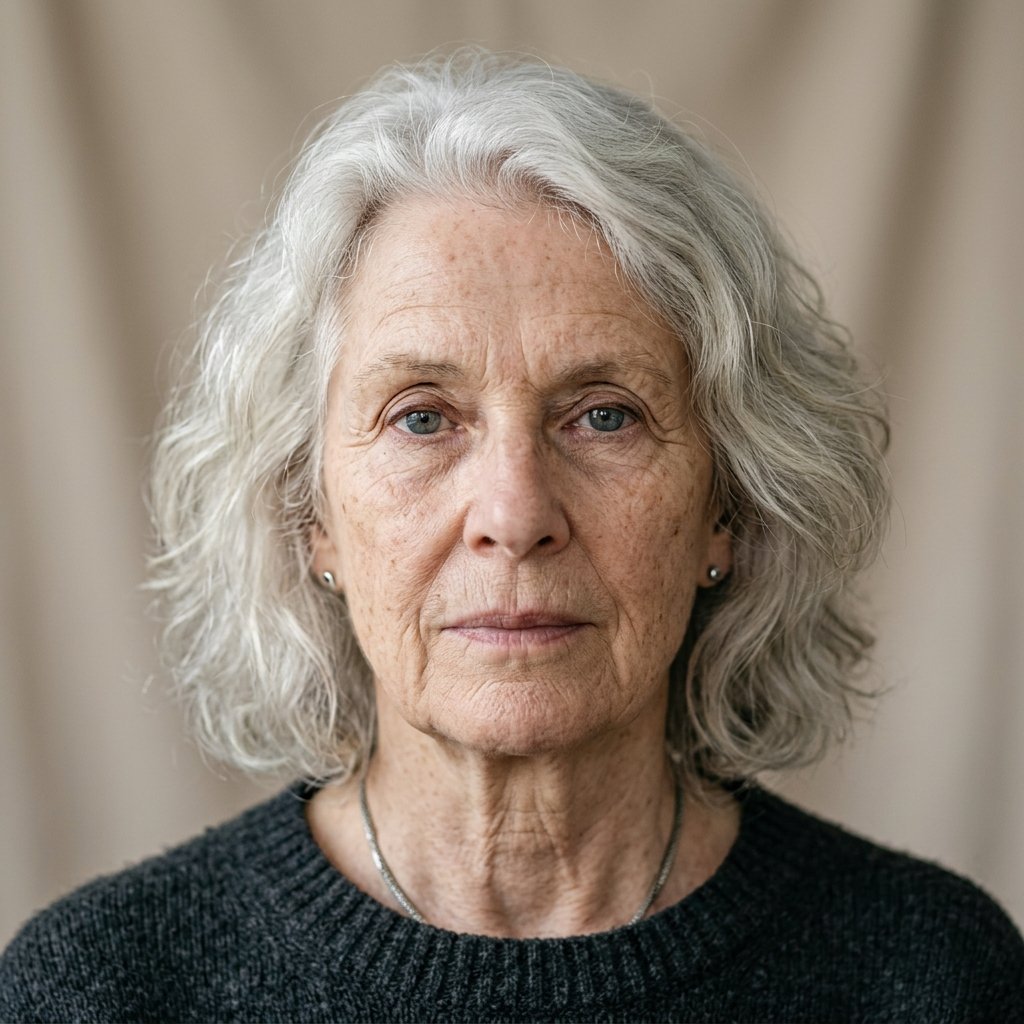
I still remember the exact sound of the wind that morning.
It was the kind of cold December wind that cuts through your coat and makes you hurry home with your head down.
But I did not hurry.
Because I heard something far more important than the wind.
A soft, broken cry was coming from behind the old abandoned church on Cedar Street.
My name is Clara Bennett, and at the time I was a forty-one-year-old literature teacher at Millbrook High School in Millbrook, Indiana.
I had lived alone since my dear parents passed away many years before.
My whole world had narrowed to my students, my beloved books, and those quiet late afternoons when I stood by the schoolyard fence and watched the old oak trees throw long shadows across the grass.
I used to tell people that my life was complete just as it was.
I was not lonely, I insisted.
I was simply content.
But the truth is, my heart had built a small, quiet room that no one ever entered.
And on that freezing morning, God placed a key directly in my path.
I had walked to the farmers market early that morning to buy apples and fresh bread.
The sky was gray, and the air smelled like snow.
As I passed the old church on Cedar Street, I heard a faint sound that stopped me dead in my tracks.
At first, I thought it was a cat.
But then the sound came again—a tiny, gasping cry that pierced the cold air.
I set down my shopping bag and walked toward the overgrown bushes beside the church door.
The old building had been closed for years, its windows covered with boards, its steps cracked and covered with dead ivy.
Behind a tangle of branches, I saw a small bundle of cloth.
It moved.
My heart began to hammer.
I knelt down in the frozen dirt and peeled back the old blanket.
Two tiny faces looked up at me.
Two newborn babies, wrapped clumsily together in a thin, worn blanket.
They were so small, so fragile, that for a moment I could not breathe.
Beside them lay a small cloth bag.
My hands trembled as I opened it.
Inside were a few used baby clothes and a single piece of folded paper.
I unfolded the note and read the words that would change my entire life.
‘Please, kind-hearted person, help raise them. We cannot keep them. We are so sorry.’
I sat there on the cold ground, clutching that note, and I began to weep.
Not because I was sad.
But because I understood, in that instant, that these two little souls had been left behind by someone who hoped for a miracle.
And somehow, that miracle was supposed to be me.
I did not call the police.
I did not call anyone.
I simply wrapped the babies inside my own thick winter coat and carried them home through the freezing streets.
My shopping bag stayed behind on the church steps, the apples spilling out into the snow.
I never went back for them.
I could not tell you why I made such a reckless choice.
But love does not always ask for permission.
Sometimes love just picks up the broken thing in front of it and refuses to let go.
That night, I placed both babies on my bed and just stared at them.
They were so quiet, so exhausted, that they slept almost immediately.
I named them Nathan and Samuel.
Two names that, to me, symbolized strength and hope.
Nathan was the one with the slightly darker hair.
Samuel had a small birthmark behind his left ear.
From that night on, they were not foundlings.
They were my sons.
But life became harder than I ever imagined.
My modest teacher’s salary was never enough to raise two babies properly.
So I did what any mother would do.
I gave private literature lessons in the evenings.
I baked homemade cakes and sold them to neighbors after school.
I typed reports for the school board late into the night.
My hands ached, my back hurt, and my eyes burned.
But I never complained.
Not once.
Because every time I looked into those two small faces, I saw a reason to keep going.
There were terrible nights when Nathan burned with fever and Samuel cried for a mother who was not there.
I would sit between them in the dark, rocking them both against my chest.
I whispered the same words over and over again.
‘Mama is here. Mama Clara will never leave you.’
Sometimes I whispered it until my voice disappeared.
But I believed it with my whole heart.
And they believed it too.
Time passed the way it always does—slowly when you are exhausted, and far too quickly when you are happy.
Nathan grew into a quiet, serious boy who loved numbers and puzzles.
He could solve math problems before I even finished explaining them.
Samuel became the dreamer of the family.
He drew on every scrap of paper he could find.
His little sketches covered the kitchen table, the margins of my lesson plans, and the backs of old envelopes.
They were obedient, loving, and deeply aware of the sacrifices I had made.
Because of that awareness, they always worked hard in school.
They never gave me a moment of trouble.
But life gave us plenty of trouble anyway.
You see, the boys had no birth certificates.
They had no clear legal documents.
The law did not know they existed.
So I fought for years.
I knocked on doors at the county courthouse.
I made phone call after phone call.
I signed petition after petition.
I stood in long lines and explained our story to strangers who looked at me with doubt in their eyes.
Some people thought I was foolish.
Some people thought I had lost my mind.
But I did not care what they thought.
I only cared that my sons had the right to attend school like any other child.
Finally, after many painful months, the papers were approved.
I still remember the day the school accepted them.
I stood in the kitchen and cried into my apron.
Nathan and Samuel hugged me from both sides.
‘Thank you, Mama,’ they said together.
I could barely speak.
By their senior year of high school, both of my sons had passed their university entrance exams.
Nathan was accepted to MIT.
Samuel was accepted to Yale’s School of Architecture.
I was so proud I thought my heart would burst.
But I was also worried.
I stood in our little living room the night before they left, staring at their packed suitcases.
Nathan came and stood beside me.
‘Mom, we’ll be okay,’ he said softly.
Samuel put his hand on my shoulder.
‘We’ll call you all the time. We promise.’
I managed to smile.
‘When you’re in Boston and New Haven, please take care of yourselves,’ I said.
‘Mama won’t be there.’
Nathan hugged me tightly.
‘You will always be with us, Mom. Always.’
Then they left.
The house became very quiet.
At first, they called every week.
I would sit by the phone on Sunday evenings, waiting for the ring.
Nathan would tell me about his math classes.
Samuel would describe his architecture drawings.
They sounded happy.
They sounded grown.
Then the calls became less frequent.
Once every two weeks.
Then once a month.
Then only short text messages on birthdays, Christmas, and New Year’s.
I told myself the same thing every day.
‘They’re grown up now. They’re just busy studying.’
I said it so many times that I almost believed it.
But late at night, in the dark of my empty house, I would sit by the window and remember their little voices.
I would remember Nathan’s feverish cries.
I would remember Samuel’s tiny arms reaching for me.
And I would whisper into the silence.
‘Mama is here.’
But no one answered.
What I did not know was that on a rainy afternoon, a tall, well-dressed man sat quietly on a bench across from my house.
He stared at the second-floor window.
It was the same window where once Nathan’s and Samuel’s desk lamps had glowed behind the old floral curtains.
He did not move for a long time.
The rain fell softly on his expensive coat.
Then he pulled out his phone.
His voice was calm, but his eyes were cold.
‘I’ve found them,’ he said into the phone.
‘The boys are alive. She’s the one raising them.’
And just like that, a clock began ticking.
But I would not hear its sound for a long, long time.
What would you have done if you had been standing in my shoes that cold December morning?