My name is Jacob Thompson, and I almost threw away my whole life when I was 16 years old.
I was a foster kid in Cedarville, Missouri, a tiny town where everyone knew your business, but nobody really knew your pain. I had bounced between six different homes since I was 9, carrying my life in a trash bag, sleeping on couches that weren’t mine. By the time I hit high school, I was so bone-tired of pretending that I just stopped. Stopped caring, stopped trying, stopped believing that tomorrow would be anything but more of the same emptiness.
The day I decided to quit school, it was a Tuesday in October. I remember because the leaves were turning orange outside the window of my third-period English class, and I just stared at them like they were a door I could walk through to disappear forever. I had already stuffed my few belongings into my backpack. I wasn’t planning to come back.
I stood up right as the bell rang and headed for the door.
But a soft, firm voice stopped me. “Jacob, would you stay for a moment?”
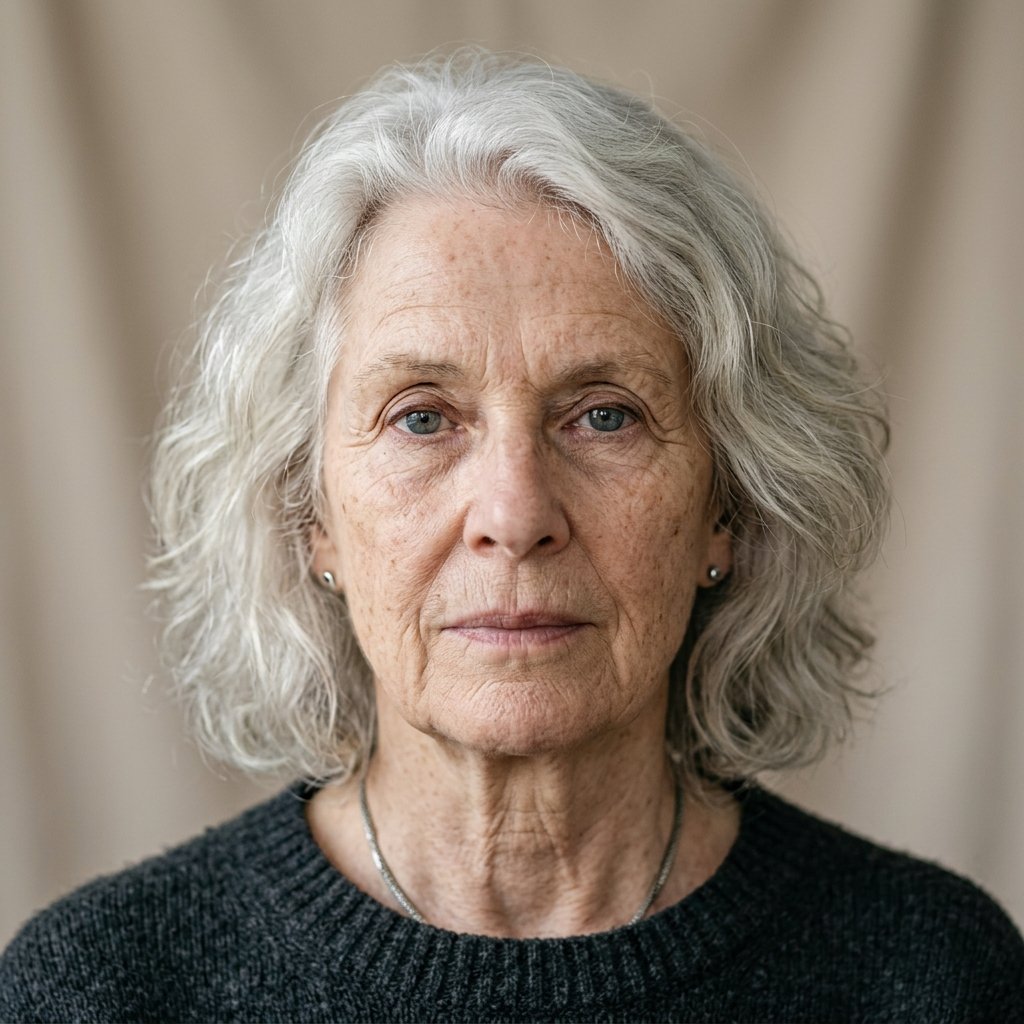
It was Mrs. Eleanor Hayes. She was my English teacher, a woman in her early sixties then, with silver-streaked hair pulled into a neat bun and the kindest eyes I have ever known. She wore the same modest floral dresses every day, and she smelled of peppermints and old books. I never thought she paid me any special attention. I was just the quiet kid in the back row.
I turned around, annoyed. “I have to go, Mrs. Hayes.”
She walked toward me, her low heels clicking on the old linoleum floor. “Jacob, I see what’s happening,” she said. “And I want you to know something. You are not invisible to me.”
I felt my throat tighten. “It doesn’t matter anyway,” I muttered. “I’m done. I’m out of here.”
She moved closer, right into my path. “You are not giving up on my watch,” she whispered, with a fierce gentleness that knocked the wind right out of me.
No one had ever said anything like that to me. Not once. I had always been surplus—an extra mouth to feed, a case file to close. But she stood there, this gentle woman, blocking the exit like a lioness protecting her cub.
I started to cry. Right there in the doorway, with my backpack on my shoulder and my future about to fall into a ditch. She didn’t say a word; she just pulled me into her arms and let me sob into her shoulder. She held me for a long time.
That afternoon changed everything.
She started staying after school for me. Every single day. At first, I resisted. I was angry at the world, and I took it out on her. I would slouch in the chair and refuse to do the work. I told her she was wasting her time. “Why do you even care?” I asked her once, with pure venom.
She looked at me calmly. “Because I see a light in you that you have never been allowed to see in yourself. And it is my God-given duty to make sure that light does not go out.”
I had no idea what she meant. But I kept coming back to that classroom, because for the first time, someone was waiting for me.
She helped me bring my grades up from failing to almost all As. She taught me how to write essays that would make a college admissions officer sit up and take notice. She brought me peanut butter sandwiches when she knew I hadn’t eaten breakfast. She bought me a copy of “Great Expectations” and told me I was Pip. I didn’t understand at the time, but she was giving me a narrative where I wasn’t the lost cause.
Then came the scholarship applications. I had never even heard of such things. I didn’t know that kids like me could go to college. Mrs. Hayes sat with me for hours at the public library, filling out form after form. She helped me craft my story—my painful, messy story—into a statement of resilience. She taught me to see my past not as a chain, but as a bridge.
One evening, after we had submitted the tenth application, I was completely drained. I put my head down on the library table and said, “I’m never going to get any of these. Why are we doing this?”
She reached into her purse and pulled out a small framed photo of a young woman in a graduation cap. “This is my daughter, Sarah,” she said softly. “She passed away from leukemia when she was 19. She never got to finish her dreams. You, Jacob, you have a chance to carry your dreams all the way. Don’t let that slip away.”
I stared at the photo. I had no words. I realized that day that her kindness came from a deep well of loss. She wasn’t just helping me; she was healing herself. And that made me work even harder.
The letters started coming in the spring. Rejections, yes, but also acceptance letters. I got a full scholarship to the University of Missouri. When I opened that envelope, Mrs. Hayes was right there beside me. She clasped her hands together and tears streamed down her cheeks. “You did it, Jacob,” she said. “You did it.”
I went to college and I was terrified. But I carried her voice inside my heart. Every time I wanted to quit, I heard her saying, “Not on my watch.” I worked two jobs and studied through the night. I majored in biology, then applied to medical school. The day I got into the University of Missouri School of Medicine, I called her immediately.
“Mrs. Hayes, I’m going to be a doctor,” I said, my voice cracking.
There was a long pause on the line. Then she whispered, “I always knew you would be.”
Twelve years passed. Twelve years of books and late-night study sessions and clinical rotations and exhaustion. I thought about her often, but we only spoke a few times a year. I would send her Christmas cards and tell her how I was doing. She would write back in beautiful cursive, always encouraging, always full of faith.
And then, at long last, I was graduating. I was becoming Dr. Jacob Thompson.
I picked up the phone and dialed her number. “I owe everything to you,” I said. “Please, please come to my graduation. I need you there.”
She was quiet for a moment. “I would be honored,” she said.
Graduation day was sunny and warm. The ceremony was held on the great lawn of the medical school. I stood with my classmates, all of us in our caps and gowns, and I scanned the crowd. There she was, sitting in the third row, a small figure in a lavender dress. She looked older, more frail, but her eyes were as bright as ever. When our eyes met, she gave me the tiniest nod. I smiled so wide my face hurt.
After the ceremony, there was a reception. I made my way through the crowd, shaking hands and hugging people. But I was looking for her. She was standing by a large oak tree, holding a small, worn envelope in her hands.
I walked up to her. “Mrs. Hayes, I am so glad you’re here.”
She didn’t say anything. She just looked at me with a strange, deep expression—like she was seeing not just the man in front of her, but the broken boy who had tried to walk out of her classroom twelve years before.
Then she held out the envelope. “I kept this for you,” she said, her voice trembling.
I took it, confused. It was yellowed and fragile. I carefully opened it and pulled out a single piece of notebook paper. It was crinkled and torn at the edges, but I recognized the childish handwriting immediately.
It said: “I will be a doctor someday.”
I had written those words in an exercise she gave us the day after she stopped me from leaving. We were asked to write down one impossible dream. I had scribbled it without thinking, purely to please her. I had completely forgotten about it.
But she had kept it. All these years.
I stared at the paper and felt my knees go weak. My vision blurred with tears. I looked up at her, and she was crying too.
“You carried your dream all the way,” she whispered. “And I carried this to remind me that hope is always worth planting.”
I fell into her arms and wept like that 16-year-old boy again. But this time, the tears were different. They were tears of gratitude, of healing, of a full-circle moment that was too sacred for words.
I held onto her for a long time. And I made a promise to myself right there: I would spend my life being the kind of light she had been for me.
Because sometimes, one person who sees you, truly sees you, can change everything. And I will never, ever forget that.
If this story moved your heart, please like and follow our page for more real-life stories of hope and kindness. And if it reminded you of someone who made a difference in your life, please share this with them. We’d love to hear your own story in the comments below.