The day we buried Grandpa Walter, the sky over Maplewood, Ohio, was the color of cold dishwater.
It seemed fitting.
Everyone expected tears, sobs, the kind of grief that buckles your knees.
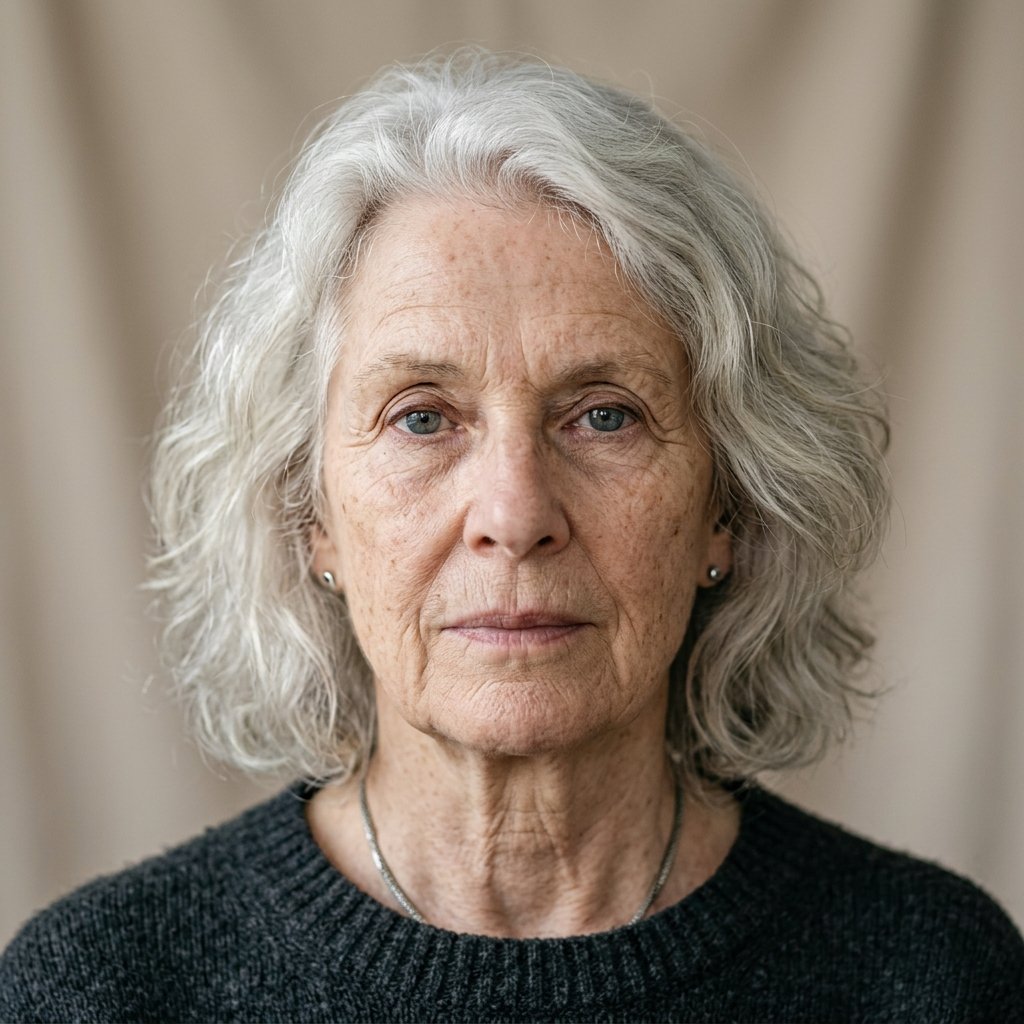
But my grandmother, Dorothy, stood beside the casket like she was waiting for a bus.
Her back was straight as a church pew, her hands folded calmly in front of her, and on her face was the strangest expression I had ever seen at a funeral.
She was grinning.
Not a nervous smile, not a brave little grimace—a genuine, secret-harboring grin.
The same grin she used to wear when Grandpa would sneak her a note under the dinner table.
I was standing right next to her, my hand shaking as I clutched a damp tissue, and I could feel the confused stares of the whole town boring into us.
Pastor Jim was reading from the Book of Psalms, his voice a low rumble, but I couldn’t hear a word.
All I could see was that grin.
And it was making me angry.
Grandpa had passed away just four days earlier.
He was 84 years old, and his heart simply gave out while he was sitting in his favorite recliner, watching the evening news.
It was peaceful, they said.
He just closed his eyes and went home.
But peaceful didn’t make it hurt any less.
He was the man who taught me how to fish in the creek behind their house, the man who never missed a single one of my school plays, the man who would slip me a $5 bill with a wink and say, ‘Don’t tell Grandma.’
I was devastated.
I thought Grandma would be shattered.
They had been married for sixty-two years.
Sixty-two years of morning coffee together, of dancing in the kitchen to old Hank Williams records, of him calling her ‘Dottie’ while she pretended to be annoyed.
I had never seen one without the other.
So why wasn’t she crying?
Why did she seem almost… happy?
My mother, standing on the other side of her, kept dabbing her eyes and shooting me worried glances.
Aunt Linda was openly sobbing into her husband’s shoulder.
Even my dad, a stoic man, had red-rimmed eyes.
But Grandma Dorothy stood there like a statue, that little grin playing on her lips, and the air around her felt different.
It felt light.
I couldn’t contain my confusion any longer.
I leaned in close, so close I could smell the familiar lavender powder she always wore.
My voice was barely a whisper, trembling with a mix of sorrow and bewilderment.
‘Grandma,’ I said, ‘are you not sad at all?’
She didn’t turn her head right away.
She just kept looking at the beautiful mahogany casket, covered in white lilies—her and Grandpa’s favorite, the same kind he sent her every anniversary.
Then, slowly, she tilted her head toward me.
Her blue eyes, still so bright and sharp at 82, locked onto mine.
She leaned in, and I felt her warm breath on my ear.
And then, with a wink that carried sixty years of mischief, she whispered the words that I will never forget as long as I live.
‘Your grandpa told me he was going to go first.’
I pulled back, my mouth opening in confusion.
‘What?’ I breathed.
She put a gentle, fragile hand on my cheek, the way she used to when I was little and had a nightmare.
‘I know you don’t understand, sweetheart,’ she said, her voice soft but steady as a heartbeat.
‘But I need you to listen. I need you to know this was all part of our plan.’
I felt a chill race down my spine.
A plan?
What kind of plan?
She must have seen the alarm in my eyes because she chuckled, a quiet, musical sound that was so startling at a funeral that several people nearby turned to look.
‘Don’t you worry, honey,’ she said.
‘This isn’t something sad. It’s something beautiful. Let me tell you what your grandfather told me the night he got his diagnosis. That’s when we made our pact.’
My mind reeled.
Diagnosis?
He hadn’t had any sickness—they said it was his heart, sudden and unexpected.
I looked at her, waiting.
‘Three months ago,’ she continued, her voice dropping to a hush, ‘Walter went to the doctor for his regular check-up. They found something in his chest. A shadow. They said it was serious, that he might have a few months, maybe a year. But they couldn’t be sure. He could go any day, they said, or he could linger and suffer.’
My eyes filled with fresh tears.
He never told us.
He never told anyone.
‘He came home that night,’ Grandma said, ‘and sat me down at the kitchen table. Took my hands, just like he did when he proposed back in 1961. And he said, ‘Dottie, I’ve been given a chance I never thought I’d get.’ I thought he’d lost his mind. But he just smiled that smile of his and said, ‘I get to choose.’ I asked him what he meant. He said the doctor gave him a timeline, but his heart could stop any second if it wanted to. And he said he’d been praying about it.’
She paused, looking back at the casket as if she could see him standing there.
‘He said, ‘Dottie, I’ve prayed that when the time comes, it’ll be quick. In my chair. Watching the news. Because I can’t stand the thought of you having to watch me waste away in a hospital bed. I want to go out living my life, not fighting for it. And I want you to promise me something.”
I couldn’t move.
‘He made me promise,’ she said, and now her voice caught just a little, the only crack in her armor, ‘that when he went, I wouldn’t cry. He said, ‘Dottie, don’t you shed a single tear. Because this isn’t a tragedy. This is the greatest gift God could give me. I get to leave while I’m still the man you married. I get to spare you the long goodbye. And I get to go first, so I can get everything ready for you. I’ll be waiting at the gates with the old Ford. The red one. The one we drove to our honeymoon. I’ll have the engine running, and I’ll be playing our song. So you better not show up with a handkerchief, because there’s no crying in heaven.”
She laughed then, a wet, joyful laugh, and I saw the first tear slide down her cheek, but it was a tear of overwhelming love, not sorrow.
‘So,’ she said, squeezing my hand, ‘I made him a promise. I promised I’d be brave. I promised I’d send him off with a smile, not a cry. And I promised I’d tell everyone that he was just going on ahead to make sure the road was clear.’
She turned back to me, her eyes brimming.
‘Your grandpa told me a secret, Emma. He told me that dying wasn’t the end. He told me that our love wasn’t a sixty-two-year thing. It was a forever thing. And he told me that he’d be waiting right there with that truck, and that he’d put in a request for a little house on a hill where we can watch the sunsets and never have to say goodbye again. And I believed him with my whole heart. So how can I be sad? He’s not gone, child. He’s just in the next room.’
I sobbed then, but it was a different kind of sob.
It was a release.
All around me, the funeral suddenly felt less like an ending and more like a send-off party, a celebration of a love that refused to be bound by a coffin.
I looked around and noticed for the first time that Aunt Linda was smiling through her tears, and my mother was nodding, because Grandma must have already told them the story that morning, but they wanted me to hear it from her.
‘He told me one more thing,’ Grandma added, dabbing at my cheeks with a fresh tissue from her purse.
‘What?’ I hiccupped.
‘He told me to tell you to take care of the creek. There’s a big catfish under the old stump, and you still owe him a dollar for the last time you lost a bet.’
I burst out laughing right there in the middle of the cemetery, and everyone stared, but I didn’t care.
That was so him.
So perfectly, wonderfully him.
After the service, as they lowered the casket into the ground, Grandma Dorothy didn’t reach for anyone’s arm.
She stood tall and she smiled, and I saw her lift her hand in a tiny wave, like she was waving at someone in the distance.
I knew who it was.
She was waving at Grandpa, parked in that red Ford, grinning back at her and tapping the watch on his wrist as if to say, ‘Take your time, Dottie. I’ll be here.’
That night, I went to her house.
I needed to understand more about this secret that had transformed a funeral into a testament of hope.
We sat in the same kitchen where they had made their pact.
She made tea, and she told me about the first time they met.
She was a waitress at a diner on Maple Street, and he was a young mechanic fresh out of the Army.
He ordered coffee, black, and when she brought it, he looked up at her and said, ‘I’ve just seen the rest of my life.’
She thought he was crazy, but he came back every day for three months until she agreed to a date.
She told me about the birth of my mother, how Walter had paced the hospital floor so much he wore a visible path in the linoleum.
She told me about the years when money was tight, and how he’d worked double shifts and never complained.
She told me about the day they bought that red Ford, the one he swore he’d meet her with.
It was a 1957 Fairlane, cherry red, and they drove it all the way to Niagara Falls for their honeymoon.
The car was long gone now, rusted and sold decades ago, but in her mind, it was as shiny as the day they bought it, waiting in a celestial parking lot.
‘He always kept his promises,’ she said, staring into her teacup.
‘He promised to love me for richer or poorer. He did. He promised to take care of me in sickness and in health. He did. He promised to be a good father. He was. So if he promises now that he’s waiting for me, I have to believe him. A lifetime of loyalty earns you that kind of trust. Our love isn’t a story that ends with a period. It ends with an ellipsis, a pause, a ‘to be continued.’ And I’ll wait for my page to turn, but I won’t waste a single day of my remaining life crying. I’ll live, because he’d want me to. I’ll laugh, because he loved my laugh. And I’ll tell everyone about the red Ford, because hope is the best thing you can give to a grieving heart.’
I held her hand, and we sat in silence for a long while.
The kitchen clock ticked.
Outside, a robin sang an evening song.
I thought about all the funerals I’d ever attended, how they were dark, heavy, suffocating things.
But Grandpa’s funeral was different because of her secret.
Because of a plan two people made in the face of a frightening diagnosis, a plan to turn death upside down.
They had taken something terrifying and turned it into a whispered promise, a secret handshake, a loving pact.
Weeks passed.
Grandma Dorothy thrived in a way I never expected.
She joined a bridge club.
She started walking in the park every morning, greeting people with that same sparkling grin.
She bought a new dress, a bright yellow one, and she wore it to church on Easter Sunday.
When people asked her how she was doing, she’d say, ‘I’m fine, darlin’. Just waiting on my ride.’
Some people thought she was in denial.
They whispered that she’d crack eventually, that the grief would hit her like a tidal wave.
But they didn’t understand.
I understood.
I started visiting her every Sunday.
We’d have lunch and she’d tell me more stories I’d never heard.
Like the time Grandpa Walter tried to build a treehouse for my mother and accidentally nailed his sleeve to the wood.
‘He was up there hollering for an hour,’ she’d laugh, ‘and I was laughing so hard I couldn’t climb the ladder to help him. He said, ‘Dorothy, this is no time for comedy!’ That only made me laugh harder.’
And in those stories, I saw him again.
Not as a memory, but as a living presence.
She kept him alive through her joy, and I realized that was the point.
When you love someone enough, you don’t have to let them go.
You just change the way you hold them.
One Sunday, about three months after the funeral, I found her in the backyard, looking up at the stars.
‘What are you doing, Grandma?’ I asked, pulling up a chair beside her.
‘Just checking in,’ she said.
‘On what?’
‘On him.’ She pointed to a particularly bright star in the east.
‘That’s the one. He told me he’d leave a light on for me. Every night since he left, that star has been there. I think that’s his porch light.’
I looked at the star.
And for a moment, just a moment, I thought I could hear the distant hum of an old engine.
I smiled and took her hand.
‘Do you think he’s still waiting?’ I asked, my voice a whisper.
‘Oh, I know he is,’ she said, squeezing back.
‘And he’s probably tapping his foot by now, saying, ‘Dottie, what’s taking you so long to finish your tea?’ But I tell him to be patient. I’ve got a few more stories to tell, a few more hands to hold. He’ll wait. He’s got all of eternity, and so do I.’
She turned to me then, her eyes reflecting the starlight, and she said something that felt like a benediction.
‘Emma, when it’s my time, don’t you dare wear black. Wear yellow, like the sun. And don’t cry. You remember what I told you. I’ll be in that red Ford with your grandpa, and we’ll be waving at you. So you wave back, you hear? You wave back and you smile, because love is too big for graves and caskets. It spills out all over the place. It leaks into the sky, into the creek, into that old Ford that’s waiting on a hill you can’t see. And every time you see a red car, or a bright star, or a fisherman on a creek bank, you’ll know we’re still here. Just in the next room.’
I promised her I would.
And I promised myself that I’d tell this story to everyone who needed to hear it.
So that’s why I’m sharing this now.
Because grief can be a heavy, silent thing, but it doesn’t have to be.
It can be a beautiful secret between two people who built a love so strong that even Death couldn’t make them cry.
It can be a grin at a funeral, a wink, a whispered promise.
It can be the certainty that the one you love isn’t lost—they’re just preparing the truck.
And if you’ve ever lost someone, if your heart aches with missing them, I hope you can borrow a little of my grandmother’s faith.
Not a faith that demands tears, but a faith that allows for a secret grin.
Because maybe your loved one whispered something to you, too, before they went.
Maybe it was in a dream, or in a thousand little memories, or in the way a certain song came on the radio at just the right moment.
Listen for that whisper.
It might be telling you that they’re still here, that the road is clear, and that one day, you’ll get to ride in that red Ford together again.
What a glorious day that will be.
Grandma Dorothy passed away two years later, on a warm June morning, with a cup of tea in her hand and a smile on her face.
She was 84, the exact same age Grandpa had been.
And when I got the call, I didn’t cry—not at first.
I went to my closet and pulled out the yellow dress I’d bought just for this day.
I wore it to her funeral, and when people looked at me strangely, I just winked and said, ‘She told me to.’
And as they lowered her beside Grandpa, I looked up at the sky and waved.
Because somewhere, in a place just beyond the edge of our seeing, I knew a cherry red 1957 Ford Fairlane was just pulling away from the curb, two impossibly happy people inside, and one of them was laughing, and the other was saying, ‘I told you I’d wait.’
And for the first time in my life, I completely understood what forever meant.
It meant a love story that doesn’t need a final page.
It meant a secret shared in a kitchen that now lives in my heart.
It meant that the greatest legacy you can leave isn’t money or possessions, but a promise so powerful that it turns tears into smiles and a funeral into a homecoming.
If this story touched your heart, please give it a ‘Like’ and a ‘Share’ so that someone else who needs a little hope today might find it. And don’t forget to Follow our page for more stories that celebrate the extraordinary power of everyday love. We’d be so grateful to have you in our community.
Have you ever received a message or a sign from a loved one that made you believe they were still with you? We’d love to hear your story in the comments below. Your experience might be the very thing another heartbroken soul needs to read right now.