My phone buzzed so violently on the nightstand that it almost danced off the edge.
I stared at the screen in the dark of my quarters at Randolph Air Force Base, the glow illuminating the medals still pinned to my dress uniform on the closet door.
112 missed calls.
Every single one from my mother, Patricia Mitchell.
Three hours earlier, I had stood under blinding television lights, my chest heavy with a lifetime of service, while more than two thousand people rose to their feet and applauded my retirement from the United States Air Force.
Now the applause was gone, replaced by a message that made my blood run cold.
‘That money belongs to this family. Demand it back immediately, or I’m calling the police.’
I read those words three times, feeling my heart beat slower each time.
My thumb hovered over the keyboard.
Then I typed two words.
‘What family?’
I hit send, blocked her number, and laid the phone face down on the cool wood.
The silence that followed was louder than any jet engine I had ever heard.
It carried me back twenty-two years, to the night my father died.
My father, Robert Mitchell, was a retired Air Force master sergeant.
He was the kind of man who believed that your true character showed up in the work nobody ever applauded.
He fixed bicycles for the neighborhood kids on Saturdays, his strong hands covered in grease, a patient smile on his weathered face.
He drove elderly veterans to their medical appointments every Tuesday, refusing any payment, just a cup of coffee and a story about the old days.
He coached Little League baseball for twelve seasons, even when the kids couldn’t afford their own gloves, and he secretly bought equipment for the ones whose families were struggling.
When he died, I was twenty years old, holding his hand in that sterile hospital room as the machines beeped their final rhythm.
The paramedics worked around us, but I never let go.
I whispered, ‘I’ve got you, Dad. I’ve got you.’
My mother, Patricia, arrived forty-five minutes late.
She fluttered in wearing a silk scarf and impeccable makeup, and the first thing she said was, ‘I didn’t want the neighbors to see me looking tired.’
She did not cry at the hospital.
Not a single tear.
She stood in the corner, checking her reflection in the window, while the medical staff covered my father’s face with a white sheet.
But at the funeral, she wailed.
She threw herself onto the casket with such theatrical sorrow that the funeral director had to gently pull her away.
Every eye in the church was on her.
Every whisper was about how brave and dignified she looked in her black dress.
A week later, she walked through our front door carrying a large glossy shopping bag and wearing an expensive fur-trimmed coat that must have cost thousands.
She had used my father’s insurance money.
The money he had set aside for our future, for my education, for emergencies.
‘I’ve sacrificed my whole life for this family,’ she announced, spinning in front of the hallway mirror. ‘I deserve something beautiful for once.’
My younger brother, Tyler, was sprawled on the couch, thumbs flying over his video game controller, a bowl of chips balanced on his stomach.
He glanced up and said, ‘Nice coat, Mom. Can I borrow twenty bucks?’
He was nineteen, unemployed, and had dropped out of community college three times.
He had never held a job for more than two weeks, and he spent most of his days gaming and most of his nights out with friends who bought him drinks.
I was on my hands and knees, scrubbing the kitchen floor with a sponge.
Dad had always kept that floor spotless, and I couldn’t stand to see a single speck of dirt on it.
I was the one who had sat with him at chemo, the one who had organized his medications, the one who had held his hand.
And now, I was the one cleaning up the messes everyone else left behind.
That was the moment the new family arrangement became crystal clear.
Patricia would spend.
Tyler would consume.
And I would provide.
The years that followed were a blur of sacrifice.
I enlisted in the Air Force, just like Dad, and I poured every ounce of my soul into my service.
I rose through the ranks, earned commendations, and built a career that would have made him proud.
And through it all, I sent money home.
Every month, without fail, a portion of my paycheck went to that address in San Antonio.
Patricia used it for spa days and new furniture.
Tyler used it for video games and takeout food.
Neither of them ever visited me on base.
Neither of them ever came to a promotion ceremony.
Neither of them ever asked about my life, my friends, or the missions that left scars no medal could cover.
But I met someone who did.
His name was Christopher Vance.
We called him Chris. He was my wingman, my brother in arms, the kind of friend who would walk through fire without a second thought.
We flew missions together over hostile territory, our jets slicing through the sky like twin blades.
We shared MREs in the desert, told stories under the stars, and promised each other that if anything ever happened to one of us, the other would look after the family left behind.
‘I’ve got my mom,’ Chris said one night, his voice quiet in the darkness of our tent. ‘She’s all I’ve got. If I ever don’t make it back, Dave, you make sure she’s okay, you hear me?’
‘Nothing’s going to happen to you,’ I said.
‘Promise me.’
‘I promise.’
Seven months later, Chris didn’t make it back.
His jet took enemy fire during a combat sortie, and I watched from my cockpit as his aircraft spiraled toward the earth, a trail of smoke painting the sky.
I screamed his name into the radio until my voice gave out.
The funeral was in a small town in Ohio, and I stood in my dress blues next to his mother, Eleanor.
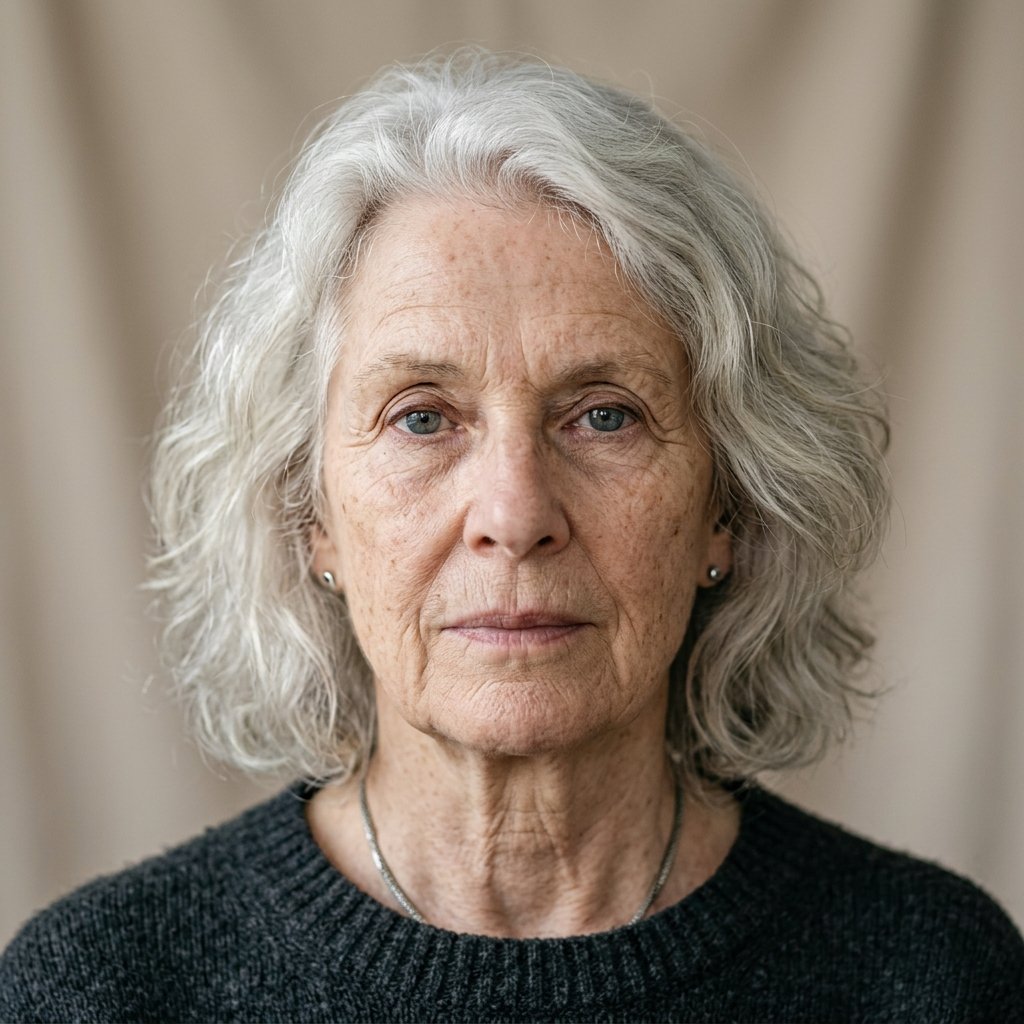
She was a tiny woman with silver hair and hands that trembled as she clutched a folded flag.
I held her up that day, literally wrapping my arm around her shoulders while the honor guard fired their rifles.
Afterward, she looked at me with eyes that had cried every tear they had and whispered, ‘He talked about you all the time. Said you were the best man he ever knew.’
I made a silent vow then.
I would keep my promise to Chris.
Over the years, I saved every extra penny from my salary, every bonus, every deployment hazard pay.
I lived in barracks, ate at the chow hall, and never bought anything I didn’t need.
Slowly, quietly, I built a trust fund for Eleanor Vance.
I never told a soul.
Not my mother, not my brother, not anyone.
It was my way of honoring the best friend I ever had, the man who gave his life for his country, the man whose mother deserved to live her remaining years in comfort and peace.
By the time my retirement ceremony approached, that trust had grown to $800,000.
I worked with the base legal office and General Harrison himself to arrange for the announcement to be made during the ceremony.
It was to be a complete surprise for Eleanor.
I invited her myself, sending a handwritten letter asking her to be my honored guest.
She called me, her voice trembling with emotion, and said, ‘David, I wouldn’t miss it for the world. Your father would be so proud of you.’
She was the only one I truly wanted in that front row.
Then, three days before the ceremony, my mother texted me.
The message was short and brutal.
‘I’m skipping your boring ceremony and going to Hawaii with my new boyfriend. Don’t expect me to change my plans just because you’re retiring.’
I stared at the screen, feeling something inside me finally snap.
Twenty-two years of neglect and selfishness.
Twenty-two years of being invisible.
I typed my reply without hesitation.
‘Then stay there.’
I didn’t wait for a response.
I called General Harrison’s aide and requested a small change to the seating arrangement.
The front-row seat reserved for Patricia Mitchell would now belong to Eleanor Vance.
The day of the ceremony dawned bright and clear over Randolph Air Force Base.
The parade ground was immaculate, the flags snapping in the Texas breeze.
I stood in my dress uniform, every crease sharp enough to cut glass, every medal polished to a brilliant shine.
My heart pounded as I saw Eleanor being escorted to the front row, her frail body wrapped in a simple floral dress, her eyes wide with wonder at the sea of uniformed men and women.
She sat in the seat meant for my mother, and when she caught my eye, she smiled the most beautiful, tearful smile I had ever seen.
General Harrison took the podium, his voice booming across the loudspeakers.
He spoke of my decades of service, of my bravery under fire, of my dedication to the Air Force and to my country.
The audience applauded, and I stood at attention, my eyes fixed on a point in the distance.
Then the general’s voice shifted, becoming slower and more personal.
‘But there is more to this story,’ he said. ‘There is the bond between wingmen, a bond forged in the crucible of combat that transcends even death. Today, we honor the man who flew beside Lieutenant Colonel David Mitchell for five years, a hero who gave his last full measure of devotion.’
I saw Eleanor’s hand fly to her mouth.
‘Christopher Vance,’ the general continued, ‘his name is inscribed on these walls, and his legacy lives on in the heart of his wingman and in this incredible act of love and remembrance.’
He gestured, and an aide wheeled out a large, framed certificate.
‘Effective immediately, an irrevocable trust in the amount of $800,000 has been established in the name of Eleanor Vance, mother of the late Captain Christopher Vance, by Lieutenant Colonel David Mitchell.’
A collective gasp rose from the crowd.
Eleanor staggered to her feet, her whole body trembling.
Tears streamed down her cheeks as she looked from the certificate to me, her mouth forming words that no one could hear.
She opened her arms, and I stepped off the stage, crossing the parade ground in three long strides, and I wrapped her in a hug that held twenty-two years of grief and love and promise kept.
‘I told you I’d take care of her, Chris,’ I whispered into the air. ‘I told you I’d keep my word.’
The ceremony continued, but that moment was captured by every news camera in the nation.
It played on the evening broadcasts, the segment running with the headline: ‘An Airman’s Ultimate Tribute to a Fallen Friend.’
Three hours later, back in my quiet quarters, my mother’s calls began.
They came in rapid succession, one after another, a relentless assault of vibration and light.
When I finally looked at my phone, the screen showed 112 missed calls.
And the text message that I opened with a steady hand.
‘That money belongs to this family. Demand it back immediately, or I’m calling the police.’
I could picture her sitting in a Hawaiian resort, a drink in her hand, her new boyfriend at her side, her entitlement billowing around her like the cheap perfume she always wore.
She hadn’t called to congratulate me.
She hadn’t called to ask about Eleanor or Chris or the years of sacrifice that had led to that stage.
She had called because my father’s son had given away $800,000 that she had already spent in her imagination.
‘What family?’ I typed.
Then I blocked her.
I turned off my phone and stared at the ceiling of my quarters, the silence washing over me like a balm.
And in that silence, I thought of my father.
I remembered the way he would come home after a long day of fixing bicycles and coaching Little League, his uniform smelling of sweat and grass, and how he would sit at the kitchen table and ask me about my day.
‘Character, son,’ he would say, ‘is what you do when no one is watching. Always remember that.’
Patricia never understood that.
She never understood why her husband gave away his time and his meager savings to strangers and neighbors.
She never understood why I joined the Air Force instead of taking some high-paying job to support her lifestyle.
She never understood that family isn’t about shared blood—it’s about shared love and shared sacrifice.
Eleanor Vance was more family to me than my own mother had ever been.
She sent me letters during every deployment, her looping handwriting filled with prayers and recipes and small-town news.
She called me on every birthday, her voice crackling with age and affection.
She prayed for me every night, she told me, and I believed her.
When I visited her in Ohio, she cooked me a meal that took her three days to prepare, even though her arthritis made every chop and stir a battle.
‘You’re the son I still have,’ she said once, patting my hand. ‘And I thank God for you every day.’
That was family.
Not the woman in Hawaii who only remembered my existence when there was money to grab.
Not the brother who still lived in our childhood home, the mortgage paid off by my father’s pension and my monthly checks, playing games while the world moved on.
The next morning, I woke to a knock on my door.
It was General Harrison, his face grave.
‘Son,’ he said, ‘we’ve received a formal complaint from a woman claiming to be your mother. She’s alleging fraud and theft. I need to know what’s going on.’
I stood at attention and told him everything.
I told him about my father’s death, about the fur-trimmed coat bought with insurance money, about the years of financial demands and emotional neglect.
I told him about my brother’s laziness and my mother’s refusal to attend a single milestone in my life.
I told him about Chris and the promise and the trust fund built from my own sweat and sacrifice.
When I finished, the general was silent for a long moment.
Then he put his hand on my shoulder.
‘Lieutenant Colonel Mitchell,’ he said, ‘the Air Force stands with you. That money is legally and morally yours to do with as you see fit. If she brings legal action, we will defend you with every resource we have. You have my word.’
I felt a weight lift from my chest.
Later that day, a certified letter arrived at the base.
It was from a lawyer in Hawaii, threatening to sue me for ‘financial abuse’ and ‘misappropriation of family assets.’
I read it once and then placed it in a drawer.
I haven’t responded.
I will never respond.
Because my family is not defined by DNA.
My family is a brave woman in Ohio who cries every time she looks at her son’s picture.
My family is the memory of a father who showed me what it meant to be a man of integrity.
My family is the brotherhood of airmen who have stood beside me through fire and storm.
And my mother, Patricia Mitchell, can keep her 112 missed calls and her threats.
She can keep her fur coats and her Hawaiian vacations and her perpetual victimhood.
She can keep the empty house in San Antonio where my father’s ghost still lingers in the floorboards I once scrubbed on my knees.
As for me, I will drive to Ohio this weekend.
I will sit on Eleanor Vance’s porch, drinking sweet tea that she insists on making even though her hands hurt.
And I will tell her every story I have about Chris—the funny ones, the brave ones, the quiet moments that only a wingman knows.
Because that is what family does.
It shows up.
It remembers.
And it loves, even when love costs everything you have.
My father once said that character is what you do when no one is watching.
I think, in the end, that is the only thing that truly matters.
Not the applause, not the medals, not the bank account.
Just the quiet choices we make in the dark, when the only judge is our own conscience.
I chose to honor a promise.
I chose to love the mother of a fallen hero.
I chose to walk away from the woman who bore me but never truly saw me.
And I would make those choices again, a hundred times over, without a second of hesitation.
If you enjoyed this story, please take a moment to Like our page, Follow for more heartfelt true stories, and Share this with someone who understands what real family means. Your support means the world to us.