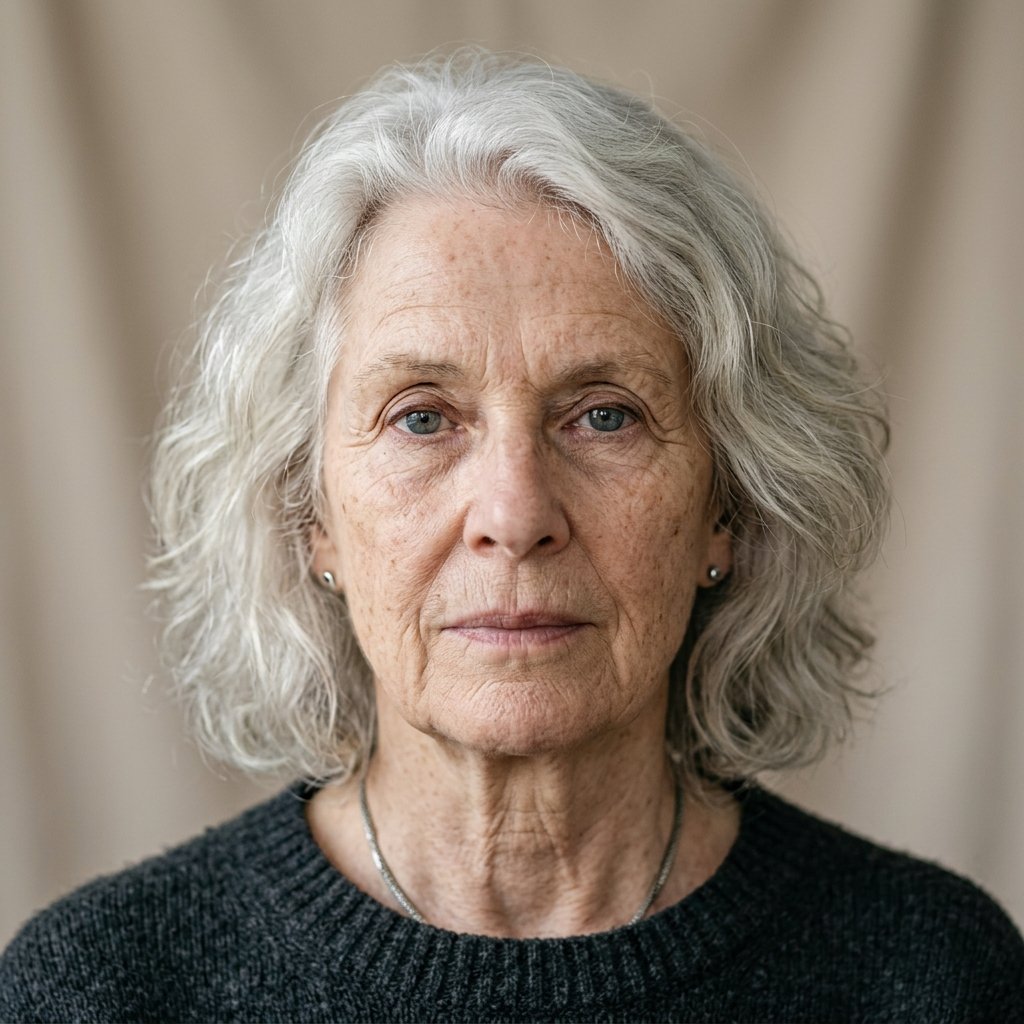
If a dying stranger hadn’t whispered a warning in my ear, I would not be alive to write these words.
My name is Clara Whitfield, and for five years I believed my husband Julian Prescott was the most devoted man on earth.
I was wrong.
The nightmare began on a rainy Tuesday evening when my father, Harrison Whitfield, collapsed in his office. A massive stroke, the doctors said. He was rushed to Mercy General Hospital in downtown Dallas, and within hours they had him on a ventilator in the ICU.
I barely left the hospital after that.
I slept in a plastic chair outside the observation window. I forgot to eat. I held his cold hand whenever the nurses allowed me in. My father was the only family I had left after my mother passed away ten years ago. He built a successful logistics company from nothing—a business now worth $5,000,000—but to me he was just Dad, the man who taught me to ride a bike and never missed a single school play.
Julian stepped in immediately. He spoke to the specialists with calm authority. He reviewed every chart. He paid the hospital bills before I even saw them. He brought me salads and pressed fresh juices and gently insisted I drink more water.
“You need to take care of yourself, sweetheart,” he would say, kissing my forehead. “Your father needs you strong.”
Those words felt like love.
Now I know they were the bars of a cage.
On the third day, my father’s condition remained critical. The doctors were guarded. I was sitting in the corridor around midnight, my eyes burning from exhaustion, when I noticed an elderly woman in a wheelchair near the nurses’ station. She had a thin blanket over her lap and wore a faded pink robe. Her name, I later learned, was Margaret Holloway. She was in room 412, battling terminal cancer.
She wheeled herself closer, her bony fingers beckoning me.
“Come here, dear,” she whispered. “I have something to tell you.”
I leaned toward her out of politeness, expecting a request for water or a call button.
Instead, she said: “If you’re still able to leave, go home tonight. And make sure your husband doesn’t know.”
I blinked. “Excuse me?”
Margaret’s pale blue eyes locked on mine. “I’ve been watching. I’ve seen him. That man doesn’t love you—he controls you. And he’s not just after your father’s money. He’s after your life.”
My heart lurched, but I shook my head. “I think you’re mistaken. Julian has been my rock.”
“Has he?” she asked quietly. “Do you have any friends left? Any job? Any life outside his shadow?”
The question hit me like a slap. I opened my mouth to argue, but no words came. I realized with a sickening jolt that I had slowly stopped seeing my college friends. I had turned down a wonderful job offer because Julian said the hours would be too stressful. I rarely went anywhere without him knowing every detail.
Margaret reached into a pocket of her robe and pulled out a small digital recorder. “Last night your husband took a phone call on the balcony outside the waiting room. I was here, as always. He didn’t see me.”
She pressed the recorder into my palm. “Listen to it alone. Then check your purse for anything that doesn’t belong to you.”
She began to wheel herself back toward her room. I stood frozen.
“Why are you helping me?” I called after her.
She looked over her shoulder. “Because I’m dying, child. And I can’t take the truth with me.”
A few minutes later, Julian appeared with a bag of food. He was dressed in a perfectly tailored navy suit, his dark hair combed back. He looked like a movie star. He always did.
“You need protein,” he said, handing me a plain grilled chicken salad and a bottle of water. “Did you drink enough today?”
I stared at him, my hand closing around the recorder in my pocket. “Yes,” I whispered.
“Good girl.” He kissed my forehead. “I’m going to grab coffee. I’ll be back in ten minutes.”
The moment he disappeared around the corner, I hurried to the family restroom down the hall. I locked the door, leaned against the cold tile wall, and put in my earphones.
I pressed play.
The first voice I heard was Julian’s.
“The old man needs to be disconnected before the weekend. The nurse is on board. She’s been increasing the dosage gradually so it won’t look suspicious. Once Harrison is gone, I’ll have control of everything through the will.”
Then a second voice—a man I recognized as my uncle Robert, my father’s own brother. “And the girl? My niece?”
Julian laughed softly. “After the funeral, Clara will have a tragic accident. A car crash, maybe. The roads can be so dangerous at night. Don’t worry, Robert. You’ll get your cut.”
I ripped the earphones out. My chest heaved. I bent over the sink, afraid I would be sick. The room spun. My husband—my gentle, caring husband—was planning to m*rder my father and then k*ll me.
I wanted to storm out and confront him. But Margaret’s words echoed in my mind: check your purse.
My handbag was a beautiful honey-colored leather piece, an anniversary gift from Julian. I never went anywhere without it. With trembling fingers, I turned it over and examined every seam. Inside the soft lining, near the bottom, I felt a small hard square. I dug my nail into the stitching and pulled.
An Apple AirTag fell into my palm.
Suddenly, years of bizarre coincidences made horrifying sense. Why Julian always called exactly when I was considering accepting a job. Why he knew I had visited a certain bookstore or what time I left my yoga class. He had been tracking my every move.
He wasn’t protective. He was a predator.
I carefully slid the AirTag back into its hidden pocket. If Julian suspected I knew, he would accelerate his plan. I had to be smart.
At five-thirty in the morning, I stood beside my father’s bed. The ventilator hissed rhythmically. His face was pale, his eyes closed. I took his hand.
“Dad,” I whispered, tears streaming down my face. “I don’t know if you can hear me, but Julian is not who I thought he was. I’m going to stop him. Please hold on.”
And then, incredibly, I felt his fingers tighten around mine. Not a reflex—a deliberate, weak squeeze.
He was conscious. He had heard everything.
That squeeze gave me the courage I needed.
I texted Julian: “Going home to shower and get fresh clothes. I’ll be back by seven. Love you.”
Then I walked to the hospital entrance and found a delivery courier waiting for a pickup. I paid him fifty dollars to carry my purse to a coffee shop on the other side of Dallas. I told him it was a surprise gift delivery. He agreed cheerfully.
While my AirTag rode north, I climbed into a taxi and gave the driver my address in Plano. “Step on it,” I said. “It’s an emergency.”
The twenty-minute drive felt like an eternity. I kept checking my phone, terrified Julian would call. But the tracker showed my purse moving peacefully toward downtown Dallas. He thought I was exactly where I said I would be.
Our house was a beautiful two-story colonial that Julian had insisted we buy. I unlocked the front door, my hands shaking so badly I dropped the keys twice. Inside, everything was pristine—just the way Julian demanded.
I went straight to his private office. He kept the door locked, but I had found the spare key months ago and never told him. I opened it and stepped inside.
His office smelled like leather and expensive cologne. The walls were lined with books he never read. I began searching methodically, starting with his desk. In the bottom drawer, beneath a stack of old tax documents, my fingers brushed against something hard and plastic.
I pulled out a phone—an older model, the kind used for burner calls—taped securely to the underside of the drawer.
The lock screen flashed. Four digits needed.
I tried his birthday. Nothing. Then, with a sinking feeling, I typed my own birthday.
The phone unlocked.
I almost laughed at the sick irony. He used my birthday as the password to the phone containing his plot to destroy me.
The first message thread was from six years ago, to a number I didn’t recognize. Later I would learn it belonged to my uncle Robert.
“The girl is insecure and desperate for affection. Her father is sitting on a fortune—at least $5,000,000. Isolating her will be easy.”
Robert’s reply: “I’ve waited years to get my hands on Harrison’s company. Do what you need to do.”
Another thread was with a contact labeled “D.S.”—Danielle Shaw, the ICU nurse assigned to my father’s care.
Julian: “Has the dosage been increased?”
D.S.: “Yes. Slowly, so no one suspects. His vitals are weakening.”
Julian: “Good. It needs to happen before Friday.”
D.S.: “And after?”
Julian: “You’ll get your money. The daughter won’t be a problem for long.”
I covered my mouth to stifle a sob. The woman who adjusted my father’s IV bags, who smiled at me every morning and said she was praying for him—she was poisoning him.
I kept scrolling. There were older messages from Julian to himself, almost like a diary. Entries about how he first met me at a charity gala, how he sized me up as an easy target—grieving my mother, lonely, eager to please. He wrote, “She’ll do anything I say. I just have to make her think it’s love.”
I wanted to throw the phone across the room. But I forced myself to continue.
Behind a large framed mirror on the wall, I found a small wall safe. The combination was, again, my birthday. Inside were several documents and a thick, official-looking envelope.
I pulled out the will.
It was a forgery so perfect it made my stomach turn. Dated two years ago, it declared that my father, Harrison Whitfield, left his entire estate—the logistics company, his real estate holdings, his investment accounts, all of it—to his beloved son-in-law, Julian Prescott.
My name was not mentioned once.
And at the bottom of the page, witnessing the signature, was my uncle Robert’s name, along with a fake notary stamp.
My own family had betrayed me.
I was still staring at the will when the burner phone buzzed in my hand. A new message flashed on the screen.
From “D.S.”: “It’s done. Your wife’s SUV has been taken care of.”
Slowly, as if in a dream, I turned toward the office window. My silver SUV sat in the driveway, exactly where I had parked it. From the outside, it looked perfectly normal.
But I knew now. I knew that the brakes had been tampered with, or the steering, or something else deadly. The moment I got behind the wheel, I would never reach the hospital. Julian would get a tearful phone call about a terrible accident, and he would play the grieving widower while he collected every penny of my father’s fortune.
I backed away from the window. My whole body trembled. For a moment, I felt the old familiar urge to call Julian, to ask him what to do, to let him take control. He had trained me so well.
But then I remembered my father’s hand squeezing mine. I remembered Margaret Holloway’s pale blue eyes. I remembered the sound of my own voice telling my dad I would stop this.
I picked up my own phone and dialed 911.
“What’s your emergency?” the dispatcher asked.
“My name is Clara Prescott,” I said, my voice surprisingly steady. “I’m at 1452 Oakwood Lane in Plano. My husband and several others are conspiring to m*rder my father and me. I have evidence. Please send someone immediately.”
As I spoke, I gathered up the burner phone, the forged will, and every other scrap of evidence. I also sent copies of everything to my own email, just in case.
Then I went to the front door and waited for the police, watching my SUV from the window and praying that Julian wouldn’t come home before they arrived.
I never saw Margaret Holloway again. She passed away two days later, quietly, in her room 412. But before she died, I was able to visit her one last time. I held her hand and thanked her. She smiled faintly and said, “You’re stronger than you know, dear. Don’t ever let anyone make you forget that.”
Julian was arrested at the hospital that same morning. Danielle Shaw was taken into custody after the police reviewed the phone messages. My uncle Robert tried to flee to Mexico, but he was picked up at the border.
My father, thank God, made a slow but full recovery. The doctors were able to reverse the effects of the increased medication once they knew what to look for. He’s back home now, a little weaker but just as sharp, and he has rewritten his will—this time with me as the sole heir and with all the proper legal safeguards.
I still think about Margaret often. A dying stranger who owed me nothing gave me back my life. She taught me that a whisper can be louder than a scream, and that sometimes salvation comes from the person you’d least expect.
If you were in my shoes, would you have followed a stranger’s warning? I’d love to hear your thoughts in the comments. And if this story moved you, please give it a Like, Follow our page for more incredible true stories, and Share it with someone who needs to know that it’s never too late to fight for your life.
Stay blessed, and trust your instincts.