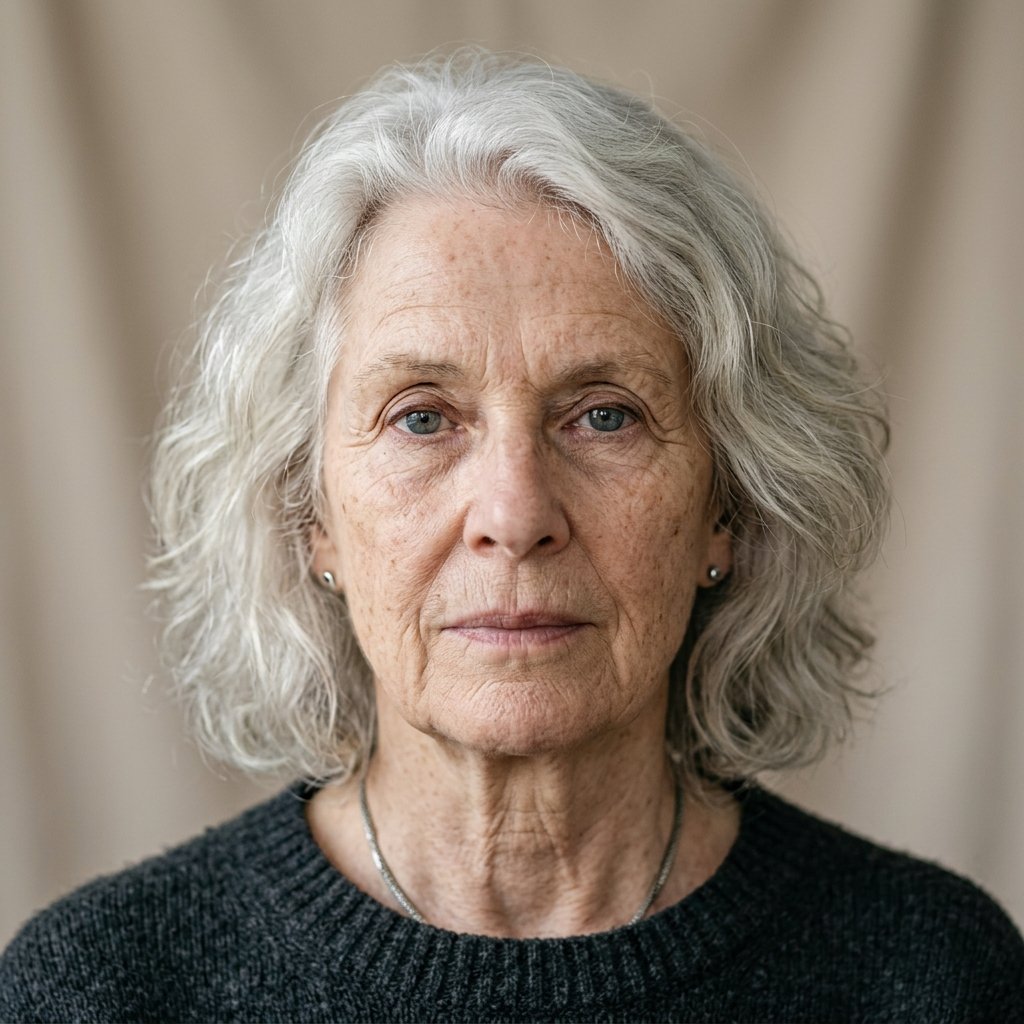
For eleven years, my mother set four plates at the dinner table every single night. One for her, and one for each of her three children. And every single night, she ate alone.
I didn’t learn this until the day I finally came home. And by then, I had already wasted more time than I will ever forgive myself for.
My name is Sarah, and I want to tell you about my mother, Margaret Whitfield, and the small white farmhouse on Cedar Lane in Millbrook, Vermont, where I grew up.
It was the kind of house that always smelled like cinnamon and woodsmoke. My father, Walter, built the porch himself the summer before I was born. He hung a lamp beside the door, and my mother turned it on every evening at dusk.
“So no one who belongs here ever gets lost in the dark,” she used to say.
We were happy once. Truly happy. Me, my older brother Daniel, and our baby brother Thomas. We fought over the last biscuit and raced barefoot through the corn and slept with the windows open to the sound of crickets.
Then my father got sick. And everything we thought was solid turned out to be made of glass.
He passed away on a cold morning in November. I was thirty-one. Thomas was only twenty-six. We stood at the edge of that frozen field and lowered the strongest man we ever knew into the ground, and none of us knew how to breathe after that.
Grief does terrible things to a family. It doesn’t always pull you closer. Sometimes it tears you into pieces so small you can’t find your way back to each other.
The trouble started with the farmhouse. Daniel wanted to sell it. He said Mom couldn’t manage all that land alone, and he wasn’t wrong about that. But Thomas wanted to keep it, and I was caught in the middle, exhausted and heartbroken and too tired to be kind.
Words were spoken in that kitchen that should never have been spoken. Cruel words. Words about money, about who did more, about who Dad loved best.
And my mother, drowning in her own sorrow, said something in the middle of it all that I clung to for eleven years like it was proof of something.
She said, “If this is how you children behave, maybe you’re all better off away from here.”
I took those words and I built a wall out of them. We all did.
Daniel moved to Arizona for work. Thomas drifted out to Oregon. I settled two states away in Pennsylvania and told myself that Mom had made her choice. She pushed us out. She said so herself.
The first year, I meant to call. The phone felt too heavy in my hand.
The second year, I told myself she should call me first. She was the parent, after all.
By the fifth year, the silence had grown so thick and so old that I no longer knew how to break it. What do you even say after five years? How do you apologize for something that has become a part of who you are?
So the years piled up. Eleven of them. Eleven Christmases where I set my own table and pretended not to see the empty places. Eleven birthdays where I whispered, “Next year, I’ll go home,” and never did.
I convinced myself she didn’t care. I convinced myself I didn’t either.
I was so terribly wrong.
It was a Tuesday last April when the letter came. Plain envelope, unfamiliar handwriting, a return address I half remembered. It was from Ruth Callahan, our old neighbor, the woman who used to bring us blueberry pie every Fourth of July.
Inside was a single line, written in a shaky hand.
“Your mother isn’t well. Come while there’s still time. She’s been asking for all three of you.”
I read it standing at my mailbox, and my knees nearly gave out. I don’t remember packing a bag. I don’t remember the eight hours of highway. I only remember the fear pounding in my chest and the prayer I kept repeating. “Please let me make it. Please don’t let me be too late.”
I turned onto Cedar Lane just past midnight.
And the porch light was on.
That little lamp my father hung, still glowing in the dark after all these years. My chest broke open at the sight of it.
I parked on the gravel and stepped out into the cold, and there she was. My mother. Sitting in her old rocking chair on the porch, wrapped in my father’s brown wool coat that swallowed her whole.
She was so small. So thin. Time had folded her into someone frail and silver, and for a moment I didn’t recognize the woman who used to chase us through the cornfield.
But then she turned her head, and her eyes found mine, and she smiled.
She didn’t cry. She didn’t ask where I’d been. She simply said, in a voice worn soft with age, “I knew one of you would come. I left the light on every single night. Just in case one of my babies found their way home.”
I fell to my knees on that porch and wept like a child. Eleven years of pride and hurt and stubbornness dissolved into the boards beneath me.
“I’m so sorry, Mama,” I sobbed. “I thought you didn’t want us. I thought you sent us away.”
She reached out and cupped my face in her paper-thin hands, the way she did when I was small.
“Oh, sweetheart,” she whispered. “I was broken that day. I said a foolish thing a foolish, grieving woman says. I never meant it. Not for one second. I’ve been waiting for you to come back so I could take it back.”
I helped her inside, and that was when I truly understood the depth of what we had done.
The house was frozen in time. Our childhood coats still hung by the door. My father’s reading glasses still sat on the side table. And in the kitchen, the table was set for four, though only one chair had been used in over a decade.
But it was what I found later that shattered me completely.
While she slept that first night, I went into her room to check on her, and I noticed a worn shoebox tucked beneath her bed. I pulled it out, my hands trembling, and lifted the lid.
It was full of letters. Dozens and dozens of them. Every single one addressed to me, or Daniel, or Thomas. Sealed. Stamped. Never mailed.
Eleven years of letters my mother wrote to her children and was too afraid to send.
I sat on her cold floor and read them until dawn.
She wrote about the garden and the first snow and the robin that nested by the window. She wrote, “I made your favorite stew today, Sarah, and I set a bowl out of habit before I remembered.”
She wrote to Thomas, “You would have loved the sunset tonight. I saved it in my heart for you.”
She wrote to Daniel, “I’m not angry, son. I was never angry. I only miss the sound of your laugh in this house.”
And every letter, every single one, ended with the exact same words.
“The door is always open. Your room is just how you left it. Come home when you’re ready. I’ll leave the light on. Love, Mom.”
She was afraid. That was the truth I had never let myself imagine. She thought we hated her. She thought we didn’t want to hear from her. So she poured her whole heart onto paper and hid it under her bed, and she waited, and she left that light burning through eleven years of darkness.
I called my brothers before the sun was fully up. I didn’t know what I’d say after all this time. I didn’t have to say much.
When I told Daniel about the light and the letters, this big, stubborn man who hadn’t spoken to me in a decade broke down on the phone. “I’ll be on the next flight,” he choked out. Thomas said the same before I even finished asking.
Three days later, for the first time in eleven years, we were all under one roof again.
I wish you could have seen my mother’s face when Daniel walked through that door. And then Thomas behind him. She pressed both hands to her mouth and she trembled, and she said the same thing over and over. “You came. You all came home.”
We cooked in that little kitchen like we used to. We burned the biscuits and laughed until our sides ached. We told the old stories, the ones about Dad, and we cried the good kind of tears, the kind that heal instead of hurt.
And that first night, we sat down together at that old table, and finally, after all those lonely years, all four plates were full.
Mom just sat there looking at each of us, her eyes shining. “I dreamed of this,” she said quietly. “I dreamed of this every night I ate alone.”
We didn’t waste another second. Daniel took a leave from work. Thomas moved back into his old room. I stayed through the summer and into the fall.
The doctors said her heart was tired and there wasn’t much time. So we made the time we had matter.
She held on for eight more months. Long enough to sit on that porch in the warm evenings and tell us everything she’d been saving up. Long enough to meet Daniel’s first grandbaby, her great-grandchild, and hold that tiny bundle against her chest with tears rolling down her cheeks.
“Now the house is full again,” she whispered. “Now I can rest.”
She passed away peacefully in her sleep on a soft December morning, with all three of her children in the house and the porch light glowing outside her window.
The night before she left us, she squeezed my hand with what little strength she had left, and she smiled that same gentle smile.
“See, sweetheart?” she said. “I told you the waiting was worth it.”
I carry so much regret for those eleven wasted years. I would give anything to have them back. But I carry something greater than the regret, and that is the gratitude that pride didn’t get the final word.
We almost lost each other forever over words spoken in a moment of grief. Over a foolish misunderstanding that grew into a wall none of us knew how to climb.
So please, if you take anything from an old story about a farmhouse in Vermont, take this.
Don’t let silence become a habit. Don’t let your pride guard a door that only love should open. That empty chair at the table fills up so much faster than you think, and once it’s empty for good, it stays that way far longer than any heart can bear.
Call your mother. Call your father. Forgive the old wounds while there is still someone left to forgive.
Go home while the light is still on.
Because somewhere, someone who loves you may be sitting in the dark, wrapped in an old coat, still setting a place for you at the table. Still waiting. Still leaving the light on. Just in case.