The last time my daughter called just to hear my voice, my wife was still alive to hand me the phone.
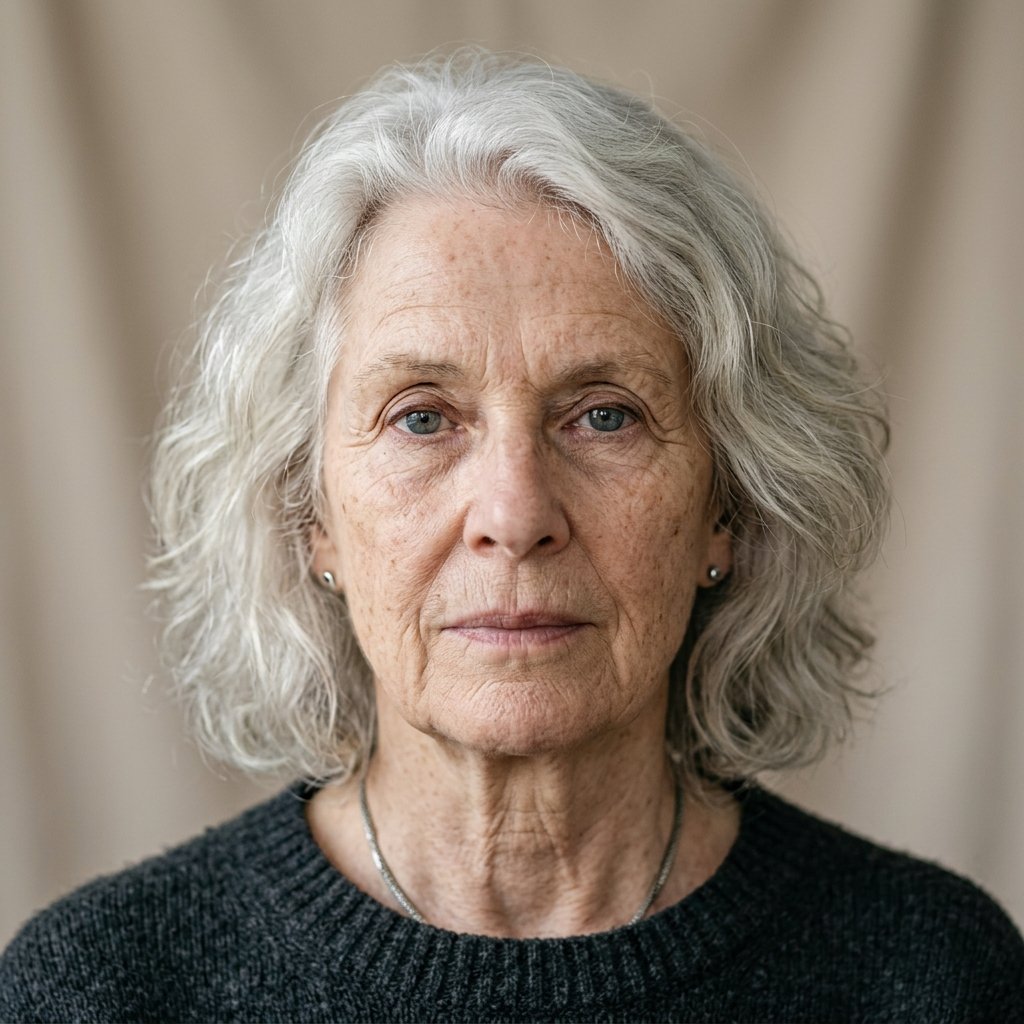
My name is Walter Ellison. I’m seventy-nine years old, and I live in a small blue house at the end of Maple Street in Brookfield, Ohio. It’s the same house where I raised three children and buried the only woman I ever loved.
When Margaret passed four winters ago, I learned something they don’t warn you about. Grief isn’t the loudest part of losing someone. The loneliness that follows is.
The house got quiet in a way that pressed against my ears. Her slippers still sat by the bed. Her handwriting was still on the calendar in the kitchen. And I would talk to those empty rooms just to hear a human sound.
I told myself my children would fill some of that silence. They didn’t.
Sarah lives out in Denver now, chasing a career that never seems to slow down. My son Michael is in Atlanta with a family of his own. And my youngest, Kevin, well, Kevin only surfaces when his bank account runs dry.
At first the calls were weekly. Then monthly. Then they became something I had to beg for.
I remember dialing Sarah’s number on a Sunday, the day we always used to gather for dinner. It rang and rang. When she finally called back three days later, the first thing she said was, “Dad, is everything okay? Do you need money?”
As if the only reason an old man would reach for his children was need.
I told her no. I told her I just wanted to talk. There was a pause, the sound of her covering the receiver, and then, “Can I call you tomorrow? Things are crazy right now.”
Tomorrow never came. It rarely did.
My birthdays became voicemails I saved and replayed just to hear their voices. My Thanksgivings became a single plate at a table built for eight. I stopped setting the extra chairs. It hurt too much to look at them.
Some mornings, I’ll be honest with you, I would lie in bed and wonder how long it would take anyone to notice if I simply didn’t get up. That’s a dark thought for a man to carry alone. But alone was all I had.
And then, on a gray rainy afternoon last spring, everything began to change. It started with a boy and a bag of groceries.
I’d started ordering my food delivered because my knees no longer trusted the icy steps of the market. That day, the delivery came during a downpour, and when I tried to step out to meet the driver, my cane slipped on the wet porch.
I went down hard. I lay there on the cold wood, rain soaking through my sweater, unable to push myself up. My cane had rolled just out of reach, and I felt the panic rising in my chest.
That’s when I heard footsteps running.
“Sir! Sir, don’t move, I’ve got you.”
A young man knelt beside me, no older than nineteen, soaked to the bone but completely calm. He slid an arm under my shoulders and lifted me with a gentleness that surprised me. His name, I would learn, was Danny.
Most delivery drivers would have left the bags on the step and hurried to the next stop. Danny didn’t. He carried my groceries inside, sat me down in my chair, and disappeared into my kitchen.
A few minutes later he came back with a hot cup of tea. “My grandma always said tea fixes the shakes,” he said, smiling.
He stayed for an hour. He didn’t have to. He just talked to me, asked about the old photographs on my wall, laughed at my stories like they were worth telling.
Before he left, he wrote his phone number on the back of the receipt. “You call me if you ever need anything,” he said. “I mean it.”
I figured it was just politeness. But two days later, there was a knock at my door. It was Danny, holding a bag of the good oranges I’d mentioned I liked.
“Wasn’t a delivery,” he said, a little shy. “Just thought you might want these.”
And so it began. He’d stop by after his shifts. He fixed the gutter that had been sagging for two years. He read me the newspaper when my eyes got tired. He sat on my porch and listened, really listened, in a way no one had in a very long time.
One evening I asked him why. Why would a young man with his whole life ahead of him spend his time with a lonely old stranger?
He went quiet for a moment. “My grandpa raised me,” he said. “My folks weren’t around much. He was everything to me. And at the end, when he got sick, he was alone in that home. I was too young and too broke to help him.”
He swallowed hard. “I promised myself that if I ever saw someone slipping through the cracks like he did, I wouldn’t look away. You remind me of him, Mr. Ellison. That’s the honest truth.”
I had to turn my face to the window so he wouldn’t see my eyes fill. That boy gave me something my own children hadn’t in years. He made me feel like I still mattered.
The months that followed were the warmest I’d known since Margaret. But then, one night in early summer, my body betrayed me again.
I’d been feeling weak all day. I stood up to close the window against the evening chill, and the room tilted. The floor rushed up to meet me.
I don’t remember hitting it. What I remember is waking to Danny’s voice, sharp with fear, and the wail of a siren cutting through the dark.
He had come by to drop off some soup and found the door unlocked, and me on the floor. He’d called for the ambulance, and he rode with me, holding my hand the entire way, telling me over and over, “Stay with me, Mr. Ellison. You’re not alone. I’m right here.”
It was my heart. A serious episode, the doctors said. They stabilized me, but for a few hours it was touch and go.
And when the hospital pulled up my emergency contacts, they called my children.
I didn’t expect them to come. But they did. All three of them, arriving one by one through that long night, pale and frightened and out of breath.
When Sarah pushed through the door of my room, she stopped cold. Because there, in the chair pulled up close to my bed, sat a young man she had never seen before, holding her father’s hand and dozing from exhaustion.
“Who,” she whispered, “who is that?”
Danny woke and stood, respectful and quiet. “I’m a friend of your father’s, ma’am,” he said simply.
I found my voice, weak as it was. “He’s the one who stayed, Sarah. He’s the one who found me. Both times.”
The silence in that hospital room was heavier than any words. I watched the understanding land on my children’s faces like a slow, terrible sunrise.
A stranger, a boy who owed us nothing, had been there. Had noticed. Had cared. While they were three phone calls I could never seem to reach.
Michael turned away, unable to look at me. Kevin sank into a chair with his head in his hands.
And Sarah, my strong, busy, always-in-a-hurry Sarah, dropped to her knees beside my bed and broke completely.
“Dad,” she sobbed, “I’m so sorry. I’m so, so sorry. We got so wrapped up in our own lives that we forgot you were still living yours. We forgot you needed us. We just assumed you were fine, because thinking about it any other way was too hard.”
I reached out and touched her hair, the way I did when she was small and frightened of thunderstorms.
“I never stopped loving you,” I told her. “I only ever wanted to be remembered.”
We wept together, all of us, in that small white room. Years of distance cracking open at last.
Recovery was slow, but I wasn’t alone for a moment of it. My children took turns staying. They cooked in Margaret’s kitchen. They cleaned out the guest room and argued gently over whose turn it was to help me with my exercises.
When I was strong enough, they made a decision. They found me a lovely place just twenty minutes from Sarah’s home, a cottage with a garden and neighbors who wave.
But here is the part that still fills my old heart to bursting. They didn’t forget Danny.
Sarah tracked him down, thanked him with tears in her eyes, and told him something I’ll never forget. “You did what we should have done. You’ll always have a place at our table.”
And he does. Every Sunday, when the family gathers for dinner, there’s a chair kept just for Danny. He’s finishing college now, and I helped him with the tuition. Money means nothing to me compared to what he gave me.
Grandchildren climb onto my lap now. My son calls just to say goodnight. My daughter tells me she loves me, and she says it first.
I have forgiven my children completely. I’ve come to believe that people are not always cruel when they neglect us. Sometimes they are simply lost in the noise of their own lives, and it takes something breaking to make them stop and listen.
Still, on quiet nights, I think about all those years I sat waiting by a phone that never rang. I think about the man I was, lonely enough to wonder if the world would notice him gone.
And then I think about a nineteen-year-old boy who ran through the rain for a stranger, because someone he loved had once been forgotten.
We spend so much of our lives believing family is only the blood we’re born into. But I have learned, at seventy-nine, that family is anyone who chooses to stay when it would be easier to walk away.
Danny chose to stay. And in doing so, he gave my own children back to me.
If you take one thing from an old man’s story, let it be this. Call your parents. Visit the lonely ones. Notice the people slipping quietly through the cracks around you.
Because the greatest gift you can ever give another human being is the simple, sacred act of not looking away.