The morning the letter arrived, I almost threw it away.
It was tucked between a grocery flyer and an electric bill, so yellowed and worn that I thought someone had mailed me trash by mistake.
But then I saw the handwriting on the front. And my whole body went cold.
I would know that handwriting anywhere. Even after fifty-one years.
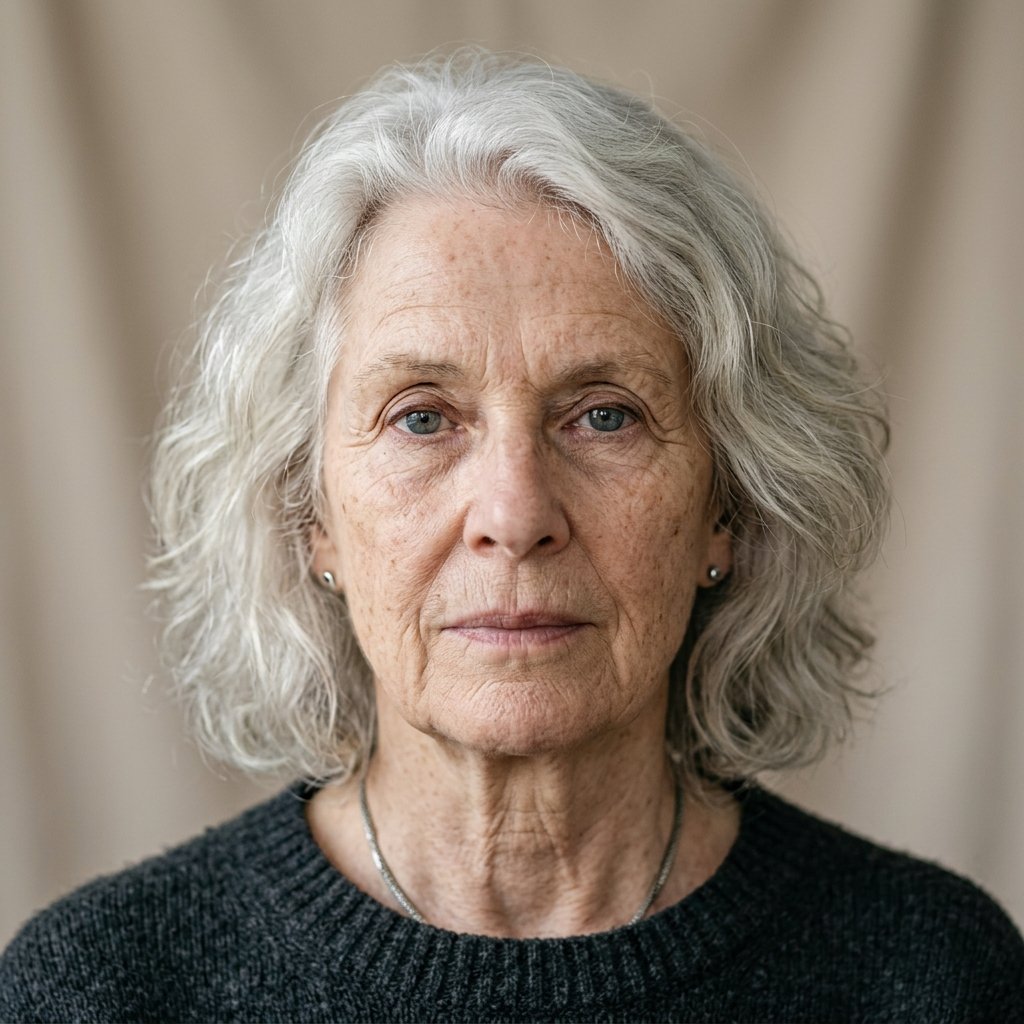
My name is Eleanor, and I am seventy-four years old. Let me tell you about the boy I loved, the lie that stole him, and the forgiveness that gave him back to me.
It was 1974 in Cedar Falls. I was nineteen, and Thomas Bennett was the most gentle soul I had ever known.
He wasn’t loud or flashy like the other young men. He was the kind of boy who noticed when you were cold and gave you his jacket without being asked.
We would sit under the big oak tree behind the church, and he’d talk about the little house he wanted to build for us one day.
A porch swing. A garden. A dog named Buster.
I believed every word, because when Thomas looked at me, I felt like the only person in the whole world.
Then the draft notice came.
I still remember the way his jaw tightened when he read it, trying so hard to be brave for me.
The night before he left, he held both my hands under that oak tree and made me a promise.
“I’ll write you every week, Eleanor. Every single week. And when I come home, I’m going to marry you.”
I promised I’d wait. I meant it with every piece of my heart.
The first month, I ran to the mailbox every afternoon like a child on Christmas morning.
Nothing came.
The second month, my hands started shaking every time the mail truck rumbled past our house.
Still nothing.
I told myself the mail was slow. That letters from overseas took time. That he was busy, tired, maybe hurt.
But the silence grew louder with every passing week.
My mother watched me wither and said nothing. My older sister Ruth, though, had plenty to say.
“You need to move on, Eleanor,” she’d tell me. “Boys like that forget the moment they’re gone. Don’t waste your best years waiting.”
Ruth was seven years older, unmarried, and living with us. I thought she was only trying to protect me.
I had no idea what she was really doing.
Then, in the fall, a soldier named Gerald came back to Cedar Falls. He’d served near Thomas.
I cornered him after the Sunday service, desperate for any scrap of news.
He wouldn’t look me in the eye.
“Eleanor, I’m sorry,” he mumbled. “Thomas met a girl overseas. Everybody knew. I figured he would’ve told you by now.”
The ground seemed to tilt beneath my feet.
I don’t remember walking home. I only remember the sound of my own crying, muffled into my pillow so my mother wouldn’t hear.
That was the day something inside me quietly died.
A year later, a good man named Harold started coming around. He was steady, honest, and patient.
He never once made me feel like a second choice, even though we both knew my heart had been broken by someone else.
So I married him. Not out of fire, but out of the gentle warmth of a man who chose me every single day.
We built a good life. Three children. A porch swing. A garden.
And yes, eventually, a dog. Though we named him Rusty, not Buster. Some memories I kept locked away too tightly to touch.
Harold and I were married for fifty-two years.
He was the one holding my hand when our daughter took her first steps, and I was the one holding his when he took his last breath last spring.
Grief is a strange, heavy thing. After the funeral, the house felt like a museum of a life that was suddenly over.
I thought the biggest surprise of my later years had already happened.
I was wrong.
Because two months after I buried my husband, that letter appeared in my mailbox.
The one with the handwriting I would know anywhere.
I sat down at my kitchen table, my heart pounding like a scared rabbit, and I opened it.
Inside was a single page, and a shorter note attached from a stranger.
The stranger’s note came first. It was from a young woman named Katie.
“Dear Mrs. Eleanor,” it read. “My name is Katie, and I am Ruth’s granddaughter. My grandmother passed away three weeks ago. Before she died, she made me promise to send you this. She said you deserved to know the truth, and that she was sorry. I’m so sorry too.”
My hands were trembling so hard I could barely hold the page.
Beneath Katie’s note was the real letter. Thomas’s letter. Dated 1974.
“My dearest Eleanor,” it began. “This is the fifteenth letter I’ve written and I still haven’t heard back from you. Have I done something wrong? Please, just one word. Even if you’ve changed your mind, I need to know you’re alright. I think about you every single day. I keep my promise close to my heart. I will come home to you.”
Fifteen letters.
He had written fifteen letters.
And I had received none.
The room spun around me as the truth crashed down like a wave I’d been running from for half a century.
Thomas had never stopped writing.
Gerald had lied, or been misinformed. There was no girl overseas.
And Ruth. My own sister. She had taken those letters from the mailbox before I ever saw them.
Katie explained the rest in a longer note she sent later, after I called her, my voice cracking on every word.
Ruth had confessed everything on her deathbed.
She had been terrified of being left alone. She was the older sister, still unmarried, watching her baby sister get swept away by love.
So she stole the letters. Every one. She hid them in a shoebox in her attic and told herself she was doing me a kindness.
She carried that guilt for fifty-one years.
Katie said her grandmother wept as she confessed, whispering, “I ruined her whole life. I ruined two whole lives. God forgive me.”
I don’t know how long I sat at that table. The coffee went cold. The afternoon light faded into evening.
I felt so many things at once. Rage. Grief. A sorrow so deep it had no bottom.
All those years. The life Thomas and I could have shared, taken by fear and a shoebox in an attic.
But here is the thing about being seventy-four years old.
You learn that anger is a fire that only burns the person holding it.
I could have spent whatever time I had left cursing my dead sister and mourning a stolen life.
Or I could do something else.
So the next morning, I called Katie back. I asked her one question.
“Is Thomas still alive?”
There was a long pause. Then she said, “I don’t know, Mrs. Eleanor. But the letter had a return address. It’s an old one. Maybe someone there remembers him.”
That address led me on a search that took three weeks and more phone calls than I can count.
And finally, one gray Tuesday morning, I found him.
Thomas Bennett, seventy-six years old, living in a small white house near Lake Morrow, just two hours from where I’d spent my entire life.
A widower, I learned. His wife had passed four years earlier. They’d had no children.
He had never known why I stopped writing either. He thought I had simply moved on.
I drove those two hours with my heart in my throat, rehearsing a thousand things to say and forgetting all of them.
When I finally stood on his porch, I could barely breathe.
I knocked.
The door opened slowly. And there he was.
Older, of course. Gray hair, a cane, glasses. But those same gentle eyes.
He looked at me for a long, long moment. His hand went to his mouth.
And then, in a voice thick with tears, he whispered the words that broke me open completely.
“Eleanor. You came.”
We sat on his porch for six hours that day.
I showed him the letter. He wept. I told him about Ruth, and he was quiet for a long time.
Then he took my old, wrinkled hand in his and said something I will never forget.
“I spent so many years wondering if you ever loved me at all. Now I know you did. That’s enough, Eleanor. That’s more than enough.”
I asked him how he could not be angry. At Ruth. At the wasted years.
He smiled softly and said, “Anger would mean the last fifty years get to steal the next ones too. I won’t give them that.”
And in that moment, sitting on that porch by the lake, I finally forgave my sister.
Not because what she did was okay. It wasn’t.
But because carrying that hatred would only poison the miracle I’d been given.
I forgave Ruth for her fear. I forgave Gerald for his careless words. And I forgave myself for believing the lie all those years ago.
Forgiveness, I learned, isn’t about saying the wound didn’t matter.
It’s about refusing to let the wound have the final word.
Thomas and I were married last month.
We stood under that same old oak tree behind the church in Cedar Falls, the one where a nineteen-year-old boy once promised to build me a house with a porch swing.
My children and grandchildren were there. So was Katie, crying happy tears in the front row.
I wore a simple blue dress. Thomas wore a smile that made him look nineteen again.
When the pastor asked if I would take this man, my voice didn’t shake at all.
“I’ve been waiting fifty-one years to say yes,” I told him. “So yes. A thousand times, yes.”
We don’t have decades ahead of us. We know that.
But we have mornings. We have coffee on the porch and quiet walks by the lake and a dog we finally named Buster.
We have each other, and we have peace.
People my age sometimes tell me they’re too old to start over. Too old to hope. Too old for love.
I tell them the same thing every time.
Love waited fifty-one years for me, and it never once gave up.
All I had to do was set down my anger long enough to let it back in.
So if there is someone you’ve been holding a grudge against, someone whose silence or mistake broke your heart, I beg you.
Don’t wait until it’s a deathbed confession or a letter that arrives fifty years too late.
Forgive. While there is still time. While there is still love left to save.
Because the heart, no matter how old, is never too tired to heal.
And sometimes, the greatest love of your life is just one act of forgiveness away.