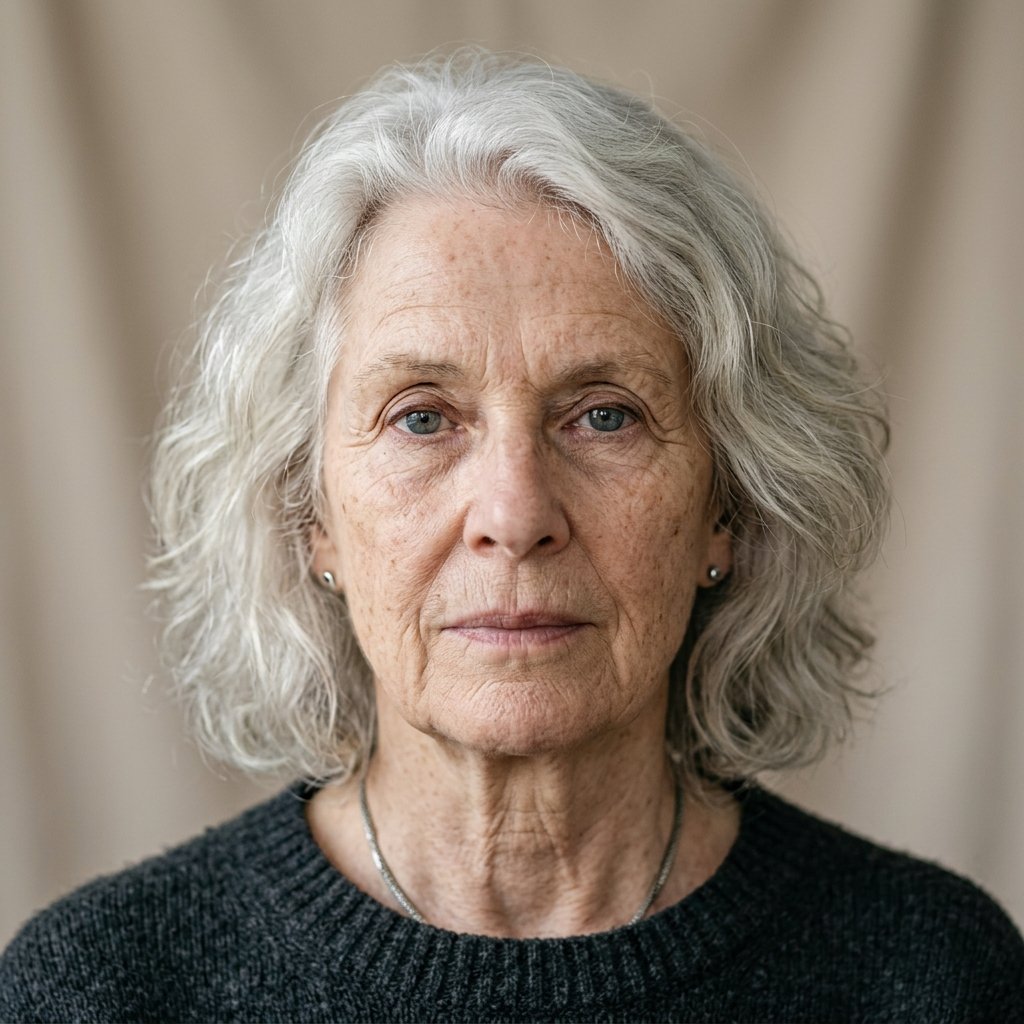
On my 70th birthday, I ironed my best blue dress, set the dining table for four, and waited by the window until the candles melted down into little pools of wax.
No one came.
Not David, my oldest, the surgeon in the city. Not Karen, my daughter, who married into a family with a lake house and a boat. Not Tommy, my baby, who once fell asleep in my arms every single night for six years.
I kept the roast warm in the oven for three hours. I told myself the traffic was bad. I told myself they were just running late.
By nine o’clock, I stopped lying to myself.
My name is Margaret Whitfield, and I have lived in the same small house on Maple Street in Cedar Falls for forty-one years.
My husband, Robert, passed away when the children were still small. Tommy was barely two. I remember standing at his grave, holding three little hands, and making a promise I intended to keep with every breath in my body.
I promised them they would never go without.
So I went to work. I cleaned houses before the sun came up. I took in laundry that other families didn’t want to touch. And at night, when my babies were finally asleep, I sat under a single lamp and sewed dresses for the fine ladies in town until my fingers cracked and bled.
I never told the children how tired I was. A mother learns to smile through exhaustion the way other people learn to breathe.
There were winters when I wore the same thin coat year after year so that David could have his textbooks. There were nights I told them I wasn’t hungry, just so there would be enough on their plates.
I want you to understand something. I never once resented a moment of it. Every sacrifice felt like love. Every skipped meal felt like a gift.
David became a doctor. I cried in the back row at his graduation because I couldn’t afford a proper seat, but I have never been prouder of anything in my life.
Karen became poised and beautiful and married a man with more money than sense. Tommy struggled for a while, but even he found his footing eventually.
And somewhere along the way, without my ever noticing the exact moment, my children stopped needing me.
The phone calls came less often. Then the visits stopped altogether. Birthdays became a rushed card in the mail, and then not even that.
I told myself they were busy. Successful people are busy. I raised them to chase big lives, and they had listened.
But on that 70th birthday, sitting alone in a house that once rang with laughter, I finally let myself feel the truth I had been swallowing for years.
They had forgotten me.
I blew out the candles one by one. I wrapped the cold roast in foil and put it in the refrigerator I could barely afford to run. And I whispered into the empty room, “Maybe I gave them too much. Maybe I taught them that I would always be here, no matter what.”
I cried that night the way I hadn’t cried since Robert’s funeral. Quietly. Into a pillow. So the neighbors wouldn’t hear.
The next morning, my eyes were still swollen when I heard a knock at the front door.
My heart leapt like a foolish schoolgirl’s. They came, I thought. One of them came.
I smoothed my hair and opened the door with a hopeful smile already on my face.
It wasn’t my children.
Standing on my porch was a young man, maybe thirty, in a brown delivery uniform. He was holding a small white envelope, and his hands were trembling.
“Are you Mrs. Margaret Whitfield?” he asked.
I nodded, confused.
The young man swallowed hard. “Ma’am, you probably don’t remember me. But about twenty years ago, my mother and I were at the grocery store on Fifth Street. We were short. Real short. She didn’t have enough for milk and bread, and I was crying because I was hungry.”
I stared at him. Something stirred, far back in my memory.
“A woman behind us in line paid for our whole cart,” he went on, his voice shaking. “She didn’t make a show of it. She just told my mother, ‘Pass it on someday, when you’re able.’ And then she left before my mother could even ask her name.”
I remembered.
It had been such a small thing. I had barely had the money myself. But that little boy’s tears had reminded me so much of Tommy that I couldn’t just stand there and do nothing.
I had forgotten it entirely. It was just a Tuesday afternoon and a few dollars I could scarcely spare.
“That was you,” he said, tears now sliding down his cheeks. “My mother spent years looking for you. She wanted to say thank you. Her name was Ruth Callahan.”
My breath caught. “Was?”
He nodded slowly. “She passed away last spring. But before she went, she made me promise something.”
He held out the envelope. My old hands shook as I took it.
Inside was not a card. Inside was a set of keys and a folded letter written in a careful, spidery hand.
“My mother built up a little bakery over the years,” the young man explained. “The one on Willow Street, the one with the blue awning. It did well. Better than she ever dreamed. And she always said none of it would have happened if a stranger hadn’t shown her kindness when she had nothing.”
I opened the letter with trembling fingers.
It read: “Dear kind stranger. I never learned your name, but I have carried your face in my heart for twenty years. You saved us on the day I nearly gave up. I promised I would pass it on, and I always keep my promises. There is a cottage by Miller’s Lake. It is small, but the door is yellow, and the mornings there are the most beautiful thing you will ever see. It is yours now, free and clear. Please. Let an old woman’s gratitude carry you home. With all my love, Ruth.”
I had to sit down right there on my own front step.
The young man, whose name was Samuel, sat beside me and held my hand while I wept. But this time, the tears were different. These were not tears of being forgotten.
These were tears of being seen.
“My mother said something else,” Samuel added quietly. “She said the kindest woman in Cedar Falls should never have to spend her last years alone.”
Two weeks later, I moved into the cottage with the yellow door.
I left behind the house on Maple Street, with all its silence and all its ghosts. I took only what mattered. My sewing box. Robert’s photograph. And the last of my hope, which I had almost thrown away.
That first morning by Miller’s Lake, I woke up not to an alarm clock, but to sunlight pouring gold across the water and the sound of birds I hadn’t heard in decades.
For the first time in my adult life, I had nowhere I needed to be and no one I needed to serve.
I didn’t know what to do with myself at first. When you have spent fifty years living for other people, freedom feels almost frightening.
But slowly, I learned.
I planted a garden. Tomatoes and basil and a stubborn little row of sunflowers that grew taller than me by August.
I bought a cheap set of watercolors and taught myself to paint the sunrise over the lake, badly at first, then a little less badly.
I met my neighbors. There was Harold, a retired schoolteacher who fixed my leaky faucet and stayed for coffee. There was Dorothy, a widow like me, who laughed so loud it startled the ducks.
They became my family. The family I chose, and the family that chose me back.
Samuel visited every Sunday. He brought fresh bread from the bakery and called me Grandma Margaret, and I loved him like my own.
Months passed before my children called.
David was the first. “Mom,” he said, in that smooth voice he used on his patients, “I heard you have a lake house now. A real property.”
Karen called the next day, suddenly warm, suddenly interested. She wanted to know how many bedrooms it had. She thought the grandchildren might enjoy summers there.
And there it was. The truth, laid bare at last.
They had not come for my birthday when I had nothing. But they came running the moment they thought I had something.
I want to tell you that I was angry. But I wasn’t, not really. I was just tired in a way that finally felt peaceful.
I told them, gently, that the cottage was small, and that it was mine, and that they were welcome to visit any Sunday, the same as anyone else who loved me.
They stopped calling after that.
And do you know what? I made my peace with it.
I forgave my children, though they never once asked me to. I forgave them for the missed birthdays, the silent phone, the years I spent waiting by windows.
That forgiveness was never for them. It was for me. Because carrying that hurt was a weight I was finally too free to keep holding.
I am 72 years old now. My hands are still marked from all those years of sewing and scrubbing. But they are gentle hands, and they have loved well.
Every single morning, I make myself a cup of tea and I sit on the little dock by the water. I watch the sun come up over Miller’s Lake, and I say a quiet thank you.
Thank you for the small kindness I once gave without a second thought. Thank you for the stranger who never forgot it. Thank you for teaching me, so late in life, what my worth truly was.
Because here is what I learned, and what I would tell any mother who feels invisible tonight.
Your value was never in whether they remembered your birthday. It was never in whether the phone rang.
Every bit of goodness you pour into this world settles somewhere. Sometimes it comes back to you from your own children. And sometimes, when they forget, it comes home through a stranger’s grateful heart, carrying you the rest of the way.
I gave my whole life away thinking love was measured by sacrifice.
And in the end, it was a few dollars for milk and bread, offered to a crying child two decades ago, that gave me back my life.
I am not bitter. I am not lonely.
I am free, and I am loved, and I am finally, deeply happy.
Have you ever given everything to the people you love, only to be forgotten by them? And has kindness ever found its way back to you from a place you never expected? Please, share your story with me. I promise to read every one.