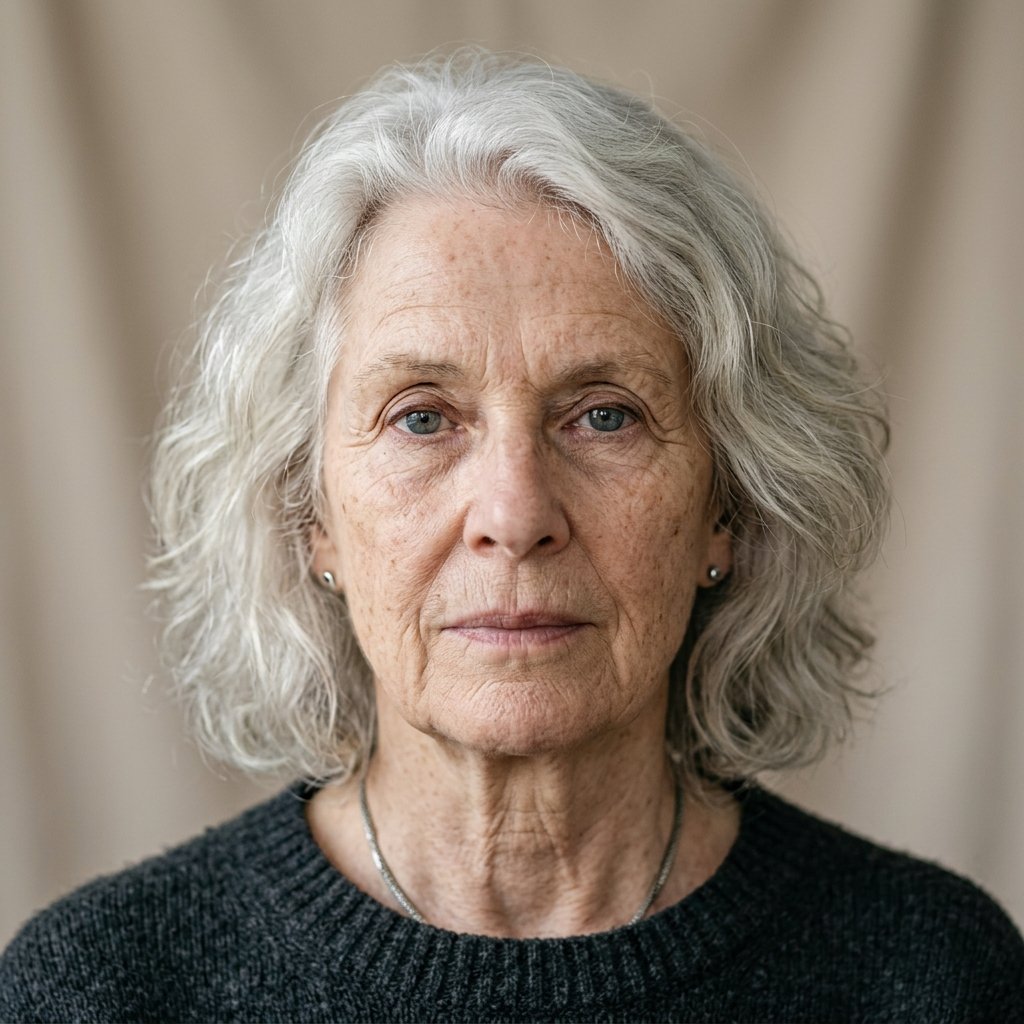
My name is Walter Bishop, and for thirty-one years I was the man mothers in Harmony, Kansas, pointed to when they warned their children how not to end up.
I wasn’t born that way. Nobody is.
I was born the oldest son of a kind carpenter and a woman who sang hymns while she washed dishes. I had a little brother, Daniel, who followed me everywhere on legs too short to keep up.
Back then, I was his whole world. He wanted to walk like me, talk like me, be brave like me.
I have spent most of my life ashamed of the man that little boy admired.
It started slow, the way most ruin does. A few card games in the back of Merle’s gas station. A little money won, which felt like magic.
Then a lot of money lost, which felt like a knife.
By the time I was twenty-four, I owed more than I could ever repay to men who did not accept apologies. I hid it from everyone. My father thought I was saving to buy the shop next to his. My mother bragged about me at church.
I let them believe it, because the truth would have broken them.
Then the worst thing happened. Our mother collapsed in the kitchen one gray November morning.
Her heart, the doctors said. She needed surgery, and soon, or we would lose her before Christmas.
My father had saved for years. The whole amount sat in a coffee tin on the top shelf of the pantry, hidden behind the flour. He showed it to me with tears in his eyes and said, “Thank the Lord we have it, son. We can save your mother.”
I knew right then what I was going to do. I have never forgiven myself for how quickly I knew.
That night, while my family slept and my mother’s breath rattled down the hall, I took the tin. Every dollar.
I told myself a lie so smooth it almost sounded like a plan. I would win it back. I would double it. I would return the money by morning and be a hero instead of a thief.
I drove three hours to a card room off the interstate and lost all of it before the sun came up.
Every penny meant to save my mother’s life. Gone in the time it takes to make a foolish man feel important.
I did not go home. I could not.
I sat in my truck in a parking lot and shook for hours. Then I did the only thing my cowardice allowed. I kept driving.
I left a note that said only three words. “I am sorry.” No name. No promise. Nothing.
I abandoned my dying mother, my grieving father, and my nineteen-year-old brother to clean up a mess I made.
Daniel dropped out of college that same week. He took a job at the lumber yard in the mornings and another washing dishes at night.
He walked into the hospital, a boy of nineteen, and begged the doctors for a payment plan. He signed papers that chained him to debt for a decade.
And somehow, through his sweat and his tears and his refusal to give up, he saved her.
Our mother lived. I did not learn that for a long time, because I had cut myself off from everyone who ever loved me.
I moved from town to town, taking work where I could, sleeping in boarding houses and the beds of borrowed friends. I drank to forget my mother’s face. I gambled to feel the only thing that ever quieted my mind.
And I sank lower than I thought a man could sink.
Rock bottom came on a cold morning in a bus station in Denver. I had eleven dollars, no coat, and no reason to see another sunrise.
An old man sat down beside me, a stranger with a paper cup of coffee. He looked at me for a long moment and said something I have never forgotten.
“Son, the past is heavy, but you don’t have to carry it standing still. Pick a direction and start walking toward the man you wish you’d been.”
Then he gave me his coffee and left. I never saw him again.
Something cracked open in me that day. Not all at once. Change never comes all at once.
I found a church basement where broken men sat in folding chairs and told the truth about themselves. I said my name out loud for the first time in years. “I’m Walter, and I did something unforgivable.”
Nobody flinched. They just nodded, because most of them carried something too.
I got sober one day at a time. I stayed sober one day at a time. Some days that was the only victory I had, and I learned to be grateful for it.
I found work with a furniture maker, an patient craftsman who taught me to shape wood with my hands. There was something healing in building things instead of destroying them.
After a few years, I opened my own small shop. I made honest tables and honest chairs for honest people, and I signed each one with a burned-in mark.
But no matter how clean my life became, one debt never left me. Not the money. The people.
So I began to do the only thing I could. Every single month, on the first of the month, I mailed an envelope to my brother Daniel back in Harmony.
Inside was cash. As much as I could spare, sometimes fifty dollars, sometimes five hundred in a good season.
No letter. No return address. No name. I did not deserve to be thanked, and I could not bear to be turned away.
I told myself it was repayment for the tin. But the truth is, it was a prayer. A way of touching my family without the right to speak to them.
Thirty-one years of envelopes. Thirty-one years of imagining Daniel’s face, older now, wondering who kept sending money into the dark.
I never expected anything back. I only wanted to make something right in the quietest way I knew.
Then, last spring, a letter found me. It had been forwarded through three old addresses before it reached my shop.
My hands knew the handwriting before my eyes did. It was Daniel’s.
Inside was a single folded page. “Walter. Mom passed away peacefully in her sleep. She was eighty-eight. The funeral is Sunday at the old church. She would want you there. I would too.”
I sat down on the sawdust floor of my shop and wept until I had nothing left.
She had lived. All those years, my mother had lived, and I had been too much of a coward to knock on the door and see her face one more time.
Now I never would.
I drove through the night to Harmony. Every mile felt like a mile back into the man I used to be, and I prayed the whole way that God had made me someone new.
When I walked into that little white church, the organ music stopped. Every head turned.
These were the people I had failed. Neighbors, cousins, the faces of my childhood, all staring at the ghost who finally came home.
At the front stood my brother. Gray now, stooped a little, his eyes lined with the years of the burden I left him.
Daniel looked at me for a long time. I opened my mouth to apologize for a lifetime, and no sound came out.
My legs shook. I was sure he would tell me to leave. I would have deserved it.
Instead, he bent down beside the pew and lifted up an old shoebox. It was worn soft at the corners, the lid held on with a rubber band gone brittle with age.
He carried it to me with both hands, the way you carry something precious.
He pulled off the lid. Inside were envelopes. Hundreds of them. Every envelope I had mailed for thirty-one years.
Every single one. Unopened.
I could not understand it. I asked him why he had never spent the money I sent to help him.
Daniel’s voice broke as he answered. “I recognized your handwriting on the very first one, Walter. The way you make your sevens. I knew it was you the whole time.”
He pressed the box into my arms.
“I didn’t keep them because I needed the money. I kept them because they were proof. Proof that you were still out there. Proof that my big brother hadn’t forgotten us. I was waiting.”
I asked him, waiting for what.
“For you to come home,” he said, “so I could tell you to your face. I forgave you a long time ago. And so did Mom. She prayed for you every single night for thirty-one years. Every night, Walter. She never once stopped believing you would come back.”
My knees gave out, and my brother caught me the way I once caught him when he was small.
We held each other in front of that whole church and cried like the two little boys we used to be, before money and shame and pride tore us apart.
That afternoon, we buried our mother side by side, two brothers standing shoulder to shoulder for the first time in three decades.
When the last shovel of earth was laid, Daniel handed me the shoebox again and said, “Now you can help me use it. Together. The way it should have always been.”
I have thought about that old man in the bus station many times since. The one who told me to start walking toward the man I wished I’d been.
I finally arrived. It only took thirty-one years and a mother’s stubborn love that outlived every wrong thing I ever did.
Here is what I know now, as an old man myself. A mistake does not have to be the final word on who you are.
We are not the worst thing we ever did. We are what we choose to build afterward.
And forgiveness, real forgiveness, is not something you earn by being perfect. It is a gift, given freely, waiting patiently for you to be brave enough to come home and receive it.
I spent most of my life believing I was too broken to be loved. Turns out, love had been sitting in an old shoebox the whole time, waiting for me to open the lid.