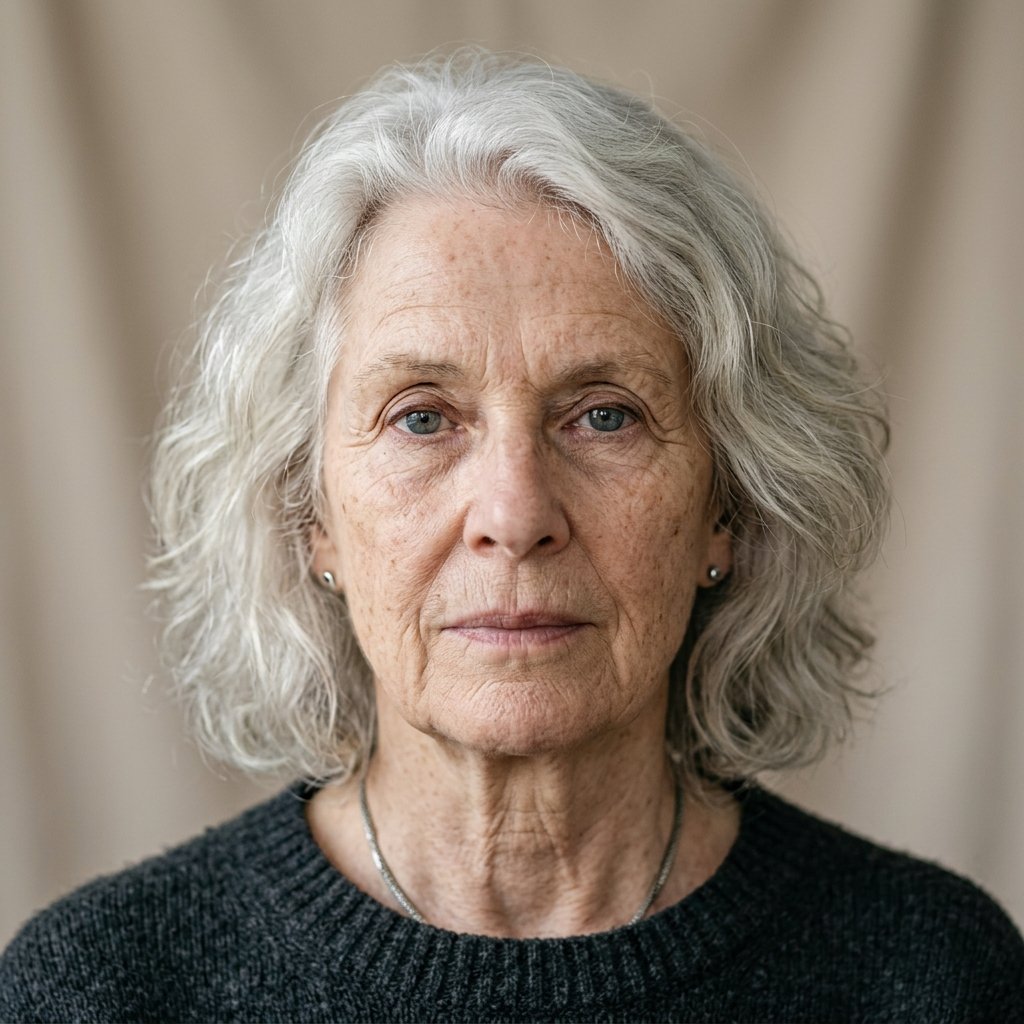
The night my husband Thomas passed away, I had exactly eleven dollars folded inside my purse and three sleeping children in the next room.
I sat at our little kitchen table in Millbrook, Ohio, under a bulb that flickered like it too was about to give up.
And I counted those bills. Over and over. As if the number might somehow grow if I only stared at it long enough.
It never did.
Thomas had been a good man. A carpenter with rough hands and the softest heart I have ever known.
He built our front porch with his own two hands. He built the kitchen shelves. He built the crib that each of our three babies slept in.
The winter he got sick, he kept telling me not to worry.
‘We’ve got each other, Ellie,’ he’d whisper. ‘That’s more than most folks ever get.’
But the cough turned into something the doctors used long words for. And one gray February morning, before the frost had even left the windows, he was simply gone.
I was thirty-four years old. A widow. And I had no earthly idea how I was going to feed my children come spring.
Daniel was ten. Serious and quiet, always watching me with those careful brown eyes of his.
Grace was seven, all wild curls and endless questions.
And little Sam was barely four, still padding into my room at night to ask when Daddy was coming home.
I never did find the right words for him. I’m not sure I ever really did.
The first thing poverty teaches you is that grief is a luxury you simply cannot afford.
There was no time to lie in bed and weep. The rent was due. The furnace needed oil. And three small faces looked up at me every single morning, hungry and trusting and mine.
So I went to work.
I took the dawn shift at Dolan’s Diner over on Main Street, pouring coffee before the sun ever cleared the rooftops.
My feet ached inside shoes I had already resoled twice. But the tips were real money, and real money was all that stood between my children and going without.
In the afternoons, I cleaned houses for the well-to-do families up on Cedar Hill.
I scrubbed their floors on my knees. I dusted long shelves of framed photographs from vacations I knew I would never take.
And at night, after the children were finally asleep, I sat back down at that same kitchen table with a needle and thread, mending clothes for anyone in town who’d pay me a dollar a hem.
For nearly ten years, I don’t believe I slept more than four hours a night.
Money was always the enemy. I stretched every dollar until it near about screamed.
We ate a great deal of beans and cornbread. I cut down Thomas’s old flannel shirts into school clothes for the boys.
And when Grace outgrew her only pair of shoes, I quietly skipped my own supper for a week so I could buy her new ones.
I never once let the children see how thin I had grown. I’d tell them I had eaten at the diner.
It was a lie. But it was a mother’s lie, and I have to believe the good Lord forgives those.
I remember one winter in particular. The furnace gave out three days before Christmas, and I didn’t have the money to fix it.
So we all slept in the front room, the four of us, huddled together under every blanket and coat we owned, watching our breath rise in the freezing dark.
Daniel held Sam to keep him warm. Grace pressed close against my side. And I stayed awake all night, feeding scraps of wood into the little fireplace, praying the sun would hurry.
That Christmas morning, there were no presents under the tree. Not a single one.
I sat my children down and I told them the truth, because I never wanted them to grow up thinking honesty was something to be ashamed of.
‘I don’t have gifts for you this year,’ I said, and my voice cracked right down the middle. ‘But I promise you, I will make it up to you someday.’
And do you know what my Daniel did? That ten-year-old boy took my hand and said, ‘Mom, you’re the present. We don’t need anything else.’
I have carried those words in my heart for thirty years.
There were small mercies too, scattered through those hard years like coins found on the sidewalk.
There was an old farmer named Walter who came into Dolan’s every morning for black coffee and two eggs.
He never said much. But every single day he left a tip far larger than his bill, tucked under the saucer where he thought I wouldn’t notice until he’d gone.
One morning I chased him out to the parking lot to tell him he’d left too much.
He just tipped his hat and said, ‘My late wife raised four young ones on her own, ma’am. I never got the chance to thank her proper. So I’m thanking you instead.’
I have thought about Walter more times than I could ever count. He taught me that kindness doesn’t always announce itself. Sometimes it just leaves a little extra under the saucer and walks away.
But there were harder days too. Days I’m not proud to remember.
One afternoon up on Cedar Hill, the woman whose house I cleaned found a small water spot on a glass she’d left out.
She held it up in front of her dinner guests and said, loud enough for the whole room to hear, ‘This is what happens when you hire help who never learned any better.’
I stood there in my apron, my face burning, and I said nothing. I needed that job far too badly to lose it over my pride.
I walked the two miles home that evening and I cried the whole way. Not for myself. But because I feared I was failing to give my children a life where no one would ever look at them that way.
That was the closest I ever came to giving up.
I sat on the edge of my bed and I looked up at the ceiling and I said, ‘Thomas, I don’t know if I can do this. I don’t know if I’m strong enough.’
And in the quiet of that room, I swear I could almost hear him answer.
‘You already are, Ellie. You always were.’
So the next morning, I got up. I tied my apron. And I went again.
Because they were mine. And that, I decided, would always be reason enough.
The hardest moment of all came when Daniel was fifteen.
His high school held an awards evening, and he had won a certificate in mathematics. I was so proud I could have burst.
I ironed my one good dress and I walked two miles through the cold to that auditorium, wearing my winter coat, the brown one with the frayed cuffs that I’d owned since before Daniel was even born.
When I finally spotted him in the crowd, he looked at me. Then he looked at my coat. And something in his young face just fell.
Walking home afterward, he was silent for a long while. Then he said, so quietly I almost missed it, ‘Mom, why do you always wear that old thing? All the other mothers had such nice coats.’
The words landed like a slap I never saw coming.
I didn’t scold him. I just pulled that coat a little tighter around my shoulders and I said, ‘This coat kept your father warm once, too. It’s got more love stitched into it than any new one ever could.’
He didn’t answer me. But I saw the shame move across his face, and I understood, even then, that it wasn’t shame of me.
It was the shame of a boy just beginning to grasp what his mother had gone without.
I cried into my pillow that night. Not because of what he’d said. But because I wished, with everything in me, that I could have given my children a life where they never had to feel like less than anyone else.
Things got harder before they ever got better, the way they so often do.
Daniel started working weekends at the hardware store. Grace babysat for every family on our block. And even Sam, the summer he turned twelve, went door to door offering to mow lawns for pocket change.
We became a team, the four of us. Held together with love and worn-out thread.
Every night before bed, I told them the very same three things.
‘Work honest. Be kind. And never, ever forget where you came from.’
I said it so many times they used to roll their eyes and say it back to me before I could finish.
But they listened. Oh, how they listened.
I watched Grace grow into a young woman who carried other people’s burdens as though they were her own. When a child in her class came to school hungry, she fed them from her own lunch. She had learned that from watching me, though I never once had to teach it with words.
The years went by faster than I ever imagined they could.
Daniel was the first to fly. He earned a scholarship, then another on top of it, and one bright autumn afternoon I watched my boy walk across a stage in a cap and gown to become the first doctor our family had ever known.
I sat in the very back row in a brand new blue dress, the first new dress I had bought myself in twenty years, and I wept into my handkerchief while kind strangers smiled at me.
Grace became a schoolteacher. The kind of teacher that children remember for the rest of their lives.
She told me once, ‘Mama, I want to be the person I needed when I was a scared little girl who’d just lost her daddy.’
And Sam, my baby, the one who used to ask when Daddy was coming home, grew up and opened his own construction company.
He builds houses now. Real houses, with strong porches and sturdy shelves. Just exactly like his father did.
I thought, by then, that my old heart had already felt everything a heart could possibly feel.
I was wrong.
On my sixtieth birthday, my three grown children took me to dinner at a restaurant finer than any I had ever set foot inside.
I felt so out of place, sitting there in my good dress and my sensible shoes, surrounded by crystal glasses and soft music.
But my children sat all around me, grown and glowing and healthy, and I thought my chest might just split open from the fullness of it.
Then Daniel stood up and gently tapped his glass with his spoon.
He reached down and pulled something from a bag beside his chair. It was a coat. A beautiful, soft, cream-colored winter coat.
‘Mom,’ he said, and I could hear his voice already shaking, ‘do you remember the night I told you that your coat embarrassed me?’
I nodded slowly. I had never once forgotten it.
‘I have spent my entire life ashamed of those words,’ he said. ‘You wore that same old coat for twenty years so that I could have everything I ever needed. And I was too young and too foolish to understand what I was seeing.’
The whole restaurant had gone quiet by then. Every table was watching.
‘So tonight,’ he went on, ‘on behalf of Grace and Sam and myself, I want to finally give you the coat you should have had a very long time ago.’
‘Not because the old one was never good enough, Mom. But because you always, always were.’
I could not speak a single word. I just reached out and took my son’s hand.
And then all three of my children were up out of their chairs and gathered around me, and we held each other and cried right there among a room full of strangers.
Not one person looked away. Some of them were crying too.
That night, my son draped that gorgeous coat over my shoulders and drove me home through the quiet streets of Millbrook.
But do you know what I did, once I was alone in my little house?
I hung that beautiful new coat ever so carefully in the closet. And then I reached for my old brown coat, the one with the frayed cuffs, and I held it against my chest one last time.
Because that old coat and I, we had been through everything together.
The freezing mornings. The empty cupboards. The Christmas with no presents. The silent prayers whispered into the dark.
It had walked beside me through the very hardest years of my life. And not once, in all that time, had it ever let me down.
I keep them both now, side by side in that same closet. The old and the new.
One of them reminds me of just how far my children have traveled in this life.
And the other reminds me of exactly what it cost to carry them there.
Folks sometimes ask me how I ever managed it. How one woman with eleven dollars to her name raised three children who turned out so fine.
And the honest truth is, I truly don’t know.
I just got up every single morning. I tied my apron. And I loved those children with everything I had in me, even on the days I felt I had nothing left to give.
Maybe that’s the secret that nobody ever tells you.
Love isn’t the grand gestures or the fine gifts. Love is the showing up. Over and over again, when no one is watching, when there’s nothing in it for you but tired feet and an aching back and another long day.
Thomas was right, all those years ago, sitting sick in our bed.
We had each other. And in the end, that truly was more than most folks ever get.
Sometimes, on quiet evenings, I sit by the window with a cup of tea and I talk to Thomas, the way I always have. I tell him about the grandchildren now. I tell him our Daniel saves lives, and Grace shapes them, and Sam builds the very roofs they sleep under. And I like to believe, wherever he is, that he’s smiling that soft smile of his.
I’m an old woman now. My hands have gone wrinkled and my hair has turned to silver.
But when I look upon the family that I raised, I don’t see the poverty. I don’t see the sleepless nights.
I see a promise I made to a dying man, and kept.
I see three children who learned that dignity will always be worth more than money.
And I see a worn brown coat, hanging quietly in the closet, that carried the four of us all the way home.