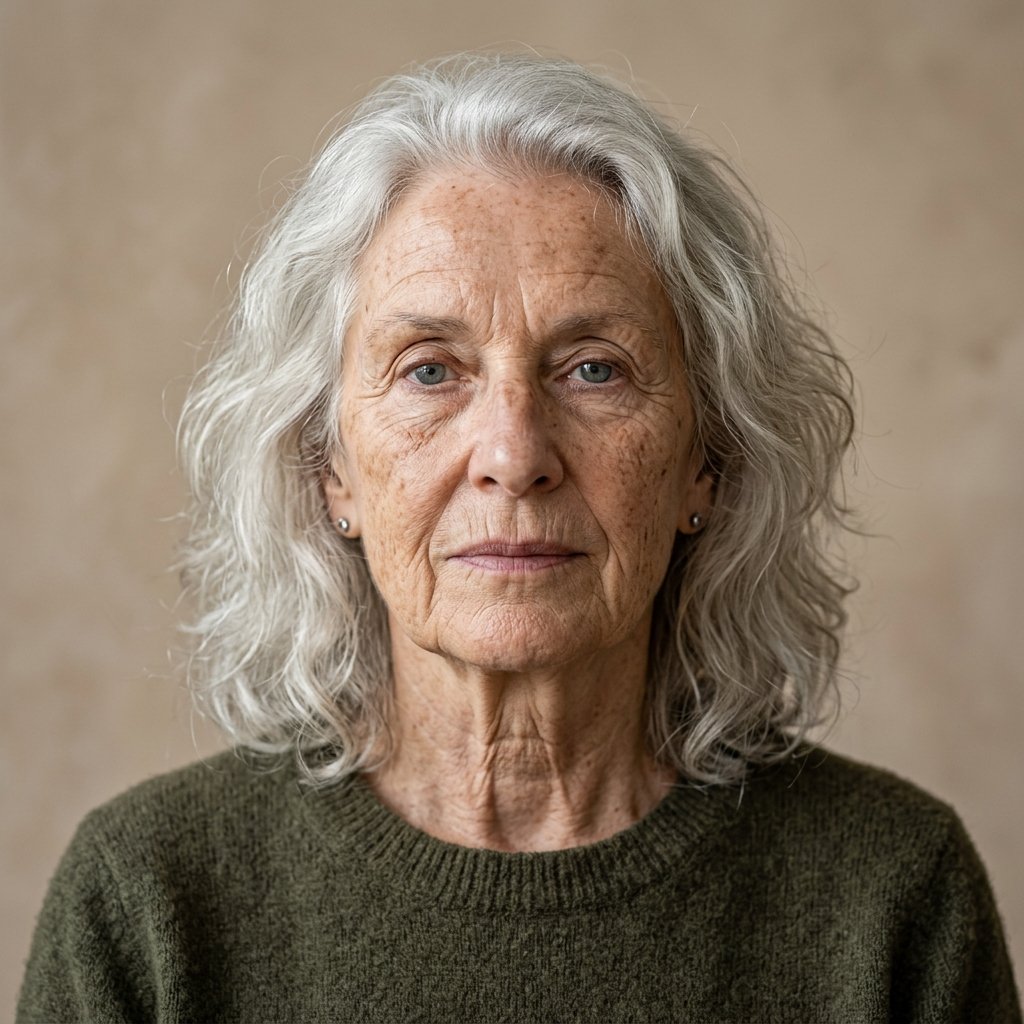
The last thing my wife ever asked me was to promise I would take care of myself. I broke that promise the very day we buried her.
My name is Thomas Bennett. I am 62 years old, and I live in a small house on Maple Street in Millbrook, Ohio.
I built that house with my own two hands, back when those hands still meant something. Back when I was a man people could count on.
Eleanor and I moved in the summer of 1989. She planted rose bushes along the front walk and hung little lace curtains in every window.
For thirty-one years, that house was full of laughter, burnt Sunday roasts, and the sound of my daughter Sarah practicing piano in the corner.
Then the cancer came. And it took Eleanor slowly, cruelly, one breath at a time.
I sat by her hospital bed for months. I held her hand until it went cold.
When she was gone, I looked around at that empty house and I did not know how to be a person anymore.
So I did the most shameful thing a man can do. I ran.
Not with my feet. With a bottle.
The first drink dulled the ache just enough to breathe. The second one let me sleep. By the end of that first year, I could not remember what it felt like to be sober.
I told myself I was just grieving. I told myself I would stop once the pain faded. But the pain never faded, and neither did the drinking.
I stopped answering the phone. I stopped going to church. I let the roses die.
My carpentry business, the one I had spent forty years building, crumbled within eighteen months. Clients stopped calling when I showed up smelling of whiskey with shaking hands.
My friends tried, at first. They came by with casseroles and gentle words. I turned every one of them away.
But the thing I lost that broke me most was my daughter.
Sarah begged me to get help. She cried on that very porch, pleading with me to see what I was doing to myself.
One Thanksgiving, I showed up to her home barely able to walk. I knocked over the turkey. I frightened her children.
She drove me home in silence. At my door she turned to me with tears streaming down her face and said, “Dad, I can’t watch you die. I just can’t.”
That was the last time she spoke to me for two years.
I told myself I deserved the silence. I told myself I was already gone, just a ghost waiting for his body to catch up.
My house grew filthy. The lace curtains yellowed. Dust settled on Eleanor’s piano like snow that never melted.
I stopped shaving. I stopped eating proper meals. Some mornings I would wake on the kitchen floor with no memory of how I got there.
I truly believed my story was already finished. That the last good chapter had been written years ago, and all that remained was the slow, quiet ending.
And then came the night that changed everything.
It was late October. A storm had rolled in off the lake, thunder shaking the windows, rain hammering the roof like fists.
I was sitting in my recliner with a glass in my hand when I heard it. A knock. Small. Timid. Barely audible over the rain.
At first I thought I imagined it. Who would come to my door at midnight in a storm?
Then it came again, louder. I hauled myself up, stumbled to the door, and pulled it open.
My heart stopped.
There on my porch stood my daughter Sarah, drenched to the bone, her mascara running in black rivers down her cheeks.
And beside her, clutching a tiny pink suitcase in both hands, stood my seven-year-old granddaughter Lily.
I had not seen either of them in two years. Lily had grown so much I barely recognized her.
Sarah looked at me, and I saw something in her eyes I did not expect. Not anger. Not disgust. Just pure, desperate exhaustion.
“Dad,” she whispered, her voice cracking. “I have nobody else.”
She told me she had to get to the hospital that very night. Her husband was away for work, hours from home. There was no time to find anyone.
“Just for a few days,” she said. “Please. I know I have no right to ask. But you’re all I have left tonight.”
Then she looked me dead in the eyes and said the words that shattered whatever was left of me.
“Please, Dad. Please don’t make me regret this.”
I wanted to say I could not do it. That I was not fit to care for a goldfish, let alone a child.
But then little Lily looked up at me with Eleanor’s eyes. The exact same warm brown eyes I had held onto until the very end.
And she said, “Hi, Grandpa. Mommy says you build things.”
Something in my chest cracked open.
I knelt down, and I said, “Yes, sweetheart. Grandpa builds things. Come inside where it’s dry.”
Sarah squeezed my hand once, mouthed thank you, and disappeared into the storm.
And there I stood, a broken drunk, suddenly responsible for the most precious thing in the world.
I cleaned the guest room as best I could. I found an old quilt Eleanor had sewn and tucked Lily beneath it.
She fell asleep almost instantly, one small hand curled beneath her cheek.
I sat on the edge of the bed and watched her breathe. And for the first time in three years, I felt something other than emptiness.
I felt terrified. Because I knew what was sitting on my kitchen counter.
A half-empty bottle. Calling to me the way it had every single night.
I walked into the kitchen. My hands were already trembling, my body already begging.
I picked up the bottle. I held it for a long, long time.
Then I thought about that little girl sleeping under Eleanor’s quilt. I thought about what would happen if she woke in the night and found her grandfather passed out on the floor.
And I walked to the sink, unscrewed the cap, and poured every last drop down the drain.
I searched the whole house that night. Every cabinet, every hiding spot, every bottle I had stashed away. I emptied them all.
Then I sat at the kitchen table and shook until the sun came up.
The next morning, Lily padded into the kitchen in her socks. I made her scrambled eggs, the only thing I remembered how to cook.
She ate every bite. Then she pulled a crayon and paper from her little suitcase and got to work.
When she finished, she slid the drawing across the table to me.
It was two stick figures holding hands beneath a big yellow sun. A tall one and a small one.
Above them, in wobbly seven-year-old letters, she had written one word. “Grandpa.”
I stood up, walked to the bathroom, and I wept like I had not wept since the day Eleanor died.
Those next few days were the hardest of my entire life.
My body screamed for the poison it had grown to depend on. I sweated through my shirts. My hands would not stop shaking.
But every single time I wanted to give up, I heard that little girl laughing in the next room.
We read books together. We baked lopsided cookies. I taught her how to hammer a nail into a scrap of wood.
What was meant to be a few days turned into two weeks, as Sarah’s recovery took longer than expected.
And somewhere in those two weeks, I remembered who I used to be.
When Sarah finally came to collect Lily, she stepped inside and stopped cold.
The house was clean. The dishes were done. And I was standing there, shaved, clear-eyed, and sober.
She did not say anything. She just looked at me for a long moment, and I saw a flicker of the old trust returning to her face.
After they left, the house was silent again. And that silence nearly pulled me back under.
But this time, I did not run to the bottle. This time, I ran to the old Methodist church downtown.
There was a support group that met in the basement on Tuesday nights. I had driven past it a hundred times and looked away in shame.
That night, I walked in. I sat in a circle of tired, broken strangers.
And when it was my turn, I said the hardest words of my life. “My name is Thomas, and I need help.”
The road was long. I stumbled more than once. But I kept getting back up, because I finally had a reason to.
I started taking on small carpentry jobs again. Fixing a fence here, building a bookshelf there.
Slowly, the calls started coming back. Slowly, so did the man I had buried alongside my wife.
One year after that stormy night, I stood in Sarah’s kitchen, one full year sober, holding a chocolate cake I had baked entirely by myself.
My daughter wrapped her arms around me and cried into my shoulder, the way she used to when she was small.
“Welcome back, Dad,” she whispered. “I missed you so much.”
Then she handed me an old shoebox, its corners worn soft with age.
“Mom wanted you to have these,” she said quietly. “She gave them to me before she passed. She said to wait until you were ready.”
Inside were letters. Dozens of them, folded neatly, each one written in Eleanor’s beautiful handwriting.
Letters she had written in her final weeks, all addressed to me. Letters I had been too drunk to ever open.
With trembling hands, I unfolded the first one.
It read, “My darling Thomas. If you are reading this, then I am already gone. But please, my love, do not follow me into the dark. Live. Live for the both of us. The world still needs your good, gentle heart.”
I sank into a chair and read every single letter, tears falling onto the pages.
In one of them, she had written, “Take care of Sarah and the little ones. And take care of yourself. You promised me you would.”
I had broken that promise for three long years. But that day, sitting in my daughter’s kitchen with my granddaughter climbing into my lap, I made it again.
And this time, I intend to keep it.
I am not proud of the man I was. I carry that shame quietly, every single day.
But I am learning, slowly, to forgive him. Because he was drowning, and he simply did not know how to reach the surface.
It took the small hand of a seven-year-old girl, knocking on my door at midnight, to pull me back into the light.
Today, the roses are blooming again along my front walk. The lace curtains are clean. And Eleanor’s piano is played every Sunday when Lily comes to visit.
Sometimes the person we believe is beyond all saving is simply waiting for one small hand to reach for theirs.
And sometimes, it is never, ever too late to begin again.