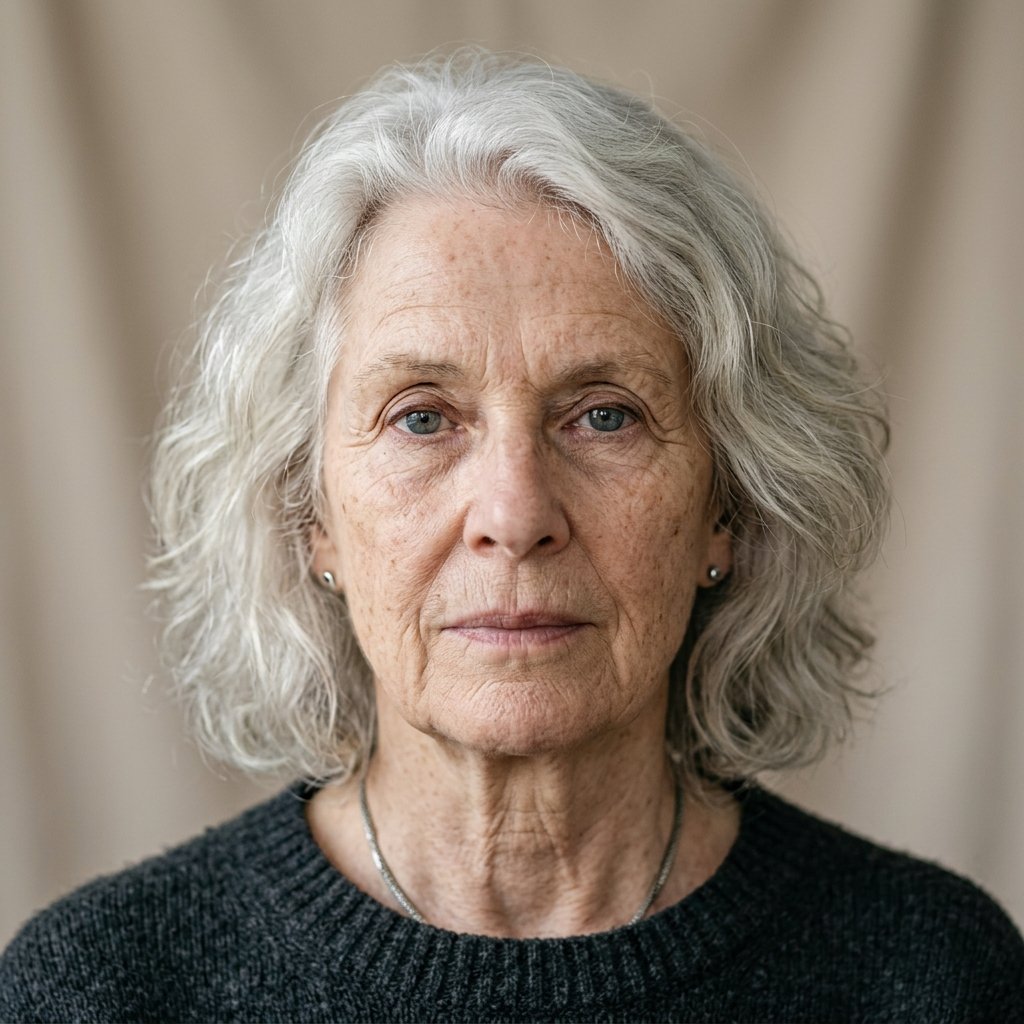
I woke up in a fog of pain and confusion, the sterile white ceiling of the hospital room swimming above me.
There was a raw, searing ache in my throat, a souvenir from the surgery I had just endured.
My thyroid, they told me, had to be removed.
I could barely swallow, and every breath felt like sandpaper.
I blinked slowly, trying to focus, when I realized I was not alone.
Edward stood at my bedside.
But he wasn’t holding my hand.
He wasn’t leaning down to kiss my forehead or whisper words of comfort.
Instead, his hands were full of papers, crisp and official, and his eyes were as cold as the January wind outside the window of St. Mary’s Hospital in Savannah, Georgia.
“You’re awake,” he said.
It wasn’t a question.
It wasn’t relief.
It was a statement, as if my consciousness was merely an inconvenience.
“Good. Sign this.”
I stared at him, my mind sluggish from the anesthesia.
“What… what is that?” I managed to croak, my voice barely a whisper.
Each word was a knife.
He didn’t flinch.
He slid the stack toward me, the corner of the top page brushing my hand.
“Divorce papers. I’ve already filled everything out. All you have to do is sign.”
The words hit me like a physical blow.
Divorce? Here? Now? I had just had surgery.
I was vulnerable, weak, my throat bandaged, my body still trembling from the trauma of the operating table.
And my husband of thirty-two years wanted me to sign away our marriage like it was a receipt at the grocery store.
I tried to gather my thoughts, but the pain was too great.
My mind drifted back to the day we met.
It was at a church picnic in Macon, Georgia, back in 1987.
I was twenty-three, wearing a yellow sundress, and he was the most handsome man I had ever seen.
He brought me a glass of sweet tea and said, “You look like an angel dropped straight from heaven.”
I laughed, blushed, and gave him my number.
We married a year later in that same church.
The first ten years were bliss.
We danced in the kitchen while the radio played old country songs.
We held hands at every Sunday service.
He used to call me his “Lily of the valley,” because my name is Lillian.
I thought we would grow old together, rocking on the porch, watching our grandchildren play.
But somewhere along the way, the music stopped.
It started small.
A missed dinner here, a forgotten anniversary there.
He started staying late at the office, coming home smelling of cigarette smoke and secrets.
When I asked, he would snap, “Don’t nag me, Lillian. I’m working for us.”
Then the tenderness dissolved completely.
He stopped looking me in the eye.
He flinched when I touched his arm.
I felt like a stranger in my own home.
Last fall, I found a lump on my neck.
At first, I ignored it, but it grew.
When the doctor said “thyroid nodule,” my heart sank.
The biopsy was inconclusive, but they recommended surgery to be safe.
I was terrified, but I thought Edward would be my rock.
Instead, he seemed annoyed by my appointments, my worry, my weakness.
“You’ll be fine,” he muttered without even looking up from his newspaper.
The morning of the surgery, he dropped me at the hospital entrance and said he had a meeting.
“I’ll check in later,” he promised.
I walked into that cold building alone, clutching my purse and a tiny suitcase of toiletries.
The nurses were kind, but they couldn’t fill the void where my husband should have been.
As they wheeled me into the operating room, I remember thinking, “What happened to us?”
Now, just hours after the anesthesia wore off, I had my answer.
He had met someone else.
I looked at him, tears spilling down my cheeks, but I didn’t sob.
“Is this a joke?” I whispered, my throat burning.
He shook his head slowly, almost pityingly.
“I’m serious, Lillian. I can’t keep living like this. You’re always sick, always weak. I need someone vibrant, someone who makes me feel alive. Her name is Danielle. She’s done hiding, and so am I.”
His calmness was chilling.
It was as if he were canceling a subscription, not destroying a marriage of three decades.
I looked at the papers through blurry eyes.
I saw his signature already there, bold and proud.
He had planned this for weeks, maybe months.
He had waited until I was at my physical and emotional lowest to strike.
“Where’s the pen?” I asked, my voice cracking.
He paused, caught off guard by my lack of fight.
“You… you’re really going to sign?”
“You said it yourself—it was only a matter of time,” I replied, echoing his earlier cruelty.
His mouth twitched, but he said nothing.
He reached into his jacket pocket and produced a silver ballpoint pen, the one I had given him for our twentieth anniversary.
He handed it to me, our fingers not touching.
My hand trembled as I took it.
I placed the tip on the line, and for a moment, I couldn’t breathe.
This was it.
The end of everything I had built.
I thought about our empty house, the garden I loved, the quilt my mother made us for our wedding.
I thought about the children we never had, the trips we never took.
All of it reduced to this stack of papers.
But a strange peace washed over me.
I had given him three decades of my life.
I had loved him with everything I had.
If this was what he wanted, I would not beg.
I scrawled my name—Lillian Grace Holloway—across the bottom of the page.
The pen scratched, and the sound felt like my heart tearing.
I pushed the papers back toward him.
“That’s it. I wish you peace, Edward.”
He stared at me for a long moment, as if expecting me to break down, to plead.
When I didn’t, something flickered in his eyes.
Was it regret? Doubt? I will never know.
“Thank you,” he said, his voice barely audible.
“Goodbye, Lillian.”
He turned on his heel with the grace of a man who had just closed a business deal.
He walked to the door, opened it, and slipped out, shutting it with an eerie gentleness.
I was alone.
The heart monitor beeped rhythmically, a cruel metronome to my grief.
I stared at the ceiling, tears streaming silently down my temples and into my ears.
My throat ached, but it was nothing compared to the hollow cavern in my chest.
I thought about all the years wasted, all the love I had poured into a man who saw me as disposable.
I thought about what I would do next—where I would go, how I would start over at fifty-five with nothing but a scar on my neck and a stack of memories.
The door clicked.
I assumed it was a nurse coming to check my vitals.
I didn’t look.
But then footsteps approached, heavier than any nurse’s soft-soled shoes.
They stopped right at my bedside.
Slowly, painfully, I turned my head.
A man stood there, tall and broad-shouldered, with salt-and-pepper hair and a face lined with concern.
He wasn’t wearing a doctor’s coat.
He was in a dark suit, well-tailored, and his hands were empty.
But it was his eyes that caught me—a deep, intense blue that seemed to hold a thousand unspoken words.
He looked at me with such tenderness that it stole my breath.
I didn’t know him.
Or at least, I didn’t think I did.
But there was something hauntingly familiar about the shape of his jaw, the way his lips pressed together.
“Lillian,” he said, his voice a low rumble.
It wasn’t a question.
He knew my name.
I tried to speak, but only a rasp came out.
He reached out and gently took my hand, cradling it like it was made of porcelain.
“You don’t remember me, do you?” he asked, a sad smile touching his lips.
I shook my head slightly, fear and confusion mingling.
How could this stranger know me? Was he a lawyer? A patient advocate? Someone from the church? But no, his gaze was too personal.
He leaned closer, and I noticed the faint scent of sandalwood.
“My name is Benjamin,” he whispered.
“Benjamin Miller. Thirty-six years ago, in a little diner outside Atlanta, you saved my life. I was just a boy then, hungry and alone, and you bought me a meal and gave me bus fare to get to my grandmother’s house. You told me that God had a plan for me, and that I should never give up.”
My heart lurched.
Memories flooded back: a rainy night, a skinny teenager with dirt on his face, sitting on a curb near the bus station.
I had stopped on my way home from work, bought him a fried chicken dinner with my tip money, and driven him to the bus depot.
I never saw him again.
“You,” I gasped, the word tearing through my raw throat.
Tears filled his eyes.
“I searched for you for years,” he said, his voice breaking.
“I promised myself if I ever made something of myself, I would find you and thank you. I built a small business, and it grew. I never forgot that night. I never forgot your kindness.”
He squeezed my hand.
“Three days ago, a private investigator I hired finally tracked you down. I found out you were here, that you were sick. I drove all night. I was coming to see you, to offer help, when I saw him leave your room. I heard what he said. I heard it all.”
I stared at him, the world tilting.
The door had been thin.
He had been outside, listening to my husband discard me like trash.
“You don’t have to worry about anything,” Benjamin said, his voice firm now.
“Not your hospital bills, not your future. I have more than enough to take care of you. You’re not alone, Lillian. You never have to be alone again.”
I couldn’t comprehend it.
The man who had just walked out of my life was the man who had promised to love me forever.
And the man who had just walked in was a stranger I had helped for one hour, three decades ago, who had come to repay a debt I never even remembered.
It was a twist so profound, so unexpected, that I felt as if God himself had reached down and rewritten my story in an instant.
Tears flowed freely down my cheeks, but this time they were not of sorrow.
They were of overwhelming, undeserved grace.
The world is full of people like Edward, who take what they want and leave when the weather turns.
But it is also full of people like Benjamin, who remember a single kindness and cling to it for a lifetime.
As I lay there, my hand enveloped in the grip of a man I had once fed and forgotten, I understood something eternal: the seeds we plant in love, no matter how small, have roots deeper than we can ever imagine.
And sometimes, when we think all is lost, they bloom right at our hospital bedside, stronger than any storm.
I looked up at Benjamin, my voice a broken whisper.
“Thank you,” I said, though the words felt far too small.
He smiled, and it was like the sun coming out after a hurricane.
“No, Lillian. Thank you. Now, let’s get you better. The rest of your life starts today.”
And in that sterile room, with the ghost of my marriage still lingering and the promise of a new beginning standing before me, I closed my eyes and let myself believe him.
Because sometimes, the greatest miracles come dressed as the people we helped long ago, walking through a door we never expected to open.
If this story touched your heart, please take a moment to Like this post, Follow our page for more inspiring true stories, and Share it with someone who needs a reminder that even the smallest kindness can change a life forever. Your support means the world to us, and it helps spread hope to those who need it most. Thank you for reading.