The last thing my father ever said to me, when I was seventeen years old, was, “If you walk out that door, Daniel, don’t you ever come back.”
So I walked. I remember the screen door slapping shut behind me, the June bugs hitting the porch light, and the terrible, thrilling certainty that I was finally free of him.
I was wrong about a lot of things that night. But mostly I was wrong about time. I thought I had all of it in the world.
I grew up in Marion, Ohio, in a small clapboard house on Maple Street with a father who believed love was something you proved through work, and never once through words.
He was a hard man. A factory foreman with cracked hands and a jaw that never seemed to unclench. He measured me by report cards and chores and the strength of my handshake, and somehow I always came up short.
The fight that ended everything was about college. I wanted to study art. He called it a waste, called me soft, said no son of his would throw away a good future chasing pictures.
I said things too. Cruel things. Things a boy says when he wants to wound the person who raised him.
And then I left.
I drove west and didn’t stop until the mountains rose up in front of me, and I made a life in Denver, Colorado, out of nothing but stubbornness and spite.
I did well, in the end. I worked in graphic design, the very thing he swore would leave me broke. I had a clean apartment, a decent car, and a small circle of friends who never knew I had a father at all.
For twenty-two years, I told myself I didn’t need them. I told myself the silence was a door I had chosen to keep closed, and that closing it had saved me.
My mother wrote sometimes. Christmas cards. A note when a neighbor passed. I answered maybe one in three, always short, always careful, never mentioning him.
He never wrote. Of course he didn’t. Pride was the only inheritance he ever passed down to me, and I had taken every ounce of it.
Then, last spring, a letter arrived that I almost didn’t open.
The return address was a hospital. Inside was a single page in handwriting I barely recognized, the loops shaky, the letters fighting to stay on the line.
It was my mother’s.
“Your father is sick, Daniel,” she had written. “The doctors have done what they can. He does not have long. He asks for you in his sleep, though he would never say it awake. Please. I am not asking for him. I am asking for me.”
I sat down at my kitchen table and read those words until they blurred. Then I put my face in my hands and wept the way I hadn’t wept since I was a boy.
All that carefully built freedom, all those years of telling myself I was fine, collapsed in an instant.
I called my office that same afternoon. I told them I needed to take leave. When they hesitated, I told them to keep the job, because I was going home either way.
I packed a single bag and drove east through the night, back across the plains I had raced away from all those years ago, watching the mountains shrink in my mirror until they were gone.
Marion looked smaller than I remembered. Everything did.
The house on Maple Street had aged the way people do, slowly and then all at once. The porch sagged in the middle. The white paint had peeled down to gray wood. The maple tree I used to climb had grown taller than the roof.
My mother met me at the door, and she had shrunk too, this woman who once seemed so tall. She held onto me and shook, and neither of us could get a single word out.
Then she led me inside, to the front room, where a chair sat by the window in the afternoon light.
And there he was.
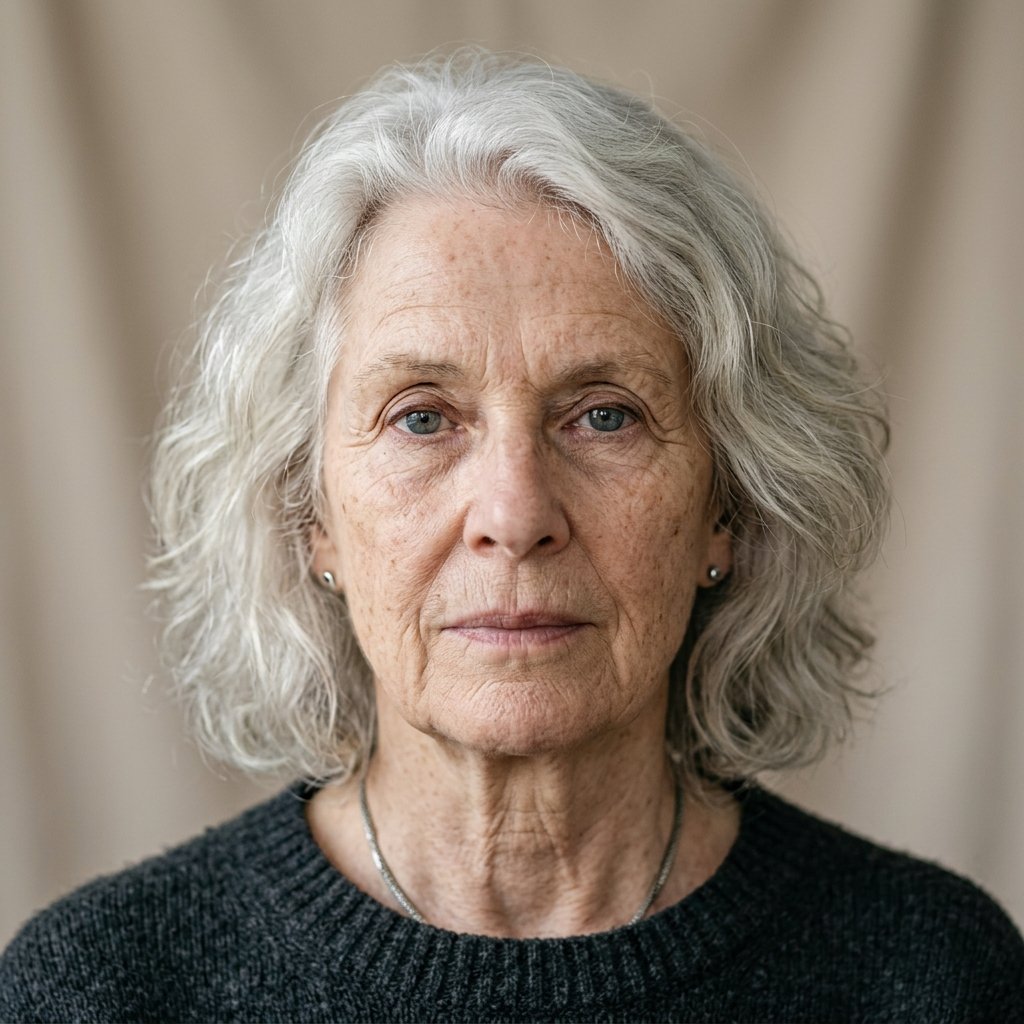
I would not have known him on the street. The man who had once filled a doorway was folded into that chair like something left out in the rain. His shoulders had caved in. His hair was white and thin. His hands, the hands I had spent my whole childhood being afraid of, trembled just holding a paper cup of water.
He looked up at me. His eyes were the only thing I recognized, the same pale blue as mine.
For a long moment, neither of us breathed. Twenty-two years hung in the air between us like smoke.
Then his lips moved, and in a voice worn down to almost nothing, he whispered, “You came.”
Two words. That was all. But something in my chest that had been locked shut since I was seventeen finally, quietly broke open.
“I came, Dad,” I said. “I’m here.”
I stayed.
I didn’t decide it so much as I simply couldn’t imagine leaving. I moved my bag into my old childhood bedroom, which my mother had kept exactly as it was, the model airplanes still hanging from the ceiling, the drawings still taped to the wall.
He had kept my drawings. The man who called my art a waste had never taken down a single one.
I found out later he used to sit in that room sometimes, my mother told me, just looking at them. He never said why.
The days settled into a rhythm I never expected to know.
I learned how to make the soft foods he could still swallow. I learned the schedule of his medicines and lined the little bottles up on the counter like soldiers.
I helped him from the bed to the chair in the morning, his weight nothing at all against my shoulder, and back again at night.
I shaved his face when his hands shook too badly to do it. I read to him from the newspaper, sports scores mostly, and watched the ghost of a smile cross his face.
And in the evenings, when his feet grew cold and swollen and he could no longer bend to reach them, I filled a basin with warm water and I washed them.
The first time I did it, I thought of every hard thing that had ever passed between us. I thought of the door, and the words, and the twenty-two years.
And then I thought of nothing at all except the simple work of my hands and the sound of his breathing, and something in me that had been clenched for two decades finally let go.
He wept the first time. Silently, tears sliding down into the collar of his shirt. “A father should do this for a son,” he said. “Not the other way around.”
“You did,” I told him. “For eighteen years, you did. Let me have my turn.”
We talked, in those weeks, more than we had in my entire life.
He told me about his own father, a man harder than he ever was, who used a belt instead of words. He told me he had sworn to do better and had failed in his own way, trading fists for a silence that cut just as deep.
He told me he had driven to Denver once, five years back. He had found my building. He had sat in his truck across the street for three hours, watching the door.
“I saw you come out,” he said. “You looked happy. You looked like a man who didn’t need his old man messing things up. So I drove home. I never told your mother.”
I had to leave the room when he said that. I stood in the kitchen and gripped the counter and grieved for all the years we had both spent guarding a wound that a single word could have healed.
One night near the end, as I tucked the blanket around his thin legs, he caught my wrist with a strength I didn’t know he still had.
“I was wrong, son,” he said, and his eyes held mine so I couldn’t look away. “About the art. About that night. About all of it. I was wrong, and I was too proud to pick up the phone, and I let it cost us everything. Can you forgive a stubborn old fool?”
I had waited twenty-two years to hear those words. I had rehearsed a thousand angry replies over the years, all the things I would say if he ever admitted he was wrong.
Every one of them left me. All I could do was hold his hand against my cheek and tell him the only truth that mattered.
“There’s nothing to forgive, Dad. You’re here. I’m here. That’s enough. That’s more than enough.”
He passed away on a warm morning in June, almost exactly a year ago now.
I was holding his hand. My mother sat on the other side of the bed, and in a soft, trembling voice, she sang the old hymn he loved, the one from the little church we used to attend when I was small.
He went quietly, without fear, with both the people who loved him most right beside him. And when it was over, the room was full of a peace I have never been able to explain.
I stayed in Marion after that, to help my mother. I never went back to Denver.
I took over the little house on Maple Street. I fixed the sagging porch and painted the gray wood white again. I sit in his chair by the window sometimes, in the afternoon light, and I feel closer to him there than I ever did when he was young and strong and angry.
People ask me if I regret it. Quitting the job. Giving up the life I built. Coming back to a man who once told me never to.
I tell them the truth. I don’t regret coming back for a single second.
The only thing I regret is the twenty-two years I waited. The letters I didn’t answer. The phone calls neither of us made. The pride we both mistook for strength when it was really just fear wearing armor.
We tell ourselves that time will fix things. That someday, when the anger cools, we’ll reach out. We treat forgiveness like something we can save for later, like it will always be there waiting.
But chairs empty. Voices fade. And one morning the phone you meant to pick up simply stops ringing forever.
So if there is someone in your life whose silence has become a wall, someone you love underneath all that old hurt, I am begging you not to wait for a hospital letter to knock it down.
Pick up the phone. Drive the miles. Say the words you’re too proud to say.
Because the greatest gift my father ever gave me was two whispered words in a sunlit room, and the greatest gift I ever gave myself was being there to hear them.