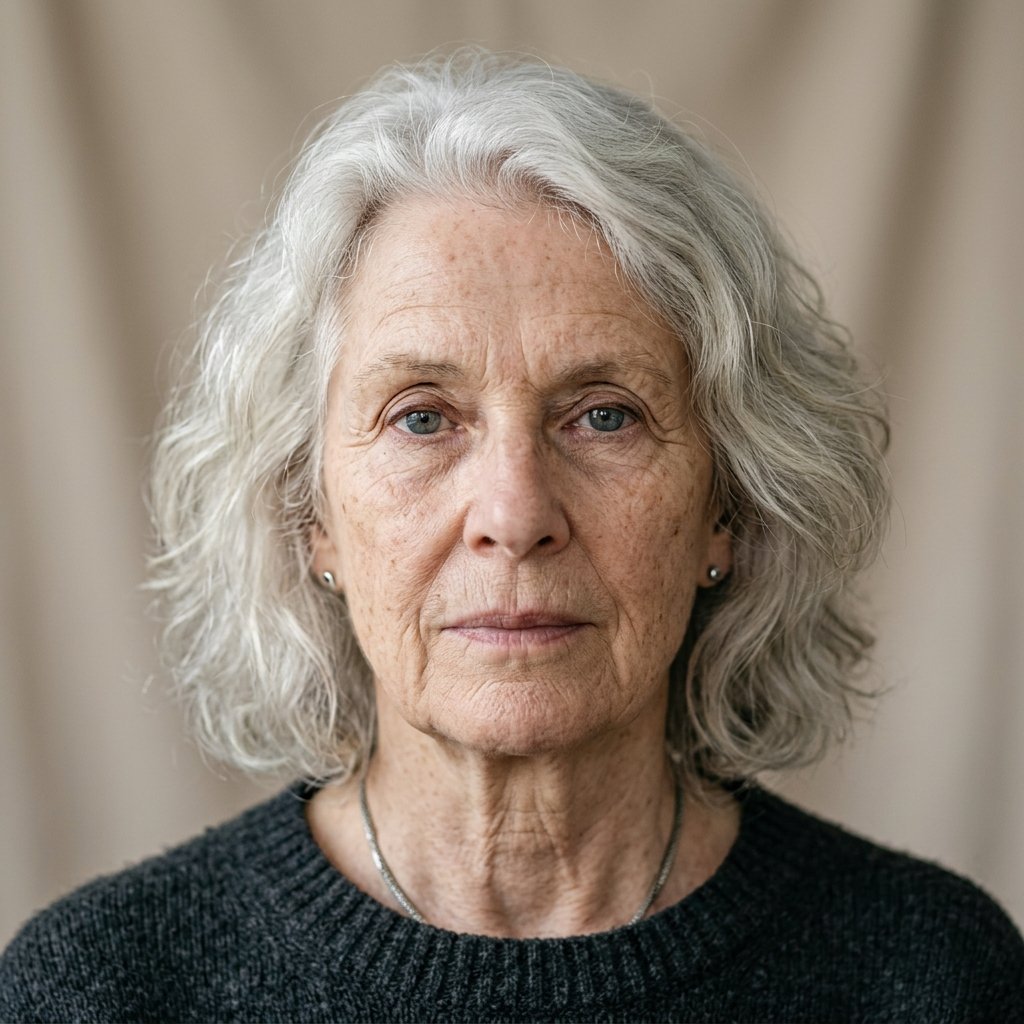
The wealthy woman in the big house on Chestnut Street looked down at my mother, who was on her knees polishing the marble, and said the words I have never been able to forget.
“People like you don’t get to dream, honey. You just get to work.”
My mother, Margaret Bellamy, set down her rag, looked up, smiled gently, and said, “Yes, ma’am.”
Then she went right back to scrubbing.
I was nine years old, waiting for her by the servants’ door because school had let out early, and I saw the whole thing.
I saw my mother swallow her pride the way you’d swallow something bitter, quickly, so no one would notice the taste of it on your face.
That night, back in our small rented house on the poor side of Cedar Falls, Ohio, I heard her crying softly behind her bedroom door.
It was the only time I ever heard her cry.
My name is Daniel Bellamy, and I want to tell you about the strongest person I have ever known.
My father, Thomas, was a carpenter with sawdust always on his sleeves and a laugh that filled our whole street.
He died when I was seven. A scaffolding gave way on a job site outside of town, and just like that, the man who built cradles and kitchen tables for half the county was gone.
He left behind my mother and three children.
I was the oldest. My sister Ruth was five. Our baby brother, Samuel, was barely two years old and still wearing the little wooden shoes our father had carved for him.
We had no savings. My father’s hands had always paid the bills, and now those hands were still.
The morning after the funeral, I remember standing in the kitchen watching my mother stare at the stack of envelopes on the table.
Rent. The doctor. The grocer. The funeral home.
She was twenty-nine years old, and I could see the whole weight of the world pressing down on her narrow shoulders.
But she did not fall apart. She never once let us see her fall apart.
Instead, she tied her hair back, put on my father’s old work coat because it was warmer than her own, and she went out to find work.
Any work.
She cleaned houses for the rich families on the good side of town.
She took in bundles of laundry and washed them by hand in a tin tub, hanging the sheets across our living room in the winter because we couldn’t afford to dry them any other way.
She worked the early shift at Dolan’s Diner, pouring coffee before the sun came up.
Then she’d walk two miles to clean the Winthrop mansion.
Then she’d walk another mile to fold sheets and scrub bathrooms at the little motel off Route 9 until well past dark.
Three jobs. Sometimes four.
And still, every single night, no matter how late it was, she came home and sat at the edge of my bed to hear about my day.
“Tell me one thing you learned today, Daniel,” she would whisper. “Just one.”
Her hands were rough as tree bark from all that hot water and lye soap, but when she brushed the hair off my forehead, they were the softest things in the whole world.
There were nights when there wasn’t enough food.
Mom would serve Ruth, Samuel, and me our plates, and when we asked why she wasn’t eating, she’d smile and say, “Oh, I ate a big lunch at work. I couldn’t fit another bite.”
I believed her for years.
It was only when I was much older that I understood the truth. There was no big lunch. There was just a mother who would rather go hungry than watch her children do the same.
The town was not always kind to us.
The other mothers at church would gather their children a little closer when we walked by, as if being poor was something you could catch.
The women whose floors my mother cleaned called her “the help” or “the cleaning lady,” never once by her name.
Margaret. Her name was Margaret, and it meant “pearl,” though I doubt any of them ever bothered to learn it.
At school, some of the boys teased me for wearing the same two shirts all year, mended so many times the patches had patches.
I came home once with a torn lip and tears I was too proud to let fall.
My mother knelt down, held my face in those rough, gentle hands, and said something I have carried in my heart every day since.
“Daniel, listen to me. Being poor is not shameful. Do you hear me? The only shame in this life is giving up. As long as you keep going, you have already won.”
Then she pointed to the little garden she kept out back, where she grew tomatoes and beans to stretch our meals.
“You see those seeds? They spend their whole lives in the dark and the dirt. And nobody claps for them. But one day they push up through all of it and become something that feeds a family. That’s you, son. You’re just still in the dirt. Keep pushing.”
I never forgot it.
I made her a promise that night, silently, staring at the water stains on our ceiling.
I promised that one day my mother would never again have to bow her head to anyone.
So I studied.
I studied by candlelight when the electricity got shut off. I studied in the back of the diner while she worked. I studied until my eyes burned.
Ruth studied right beside me, that same fire in her eyes.
And little Samuel, who worshipped the memory of the father he barely knew, would sit in the corner building tiny houses out of scrap wood, whispering, “I’m gonna build things like Daddy.”
The years were long and heavy.
There were winters so cold we slept in one bed, all four of us, sharing warmth like a litter of kittens.
There were birthdays with a single candle stuck in a piece of bread because a cake was a luxury we simply couldn’t reach.
But there was also so much love in that tiny house that, looking back, I would not trade a single moment of it.
When I earned a full scholarship to the state university, my mother sat down on the kitchen floor and wept.
Not from sadness. From something too big for her heart to hold quietly.
“Your father,” she kept saying, wiping her eyes with her apron, “oh, if your father could see you now.”
I worked my way through medical school. I chose surgery, because I wanted hands like my father’s, hands that could fix what was broken.
Ruth became a schoolteacher, the kind who buys shoes for the students who come to class without any, just like someone once did for her.
And Samuel? He grew up and started his own construction company, building homes across three counties, the honest trade our father had loved.
But the moment I want to tell you about most, the one that still brings tears to my eyes, came two years ago.
I had just been named the youngest chief of surgery in the history of Cedar Falls Regional Hospital.
They threw a grand gala to celebrate. Crystal chandeliers, a room full of the county’s finest families in their tuxedos and gowns.
And sitting among all of them, in a modest blue dress she’d bought secondhand and pressed three times so it would look just right, was my mother.
Her hair was silver now. Her hands were still rough. She sat with them folded in her lap, a little nervous, a little out of place among people who had never once had to worry about a meal.
And here is the part that made my blood run hot.
At my table sat old Mrs. Winthrop.
The very same woman who, decades earlier, had looked down at my mother scrubbing her marble floor and told her that people like her don’t get to dream.
She did not recognize the elegant surgeon being honored as the barefoot boy who used to wait by her servants’ door.
When they called my name and handed me the award, the room fell silent, waiting for the usual speech.
Thanks to the board. Thanks to the donors. Thanks to the institution.
But I did not say any of that.
I held that heavy award in my hands, and I looked out over that sea of powerful people, and then I found the one face that mattered.
“I need to be honest with all of you tonight,” I began, my voice steadier than I expected. “I did not get here because I am gifted. I got here because a woman in this town spent eleven years on her knees, cleaning your floors, washing your laundry, and going hungry so her children would not have to.”
You could have heard a pin drop.
“Some of you called her ‘the cleaning lady.’ Some of you told her that people like her don’t get to dream.”
I saw Mrs. Winthrop’s face go pale as the memory found her at last.
“Well, tonight, her dream is standing in front of you in a surgeon’s honor. Every life I have ever saved on my operating table belongs to her.”
My voice finally broke.
“Mom. Please. Stand up.”
The entire room turned to look at the woman in the secondhand blue dress.
For a moment she just sat there, frozen, her eyes shining, her hand pressed against her mouth.
Then, slowly, trembling, my mother rose to her feet.
And one by one, those proud, wealthy families set down their glasses and began to clap.
Then they stood.
Every single person in that grand room rose to their feet and gave a standing ovation to the cleaning lady they had spent a lifetime overlooking.
Mrs. Winthrop, tears rolling down her powdered cheeks, was clapping the hardest of all.
My mother covered her face and wept the way she had wept behind that bedroom door all those years ago.
But these were different tears. These were the tears of every seed that finally breaks through the dirt and reaches the sun.
I walked down from that stage, through the applause, and I wrapped my arms around the smallest, strongest woman I have ever known.
“You did it, Mom,” I whispered into her silver hair. “You pushed through the dirt. Look how tall you grew.”
My mother never scrubbed another person’s floor again for as long as she lived.
Ruth, Samuel, and I made sure of that.
We bought her a little white house with a big garden, and she spends her mornings now growing tomatoes and beans, not because she has to, but because she loves to watch things grow.
Sometimes I sit on her porch and I think about that rich woman’s cruel words from so long ago.
“People like you don’t get to dream.”
She was wrong.
Because my mother dreamed the biggest dream of all. She dreamed her children into people who could hold up an entire community.
And she did it not with money, not with power, but with sacrifice, and faith, and a love that simply refused to break.
That is the woman who raised me.
And if you ever meet someone the world calls “just the cleaning lady,” look a little closer.
You just might be looking at the strongest person in the room.