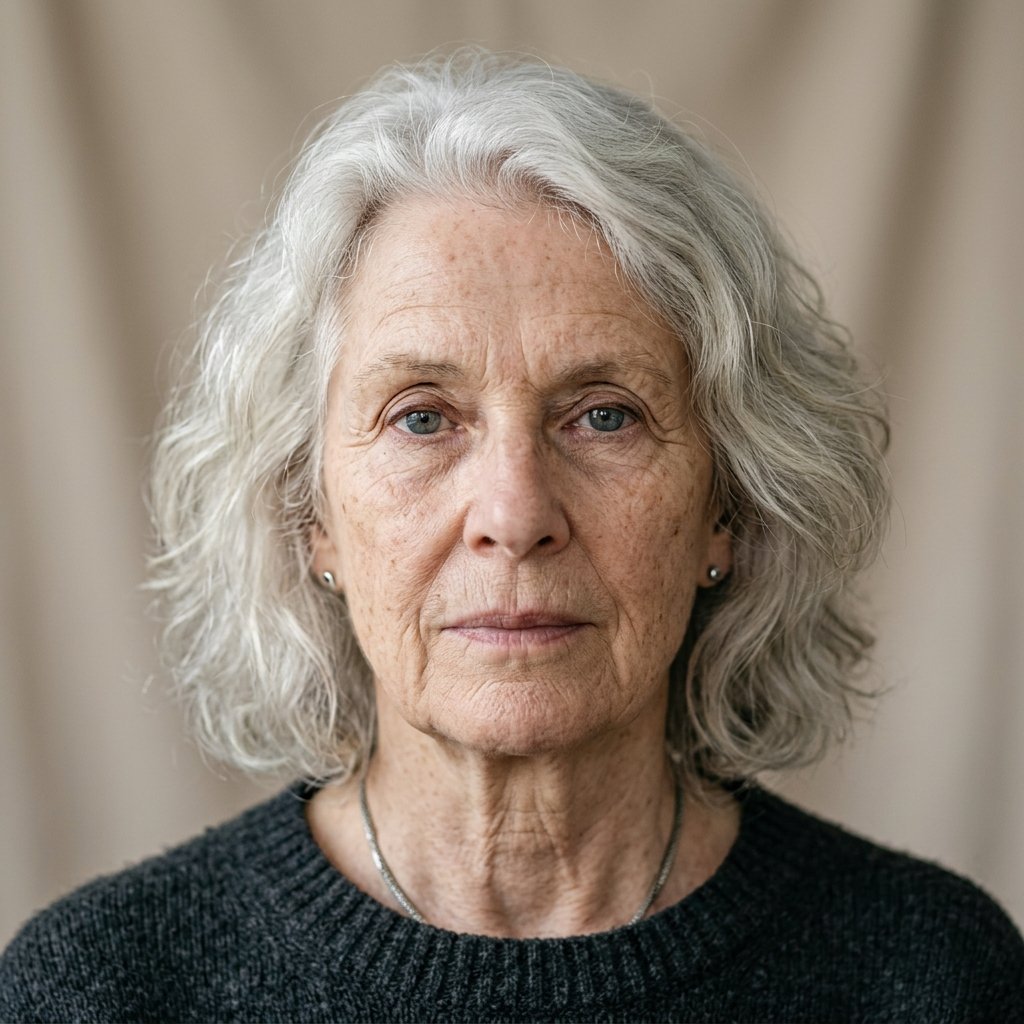
I hadn’t eaten in two days when I saw Darnell Brooks walking through the Atlanta Greyhound terminal.
My stomach was a hollow pit, and my hands would not stop shaking.
I was wearing three old coats, a soiled beanie pulled down over my ears, and shoes that had split at the soles weeks ago.
The terminal was loud and cold and indifferent.
People rushed past me with hot coffee and shiny phones, and nobody looked down at the woman sitting against the wall.
But then I saw him.
Darnell Brooks.
The retired basketball legend.
He moved through that crowd like a man who owned the air around him, calm and deliberate, while everyone else scurried and shouted.
I did not think about pride anymore.
Pride had left me eight months ago, somewhere between my eviction notice and my first night on the street.
So I pushed myself up on weak legs, steadied myself against the cold tile wall, and stepped into his path.
“Sir, please. Just a dollar.”
My voice came out cracked and thin, barely louder than the hissing bus brakes outside.
I hated the sound of it.
I hated the desperation in my own throat.
But hunger is a cruel teacher, and she had taught me to beg.
Darnell stopped.
Not a slow step.
Not a polite mumble of apology.
He stopped dead in the middle of that crowded terminal, and for a long moment he just looked at me.
The noise of the station continued to crash around us.
Executives barked into phones.
A baby cried near the ticket counter.
The overhead speaker announced a bus to Savannah in a flat, tired voice.
But in that little pocket of space between us, everything went still.
He turned his full body toward me, and his eyes locked onto mine.
I expected pity.
I expected annoyance.
I expected the quick, embarrassed shuffle I had seen a thousand times.
But I did not see any of that.
I saw something I had not seen in months.
He was truly seeing me.
Not the dirt on my face.
Not the torn jacket.
Not the mess of gray hair escaping my old beanie.
He was seeing me, Eleanor Vance, as a person.
“What’s your name?” he asked.
His voice was low and steady, and it cut straight through the terminal noise.
I blinked at him, stunned.
Nobody asked my name anymore.
Famous people tossed coins into my cup and scurried away, or they pretended I did not exist at all.
But he asked.
“Eleanor,” I stammered. “Eleanor Vance.”
“How long have you been on the streets, Eleanor?” he asked.
The question landed like a blow to the center of my chest.
He said my name with respect.
He said it with dignity, as if I were still a woman worth knowing.
I felt tears begin to burn behind my eyes.
“Eight months,” I whispered. “Since I lost everything.”
“What did you do before?” he asked gently.
I hesitated.
That part always hurt the most.
I looked down at the cracked floor, at the old gum stains and the scuff marks from a million hurried shoes.
“I was a nurse,” I said quietly, unable to meet his eyes. “Twelve years in the ICU at Grady Memorial Hospital. I saved lives.”
For a moment, he did not speak.
Around us, people were beginning to falter.
A teenager in a hoodie whispered to his friend.
A woman in a business suit pulled out her phone and started recording.
A small crowd began to gather in a loose half circle, murmuring and pointing.
I wanted to disappear.
I wanted to sink into the floor and become invisible.
But Darnell did not look at the phones, and he did not look at the crowd.
He kept his eyes on me.
“What happened?” he asked softly.
That was the question that broke me.
The tears spilled over and ran hot down my cheeks, cutting clean paths through the grime.
I sucked in a ragged breath and tried to steady myself.
“I had a breakdown,” I said, and my voice cracked on the last word. “I lost too many patients during the pandemic. I held too many hands. I watched too many monitors go flat. I couldn’t do it anymore.”
He said nothing.
He just waited, patient as a sunrise.
“I lost my job,” I continued, the words tumbling out now. “I couldn’t show up for my shifts. I couldn’t eat. I couldn’t sleep. Then I lost my apartment. Then…”
I gestured down at my layered coats, at the holes in my shoes, at the plastic bag that held everything I owned.
“Then I ended up here,” I finished.
My voice dropped to a whisper. “I used to save people, and now I can’t even save myself.”
The crowd had gone quiet now.
I could hear the faint whir of the cameras, and someone sniffled behind me.
But I did not turn around.
I kept my eyes on Darnell Brooks, because he was the first person in eight months who looked at me like I was not already gone.
He took a slow breath, and then he asked the question that stopped time.
“Do you still have your nursing license?”
I felt my heart stutter in my chest.
Eight months of shame, of hunger, of sleeping under bridges and hiding from the rain, and now this man, this famous stranger, was asking about my license.
I opened my mouth, but for a long moment no sound came out.
The question did not feel like an ending.
It felt like a door cracking open in a dark room.
And for the first time in eight long months, I allowed myself to believe, just for a second, that my life might not be over after all.
I was born and raised in Macon, Georgia, in a small white house with a front porch and a tire swing in the backyard.
My mother was a schoolteacher, and my father fixed refrigerators for a living.
They taught me three things: work hard, treat people kindly, and never walk past someone in need.
I carried those lessons into nursing school, and I carried them into the ICU at Grady Memorial Hospital.
For twelve years, that hospital was my second home.
I knew every supply closet, every charge nurse, every beep and hum of the monitors.
I learned to read a patient’s face before I ever looked at a chart.
I learned how to hold a grown man’s hand while he cried for his mother.
I learned how to stand in the break room at three in the morning, splashing cold water on my face, and then walk back into a room where a family was falling apart.
I was good at my job.
I was proud of my job.
I wore my scrubs like armor, and I believed I could handle anything.
Then the pandemic came.
I remember the first night the ICU filled up.
There were no empty beds.
There were no quiet corners.
There was only the endless sound of ventilators and the constant fear in my own chest.
I worked sixteen hour shifts, sometimes longer.
I skipped meals because there was no time to eat.
I called families on video screens and watched them say goodbye through glass.
I held phones next to dying patients so their children could whisper, “I love you,” one last time.
And then I walked out to my car, sat in the dark, and sobbed until I could not breathe.
I started losing patients I was sure I could save.
I started losing count.
I started losing pieces of myself.
One morning, after a particularly terrible night, I walked into the break room and realized I could not remember what day it was.
I could not remember the last time I ate a full meal.
I could not remember the last time I slept more than two hours.
A doctor found me sitting on the floor, still in my gown and gloves, staring at the wall.
“Eleanor,” she said gently, “you need to go home.”
I tried to stand, but my legs would not hold me.
I tried to speak, but the words would not come.
Something inside me had snapped clean in half.
I never went back to that hospital.
Not because I did not love it.
But because I was broken, and I did not know how to fix myself.
Within a month, I lost my job.
Without a job, I could not pay my rent.
Without rent, I lost my apartment.
I sold my furniture for grocery money.
I sold my car for a bus ticket.
I stayed with a cousin for a while, but she had her own troubles, and I could not bear to be a burden.
So one cold October morning, I packed a single plastic bag, took a bus to Atlanta, and disappeared into the noise of the city.
I told myself it would only be for a few weeks.
A few weeks turned into eight months.
Eight months of sleeping in shelters when I could get a bed, and under bridges when I could not.
Eight months of eating from garbage cans and gas station bathrooms.
Eight months of watching people look through me like I was made of glass.
Eight months of losing my name.
Until Darnell Brooks asked me what it was.
That is the thing about homelessness.
It does not just take your home.
It takes your identity.
It takes your dignity, your voice, your reflection.
You stop being Eleanor, the ICU nurse with twelve years of experience.
You become a shadow on a bus terminal floor, a problem to step around, a pair of trembling hands asking for a dollar.
I used to walk through this same terminal as a traveler, with a suitcase and a ticket and a destination.
Now I walked through it as a ghost.
When I saw Darnell Brooks step through those glass doors, I did not see a famous athlete.
I saw a chance to eat.
That is how low I had fallen.
But he did not treat me like a chance.
He treated me like a human being.
“What’s your name?” he asked again, because my mouth had not yet produced an answer.
I swallowed hard and looked up at him.
“Eleanor,” I repeated, stronger this time. “Eleanor Vance.”
He nodded, as if tucking my name away somewhere safe.
“How long have you been on the streets, Eleanor?”
“Eight months,” I answered, and the shame of it burned in my throat.
“What did you do before?”
I closed my eyes for a moment, and I saw the ICU again.
The bright lights.
The beeping monitors.
The rows of beds.
The faces of every patient I had lost.
“I was a nurse,” I whispered.
He was quiet.
The crowd was very quiet now.
You could have heard a pin drop in that noisy terminal.
“What happened?” he asked, and his voice was so gentle it nearly undid me.
I felt the tears come again, hot and unstoppable.
“I had a breakdown,” I said. “I lost too many patients during the pandemic. I couldn’t go back. I lost my job. I lost my apartment. I lost everything.”
I pointed to the ground at my feet, to the grim evidence of my ruin.
“I used to save lives,” I said, and my voice broke. “Now I can’t even save my own.”
Somewhere in the crowd, a woman started to cry.
I did not look at her.
I could not look away from Darnell Brooks.
He took a deep breath and looked at me with those calm, kind eyes.
“Do you still have your nursing license?” he asked.
And in that moment, standing in the middle of that cold, indifferent terminal, I felt something shift inside my chest.
It was not hope, exactly.
It was something smaller and more fragile than hope.
It was the faint, trembling possibility that I was still someone.
That my twelve years of service had not been erased.
That my life, however broken, was not yet finished.
I opened my mouth to answer.
The crowd leaned forward, phones raised, eyes wide.
And I looked straight into Darnell Brooks’s face, and for the first time in eight long months, I did not see a stranger.
I saw a man who remembered that every person on this earth has a story.
And he had just asked to hear mine.
There are moments that split your life into before and after.
I used to think those moments were big, dramatic things: a car crash, a wedding, a birth, a death.
But sometimes the biggest moments are quiet.
Sometimes they happen on a cold floor in a bus terminal, with a dollar in your hand and a famous man looking you in the eye.
I had asked for one dollar.
I had expected one dollar.
But Darnell Brooks did not give me a dollar.
He gave me something far more valuable.
He gave me my name back.
He gave me permission to remember that I was a nurse, a professional, a woman who had dedicated her life to healing others.
He gave me the first human conversation I had in eight months that did not involve pity or disgust.
And then he asked me the question that I had been afraid to ask myself.
“Do you still have your nursing license?”
I thought about the license tucked inside the front pocket of my plastic bag.
I had kept it with me through everything.
Through theshelters.
Through the rain.
Through the cold nights under the bridge.
It was stained and creased, but it was still there.
It was the only proof I had left that I had once been somebody.
“Yes,” I whispered at last, my voice shaking. “I think so. I think it’s still valid.”
Darnell Brooks nodded slowly.
He did not look surprised.
He looked like a man who had already made a decision.
But he did not say anything else.
He simply held my gaze for another long moment, and then he extended his hand.
Not to drop a dollar into my palm.
Not to wave me away.
He extended his hand to me as if I were an equal.
And I, Eleanor Vance, a homeless nurse who had lost everything, reached out and shook it.
The crowd erupted in murmurs.
The phones kept recording.
The world kept turning.
But in that small, sacred moment, I felt something I had not felt in eight months.
I felt seen.
I felt human.
And I felt, for the first time, that maybe, just maybe, God had not finished with me yet.
I do not know what Darnell Brooks did after he walked away that day.
I do not know if he thought about me again, or if that moment faded into the thousands of other moments in his busy life.
But I will tell you this.
I never spent another night on the street.
Not because of a dollar.
But because a man looked me in the eye and asked my name.
Because he reminded me that I was not invisible.
And because, when he asked if I still had my nursing license, I finally remembered that I did.
I remembered that I was a nurse.
I remembered that I had held dying strangers’ hands in the middle of a plague.
I remembered that I had walked into rooms full of fear and come out carrying hope.
I remembered that I was strong, even when I felt broken.
So no, Darnell Brooks did not give me a dollar that day.
He gave me back my life.
And that, my friends, is worth more than any amount of money in this world.
What would you do if you saw someone like me?
Would you stop and ask their name, or would you walk by like everyone else?
I hope this story reminds you that everyone has a story worth hearing.
If this moved you, please like this story, follow our page, and share it with someone who needs to remember their worth today.