The night we agreed to end our marriage, the divorce papers sat between us on the kitchen table like a stranger nobody had invited to dinner.
Thirty-eight years. That is how long Frank and I had been husband and wife. And on that bitter February evening in Millbrook, Ohio, we had finally agreed on the one thing we could no longer avoid.
It was over.
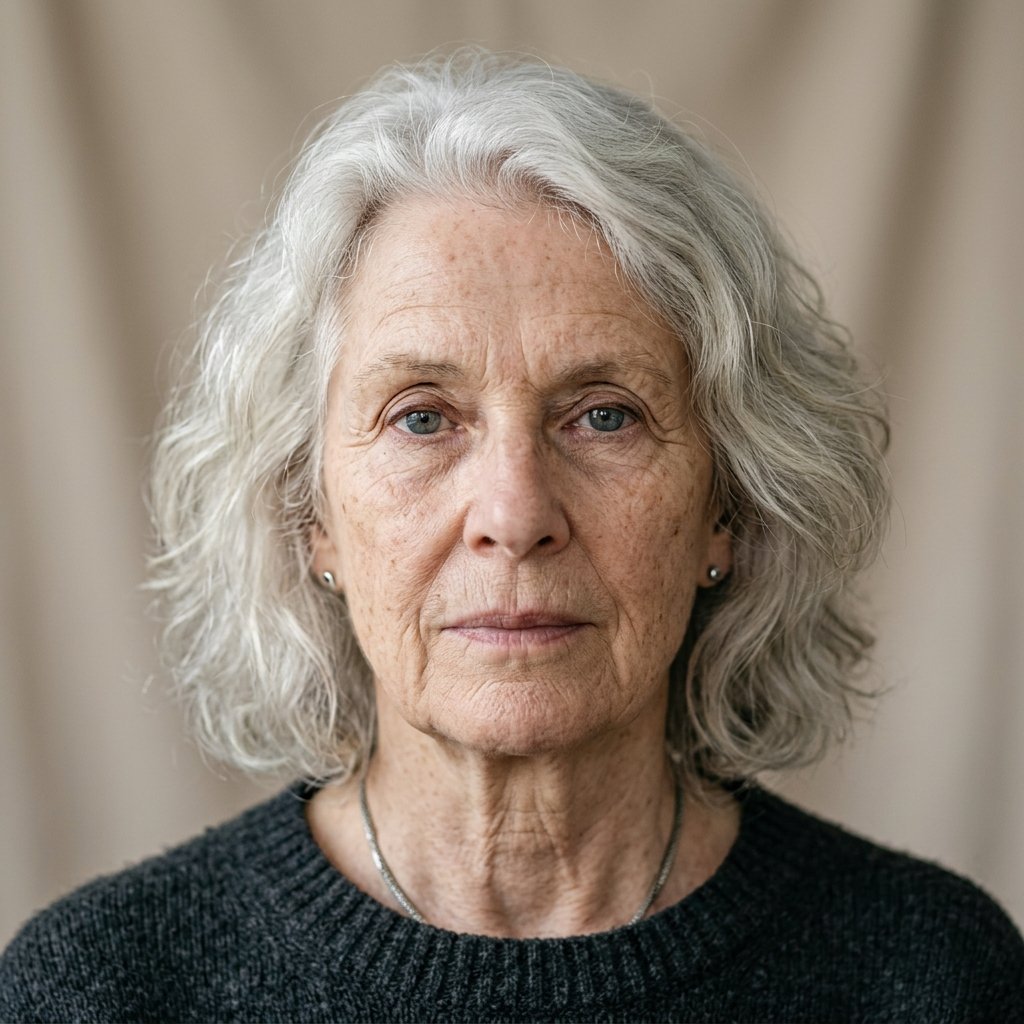
I was sixty-two. Frank was sixty-four. We had raised a daughter, buried both our fathers, survived two layoffs and one small fire in the garage. And somewhere along the way, we had simply stopped seeing each other at all.
The house was too quiet that night. The kind of quiet that hums in your ears. Frank sat in his chair by the window, reading glasses low on his nose, pretending to look at the newspaper. I stood at the sink washing a single cup, because keeping my hands busy was easier than looking at the man I once could not bear to be apart from.
‘We should sign them Monday,’ he said. His voice was flat. Tired.
‘Fine,’ I answered. ‘Monday.’
That was it. Thirty-eight years, folded up into one small word. Fine.
I want you to understand something. We did not hate each other. I almost wish we had. Hatred at least has heat in it.
What we had was worse. We had silence. Two people who passed each other in the hallway like polite roommates, who slept on the far edges of the same bed, who had forgotten the sound of the other one laughing.
It had not always been that way. I still remember the summer of 1983, when Frank Callahan asked me to dance at the county fair, his hands shaking so hard he stepped on my new shoes twice.
He was tall and clumsy and he smelled like motor oil and peppermint, and when he smiled at me under those string lights, I knew. I just knew.
We married nine months later in that same little church on Maple Street, so broke we could barely afford the flowers. But oh, we were happy. We were the kind of happy that people warn you does not last.
And they were right, I suppose. Because life is a slow thing. It does not take your love all at once. It takes it a little at a time, in unpaid bills and long shifts and disappointments you never quite talk about.
Our daughter, Emily, had begged us for years to talk to someone. ‘Mom, you two used to be so in love,’ she would say. ‘What happened?’
I never had a good answer. Life happened, I suppose. The slow kind of losing that you do not notice until everything is already gone.
Then came the phone call that changed everything.
It was a Tuesday. Nine forty-seven in the evening. I remember because I had just turned off the television. The phone rang, and something in my chest went cold before I even picked it up.
A mother knows. God help us, a mother always knows.
There had been an accident on the interstate outside Columbus. Rain. A truck that could not stop in time. Our Emily, our only child, thirty-four years old, was gone.
Passed away, the officer said. I hated those words. I still do.
Frank came into the room and saw my face and the phone shaking in my hand, and he knew too. He did not say anything. He just crossed the floor and held me up, because my legs had stopped working.
It was the first time he had touched me in over a year.
We buried our little girl on a gray morning when the ground was still half frozen. And standing at the edge of that grave, holding a small mittened hand, was the reason our story did not end the way we had planned.
Danny. Emily’s son. Our grandson. Six years old, with his mother’s brown eyes and a cowlick that would not lie flat no matter how much you wet it.
Emily had raised him alone since his father walked out when Danny was two. Now there was no mother. There was no father.
There was only us. Two people who, three days earlier, had planned to become strangers.
The lawyer, a kind man named Tom Bishop, sat us down in his office the following week. The divorce papers were still there, unsigned, waiting on the corner of his desk.
‘You need to decide,’ he said gently, ‘what happens to the boy. And whether the two of you are still ending things.’
Frank and I looked at each other for the first time in a very long time. Really looked.
‘A child needs stability,’ Tom went on. ‘He has lost his whole world. If you two separate now, and split him between two houses, two towns…’ He did not finish. He did not have to.
That night, we sat at the same kitchen table. The papers between us. Danny was asleep down the hall in Emily’s old childhood room, clutching a stuffed dog he refused to let go of.
‘I can’t do this alone,’ Frank finally said. His voice cracked on the word alone. I had not heard him cry in years. ‘I don’t know how to raise a little boy at my age, Ruth. But I know I can’t do it without you.’
‘So what are you saying?’ I asked.
‘I’m saying tear up the papers.’ He swallowed hard. ‘Not for us. For him. We can be civil. We can share the house. We can give that boy a home.’
For Danny. That was the deal we made that night. Not for love. Not for us. For a grieving little boy who woke up screaming for his mama at two in the morning.
I did not know then that saving him would end up saving us.
The first weeks were hard in ways I cannot fully describe. Danny would not eat. He would not speak above a whisper. He wet the bed and then cried because he was ashamed.
Frank and I, who could barely say good morning to each other, suddenly had to become a team at sixty-two and sixty-four years old.
I remember the first night Danny had a nightmare. I ran to his room, and Frank was already there, sitting on the edge of the little bed in his old flannel robe, his big rough hand rubbing slow circles on that tiny back.
‘It’s alright, buddy,’ he whispered. ‘Grandpa’s here. Grandma’s here. We’ve got you. We’re not going anywhere.’
I stood in the doorway and watched my husband comfort a broken child, and something inside me that had been frozen for years began, very slowly, to thaw.
We fell into a rhythm we had not known in decades. Someone had to make breakfast, so I made breakfast. Someone had to drive Danny to school, so Frank drove him.
In the evenings, we sat together at the table, because Danny would not eat unless we were both there.
‘Grandma, sit by Grandpa,’ he would say. ‘Families sit together.’
So we sat together. And little by little, the silence between us started to fill up again. With small things. A shared worry over a fever. A quiet laugh when Danny mispronounced a word. A hand passing the salt.
It was not all smooth. One evening in March, it nearly fell apart again.
Danny had a bad day at school, and I snapped at Frank over something foolish, the burnt toast, of all things. Years of old resentment came pouring out of both of us right there in the kitchen.
‘You always did this,’ I said. ‘You always shut me out.’
‘And you never once told me what you needed!’ he shot back.
Then a small voice came from the doorway. Danny, in his pajamas, tears streaming down his cheeks.
‘Please don’t fight,’ he whispered. ‘Everybody I love goes away when there’s fighting.’
Frank and I froze. In that moment, we saw ourselves through the eyes of a child who had already lost everything. We both dropped to our knees and pulled him into our arms, the three of us crying on the kitchen floor.
‘We’re not going anywhere,’ Frank said, over and over. ‘I promise you, buddy. Nobody is going anywhere.’
That night, after Danny slept, we started sorting through some of Emily’s boxes. And tucked inside her old Bible, I found a letter she had written to us years before, one she never mailed.
‘Mom and Dad,’ it read, ‘I don’t know why you stopped talking. But I remember how you used to look at each other. I hope one day you find that again. Life is too short to spend it as strangers. Love, your Emily.’
Frank and I sat on that bedroom floor and wept until there were no tears left. Our daughter, gone from this world, was still trying to bring us back together.
We talked that night the way we had not talked in fifteen years. About Emily. About all the years we let slip by.
‘I felt invisible,’ I admitted. ‘Like you looked right through me.’
‘I felt like I could never make you happy,’ he said. ‘So I stopped trying to. I’m sorry, Ruth. I am so sorry.’
We were two old fools who had almost thrown away a lifetime over pride and tiredness. And it took losing our daughter, and gaining her son, to remind us what we had promised each other under a white tent all those years ago.
The months turned. Danny started smiling again. He started sleeping through the night.
He called Frank ‘Papa’ now, and me ‘Grammy,’ and those two names became the sweetest sounds in that old house.
One Saturday, Frank spent four hours in the garage. I thought he was hiding, the way he used to. Then he called me out, and there he was, holding a small red bicycle he had found at a yard sale and fixed up himself, new tires and all.
‘For Danny,’ he said, almost shy. ‘Every boy needs a bike.’
We spent that whole afternoon in the driveway, the three of us. Frank ran behind that bike holding the seat, his back surely aching, and I clapped like a fool when Danny finally wobbled forward on his own.
‘Look, Grammy! Look, Papa! I’m doing it!’ Danny shouted, laughing that pure belly laugh only children have.
And I looked at Frank, and Frank looked at me, and we were both crying and laughing at the same time. Over a bicycle. Over a little boy. Over a life we thought we had lost.
Spring came to Millbrook. Frank planted tomatoes with Danny in the backyard, the two of them covered in dirt, arguing happily over how deep to plant the seeds.
I watched from the porch with a pitcher of lemonade and a heart so full I could hardly stand it.
One evening in May, Frank came home with a small paper bag. Inside was a plain gold band. He had lost weight over that hard year, and his old ring no longer fit, so he had bought a new one.
‘I want to wear it again,’ he said. ‘If you’ll have me. All of me. For real this time.’
I did not say anything. I just took his hand, that same rough hand that had held our grandson through a hundred nightmares, and I slid that ring onto his finger myself.
That summer, we did something I never imagined we would do at our age. We renewed our vows.
Nothing fancy. Just the little church on Maple Street, the same one where we had married so long ago, a handful of old friends, and Danny standing between us in a clip-on tie, holding the rings on a little pillow and beaming like the sun itself.
‘Do you, Frank, take Ruth, again, to have and to hold?’
‘I do,’ he said, his voice thick. ‘This time I am going to do it right.’
And when the pastor asked if anyone had anything to add, Danny piped up in front of the whole church.
‘We’re a family now,’ he announced proudly. ‘Papa says families never give up on each other.’
There was not a dry eye in that little church.
People ask me sometimes how we did it. How two people so close to the end found their way back.
The truth is, we did not do it for ourselves. We were too proud, too worn down, too certain we were finished.
It took a grieving little boy who needed us both to force us into the same room, the same table, the same life again. And in caring for him, we accidentally remembered how to care for each other.
Frank is seventy now. I am sixty-eight. Danny is twelve, all elbows and knees, and he plays baseball on Saturdays with his Papa cheering the loudest in the stands.
The house is not quiet anymore. It is full of muddy sneakers and homework and the smell of Sunday breakfast. It is full of life.
And every night, before Danny goes to bed, he still says the same thing he said in that church.
‘Families never give up on each other.’
We almost did. We came so close. And the greatest blessing of my old age is that we did not.
A family that was about to break apart got to begin again. Not despite our heartbreak, but somehow, mercifully, because of it.
If you are reading this, and your marriage feels cold, and the silence feels too heavy to carry, I want you to hear an old woman who almost lost everything.
Do not sign the papers yet. Do not give up on the person across the table.
Sometimes love is not lost. Sometimes it is just sleeping, waiting for a reason to wake up.
Ours woke up. And I thank God for it every single day.