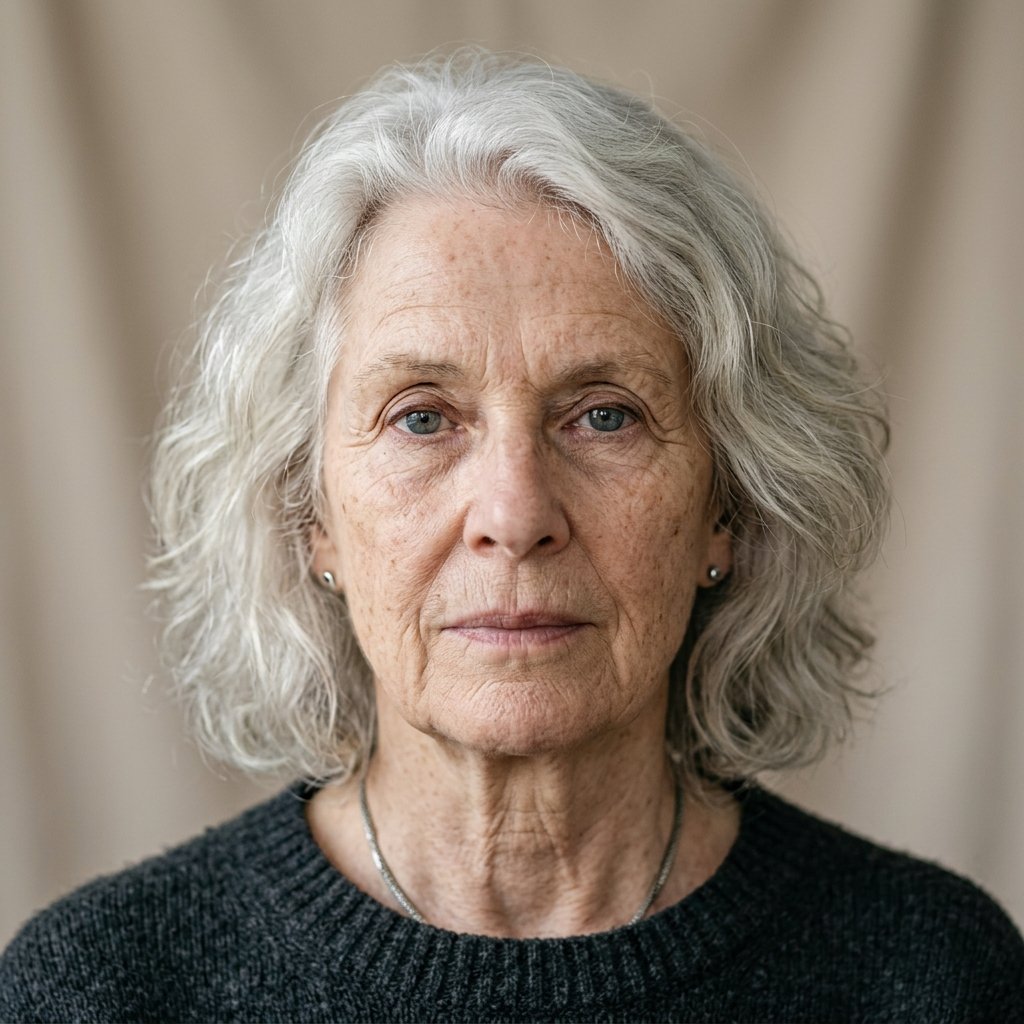
I never thought love could demand such a heavy toll. When I met Harold Bennett at the University of Wisconsin in the fall of 1983, he was the kind of man who carried my books without being asked and laughed like the world was not so frightening after all.
We were young, broke, and absolutely certain that our love could outlast any storm. We married in a small chapel in Madison, Wisconsin, with forty guests and a cake that my mother baked herself.
I wore my grandmother’s veil, and Harold whispered to me at the altar, ‘You are my whole heart.’ I believed him. For twenty-two years, I never doubted that belief.
Harold worked as a high school history teacher. I taught third grade at a school just outside of town. We bought a little white house on a quiet street, and we filled it with laughter, with ordinary arguments over whose turn it was to take out the trash, and with a deep certainty that we were building something unbreakable.
We never had children of our own, and that was a grief we carried together. But we poured our love into our students, our neighborhood, and our church. We were not rich, but we had enough. And we had each other.
Last spring, everything changed. Harold had always been a big man, but his weight had quietly become a burden over the years. His doctor warned him about fatty liver disease, but Harold shrugged it off. ‘I feel fine,’ he kept saying. ‘It’s just a little tiredness.’
Then the tiredness became something worse. His skin turned a faint yellow, his eyes grew dull, and he could barely climb the front steps without stopping to catch his breath. I begged him to see a specialist. Finally, he agreed.
At the University of Wisconsin Hospital in Madison, a hepatologist named Dr. Karen Whitfield ran a series of tests. She sat us down in a small room with white walls and a box of tissues on the table. Her voice was calm, but her eyes were serious.
‘Harold,’ she said, ‘you have cirrhosis of the liver. It has advanced rapidly. Without a transplant, I am afraid you may not survive more than six months.’
The room went silent. I reached for Harold’s hand. His skin was warm, but his grip was weak. ‘There has to be something else,’ I whispered.
Dr. Whitfield shook her head gently. ‘His blood type is rare. The waiting list is long. But a living donor might be possible. A family member or a spouse with a matching blood type could donate a portion of their liver.’
I did not hesitate. ‘Test me,’ I said. ‘Take mine.’
Harold looked at me with tears in his eyes. ‘You don’t have to do this, Margaret,’ he said, though my name is not Margaret. I was scared, yes. But I loved him more than I feared the knife.
The tests took two weeks. Two weeks of blood draws, scans, and sleepless nights. I prayed constantly. I asked God for strength, and I asked Him to let me save my husband.
Then Dr. Whitfield called with the news. ‘You are a match,’ she said. ‘The surgery can be scheduled.’ I cried with relief. Harold held me in his arms, though he was the one who was dying.
The surgery was scheduled for a cold Tuesday morning. I remember the smell of antiseptic and the feel of the thin hospital gown against my skin. My mother had passed away years before, but I felt her presence with me in that room.
Harold was wheeled into the operating suite first. I kissed his forehead and told him I would see him soon. ‘I love you,’ I said. ‘I love you more than the moon loves the night,’ he whispered back. That was our phrase. It always made me smile.
The anesthesia hit me like a black wave. I remember counting backward from ten. I reached eight. Then there was nothing.
When I woke, my abdomen was on fire. It felt as though someone had poured gasoline inside me and struck a match. Tubes snaked from my arms, and a machine beeped steadily somewhere to my left. I tried to move, but my body refused.
A nurse with kind eyes leaned over me. ‘You did beautifully,’ she said. ‘The surgery went very well. Your husband is in recovery.’ I tried to smile, but the pain was too great.
For two days, I drifted in and out of sleep. I kept asking about Harold. The nurses told me he was stable. They told me he was resting. That was enough for me. I imagined him in another room, his body accepting my gift, his color returning, his strength slowly coming back.
On the third day, they finally wheeled Harold into my room. He was pale, but he was alive. He smiled that same gentle smile that had first stolen my heart all those years ago in a crowded university hallway.
He reached for my hand. His fingers were cool. ‘Thank you for saving my life, my love,’ he whispered. His voice cracked with emotion.
In that moment, every scar, every ounce of pain, every terrifying minute of the unknown was worth it. I squeezed his hand as hard as I could. ‘I would do it again in a heartbeat,’ I told him. And I meant it.
But two days later, something strange happened. My surgeon, Dr. Raymond Bennett, asked to see me privately. He was a tall man with gray hair and steady hands, but that day his hands would not stop moving. He kept adjusting his tie. He would not meet my eyes.
A nurse helped me into a wheelchair and brought me to his office. The room was small and smelled of coffee and old paper. Dr. Bennett closed the door behind us and sat down across from me. He leaned forward slowly.
‘Ma’am,’ he said. ‘I need to tell you something very difficult.’
My heart began to pound. I thought perhaps Harold had taken a bad turn. I thought perhaps my donation had failed. I braced myself for the worst.
‘What is it?’ I asked. My voice trembled. ‘Is Harold okay?’
Dr. Bennett hesitated. He looked down at his hands, then back up at me. His expression was cautious, almost guilty. And then he said the words that made the ground vanish beneath me.
‘Ma’am, the liver wasn’t for him.’
I stared at him. The words did not make sense. They floated in the air like smoke, impossible to hold. I heard myself ask, ‘What do you mean?’ My voice sounded far away.
Dr. Bennett took a deep breath. ‘There were complications in the allocation process,’ he said. ‘A redirection. Your donation, though successful, was not used for Harold. It went to another patient who was in desperate condition.’
I felt the room tilt. My hands gripped the arms of the wheelchair. ‘You’re telling me Harold did not receive my liver?’ I asked. The words came out slow and dull.
‘That is correct,’ he said. ‘Your husband remained on the transplant list. He did not receive your organ.’
The silence between us was enormous. I could hear the clock on his wall ticking. I could hear my own heartbeat. I could hear the thin sound of my breath coming faster and faster.
I thought of the pain in my abdomen, the tubes, the fear, the two weeks of tests, the moment I said ‘Take mine.’ I thought of Harold’s hand in mine, thanking me for saving his life. But I had not saved him. Not at all.
‘Who received it?’ I whispered. I did not know why I asked. I was not sure I wanted the answer.
Dr. Bennett shook his head. ‘I am not permitted to share that information,’ he said. ‘But I can tell you the recipient is recovering well.’
A stranger. Somewhere in this same city, a stranger was recovering with a piece of my body inside them. My husband, the man I had loved for more than two decades, was still waiting. Still dying.
I felt something break inside me. It was not anger, not yet. It was something quieter and more terrible. It was the sound of a promise shattering.
I asked Dr. Bennett to give me a moment. He nodded and stepped out of the room. I sat alone in that sterile office, and I wept. I wept for Harold. I wept for myself. I wept because I did not know how to go back to that recovery room and pretend that everything was as it had been.
When I finally returned to my room, Harold was sleeping. His chest rose and fell with the rhythm of life, but it was not my liver keeping him alive. It was some machine, some medicine, some fragile thread of hope.
I watched him for a long time. I thought about our wedding day, the taste of my mother’s cake, the sound of Harold’s laughter. I thought about the quiet nights we spent on the front porch, talking about nothing and everything. I thought about all the years I had taken for granted.
And I thought about the truth that now sat between us like a stone.
Harold opened his eyes. He smiled weakly when he saw me. ‘There you are,’ he said. ‘I was dreaming about you.’
I forced a smile. ‘Good dream?’ I asked.
‘The best,’ he said. ‘We were back at the university. You were wearing that blue dress you used to love. You looked so beautiful.’
I wanted to tell him the truth. I wanted to fall into his arms and cry until there were no tears left. But I could not. Not yet. He needed his strength. And I needed to find mine.
So I held his hand and listened to him talk about his dream. I prayed that a new liver would come for him in time. I prayed that my sacrifice, even if misdirected, might still count for something in the eyes of God.
But deep in my heart, I knew that nothing would ever be the same. I had given part of my body to save the man I loved. And that gift had been taken from him, from us, without warning or permission.
The truth was not just painful. It was unbearable. And yet I had to bear it, because the only other choice was to fall apart completely.
That night, I lay awake in my hospital bed and stared at the ceiling. I listened to Harold’s soft breathing from the chair beside me, where the nurses had let him sit for a little while. I felt the raw, burning place where my liver had been cut.
And I wondered what kind of world could do such a thing. I had offered everything. I had given a part of my own life. And somewhere, someone else was walking around with my flesh and blood, while my husband still waited for a miracle.
I did not know if I would ever find peace. I did not know if Harold would survive. I did not know if our marriage could carry the weight of this terrible secret.
But I did know one thing: I still loved him. And as long as I had breath in my body, I would keep fighting for him. Even if my own body had already given more than it could bear.
The next morning, Dr. Whitfield came to see me. She looked exhausted. She pulled a chair close to my bed and spoke quietly, as if she were afraid the walls might hear.
‘I found out about the redirection late last night,’ she said. ‘I am so sorry. This should never have happened. The hospital is investigating.’
I looked at her. ‘Will Harold get another chance?’ I asked. That was all I could think about.
She nodded slowly. ‘His status has been moved to priority. But the wait is still uncertain. His body is growing weaker.’
I closed my eyes. I thought of all the prayers I had said, all the hope I had carried. I thought of the moment I said ‘Take mine’ as if it were the simplest thing in the world.
‘What can I do?’ I whispered.
Dr. Whitfield reached for my hand. ‘You can rest. You can heal. And you can be here for him. That is all any of us can do right now.’
So that is what I did. Day after day, I sat beside Harold’s bed. I read to him from old newspapers and told him stories about our life together. I held his hand and sang soft hymns when the pain was too much.
I did not tell him about the redirection. I could not. He believed I had saved him, and I let him believe it. Maybe that was wrong. Maybe one day I will tell him the whole truth. But not while he was still fighting.
Weeks passed. My own body slowly healed, though my heart did not. Harold’s condition held steady, but he remained on the transplant list, waiting for a liver that might never come.
Then, one afternoon, a nurse came into the room with tears in her eyes. ‘We have news,’ she said. ‘A donor liver has been found. Harold is going into surgery.’
I do not remember standing up. I do not remember crossing the room. I only remember falling to my knees beside his bed and thanking God over and over again, until the words became a meaningless, beautiful song.
Harold looked at me with fear and hope mixed together. ‘I love you,’ he said.
I kissed his forehead. ‘I love you more than the moon loves the night,’ I whispered.
They wheeled him away. I watched him disappear through the double doors, and I prayed harder than I had ever prayed in my life.
The surgery took nine hours. I sat in the waiting room with half a dozen other families, all of us holding coffee cups and each other’s hands. A volunteer brought me a damp cloth for my face, but I did not use it.
Finally, Dr. Bennett appeared. He was still wearing his scrubs, and his mask hung loose around his neck. He looked exhausted, but he was smiling.
‘It went well,’ he said. ‘Harold received a full liver this time. He is in recovery.’
I broke down completely. I cried so hard that a nurse had to help me sit down. I cried for joy, for relief, for all the weeks of silent terror. And I cried for the piece of me that had gone to a stranger, because without it, I would not have been there to hear those words.
Harold recovered slowly but steadily. He regained his color, his strength, and that familiar spark in his eyes. He never knew the full truth, and perhaps he never will. But sometimes, when he looks at me with wonder and calls me his hero, I feel a pang of something I cannot name.
Because I know now that love is not always about saving someone. Sometimes it is about giving everything you have, even when the gift does not go where you intended. Even when it breaks you in ways you never imagined.
I gave part of my liver for Harold. The liver went to someone else. But in the end, Harold got what he needed. And I got a truth that few people ever have to carry.
Life is strange and painful and beautiful all at once. And I have learned that the deepest love is not the one that demands a happy ending. It is the one that survives the ending you never expected.
My husband is alive because of a stranger’s organ, and somewhere another family is alive because of mine. I will never meet them. I will never know their names. But I hope they know that a piece of my love found its way to them.
As for me, I am still healing. The scar on my abdomen is fading, but the one on my heart will always be there. And I am learning to live with it.
Thank you for reading my story. If it touched your heart, please take a moment to like this post, follow our page, and share this story with someone who might need to hear it. Your kindness means more than you know.