I will never forget the sound of his voice.
It cut through the clinking of crystal glasses and the soft piano music like a knife.
I was sitting in the most exclusive restaurant in Boston on a rainy Tuesday evening.
The Ivory Oak was not a place where people knelt on marble floors.
It was a palace of chandeliers, velvet chairs, and waiters who never raised their voices above a polite murmur.
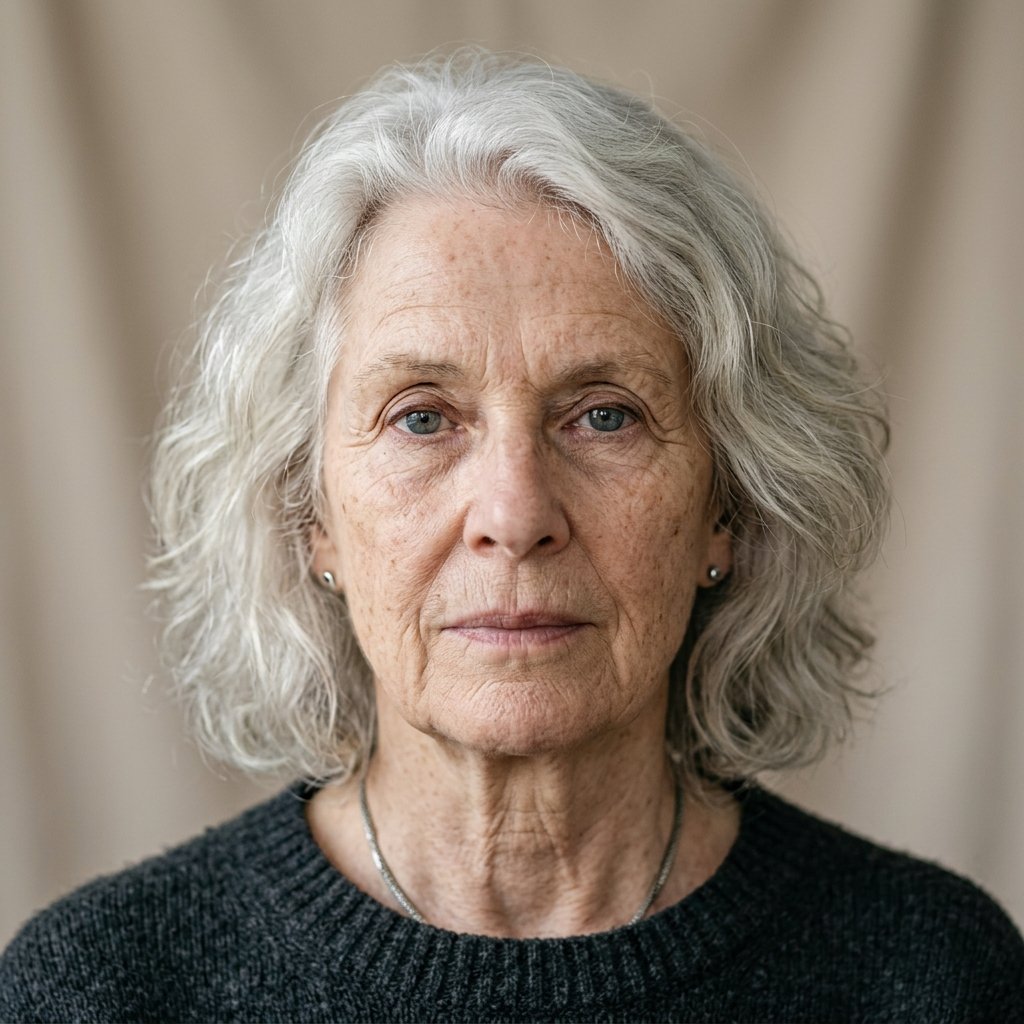
I, Katherine Sinclair, was thirty-one years old and the youngest self-made fashion mogul in America.
My gown came from my own label, Sinclair Rose, and the diamonds on my wrist could have paid for a small house.
But if you had looked closely at my eyes behind that polished smile, you would have seen something no jewelry could fix.
I was empty.
I had built an empire with my own two hands, and yet I felt like a ghost sitting in the middle of all that gold.
Every forkful of truffle risotto tasted like dust.
Every sip of imported wine reminded me that I had no one waiting for me at home.
I had traded my youth, my health, and my heart for a throne built of fabric, needles, and sleepless nights.
And on that rainy Tuesday evening, I was beginning to wonder if any of it had been worth it.
My fork was halfway to my lips when his voice broke through the music and the chatter.
“Excuse me, ma’am… may I have your leftovers?”
The entire restaurant went silent.
I turned in my chair, and the sight of him made my chest tighten.
A man knelt beside my table, soaked from the rain.
His jacket was torn at the shoulder, his shoes did not match, and streaks of dirt covered his tired face.
But that was not what stopped my breath.
Strapped to his chest were two tiny infants, their cheeks pale, their little eyes too tired even to cry.
They looked like they weighed almost nothing.
They looked like they had already learned that the world was a cold and hungry place.
For a long moment, no one spoke.
The only sound was the rain tapping against the tall windows and the faint hum of a wine cooler.
Gasps spread across the room like ripples in a pond.
A woman at the next table pulled her fur coat tighter around her shoulders as if poverty could rub off on her.
A man in a tailored gray suit shook his head and muttered something under his breath.
Two security guards in black suits started walking toward him with their hands raised.
I could hear someone whisper, “Get him out of here before he ruins the evening.”
But something inside me snapped.
I raised my hand without even thinking.
“Let him stay,” I said.
My voice came out steady, but my heart was pounding so hard I could feel it in my ears.
The guards stopped in their tracks and looked at me as if I had lost my mind.
I did not care.
I pushed my chair back, and for the first time in years, the diamonds on my wrist felt heavy for the right reason.
“What is your name?” I asked him, my voice softer now.
He looked up at me with those tired, honest eyes.
“Benjamin, ma’am. Benjamin Foster.”
His voice did not shake with pity for himself.
It only shook when he glanced down at his daughters.
I swallowed hard and nodded toward the empty chair across from me.
“Please, sit down with me, Benjamin.”
The room let out a collective breath, as if every single guest was waiting for me to call the police.
But I was done performing for people who had never known hunger.
He hesitated, his muddy shoes leaving small puddles on the pristine marble floor.
“I don’t want to ruin your table, ma’am,” he said quietly.
“I just wanted the leftovers. The babies haven’t eaten since yesterday.”
His words hit me like a wave of cold water.
The babies had not eaten since yesterday.
I looked at their pale cheeks and tiny closed fists, and I felt something crack open inside my chest.
I was not looking at a homeless man.
I was looking at a father who had reached the end of every road and still found the strength to kneel for his children.
“You are not ruining anything,” I told him.
“Please sit.”
One of the security guards stepped forward and lowered his voice.
“Miss Sinclair, are you sure? We can handle this quietly.”
I turned to him, and for the first time that evening, my face was not calm.
“Bring us two warm bowls of soup, fresh bread, and two bottles of warm milk for the babies,” I said.
“And bring a clean towel.”
The guard blinked.
“I will pay for everything,” I added.
“Just do it.”
He nodded and walked quickly toward the kitchen.
Benjamin stared at me as if he could not believe what was happening.
“Ma’am, you don’t have to do this,” he whispered, his voice cracking for the first time.
“I know I don’t have to,” I said.
“But I want to.”
He lowered himself into the chair, moving slowly so he would not wake the twins.
His hands trembled as he adjusted the strap across his chest.
The babies stirred, and one of them let out a tiny whimper.
He immediately began to rock them gently, humming a soft, broken lullaby under his breath.
It was the most beautiful sound I had ever heard in that glittering restaurant.
I watched him for a long moment, and the questions began to crowd my mind.
“Benjamin,” I said gently, “how did you end up here?”
He looked down at the table, his jaw tightening.
“I used to have a small hardware store in a little town outside the city,” he said.
“My father started it when I was a boy. I took it over after he passed away.”
I could hear the love in his voice when he talked about that store.
“For twelve years, it was everything to me,” he continued.
“I knew every customer by name. I opened early and stayed late. I never missed a single payment.”
He paused and swallowed hard.
“Then the big chain store moved in two blocks away.”
His voice grew darker.
“They sold everything cheaper than I could buy it. I lost customers one by one.”
I felt a knot form in my stomach.
I had built my own business from nothing, but I had never faced the kind of ruin that was swallowing him whole.
“I sold my house to try to save the store,” he whispered.
“I sold my car. I sold my father’s watch.”
His hands clenched into fists on the tablecloth.
“But it was not enough.”
I could hear the shame in every word.
“The bank took the store,” he said.
“And my wife…”
He stopped, and his eyes closed for a moment.
“My wife, Karen, left when the twins were only three weeks old.”
The silence between us felt heavy as stone.
“She said she could not take the stress,” he went on, his voice barely above a whisper.
“She packed a bag and walked out the door while I was feeding the babies.”
I felt my eyes burn.
“I knocked on every family door I had,” Benjamin said.
“My brother called me a burden. My cousin stopped answering her phone. My mother lives in a care facility and does not even remember my face anymore.”
He looked up at me, and there was no anger in his eyes.
Only a deep, quiet exhaustion that had settled into his bones.
“For the past four months, an abandoned bus behind the old train yard has been our only shelter,” he said.
“It is cold. It leaks. But it keeps the wind off their little faces.”
My hand went to my mouth, and I did not care if the whole restaurant saw me cry.
The waiter arrived with two bowls of soup, fresh bread, butter, and two bottles of warm milk.
He set them on the table with the kind of grace reserved for paying customers.
Benjamin looked at the food as if it were made of solid gold.
“Eat,” I said, pushing the bowl toward him.
“Please.”
He took a piece of bread and dipped it into the soup.
His hands still trembled, but his eyes never left the twins.
“Thank you,” he said between bites.
“I will not forget this.”
I watched him eat, and a thousand thoughts raced through my mind.
I thought about my own father, who had died when I was nineteen.
He had worked double shifts at a textile mill to keep food on our table.
He never wore a tailored suit or ate at an exclusive restaurant.
But he had the same look in his eyes that Benjamin had now.
The look of a man who would move heaven and earth for his children.
“Benjamin,” I said slowly, “your daughters are looking at a stranger right now.”
He looked up, confused.
“But one day,” I continued, “they will know that their father knelt in a room full of strangers and asked for leftovers because he loved them more than his own pride.”
His chin trembled.
“I failed them,” he whispered.
“No,” I said firmly.
“You did not fail them. You carried them through the rain and the cold and the shame because you refused to give up on them.”
A tear slid down his dirt-streaked cheek.
He wiped it away quickly, but I saw it.
The whole room was watching us now, and for once in my life, I did not care what any of them thought.
I looked at the two sleeping babies, and I saw something I had not seen in a long time.
I saw hope.
“The world told you that you were worthless,” I said quietly.
“But these two little girls are alive because of you.”
Benjamin closed his eyes, and a sob escaped his lips.
It was not a loud sob.
It was the kind of cry a man lets out when he has been holding himself together for too long.
“I do not know what to do next,” he admitted.
“I have applied for jobs. I have walked miles to food banks. I have sold the only coat I owned to buy formula.”
He shook his head.
“But every door closes in my face because I do not have an address, and I cannot leave the babies with anyone.”
I reached across the table and placed my hand over his.
“Then we will find a way together,” I said.
His eyes widened.
“Ma’am, I did not come here to ask for that,” he said quickly.
“I only asked for leftovers.”
“I know,” I said.
“But I am not offering you leftovers.”
I leaned forward, and the words left my mouth before I could stop them.
“Tomorrow morning, you and your daughters will come to my office,” I said.
“I need someone to run the warehouse floor at Sinclair Rose. It is not glamorous, but it is an honest job with a steady paycheck.”
Benjamin stared at me as if I had just handed him the moon.
“I do not know what to say,” he whispered.
“Say yes,” I told him.
“And bring those little girls with you. My office has a nursery.”
He looked down at his daughters, then back at me.
“Yes,” he said, his voice breaking.
“Yes, ma’am. I will be there.”
I smiled for the first time in months.
A real smile, not the one I wore for magazine covers and business dinners.
“Then it is settled,” I said.
“Now eat your soup before it gets cold.”
He laughed through his tears, and the sound was like sunlight breaking through a storm.
For the next hour, I sat with him and listened to his entire story.
He told me about the day his father taught him how to repair a lawnmower engine.
He told me about the first time he held his daughters in the hospital, when they were so small he was afraid to touch them.
He told me about the nights on the bus when he would wrap them in old newspapers and sing to them until they fell asleep.
He told me about the morning his wife left, and how he had stood at the door holding a bottle in one hand and a diaper in the other, watching her walk away in the rain.
Every word painted a picture of a man who had lost everything except his love for his children.
By the time the restaurant emptied out, I knew I had not just fed a hungry stranger.
I had found a piece of my own humanity that I had buried under success.
I paid the bill, leaving a generous tip for the patient waiter.
Then I walked Benjamin and the twins to the front door.
The rain had stopped, and the city lights shimmered on the wet pavement.
“Do you have somewhere safe to sleep tonight?” I asked.
He hesitated.
“The bus,” he said quietly.
I shook my head.
“You will stay at a hotel tonight,” I said.
“A warm room, a real bed, and a shower.”
I pulled out my phone and booked a room at a modest hotel two blocks away.
I did not ask his permission because I knew his pride would refuse.
Instead, I handed him the confirmation number and two crisp bills from my purse.
“This is not charity,” I said, looking him straight in the eye.
“This is an advance on your first paycheck.”
He looked at the money, then at me.
“Thank you,” he whispered, his voice thick with emotion.
“I will prove that I am worth it.”
“You already have,” I said.
We stood there for a moment, two strangers brought together by a simple request for leftovers.
Then Benjamin turned and walked toward the hotel, his shoulders a little straighter, his daughters still sleeping against his chest.
I watched until he disappeared around the corner.
Then I called my driver and got into the back of my car.
But I did not go home right away.
I sat in the quiet and thought about the evening.
I had walked into that restaurant as a woman who had everything and felt nothing.
I left as a woman who finally understood that real wealth has nothing to do with chandeliers or designer gowns.
Real wealth is the courage to kneel for someone you love when the whole world is watching.
Real wealth is the strength to ask for help when pride tells you to stay silent.
Real wealth is looking into the eyes of a broken man and seeing not a failure, but a father.
And that is exactly what I saw that rainy Tuesday evening in Boston.
I saw a father.
A father who had been counted out, knocked down, and left behind.
But a father who refused to let his daughters go hungry, even if it meant kneeling in a room full of strangers and asking for leftovers.
That image will stay with me forever.
It reminds me every single day why I started my company in the first place.
Not to be rich.
Not to be famous.
But to make a difference when it matters most.
Benjamin Foster came back the next morning with two clean babies, a borrowed tie, and a look of quiet determination in his eyes.
He started working in my warehouse that same week.
Within six months, he was promoted to floor supervisor.
Within a year, he was managing the entire distribution team.
And through it all, his daughters grew strong and healthy.
Their little cheeks filled out, their eyes began to sparkle, and their laughter echoed through our office every day.
I did not save Benjamin Foster.
He saved himself.
I simply gave him the chance he had been denied for too long.
And in giving him that chance, I found something I had lost years ago.
I found my heart again.
So if you are reading this and you feel like the world has turned its back on you, please remember Benjamin.
Remember that a single act of kindness, no matter how small, can change the course of a life.
Remember that sometimes the richest people in the room are not the ones wearing diamonds.
They are the ones who kneel for their children when no one else will.
And remember that it is never too late to start over.
Because that rainy Tuesday evening, in the middle of a glittering restaurant in Boston, a man with nothing asked for leftovers.
And in return, he gave me back my soul.
If this story touched your heart, please like our page, follow us, and share it with someone who needs a little hope today.
Thank you for reading.