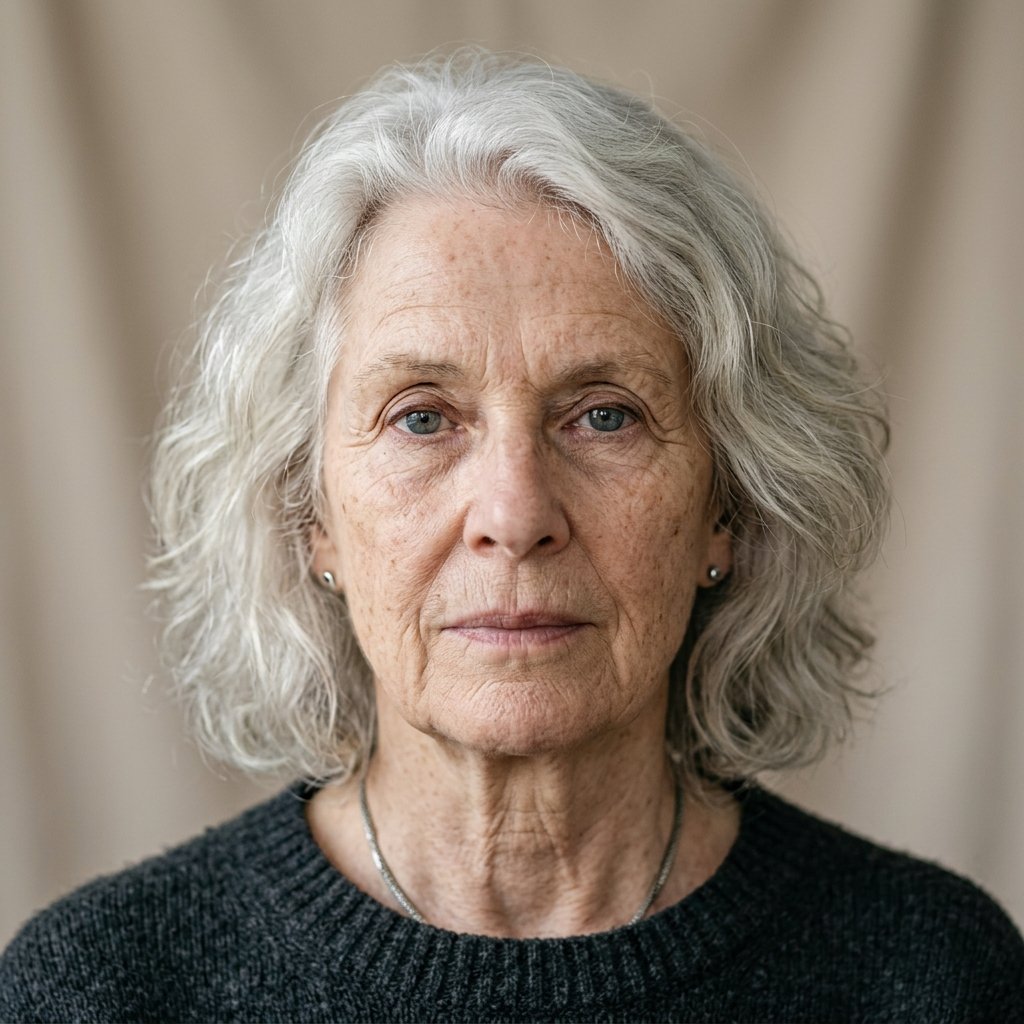
I thought it was a coyote at first.
Or maybe the wind playing tricks on a man who had been alone too long.
But when I stopped on the ridge and listened, I heard it again—a thin, high cry that could only come from a newborn baby.
My old roan gelding, Buck, froze under me.
Snow squeaked against his horseshoes as he shifted.
I pulled the collar of my sheepskin coat tighter against the January wind and squinted through the pines.
The Bitterroot Mountains rose around me like broken teeth, white and silent.
I had been riding the fence line since dawn, checking for breaks after three days of hard wind.
My hands were numb even inside my thick gloves.
I wanted to turn back to the cabin.
I wanted hot coffee and a fire.
But that cry came again.
Then another one.
Then a third.
Three tiny voices, thin as thread, calling out through the storm.
“Easy, Buck,” I said, though my own heart had started hammering.
I swung down from the saddle.
My boots sank ankle-deep into the snow.
I led Buck off the trail and up a narrow track that cut through the timber like a scar.
The wind slapped me in the face.
The pines groaned.
The babies did not stop crying.
I followed the sound until I came to a small clearing by an old fence post.
Half the post was rotted.
The other half was buried under a hard white drift.
And tied to that post was a woman.
I will never forget the sight as long as I live.
She had been lashed there with barbed wire.
Her arms were pinned behind her back.
The wire had been wound so tight that it had torn through her dress and bitten into her skin.
Snow had started to pile on her shoulders and in her hair.
Her face was the color of old linen, except where bruises spread like spilled ink across her cheek and jaw.
At her feet lay three bundled infants wrapped in a shredded nightgown.
One was mewling weakly.
The other two had gone quiet.
I dropped Buck’s reins and went to my knees in the snow.
“Ma’am,” I said, but my voice cracked.
Her eyes opened.
They were gray as the storm.
“Don’t let them take my daughters,” she whispered.
I checked the babies first.
My hands were shaking, but I moved fast.
I pressed my fingers against each tiny chest.
Three little hearts were still beating—slow, shallow, but steady.
One of the babies, the smallest one, opened her mouth and let out a sound no louder than a kitten.
I looked up at the woman.
Her lips were blue.
“You’re coming with me,” I said.
I pulled my boot knife from its sheath.
It was dull from cutting rope all winter, but it was all I had.
I sawed at the wire.
The barbs tore loose from the post.
The woman sagged forward.
She did not scream when the wire pulled free.
She did not have the strength.
I caught her before she hit the snow.
She felt lighter than a sack of grain.
I lifted her as if she were made of paper, then I gathered the babies one by one and tucked them beneath my coat with a wool blanket from my saddlebag.
Buck sidestepped, ears flat.
The wind slashed across the clearing.
“You don’t die here,” I said to the cold, or to God, or maybe to the woman whose weight was next to nothing.
“Not on my land.”
Then I started up the mountain.
The snow came down harder as we climbed.
Buck walked behind me with his head low, as if he understood the weight of what we carried.
I held the woman against my chest with one arm and kept the babies pressed close with the other.
My legs burned.
My lungs ached.
But I did not stop.
I could not stop.
Every few steps I looked down at the small faces hidden inside my coat.
I whispered to them through the wind.
“Stay with me, little ones.”
“Just a little farther.”
The half mile to my cabin had never felt so long.
The whole mountain seemed to lean against me.
The pines swayed like angry giants.
But I kept moving.
I had spent six years alone in that cabin after losing my wife and son to scarlet fever.
I had buried them on the hill behind the barn.
I had stayed alive, but I had not truly lived.
And now the Good Lord had put four lives directly in my frozen hands.
I was not about to let them go.
Finally, I saw the warm square of light in the distance.
My cabin.
I nearly wept.
I kicked open the door with my boot and carried her inside.
The stove was still holding a low fire from the morning.
The room smelled of pine smoke and old coffee.
I laid the woman down on my cot by the window.
Then I carefully pulled each baby out from under my coat and placed them on my bed, still wrapped in that torn nightgown and my wool blanket.
The smallest one cried again, a thin little sound.
“I know,” I said softly.
“I know, sweet girl.”
I threw more wood into the stove until the iron glowed red.
I filled a pot with snow and set it to melt.
Then I turned back to the woman.
She was shivering so hard the cot rattled.
Her lips were cracked.
Her fingers were white and stiff.
I pulled off my own coat and wrapped it around her shoulders.
Then I took a clean shirt from my trunk and began to tear it into strips.
Her wrists were in bad shape from the wire.
The skin was torn and angry red, but the cold had stopped most of the bleeding.
I dipped the cloth strips into warm water and cleaned the wounds as gently as I could.
She flinched but did not make a sound.
“What’s your name?” I asked.
“Clara,” she whispered after a long moment.
“Clara Bennett.”
“I’m Elias Hart,” I said.
“You’re safe now, Clara.”
She closed her eyes.
A single tear slipped down her bruised cheek.
“They were going to take my daughters,” she said.
“Who?” I asked.
“My husband.”
I stopped.
“Your husband did this?”
She nodded weakly.
“He wanted a son,” she said.
“When the third girl came, he said I was worthless.”
I felt something cold rise up inside me.
“He tied me to that post and said the mountains could have us.”
I did not speak.
I could not trust my voice.
I had seen cruelty before.
I had fought in the war.
I had watched good men die for nothing.
But this was a different kind of evil.
“What about the babies?” I asked.
“He left them there with me,” she said.
“He said if they were so precious to me, we could all freeze together.”
I stood up.
My fists were clenched so tight my knuckles cracked.
“What’s his name?” I asked.
“Marvin Bennett.”
I knew that name.
Marvin Bennett was a cattle buyer from over near Deer Lodge.
A proud man who always wore a clean black hat and thought he was better than everyone else.
I had once refused to sell him a heifer because he had mistreated his horse.
He had called me a fool and ridden off in a fury.
Now I understood exactly what kind of man he was.
“He won’t touch you again,” I said.
“But you don’t understand,” she whispered.
“He is coming back.”
“When?”
“In the spring,” she said.
“He said he would come back to bury us.”
I looked out the window at the white world beyond.
The storm was howling now.
The snow had already hidden our tracks.
“Then we have until spring,” I said.
I turned back to the babies.
They were all three awake now, squirming and making small sounds like hungry birds.
“Have you fed them?” I asked.
She shook her head.
“I have no milk,” she said.
“The fear took it away.”
I went to the pantry and found a can of condensed milk I had been saving for hard times.
I mixed it with warm water in a clean tin cup.
Then I took a clean rag, twisted the corner into a soft point, and dipped it in the milk.
I picked up the smallest baby first.
She was so light.
So fragile.
I touched the milk-soaked rag to her lips.
She started to suck.
A tiny little sound.
But she was alive.
And she was fighting.
One by one, I fed them.
They were weak, but they took the milk.
Clara watched me from the cot with tears streaming down her cheeks.
“You are very kind,” she said.
“I am just a man doing what any man should do,” I said.
But we both knew that was not true.
Most men would have ridden past.
Most men would have been too afraid.
But I was not most men.
And I had been alone long enough to know that some gifts only come in the middle of a storm.
When the babies were fed and wrapped in every warm thing I owned, I sat down in the chair by the stove.
The fire crackled.
The wind screamed outside.
But inside that little cabin, for the first time in six years, I did not feel alone.
Clara slept, and I watched over all four of them.
I studied her face in the firelight.
She was young—maybe twenty-three or twenty-four.
Her hands were rough, the hands of a woman who had known hard work.
But there was something strong in her jaw.
Something that had refused to give up even when the whole world had turned against her.
I thought of my own wife, Rebecca.
She had died giving birth to our son, Benjamin.
The boy had followed her two days later.
For months I had blamed God.
For six years I had lived like a ghost on this mountain.
And now here was a woman who had given birth to three new lives and had been left to die for that very miracle.
The injustice of it burned in my chest.
At some point in the night, Clara woke again.
She tried to sit up.
“Easy,” I said.
“You need rest.”
“I need to hold my babies,” she said.
I helped her sit up and brought each baby to her, one by one.
She held them against her chest and wept silently.
“Thank you,” she whispered over and over.
“Thank you.”
I nodded and looked away.
I did not want her to see the tears in my own eyes.
“What will you do?” she asked after a while.
“I will keep you safe,” I said.
“But Marvin—”
“Marvin Bennett will have to go through me,” I said.
“And I promise you, Clara, he will not enjoy that.”
She looked at me then, and for the first time, I saw a flicker of hope in those gray eyes.
“Why would you do this?” she asked.
“You don’t even know me.”
I thought about that for a long moment.
Then I told her the truth.
“Because I know what it is to lose everything,” I said.
“And I know what it is to be given a second chance.”
“This is my second chance.”
The fire popped and settled.
The wind moaned in the chimney.
Outside, the blizzard raged on through the night.
But inside that little cabin, something sacred was beginning.
A new family was being born in the middle of the Montana wilderness.
The next morning, I woke to the sound of a baby crying.
For one terrible moment, I thought it had all been a dream.
Then I saw Clara asleep on my cot with a baby in each arm.
The third baby was lying in a drawer I had padded with a clean blanket.
I got up quietly and stoked the fire.
I put coffee on the stove and made breakfast—flour biscuits and salt pork.
The smell filled the cabin.
Clara stirred.
“Good morning,” I said.
“Good morning,” she replied.
Her voice was stronger today.
“I need to get word to the town,” I said.
“You need a doctor.”
She shook her head.
“No doctor,” she said.
“People talk.”
“You need medicine,” I insisted.
“And those babies need proper milk.”
She looked at me with those steady gray eyes.
“Then you go,” she said.
“But take my story to the sheriff.”
I nodded.
“I will.”
But then I looked outside at the snow, which had drifted higher than the porch rail.
“It will be a few days before I can get down the mountain,” I said.
“The pass will be closed.”
“Then we wait,” she said.
“We have everything we need right here.”
I smiled at that.
“Yes,” I said.
“We do.”
Over the next several days, we fell into a quiet rhythm.
I fed the stock in the barn and brought in firewood.
Clara rested and regained her strength.
The babies ate and slept and cried.
I found that I did not mind the crying.
It meant they were alive.
On the third morning, Clara was strong enough to stand.
She wrapped herself in one of my old coats and walked slowly around the cabin.
“This is a good place,” she said.
“It has good bones.”
“My Rebecca used to say the same thing,” I said without thinking.
She turned to me.
“Your wife?”
I nodded.
“She passed six years ago,” I said.
“Our son too.”
“I am so sorry,” Clara said softly.
“So am I,” I said.
“But I think she would be glad to see this house full again.”
Clara smiled.
It was the first real smile I had seen from her.
It changed her whole face.
“What are their names?” I asked, looking at the babies.
“Alice, Grace, and Ruth,” she said.
“After my mother and two sisters.”
“Good strong names,” I said.
“Good strong girls.”
She nodded.
“They had to be strong,” she said.
“They had to survive their father.”
That evening, I opened the old trunk at the foot of my bed.
Inside were Rebecca’s things.
Her blue gingham dress.
Her wool shawl.
Her Sunday boots.
I had not opened that trunk in years.
I had not been able to bear it.
But that night, I pulled out the wool shawl and handed it to Clara.
“You will need this,” I said.
She took it in her hands as if it were made of gold.
“Are you sure?” she asked.
“Yes,” I said.
“Rebecca would have wanted you to have it.”
She wrapped the shawl around her shoulders and closed her eyes.
“Thank you,” she whispered.
I nodded and swallowed the lump in my throat.
That night, as I sat by the fire, I realized that I had not spoken Rebecca’s name in all those years.
But saying it now had not broken me.
It had set me free.
And somewhere deep in my heart, I knew that Rebecca was watching.
And she was smiling.
The days passed slowly, and the snow kept falling.
I did not mind the isolation.
In fact, I dreaded the coming of spring.
Because spring meant Marvin Bennett would return.
And spring meant the world would come crashing back into our little cabin.
But I was ready.
I had found something worth fighting for again.
One evening, about a week after the rescue, Clara asked me a hard question.
“Elias,” she said.
“What if he finds us before we can get to the sheriff?”
“He’ll find me first,” I said.
“I’ll