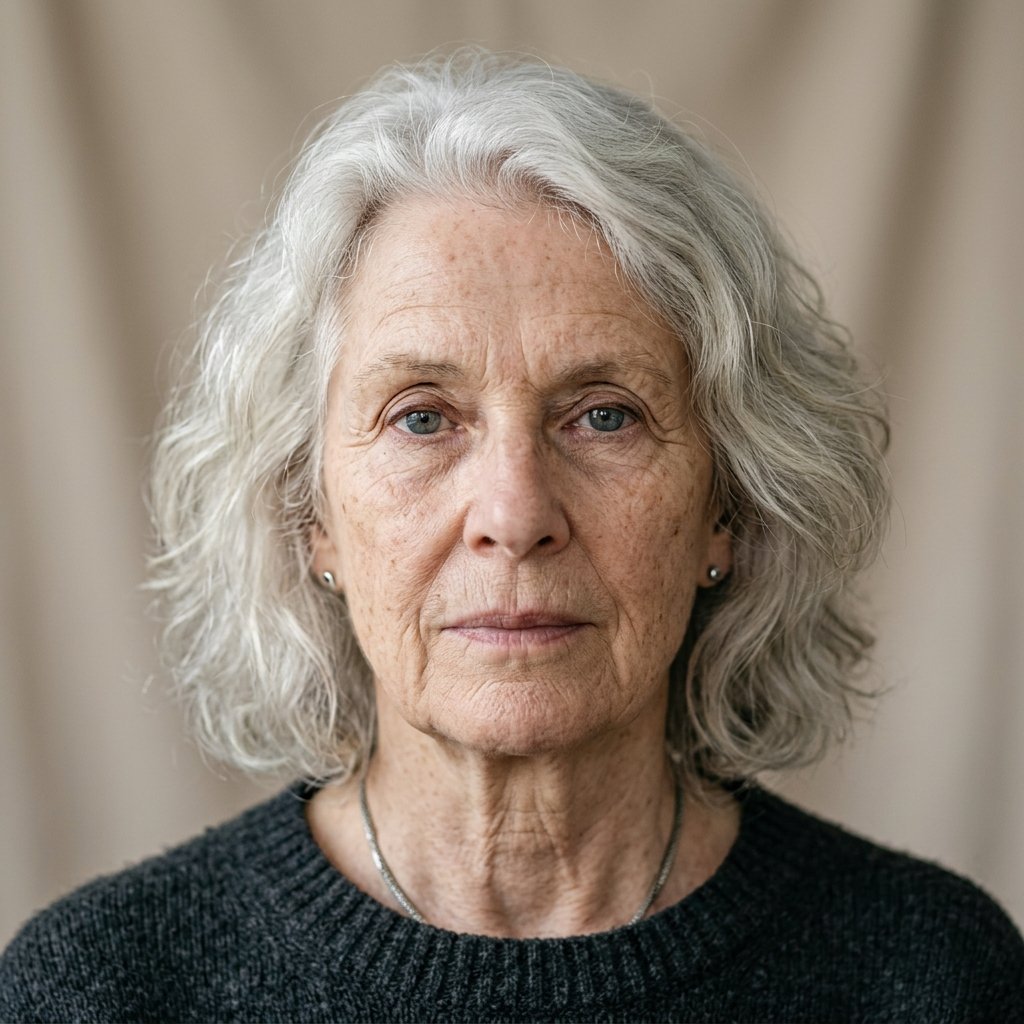
The morning Hannah Cole became a wife, snow fell over the Blue Ridge Mountains with a sad patience, as if the sky itself knew that this was not a day of celebration, but of resignation.
Hannah, twenty-three years old, looked at herself in the cracked mirror of the old farmhouse and smoothed her mother’s wedding dress with trembling hands. The yellowed lace smelled of mothballs, of stored years, and broken promises. She wasn’t trembling from the cold. She was trembling with shame.
Her father, Ronald Cole, knocked on the door.
“It’s time, sweetheart.”
Hannah closed her eyes for a second.
“I’m ready,” she lied.
The truth was uglier and simpler. Her father owed $50 to the local bank in their tiny town of Jasper Hollow, Virginia. Fifty dollars. Exactly the same amount for which they were giving her away in marriage to a man she had not chosen.
At home, they called it an “arrangement.”
The bank manager, Mr. Hensley, called it a “solution.”
Her brother Travis, who smelled of cheap whiskey before dawn, called it “luck.”
Hannah called it by its real name.
A sale.
The man she was to marry was named Caleb Whitfield. He was thirty-eight years old, lived alone on an isolated ranch tucked between pine ridges and deep ravines, and in the town of Jasper Hollow, everyone said the same thing about him: that he owned good land and that he spoke to no one.
Some called him surly.
Others, crazy.
Most called him simply “the deaf man.”
Hannah had only seen him twice.
The first time, months ago, when he entered the general store for salt, nails, and coffee. Tall, broad-shouldered, silent as a shadow. He had paid in exact change and left without a single word, his boots heavy on the wooden floor.
The second time, a week before the wedding, when her father brought him to the house.
Caleb had stood in the living room, with snow melting on his boots, and did not say a single word. He pulled a small notebook from his coat pocket, wrote something with a stubby pencil, and handed it to Ronald.
“Agreed. Saturday.”
Nothing more.
No courtship. No questions. Not a single sign of excitement.
The ceremony lasted less than ten minutes.
Pastor Whitfield, no relation to the groom, pronounced the words like someone fulfilling an uncomfortable obligation in the drafty little chapel on County Road 9.
Hannah repeated the vows with a voice that didn’t feel like her own.
Caleb merely nodded when necessary.
When the moment for the kiss came, he barely brushed her cheek with his lips and pulled away immediately.
He didn’t seem happy.
He didn’t seem cruel, either.
That, as strange as it was, left Hannah even more unsettled.
The trip to the ranch took almost two hours.
He drove his old Ford truck in silence. She, at his side, kept her hands clasped in her lap and watched the white landscape stretch as far as the eye could see. The winding gravel road climbed higher into the mountains until the town disappeared behind them.
Upon arrival, she found a solid wooden house, a corral, a barn, a well, and beyond that, forest and mountain. No neighbors. No nearby lights. Only wind, snow, and an immense silence.
Caleb helped her down from the truck and led her inside.
The house was austere but clean. A sturdy oak table, two chairs, a lit fireplace, a small kitchen with an iron stove, and a bedroom in the back. The floors were swept, the windows clear, but there was a heaviness in the air, like a house that had held too many quiet nights.
He took out the notebook again and wrote:
“The bedroom is yours. I will sleep out here.”
Hannah looked at him, surprised.
“That’s not necessary.”
He shook his head and wrote again.
“It’s decided.”
That night, while unpacking her small suitcase in the room, Hannah cried for the first time since it all began. She made no sound. She just let the tears fall onto her mother’s old dress, as if each one buried a piece of the life she was no longer going to have.
The first few days were cold in every sense.
Caleb got up before dawn, went out to tend to the cattle, fix fences, or chop wood, and returned with his clothes smelling of smoke and wind. Hannah cooked, swept, sewed, and washed in silence. They communicated through the notebook.
“There will be a storm.”
“I need to check the well.”
“The flour is in the top drawer.”
“I’ll be back after dark.”
Nothing more.
It was practical, distant, like two strangers sharing a house out of necessity. Hannah began to wonder if he regretted the arrangement, or if he simply expected nothing from her at all.
However, on the eighth day, something changed.
Hannah woke up in the middle of the night to a harsh, stifling sound, like the groan of a man trying not to make noise. It came from the main room, muffled but full of pain.
She slipped out of bed and found Caleb on the floor by the fireplace, his hand pressed against the side of his head. His face was contorted in agony, his skin damp with sweat, and his body tense like a rope about to snap.
Hannah knelt beside him.
“What’s wrong?”
Her voice sounded small in the dark room.
He couldn’t hear her, of course. But he saw her mouth move and, with a trembling hand, reached for the notebook that had slid across the floor. He wrote just two crooked words.
“Happens often.”
Hannah didn’t believe him.
No one who “happens often” ends up like that, writhing on the floor, biting back screams. She had seen pain before, but this was different. This was the kind of pain that steals a man’s breath and leaves him hollow.
She brought him a damp cloth, helped him lie back against a folded blanket, and stayed by his side until the spasm subsided. She watched his jaw slowly unclench, watched his breathing ease, watched the color creep back into his face.
Before falling asleep, Caleb wrote a single sentence.
“Thank you.”
From then on, Hannah began to observe.
She saw how, some mornings, he would involuntarily move his hand to the right side of his head.
She saw bloodstains on the pillowcase.
She saw the way he held back the pain, as if he had made it part of his routine, like milking the cows or chopping wood.
One night, after dinner, she asked him in writing how long he had been like this.
Caleb responded:
“Since I was a child. The doctors said it was related to my deafness. That there was no cure.”
Hannah wrote back:
“Did you believe them?”
He took a while to respond. His pencil hovered over the page for a long moment.
“No.”
Three nights later, Caleb fell from his chair in the middle of dinner.
The thud echoed sharply against the floor, and his bowl of stew clattered beside him. Hannah shot to her feet, her chair scraping back.
“Caleb!”
He was convulsing with pain, clutching his head, his boots scraping against the floorboards. His face was white as the snow outside, his teeth grinding so hard she could hear it.
Hannah grabbed the oil lamp and brought it close to his face. She carefully brushed aside his dark hair, which was damp with sweat, and looked inside the swollen ear.
What she saw turned her blood to ice.
There was something in there.
Something dark.
Something alive.
It moved.
She recoiled for an instant, her heart about to burst through her ribcage. A scream lodged in her throat, but she swallowed it down. She had to stay calm. She had to think.
Hannah prepared hot water, fine sewing tweezers, and alcohol. Her hands shook, but she forced them steady by pressing them flat against the table for a moment.
Caleb, pale and sweaty, looked at her with distrust and fear. His eyes were wide, and for the first time, she saw a crack in that silent, unbreakable wall of his.
She wrote with a steady hand:
“There is something inside your ear. Let me take it out.”
He shook his head violently. He grabbed the notebook and wrote:
“It’s dangerous.”
Hannah took the pencil and replied:
“It’s more dangerous to leave it there. Do you trust me?”
Caleb held her gaze for a few eternal seconds. The fire crackled behind them, throwing long shadows across the walls.
Then, very slowly, he nodded.
Hannah worked with a trembling pulse but with determination fixed in her chest. She knelt beside him, tilted his head so the lamplight fell directly into his ear, and introduced the tweezers bit by bit.
Caleb gripped the edge of the table until his knuckles turned white. A low, ragged sound escaped his throat, but he did not pull away.
She felt resistance.
Then a tug.
Then a sickening, wet sliding sensation.
And suddenly, something came out writhing between the metal.
Hannah dropped the tweezers and scrambled backward, her hand flying to her mouth. The thing hit the floor with a soft, wet sound.
It was huge. Easily two inches long. Dark, segmented, glistening in the lamplight.
A botfly larva.
Alive and twisting on the floorboards, its tiny hooks still grasping the air.
Caleb stared at it, his face blank with shock. Then he looked up at Hannah, and for the first time, his eyes filled with tears.
She wanted to speak, but no words came. She grabbed the notebook with trembling hands and wrote:
“It’s out. It’s finally out.”
He read it, then looked back at the creature. His chest heaved, and a sob broke from him, raw and unguarded. He covered his face with his hands and cried like a man who had carried a mountain for thirty years and just now felt it lift.
Hannah knelt beside him and, without thinking, wrapped her arms around him. He tensed for a moment, then leaned into her, his shoulders shaking.
They stayed like that for a long time.
The next morning, everything was different.
The silence between them no longer felt like a wall. It felt like a language.
Caleb wrote in the notebook more than he ever had before. He told her about his childhood, about the constant infections, about the doctors in Charlottesville who had told his parents it was all in his head. He told her how he had learned to live with the pain, to hide it, to bury it so deep that even he almost forgot it was there.
And Hannah wrote back.
She told him about her mother’s death. About her father’s debts. About the $50 sale that had brought her here. She told him she had arrived expecting a prison, and instead had found a man who slept on the floor so she could have the bed.
Caleb read her words, and then he wrote:
“I bought you out of debt, but I don’t own you. You’re free here, Hannah. You can stay or you can go. I’ll give you enough money to start over if that’s what you want.”
Hannah stared at the page, the words blurring.
Then she picked up the pencil and wrote:
“What if I want to stay?”
Caleb looked at her for a long moment. Then he smiled for the first time since she had met him. It was small and uncertain, but it reached his eyes.
He wrote:
“Then stay.”
And she did.
Weeks passed. The snow began to melt, and the first green shoots appeared along the fence line. Hannah planted a garden. Caleb fixed the roof. They fell into a rhythm, and slowly, the notebook became less of a necessity and more of a bridge.
One evening, as they sat on the porch watching the sun sink behind the mountains, Caleb wrote:
“I can hear something now. Faint. Like wind in the trees. The doctors said I never would.”
Hannah wrote back:
“What else can you hear?”
He paused, then wrote:
“Your voice. Not the words, but the sound of it. It’s the most beautiful thing I’ve ever heard.”
Hannah felt her eyes burn. She reached out and took his hand, and he held it like it was the most natural thing in the world.
Months later, in the spring, Hannah’s father showed up at the ranch.
He stood on the porch, hat in hand, looking older and more broken than she remembered. He had heard rumors that Caleb was getting better, that the ranch was thriving, that his daughter was happy.
“Hannah,” he said, his voice cracking. “I came to apologize. I was wrong. I was a coward. I sold you to settle a debt, and I have not slept since.”
Hannah crossed her arms. “You sold me for $50. That’s what I was worth to you.”
Her father flinched as if she had struck him.
“I know. I’ll spend the rest of my life trying to make it right.”
Caleb appeared in the doorway behind her. He looked at Ronald Cole, then at Hannah, then pulled out the notebook and wrote something quickly.
He handed it to her father.
Ronald read it aloud, his voice unsteady.
“‘You don’t owe me anything. I owe you. You brought me Hannah. That is the greatest gift I have ever received.'”
Ronald broke down crying. He fell to his knees on the wooden porch and sobbed like a child.
Hannah looked at Caleb, then back at her father.
She took a deep breath and said, “Get up, Dad. You can come in for supper.”
It wasn’t forgiveness. Not yet.
But it was a start.
That night, after her father had gone to sleep in the spare room, Hannah sat beside Caleb by the fireplace and wrote in the notebook:
“You didn’t have to say that. You could have turned him away.”
Caleb wrote back:
“He’s your father. And I know what it’s like to carry shame. It eats at you. I wanted to give him a chance to put it down.”
Hannah stared at him, at this quiet, deaf man who had been sold a wife and had chosen to give her freedom instead. This man who had suffered silently for decades and never once asked for pity.
She wrote:
“I came here thinking my life was over. But this is the first place I’ve ever felt alive.”
Caleb smiled and wrote:
“Then we are both learning to hear.”
And in that moment, surrounded by the warmth of the fire and the quiet of the mountains, Hannah understood what the little adobe church ceremony could never have given her.
This was not a sale.
This was a beginning.
That night she slept beside him for the first time, not as a woman sold into marriage, but as a woman who had chosen to stay.
Years later, people in Jasper Hollow would tell the story of the deaf farmer and the heavy girl who had been traded for $50.
They would tell how she pulled a monster from his ear and, in doing so, pulled him out of a lifetime of silent suffering.
They would tell how he had given her back her freedom and, in doing so, had won her heart.
But what they would never fully understand was this.
The thing she pulled out of his ear that awful night was not the only thing that had been living inside him.
It was the shame. The loneliness. The years of being called “the deaf man” as if that were the only part of him that mattered.
And when it came out, writhing and ugly in the lamplight, it took all of that with it.
Hannah and Caleb built a life together on that mountain. They raised cattle, grew vegetables, and had a daughter they named Grace. She was born with perfect hearing, and her first word was not “Mama” or “Dada,” but “home.”
And every night, before they fell asleep, Caleb would reach for his old notebook and write one line.
Hannah would write back.
It was never anything fancy.
Just two words.
“Thank you.”
And she would always smile and reply:
“You’re welcome.”
If this story touched your heart, please Like and Follow our page so we can keep sharing powerful true stories like this one. And if it made you believe in unexpected love, Share it with someone who needs to be reminded that healing can come from the strangest places.