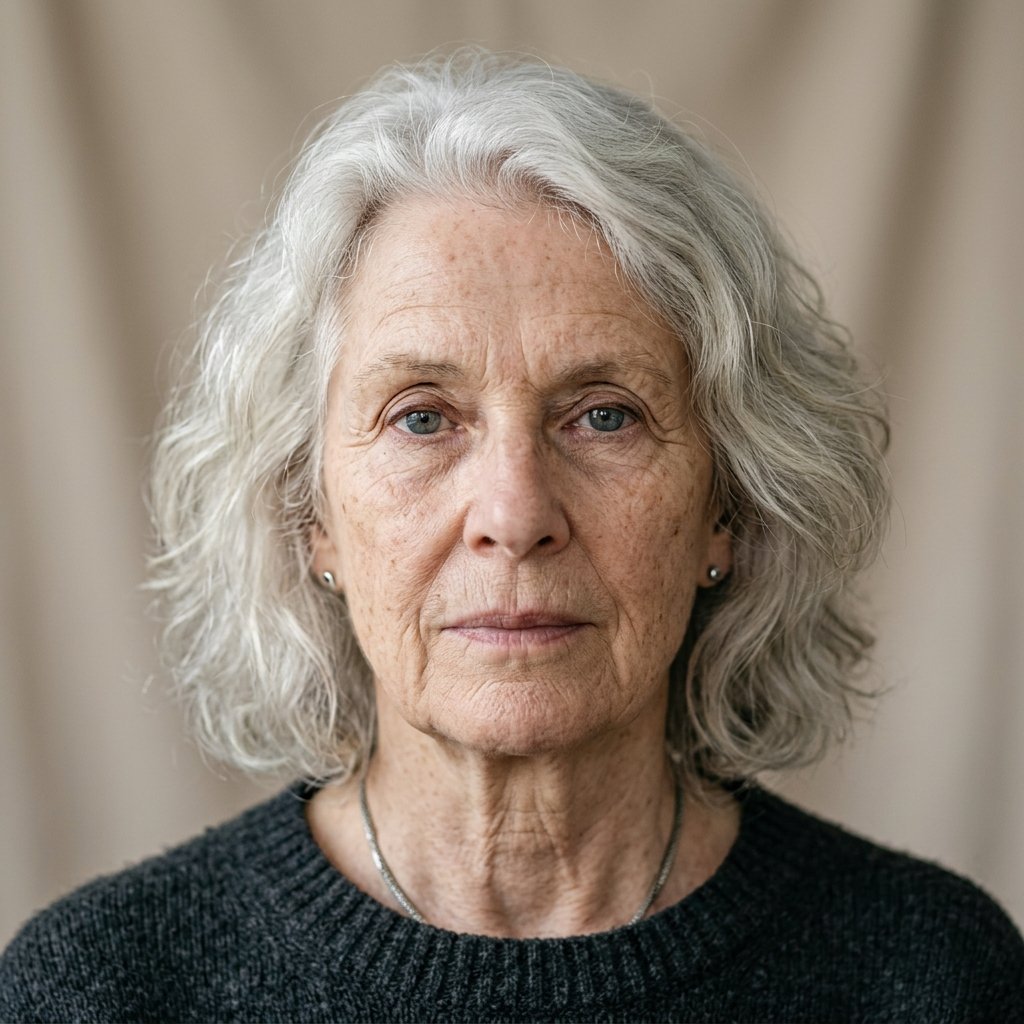
I walked into Mercy Crest Medical Center in Nashville, Tennessee, on a cold Tuesday morning, carrying a small suitcase, a worn-out sweater, and a shattered heart.
No one came with me. There was no husband in the waiting room. No mother pacing the hallway. No friend holding a phone, ready to record the first cry. There was only me, my shallow breathing, and the weight of nine months of silence pressing down on my chest.
My name is Jenna Calloway. I was twenty-six years old that day. And I had learned far too soon that some women don’t just give birth to a child. They give birth to a completely new version of themselves.
At the front desk of the maternity ward, the nurse smiled at me with that warm, practiced kindness nurses are so good at.
“Is your husband on his way, sweetheart?” she asked.
I gave her an automatic smile. The tired smile I had perfected over seven long months so I wouldn’t crumble in front of strangers.
“Yes,” I said. “He won’t be long.”
It was a lie. The biggest lie I told that entire day.
Brandon Whitfield had left seven months earlier, the exact same night I told him I was pregnant. He didn’t scream at me. He didn’t insult me. He didn’t throw anything or slam his fist against the wall. He simply packed a few clothes into a dark gray backpack with this terrifying calm, told me he needed to “think,” and closed the front door behind him with a soft, cowardly click that hurt worse than any blow ever could.
I cried for three weeks straight. I cried until my eyes were swollen shut and my ribs ached and my pillow was permanently damp. Then I stopped crying. Not because the pain had ended, but because the pain no longer fit inside my body. It had to transform into something else. Work. Survival. Routine.
I found a tiny room in a shared house on the east side of Nashville. The walls were thin and the radiator hissed at night, but it was mine. I took double shifts at a diner downtown called Ruby’s Corner. I saved every single cent I could. I rubbed my swollen feet every night with warm water and cheap lotion, and I talked to my baby before I fell asleep, my hand resting on my growing stomach.
“I am going to stay with you,” I promised him in the dark. “No matter what happens, I will never leave you.”
Labor started in the early hours of a freezing morning. It lasted twelve brutal hours. Twelve hours of pain that rose and crashed over me like furious waves, splitting me open from the inside. I gripped the metal bed rails until my knuckles turned white as bone.
The nurses were incredible. They encouraged me constantly. They checked the monitors. They wiped the sweat off my forehead with cool cloths. They told me I was doing great. I only repeated the same desperate words between gasping breaths.
“Let him be okay… please, just let him be okay.”
At exactly 3:17 p.m., my son was born.
His crying filled the delivery room like a bell announcing life itself. The sound echoed off the white walls and wrapped around me like a blanket. I let my head fall back against the pillow and wept with a strength I hadn’t even possessed the night Brandon left. This was different. This was fear finally letting go. This was love being born in the form of a tiny, screaming human being.
“Is he okay?” I asked over and over. “Is my baby okay?”
A young nurse with red hair pulled back into a ponytail smiled down at me as she wrapped my son in a soft white blanket.
“He’s perfect, honey. Absolutely perfect.”
They were preparing to place my newborn in my arms when the on-call doctor entered the room to do the final chart review. He was a man of nearly sixty, with steady hands, a deep calm voice, and the kind of quiet authority that makes everyone around him feel like everything is completely under control.
His name was Dr. Alan Whitfield.
He took the clinical sheet from the nurse’s station. He walked toward the baby. He looked down for just a second.
And then he froze.
The head nurse was the first one to notice something was wrong. Dr. Whitfield’s face had gone pale, like all the blood had drained out of it in a single instant. His hand trembled slightly over the clipboard. His eyes, always so steady and professional, filled with something no one in that room had ever seen before.
Tears.
“Doctor?” the nurse asked carefully. “Are you feeling all right?”
He didn’t answer her.
He kept staring down at my baby. At the shape of his tiny nose. At the soft line of his mouth. And then, right below the baby’s left ear, at a small birthmark shaped like a cinnamon crescent moon.
I sat up in alarm, still weak from labor, still shaking from the adrenaline and exhaustion.
“What’s wrong?” I asked. “What’s wrong with my son?”
Dr. Whitfield swallowed hard. When he finally spoke, his voice came out barely above a whisper.
“Where is the child’s father?”
My expression hardened instantly. My whole body went rigid. That was not a question I wanted to answer.
“He isn’t here,” I said flatly.
“I need to know his name,” he said.
“Why?” I asked, already defensive. “What does that have to do with my baby?”
The doctor looked at me then. And the expression on his face stopped my breath. It was an ancient, almost unbearable sadness. The kind of sadness that carves itself into a person’s bones over decades and refuses to leave.
“Please,” he said softly. “Tell me his name.”
I hesitated. I didn’t want to say it. But the way he looked at me, so broken, so desperate, I couldn’t stop the word from leaving my mouth.
“Brandon,” I finally said. “Brandon Whitfield.”
The silence in the delivery room became absolute.
The machines beeped softly. The baby cooed and shifted inside his blanket. But no one spoke. No one moved. It felt like the entire world had stopped rotating.
Dr. Whitfield closed his eyes. A single tear escaped down his cheek. Then another. They fell silently onto his white coat.
“Brandon Whitfield,” he repeated slowly, his voice cracking. “Is my son.”
No one moved.
My newborn’s soft crying was the only sound left in that room where, suddenly, two completely separate stories had broken apart and joined together at the same exact moment. I felt all the air disappear from my lungs.
“No…” I murmured. “That can’t be.”
But on Dr. Whitfield’s face, there was no doubt. Only pain. An old, deeply buried pain that had suddenly just found another name.
He sat down heavily in the chair beside my bed, as if his legs could no longer hold him. The clipboard slid to the floor with a clatter. He stared at the newborn in the bassinet, tears still falling down his weathered face.
Then, he began to speak.
“I haven’t seen Brandon in eight years,” he whispered. “Not since his mother died.”
I lay back against the pillows, my heart pounding so hard I could hear it in my ears. The nurses stood frozen by the door, uncertain whether to leave or stay. The baby whimpered softly, and the red-haired nurse instinctively stepped forward to gently rub his back.
Dr. Whitfield kept his eyes on the baby. His voice was low and broken.
“He blamed me for her death. I worked too much. I missed too many family dinners. I was at this hospital the night she collapsed.” He paused. “I was in surgery. I couldn’t leave. By the time I got to her room, she was already gone.”
He turned to look at me, his eyes red and wet.
“Brandon never forgave me. He packed a bag that same week and disappeared. I haven’t heard his voice since.”
I didn’t know what to say. My son’s father had abandoned me to “think,” and now I was staring at his own father, who had also been abandoned. Two generations of Whitfield men. Two vanishing acts. And here in this sterile white room, all the broken pieces had collided.
Dr. Whitfield wiped his eyes with the back of his hand, taking a shaky breath.
“I know I have no right to ask you anything,” he said. “But that boy in the blanket… he is my grandson.”
I looked at the baby. My son. The one I had promised never to leave.
And I realized the most painful truth of all: the man who had left me was also a man who had been left. Maybe not in the same way. But hurt still echoed through his family like a sickness.
I didn’t offer Dr. Whitfield forgiveness for Brandon. That wasn’t my place. I didn’t promise him a place in my son’s life. That felt too big for that moment.
But I did reach over, ignoring the pain in my body, and took his trembling hand.
“You’re here now,” I told him quietly. “That’s more than Brandon ever did.”
He broke down then. The great, steady doctor who had delivered hundreds of babies, who had ordered nurses through emergencies, who had been calm in the face of chaos, sobbed like a child beside my hospital bed.
The following hours blurred together. The nurses found someone to cover Dr. Whitfield’s shift. He sat with me as I held my son for the first time, watching with a mixture of grief and awe. He didn’t ask to hold him. He just looked at the tiny face and cried quietly.
I named the baby Noah. Noah Calloway. Not Whitfield. That was a decision I made with a clear head. He would carry my name, because I was the one who stayed.
But when Dr. Whitfield left late that night, he paused at the door and looked back at me.
“May I see him again?” he asked.
I looked down at Noah, sleeping peacefully in my arms. Then I nodded.
“Yes,” I said. “You can.”
Because no matter how much Brandon had hurt me, no matter how much he had run away, this old man with the tear-stained face had done nothing but show up. And in a world full of people who leave, showing up matters more than anything.
Maybe that is what I learned in that delivery room. We don’t get to choose the family we are born into. But sometimes, in the strangest and most painful moments, we get to choose the family we allow to stay.
If you enjoyed this story, please Like our page, Follow us for more, and Share this with someone who needs to feel this today. Thank you for reading.