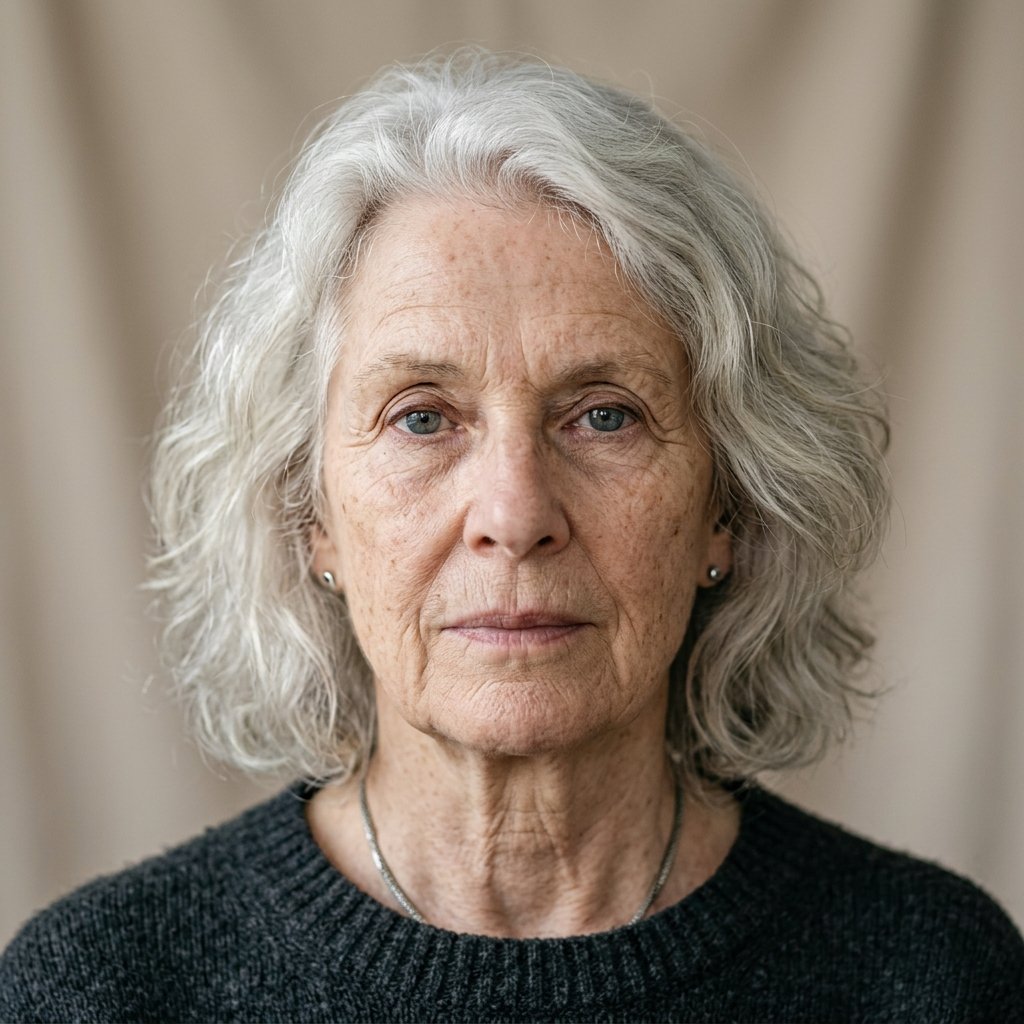
At 6:14 p.m., I stood beside my daughter’s hospital bed at the Cleveland Clinic and took a photograph I never imagined sharing.
Olivia looked almost colorless beneath the white blankets.
The breathing tube had been removed only an hour earlier, but angry red marks still circled her mouth.
Her dark hair was tangled against the pillow, and a line of neat stitches disappeared beneath the collar of her hospital gown.
She had survived a ruptured aneurysm after collapsing during basketball practice at Shaker Heights High School.
The surgeon called the operation “a race measured in seconds.”
My hands were still trembling when I sent the photograph to our family group chat.
“She wants to see you,” I wrote.
I stared at the screen, waiting.
My younger brother Brian answered first.
“Busy. Handle it.”
Just those three cold words.
I blinked, trying to process it, when two minutes later my mother Linda added, “She lived. Stop making her our problem.”
I read those words over and over until they blurred into something unrecognizable.
“It’s okay,” I replied.
Then I set the phone down gently on the windowsill and walked into the hospital restroom.
I locked the door.
I pressed both hands over my mouth.
And I cried.
Not quiet, dignified tears.
I sobbed like a broken man, the kind of crying you never want anyone to witness.
The sound was muffled against my palms, but my whole body shook.
For years, I had been the dependable one.
The one everyone called when something broke or money ran out.
When my mother’s roof leaked during a storm, I spent three weekends patching it without charging her a dime.
When Brian’s restaurant failed in downtown Cleveland, I loaned him twenty thousand dollars even though my wife whispered it was a terrible idea.
When family vacations got canceled because someone needed help moving, I was the one who showed up with a truck.
I never complained.
I thought that was just what family did.
But now, when my only child lay in a hospital bed after nearly dying, they treated her survival like an inconvenience to their schedules.
I stayed in that restroom for almost twenty minutes, splashing cold water on my face until the redness faded from my eyes.
When I came out, Olivia was still sleeping.
I sat down in the hard plastic chair beside her bed and held her small, cold hand.
The nurses came and went, checking monitors and adjusting drips.
The hours crawled by.
At 9:40 p.m., her eyelids fluttered.
“Daddy?” she whispered, her voice hoarse from the tube.
“I’m right here, sweetheart,” I said, leaning close.
She tried to smile but it came out wobbly. “Did Grandma answer?”
My heart clenched like a fist.
I forced a smile that I hoped looked real. “She knows you’re safe. She’s glad.”
Olivia nodded weakly, but I saw the disappointment move across her pale face like a shadow.
She knew.
Children always know.
I held her hand tighter and told her to rest.
She closed her eyes again, and I thought I had gotten away with the lie.
Then at 9:57, a nurse named Margaret rushed into the room with wide eyes and a television remote.
“Mr. Thompson, you need to see this,” she said, already turning on the small wall-mounted screen.
A local news reporter stood outside the hospital beneath flashing emergency lights, looking serious and urgent.
“We are following a major development involving the incident at Shaker Heights High School,” she announced. “Seventeen-year-old Olivia Thompson is now being credited with saving at least eleven lives.”
I froze.
My ears started ringing.
The report showed security footage from the school gymnasium.
Gracious, silent footage that made my breath stop.
Minutes before Olivia collapsed, she had smelled gas near the boiler room.
She didn’t just run away.
She pulled the fire alarm.
She ran to the coaching staff and warned them.
Then she helped evacuate younger students from an after-school program in the adjacent building.
The footage showed her carrying a small, frightened boy outside, her face determined even as her own body was failing.
She collapsed on the grass only after she set that child down safely.
Investigators later discovered a damaged natural-gas line beneath the gym floor.
The fire chief said the entire building could have exploded within minutes.
Eleven children and two adults would have been inside.
My daughter saved them all.
Then the reporter said something that made my knees buckle.
The child Olivia carried out, the eight-year-old boy with the trembling lip, was Lucas Mitchell.
Son of United States Senator Karen Mitchell.
I gripped the side of the bed so hard my knuckles went white.
At exactly 10:00 p.m., every major station picked up the story.
News vans pulled up outside the hospital, their antennas rising into the night sky.
Reporters swarmed the entrance.
The governor released a statement praising Olivia’s bravery.
And Senator Mitchell appeared on live television, tears streaming openly down her face, voice shaking with emotion as she thanked the teenage girl who had saved her son.
“If it weren’t for Olivia Thompson,” she said, “I would be planning my little boy’s funeral tonight. She is a hero in the truest sense of the word.”
Across town, my mother Linda watched from her living room.
She had been sitting in her recliner, probably scrolling through her phone, when the breaking news interrupted her program.
She saw the hospital photograph they displayed beside the headline: TEEN HERO FIGHTS FOR HER LIFE AFTER SAVING ELEVEN CHILDREN.
The same photograph I had sent to the family group.
The photograph she had dismissed.
Her phone slipped from her hand and clattered to the hardwood floor.
She just stared at the television, mouth open.
At a crowded restaurant in Lakewood, my brother Brian watched the same broadcast from a mounted television above the bar.
His business dinner, so incredibly important that he couldn’t visit his dying niece, went completely silent.
The whole restaurant turned to watch.
Brian’s face went pale.
His phone dropped into a glass of water right in front of him, but he didn’t even notice.
Then, almost simultaneously, they began calling me.
My phone started buzzing frantically on the windowsill.
Mom.
Brian.
Mom again.
Brian again.
Their names flashed across my screen like little alarms, one after another, urgent and insistent.
I looked at the phone.
Then I looked at my daughter, still pale but breathing steadily, her hand warm in mine.
I thought about all the years I had answered every call.
Every crisis.
Every request.
And I thought about how they had answered mine.
“Busy. Handle it.”
“Stop making her our problem.”
I reached for the phone.
My thumb hovered over the green button for just a moment.
Muscle memory.
But then I saw Olivia’s stitches, the red marks around her mouth, the incredible fragility of her young life.
And I realized something that took my breath away.
My daughter had saved the lives of eleven strangers without hesitation.
While her own family wouldn’t even spare a moment to acknowledge hers.
For the first time in my entire life, I pressed Decline.
The buzzing stopped.
The silence in the room was the most peaceful thing I had ever heard.
I brought Olivia’s hand to my lips and kissed it gently.
“You rest, sweetheart,” I whispered. “Daddy’s got this now.”
A few minutes later, my phone buzzed with a text message from a number I didn’t recognize.
It was Senator Mitchell.
She had somehow gotten my number through the hospital.
“Mr. Thompson, I will be at the hospital in the morning to thank your daughter personally. Anything you need, anything at all, I am here. Your daughter is an angel.”
I read that message twice.
A United States Senator, a woman who probably had a thousand demands on her time, was making my daughter a priority.
But my own mother couldn’t be bothered.
Funny how the world works, isn’t it?
The hours passed slowly.
Around midnight, a nurse came in to check Olivia’s vitals.
“She’s doing wonderfully,” the nurse said softly. “She’ll be groggy for a few days, but all signs point to a full recovery.”
“Thank you,” I said, and meant it with every fiber of my being.
The nurse glanced at the muted television, which was still showing coverage of the story on a loop.
“You must be incredibly proud,” she said.
“I am,” I said. “More than words can say.”
I told myself I wouldn’t cry again that night.
But when the nurse left and the room was quiet, a few more tears escaped.
These were different tears, though.
They were tears of overwhelming pride and gratitude.
My little girl was a hero.
Not because she saved a senator’s son, but because she did the right thing when it mattered most.
Because she was brave and selfless and good.
Everything I had tried to raise her to be.
And somehow, despite everything, that goodness had survived, like a candle in the wind.
The next morning, Olivia woke up clearer and more alert.
“Daddy,” she said, “why are there so many news trucks outside?”
I smiled—a real one this time—and gently brushed the hair from her forehead.
“Because the whole world found out what I’ve always known, sweet pea. You’re a hero.”
She looked confused. “I just smelled gas. It wasn’t a big deal.”
I laughed, a choked, emotional laugh. “It was a very big deal. You saved lives.”
Her brow furrowed. “Is Grandma coming now?”
I paused.
I thought carefully about how to answer.
“I don’t think so, sweetheart. And you know what? That’s okay. We have each other. That’s all we need.”
Olivia looked at me for a long moment, her wise young eyes searching my face.
Then she nodded.
“Okay, Daddy. I love you.”
“I love you too, more than anything in this world.”
The rest of that week was a blur of reporters, official thanks, and slow healing.
Senator Mitchell visited as promised, bringing little Lucas with her.
The boy walked right up to Olivia’s bed and handed her a hand-drawn card that said “Thank You” in wobbly crayon letters.
Olivia cried.
The Senator cried.
I cried.
Even the hardened news photographers dabbed their eyes.
My mother and brother continued to call and text, but I let every single one go to voicemail.
I wasn’t angry anymore.
I just didn’t care.
Something inside me had shifted permanently, like a tectonic plate grinding into a new position.
The old David, the one who would do anything for family no matter the cost, was gone.
In his place was a man who finally understood his worth.
A man who would never again beg for scraps of affection from people who had none to give.
Olivia was discharged ten days later, walking on wobbly legs but smiling.
We drove home in comfortable silence, her hand resting on my arm.
“Daddy,” she said as we pulled into our driveway, “thank you for being there.”
“Always, sweetheart. Always.”
That night, I finally blocked my mother’s and brother’s numbers.
Then I sat on the back porch, looked up at the stars, and felt something I hadn’t felt in years.
Peace.
Real, deep, soul-filling peace.
Not because I had won anything or proven a point.
But because I had finally learned to protect what mattered most.
And that was more valuable than any apology could ever be.
The story went national for about a week and then faded, as all news stories do.
But Olivia received a scholarship offer from the state for her bravery, and letters of thanks poured in from parents of the children she had saved.
We didn’t hear from my family again.
Months later, I heard through a distant relative that my mother had told people the whole situation was “blown out of proportion.”
I didn’t respond.
There was nothing to say.
Some people cannot be reached, no matter how much you love them.
And some lessons are learned in the hardest possible way.
But as I watch Olivia now, fully recovered, laughing on the basketball court with her friends, I know one thing for certain.
That moment in the hospital, when I pressed Decline, was the moment I truly became her father.
Not just the man who provided and protected, but the man who showed her that love should never be one-sided.
That self-respect is not selfishness.
And that sometimes, the hardest and most important thing you can do is walk away.
If this story touched your heart, please take a moment to Like and Follow our page. And if you believe that family should be there for each other no matter what, please Share this story with someone who needs to hear it today. We’d love to know your thoughts in the comments.