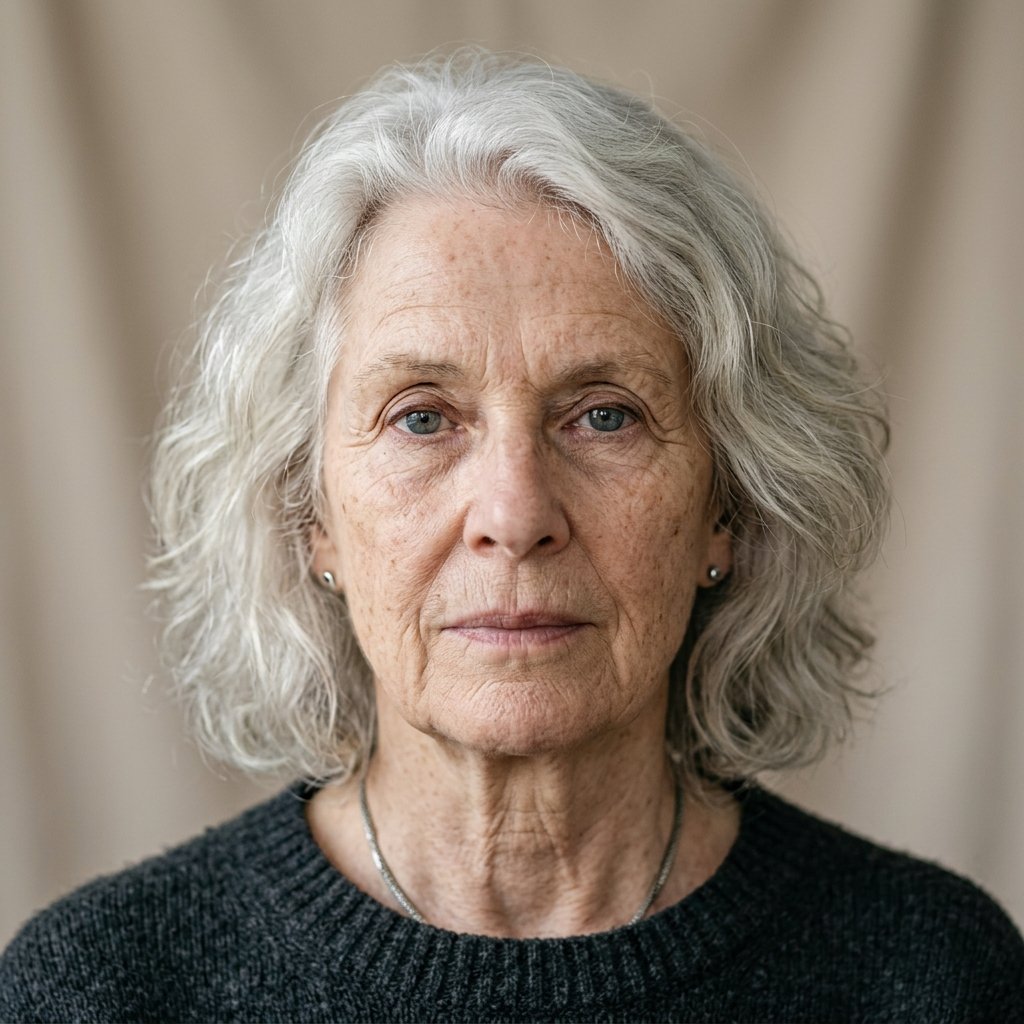
On the morning of my seventieth birthday, my three children sat around a kitchen table and quietly decided I was a burden they could no longer carry.
My name is Margaret Whitfield. I have lived in Cedar Falls, Ohio, my whole life, in the same tired town where I once believed love was a debt that would always be repaid.
I was thirty-four years old when my husband, Thomas, passed away one cold February. He left me with three small children and exactly eleven dollars folded inside an old coffee tin.
I remember standing at his graveside, holding little Susan on my hip while Daniel and Michael clutched my coat, and I made a promise. I would give my children a life better than mine, no matter what it cost me.
And it cost me everything.
I cleaned other people’s houses before the sun came up. I scrubbed floors on my knees until they bled through my stockings.
In the evenings I tied on an apron at Miller’s Diner on Route 9 and carried plates until midnight, smiling at strangers while my own feet screamed.
I wore the same brown winter coat for fourteen years so my children could have new ones. I skipped supper more nights than I could count and told them I simply wasn’t hungry.
I never let them see me cry. A mother learns to fold her tears very small and hide them where no one can find them.
And for a while, it felt worth it. My children grew tall and healthy. They laughed. They dreamed.
When Daniel came to me at twenty-five and said he wanted to open a hardware store downtown, his eyes shining like his father’s, I didn’t hesitate.
I sold my wedding ring, the last thing I truly owned of Thomas, and I placed the money in Daniel’s hands.
“Every man deserves a chance,” I told him. He hugged me and promised he would never forget it.
When Susan fell in love and wanted the wedding of her dreams, I emptied the small savings account I had spent a decade building.
I wanted her to walk down that aisle feeling like the most cherished woman in the world. And she did. It was a beautiful day.
And when the bank threatened to take the little house on Maple Street where I had raised them all, I made the hardest choice of my life.
I sold it. My home. The place where their handprints were still pressed into the concrete of the back steps.
I told them I wanted to “simplify things,” so they wouldn’t feel guilty. I moved into a rented room above the pharmacy and gave the extra money to help Michael pay off his college loans.
I never kept a ledger. A mother’s love isn’t supposed to be a receipt.
But somewhere along the way, my children stopped seeing me as a person. I became a chore. A phone call they kept meaning to return.
The visits grew shorter. The holidays grew colder. And on my seventieth birthday, they finally said out loud what I had feared for years.
They gathered in Susan’s spotless kitchen, the good china untouched, and told me they had found “a lovely place” for me to live.
A nursing home on the edge of town. Riverbend Care.
“It’s just easier this way, Mom,” Susan said, sliding a brochure across the table without meeting my eyes.
Daniel nodded, studying his coffee cup. Michael was on speakerphone from Denver, saying how relieved he was that I’d be “looked after.”
Then they handed me a birthday card. Inside, in careless handwriting, it read: “Happy Birthday, Margret.”
They had spelled my name wrong. Seventy years of being their mother, and they couldn’t even spell Margaret.
I did not shout. I did not weep at that table. I simply folded my hands, thanked them for thinking of me, and let them drive me to Riverbend that very afternoon.
I saved my tears for the dark, the way I always had.
That first night, I lay on a narrow bed in a room that smelled of antiseptic and someone else’s memories, and I wondered what the point of a life of sacrifice had been.
I had given my whole self away, piece by piece, and ended up with nothing to hold.
But life, I have learned, has a way of surprising the people who think their story is over.
The woman who ran Riverbend was named Ruth Callahan. She was sixty and sharp-eyed, and she had a way of seeing straight through a person’s silence.
On my third morning, she found me sitting alone by the window and said, “Margaret, my kitchen is short-handed and my cook quit. You look like a woman who knows her way around a stove.”
I almost laughed. But something in me stirred, something that had been asleep for a long time.
So I tied on an apron again, not out of desperation this time, but out of purpose. I baked bread. I made pot roast the way Thomas used to love.
Soon the whole home smelled like a real kitchen, and the residents started coming to the dining room early, just to sit near the warmth.
Ruth noticed how the old folks lit up around me. “You have a gift, Margaret,” she said. “Would you read to the ones who never get visitors?”
And so I did. Every afternoon I sat beside men and women the world had forgotten, and I read them stories, and I held their trembling hands.
There was Walter, a retired schoolteacher whose son never called. There was Eleanor, ninety-one, who had outlived everyone she ever loved.
They became my family. In giving them my time, I found something I hadn’t felt since my children were small. I felt needed. I felt seen.
For the first time in years, I woke up wanting to be alive.
Then, on a gray afternoon in October, everything changed.
A young lawyer named James Foster came to Riverbend asking for me by name. He carried a leather folder and a puzzled expression.
He told me that decades ago, before he passed, my Thomas had quietly purchased a narrow strip of land down by the Cedar River. He had never told me. He must have meant it as a surprise that time stole from him.
For forty years it had sat there, forgotten, worth almost nothing. But the county had just approved a new road and a riverfront development.
That worthless little strip of land was suddenly worth more money than I had earned in my entire lifetime.
I sat there stunned, holding a deed with my dead husband’s signature, feeling him reach across all those years to take care of me one last time.
I told almost no one. But small towns whisper, and within a single week, my telephone began to ring.
Suddenly Susan called every evening. Suddenly Daniel appeared at Riverbend with a bouquet so large he could barely see over it.
Michael flew in from Denver, tears in his eyes, calling me “the best mother a man could ask for.”
They talked about a bigger house where I could live with them. They talked about family dinners, about making up for lost time.
Daniel actually wept at my door. “We made a terrible mistake, Mom,” he said. “Come home. Let us take care of you now.”
And oh, how the old Margaret wanted to believe them. How badly a mother’s heart aches to be wanted by her children.
But I had spent months among the forgotten, and I had learned to tell the difference between love and hunger.
These were the same children who couldn’t spell my name in June. They hadn’t come back for me. They had come back for what I could give.
So I gathered them together, in that same spotless kitchen where they had cast me aside, and I spoke gently but clearly.
“I forgave you the moment you drove away,” I told them. “I forgave you because carrying anger is heavier than any load I ever bore for you.”
“But I will not go back to being invisible. I will not be loved only when my hands are full.”
They were quiet. Susan cried. Daniel stared at the floor.
I did not punish them. I did not cut them off or shame them. That is not who I am, and it is not who Thomas raised me to be.
Instead, I made a different choice. I took the money that land had given me, and I built something that would outlast us all.
Beside Riverbend, I built a small, warm home for the elderly who had no one, the ones the world sets aside like I had been set aside.
I filled it with soft chairs, and fresh bread, and the sound of laughter. I hired kind people. I named it after Thomas.
Ruth runs it with me now, and every day I walk those halls holding hands, reading stories, and reminding forgotten souls that they still matter.
Walter has a garden now. Eleanor smiles again. And I, at seventy-two years old, have finally found the happiness that sacrifice alone never gave me.
My door remains open to my children. They visit, and I am glad to see them. But they come now as equals, never again as I once was, a servant grateful for scraps of attention.
Some evenings I sit on my porch and watch the sun sink behind the river, and I thank my husband, not for the land, but for the lesson hidden inside it.
My heart was never empty. It was only waiting for the right people to fill it, and for me to finally believe I deserved to be filled.
I gave my life to people who forgot me. And in the losing of everything, I found the one thing I had never once given myself.
I found peace. And I found me.
So tell me, from one tender heart to another. Was I right to open my door to the children who abandoned me? Or are there some doors that should be kept gently, lovingly closed?