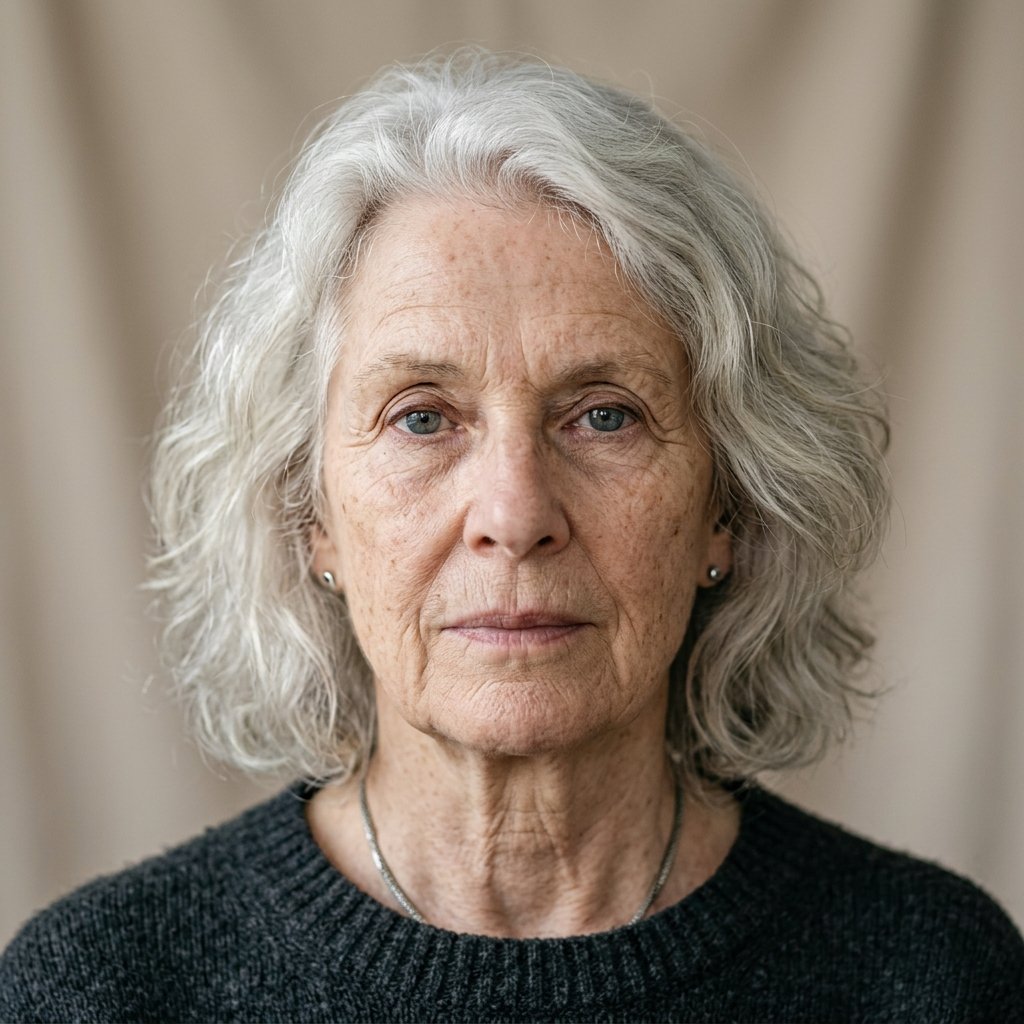
My name is Eleanor Whitfield, and for eleven long years, I set four plates at my Sunday table for children who never came home.
Every single week, I cooked the pot roast my late husband Harold used to love. I peeled the carrots the way I always had. I folded four cloth napkins into neat triangles and placed a fork on each one.
And every single week, I sat down alone in that quiet kitchen in Cedar Falls, Iowa, and listened to the clock on the wall tick louder than my own heart.
People who hear my story always assume my children were cruel. They weren’t. That was the hardest part to explain to anyone.
They didn’t hate me. They didn’t run away angry. They simply got busy, the way young people do, and then busy quietly turned into gone.
My oldest, David, took a job in Denver. My daughter, Ruth, married a good man and moved to Charlotte. My youngest, Michael, chased his dreams all the way to Seattle.
At first, the phone calls came every Sunday, right at six o’clock. Then they came every other week. Then once a month, if I was lucky.
And then, somewhere in the shuffle of jobs and mortgages and children of their own, the calls just stopped altogether.
I kept telling myself the same gentle lie. “They’ll come back when life slows down. When the kids are older. When things settle.”
So I waited. That is what mothers do best, I think. We wait.
I kept their old bedrooms exactly the same. David’s baseball trophies still sat on the shelf, gathering a soft layer of dust. Ruth’s pressed flowers were still tucked inside the pages of her old diary.
Every birthday, I bought a card. I wrote something loving inside, sealed it, and then set it on the counter, because I no longer knew their new addresses. Those cards piled up in a shoebox until the lid wouldn’t close.
My neighbor, Dorothy, used to shake her head at me over the fence. “Eleanor, honey, you have got to let go,” she’d say kindly. “You cannot keep cooking for ghosts.”
But a mother’s hope does not spoil like milk left out on the counter. It just keeps holding on, quiet and stubborn, long after everyone else has told you to give up.
I want you to understand what those Sunday evenings really felt like.
The house was so silent I could hear the refrigerator hum. I would set the table for four, light a small candle, and pretend, just for a moment, that any second the front door would swing open and I would hear those familiar voices calling, “Mama, we’re home.”
Then the pot roast would go cold. The candle would burn down. And I would wrap the leftovers in foil and put them in a fridge that no one else would ever open.
I was seventy-eight years old, and I had never felt so invisible in all my life.
Then came last winter, and everything changed.
It was a bitter January morning, and the porch steps had frozen solid overnight. I went out to fetch the newspaper, the way I had done for fifty years, and my foot slipped clean out from under me.
I heard something crack. Then came a pain so sharp it stole the breath right out of my chest.
I lay there on that cold concrete for almost an hour. I could not get up. I could not reach my walker. I just lay there in the freezing gray light, calling out to a street where nobody was listening.
It was the mail carrier who finally found me. He called for help, and soon I was rushed to the county hospital with a broken hip.
In that sterile hospital room, with the machines beeping softly beside me, a young nurse named Grace held my trembling hand.
She had the kindest eyes I had ever seen. She squeezed my fingers gently and asked me a simple question.
“Mrs. Whitfield, is there anyone we can call for you? Any family?”
And I opened my mouth to answer, and nothing came out.
Because in that terrifying moment, I realized I could not remember a single one of my own children’s phone numbers.
I had given birth to three human beings. I had rocked them, fed them, stayed up through fevers and heartbreaks. And now I could not even recall the numbers that might bring them to my side.
The tears came then, hot and silent, rolling down into the pillow.
Grace didn’t rush me. She just sat there and let me cry.
That night, alone in the dark hospital, something inside me finally broke loose. Not my hip. Something deeper. Something in my spirit.
I made a decision. I decided I was done waiting.
When I came home three weeks later, moving slow behind my walker, I did the hardest thing I had ever done.
I walked into that kitchen, and I took down the four plates I had set for eleven years. I wrapped them in old newspaper, one by one, my hands shaking the whole time.
I carried them up to the attic in three careful trips and placed them in a cardboard box. I folded the four napkins and laid them on top. I closed the lid.
“That’s enough now, Eleanor,” I whispered to myself in that dusty attic. “You cannot spend your last years grieving a family that has already moved on.”
I went back downstairs and set the table for one. Just one plate. Just one fork.
And I told myself I would learn to be at peace with the quiet.
But heaven, it seems, was not finished with my story.
It was a rainy Sunday evening, near the end of February, when it happened. The rain was coming down hard, drumming against the windows, and I was warming a small can of soup on the stove.
That’s when the doorbell rang.
I wasn’t expecting anyone. Dorothy always called first. I figured it was some poor delivery man caught out in the storm.
I shuffled to the door on my walker, my slippers whispering across the floor. I turned the deadbolt and pulled the door open into the cold, wet night.
And my heart simply stopped.
Standing on my porch, soaked to the bone in the pouring rain, were all three of my children.
David stood in front, his gray hair plastered to his forehead, holding a covered casserole dish in his big hands. Ruth was beside him, and she was already crying, her mascara running down her cheeks.
Michael, my baby, my youngest, stood just behind them, and he looked at me like a little boy again.
And behind all three of them, huddled under umbrellas, stood four small children I had never seen before in my life. My grandchildren.
I could not speak. My hand flew to my mouth. My legs nearly gave out beneath me.
“Mama,” David said, his voice cracking wide open. “Mama, we’re so sorry.”
Ruth stepped forward and took both my hands. “The nurse from the hospital, a woman named Grace, she found your old address book in your purse,” she wept. “She called every single one of us. She tracked us all down.”
Michael’s chin was trembling. “She told us everything, Mama,” he choked out. “She told us you’d been setting our plates. Every Sunday. For eleven years.”
He wiped his eyes with the back of his hand. “How did we let this happen? How did we let so much time slip away from us?”
I stood in that open doorway, the rain blowing cold against my face, and I reached out and pulled my children into my arms.
All three of them, grown adults now, folded down into me like they were small again. We stood there in the doorway and held on to each other while the storm poured down around us.
Nobody spoke. Nobody needed to. Eleven years of silence dissolved in the space of a single embrace.
The little grandchildren watched us, wide-eyed, and one tiny girl tugged on my sleeve and said, “Are you our grandma?”
And I knelt down slow, ignoring the ache in my hip, and I said, “Yes, sweetheart. Yes, I am. And I have waited my whole life to meet you.”
That evening, my quiet house came roaring back to life.
David heated up the casserole. Ruth found the good tablecloth in the cabinet. Michael went up to the attic and brought down that dusty box I had packed away only weeks before.
And one by one, he unwrapped those four plates and set them back on the table, right where they belonged.
We sat down together, all of us crowded around that old table, elbow to elbow, laughing and crying at the same time.
I looked around at the faces I thought I had lost forever, and I could barely breathe from the joy of it.
Later that night, after the little ones had fallen asleep on the couch, David sat beside me and took my hand.
“We’re not going to disappear again, Mama,” he promised. “Every Sunday, one of us is calling you. And every holiday, we’re all coming home. I swear it.”
And they kept that promise.
That was over a year ago now. My hip healed. My heart healed even more.
These days, my table is full again every Sunday. The napkins are folded into neat little triangles. The pot roast is bubbling on the stove, just the way Harold used to love it.
And this time, those four chairs are never, ever empty.
Sometimes I think about Grace, that young nurse with the kind eyes, and I say a quiet prayer of thanks for her. She never knew what she gave me. She simply opened an old address book and made a few phone calls.
But to me, she gave back the only thing I had ever truly wanted in this world.
I spent eleven long years believing I had been forgotten by the people I loved most.
It turns out love was never truly gone. It was just waiting, quietly, on both sides of a closed door, waiting for someone brave enough, or kind enough, to finally knock.
So if you are reading this, and your mother or your father is sitting alone somewhere by a silent telephone, please do not wait for the perfect moment.
Please do not wait for someday. Because someday has a cruel way of arriving far too late.
Pick up the phone tonight. Drive the distance. Knock on the door.
You never know how many plates they have quietly set, hoping and praying that this will be the Sunday you finally come home.