The last words my daughter ever spoke to me were, “You never wanted me anyway.”
She said them standing in the doorway of my kitchen here in Millbrook, Ohio, with a suitcase in her hand and tears she refused to let fall.
Then she turned around, walked to her car, and drove out of my life for eight years.
I stood at that window for a long time after her taillights faded down Chestnut Street. I kept waiting for her to turn around. She never did.
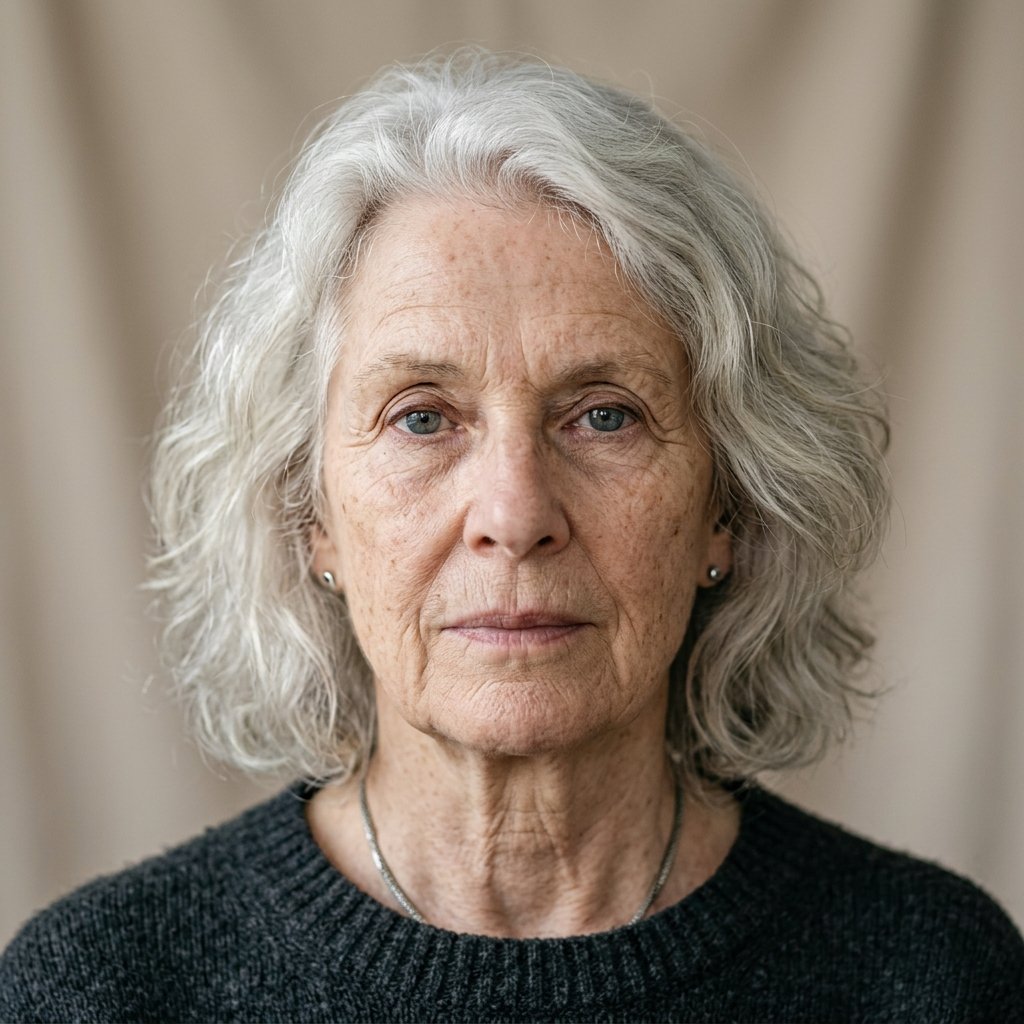
My name is Eleanor. I am sixty-eight years old, and for eight years I carried a wound I could not name, because I never understood what I had done wrong.
To understand any of this, you have to go back to the worst season of my life.
My husband, Harold, passed away when Grace was nineteen. One ordinary Tuesday his heart simply stopped, and the man who had been my whole world for twenty-six years was gone before the ambulance even reached our street.
I was not prepared. Harold had handled the money, the mortgage, the bills. I had spent my life raising our children and keeping our home warm.
Suddenly I was a widow with a stack of unpaid debts, a house I could barely afford, and a grief so heavy some mornings I could not lift my own arms.
So I did what mothers do. I went to work.
I took a job at the fabric store during the day and cleaned offices downtown at night. I was fifty-two years old and running on three hours of sleep and cold coffee.
Grace was in college by then, coming home on weekends. I tried so hard to keep her from seeing how frightened I was. I did not want my fear to become her burden.
But a house cannot hide everything. Children feel the cracks in the walls even when you paint over them.
The night that broke us happened on a Thursday in October. I remember because the maple in our front yard had just turned that deep, burning red.
Grace was supposed to be at her friend Diane’s house until late. I thought I was alone.
I was on the phone in the kitchen with my sister Ruth, and for the first time in months, I let the mask fall completely.
I cried the way you only cry when you believe no one can hear you.
I told Ruth I was drowning. I told her I hadn’t slept properly in a year. I told her I was terrified I was failing my daughter, that Grace deserved a mother who wasn’t a tired, hollow shell.
And then I said the sentence that would cost me eight years of my life.
I said, “Ruth, sometimes I think it would have been easier if I’d never had children. I can’t do this.”
But I did not stop there. I kept talking.
I said, “But then I wouldn’t have Grace, and she’s the only reason I get up every single morning. I can’t do this if she doesn’t know how much I love her. She’s all I have left of Harold. She’s all I have left of me.”
What I did not know was that Grace had come home early. Diane had a headache, and my daughter had let herself in through the side door.
She was standing in the hallway just outside the kitchen when I said those first devastating words.
And she left before I said the rest.
She heard, “It would have been easier if I’d never had children. I can’t do this.”
She never heard, “But then I wouldn’t have Grace.”
She carried that half a sentence up to her room, packed a bag in silence, and came down the next morning with a face like stone.
When I asked what was wrong, she simply said those words. “You never wanted me anyway.”
I was so exhausted, so blindsided, that I thought she was talking about a college fund we had argued about weeks before. I thought it was a passing storm.
I said something short and tired. I did not chase her. I did not grab her arm and demand we talk.
And that, more than anything, is the regret that has lived in my chest ever since.
Because a mother should always chase. A mother should always ask the second question.
The silence that followed was the loudest thing I have ever lived through.
At first I told myself she just needed space. Young people storm off. They come back.
But a week became a month. A month became a season. She moved to Denver with a girlfriend from school and would not return my calls.
Every Christmas, I wrote her a letter. I poured my whole heart onto the page, telling her I loved her, that our door was always open, that whatever I had done I was sorry for.
Every single letter came back stamped “Return to Sender.”
I kept them anyway. I tied them with a ribbon and put them in a box in my closet, one for each year, a paper record of everything I was never allowed to say out loud.
The years took things from me one by one.
I heard through a cousin that Grace had gotten married. I was not invited. I saw a photograph, months later, of my little girl in a white dress, and I wept until I could not breathe.
Then I heard she’d had a baby. A little girl. They named her Lily.
I had a granddaughter walking the earth, and I did not know the color of her eyes.
I grew older alone in that house on Chestnut Street. I retired. I planted a garden. I learned to talk to the empty rooms as if someone might answer.
And I made a kind of quiet peace with the idea that I would die without ever holding my own child again.
Then, three weeks ago, on an ordinary evening, my telephone rang at nine o’clock.
I almost didn’t answer. But something made me pick it up.
A small, careful voice on the other end said, “Hello? Are you my grandma?”
I had to sit down. My knees simply gave out beneath me.
“Who is this, sweetheart?” I whispered.
“I’m Lily,” she said. “I’m six. I found some letters in my mommy’s closet. They have your name on them. You wrote you love us.”
My hand was shaking so badly I could barely hold the phone.
Lily, it turned out, had climbed onto a shelf looking for a board game and had knocked down that ribboned box. She had read every letter I sent, one by one, in her careful six-year-old way.
And she had asked her mother a question that cracked the whole thing open. She asked, “Mommy, why won’t you talk to the grandma who loves us?”
Suddenly there was a rustle, and then a woman’s voice came onto the line. A voice I had not heard in eight years.
“Mom?” Grace said. And she was already crying.
“I’m here, baby,” I told her. “I’ve always been here.”
There was a long, trembling silence. Then she said, “Mom, I need to ask you something, and I need you to tell me the truth. That night. The night before I left. I heard you on the phone with Aunt Ruth.”
My heart stopped. After all these years, I finally understood.
“I heard you say it would have been easier if you’d never had children,” she said. “I heard you say you couldn’t do it. You couldn’t do me. So I left, because I finally knew what you really felt.”
And there it was. Eight years of my life, explained in three sentences.
Eight years, built entirely on the half of a conversation my daughter never got to finish hearing.
So I told her everything.
I told her about the two jobs and the sleepless nights. I told her how I had cried on that phone because I was so afraid of failing her, not because I didn’t want her.
And then I told her the rest of the sentence. The part she never heard.
“Grace,” I said, “what I told Ruth that night was that I wouldn’t get out of bed at all if it weren’t for you. That you were the only reason I kept breathing after your father died. You were never the burden, sweetheart. You were the only thing that made the weight worth carrying.”
On the other end of the line, my thirty-two-year-old daughter began to sob like the little girl I used to rock to sleep.
“I only heard the first part, Mama,” she wept. “I’ve believed you regretted me for eight years. I built my whole life around a wound that wasn’t even real.”
We stayed on that phone until three o’clock in the morning.
We did not shout. We did not blame. We just talked, honestly and gently, the way we should have done in that kitchen all those years ago.
She told me about her marriage, about Lily’s laugh, about the nights she almost called and lost her nerve.
I told her about the garden, and the letters, and how I had never once stopped hoping.
Last Sunday, a car pulled slowly into my driveway.
Before it even came to a stop, the back door flew open and a little girl with her mother’s brown eyes came running across the grass, shouting, “Grandma! Grandma!”
I dropped to my knees and caught Lily in my arms, and I held my granddaughter for the very first time.
Grace walked up the porch steps slowly, older now, with lines around her eyes that eight lost years had drawn there.
She looked at me for a long moment. Then she fell into my arms and said the two words I had prayed to hear for nearly a decade.
“I’m home, Mama.”
We sat on that porch until the sun went down, three generations of women who had almost been lost to each other forever.
And all of it, every stolen year, could have been prevented by one simple thing.
A conversation. A question asked instead of an assumption made.
I have learned, far too late, that most of the pain in this world does not come from the cruel things people say.
It comes from the kind things they say that we never stay long enough to hear the end of.
So if there is someone you have shut out of your heart, someone you have written off over something you think you understand, I am begging you.
Pick up the phone. Ask the question. Stay for the whole sentence.
You may find, as I did, that the truth was love all along.