For eleven years, my mother set the dinner table for five people who never came home.
Same white plates with the little blue flowers. Same cloth napkins she ironed on Saturday nights. Same chair by the window she still saved for my father, even after we lowered him into the ground on a gray October morning.
My name is Robert Whitmore, and I grew up in a small brick house on Chestnut Street in Millbrook, Ohio. It was the kind of house where the screen door slapped shut a hundred times a day and the whole neighborhood could smell my mother’s cooking from the sidewalk.
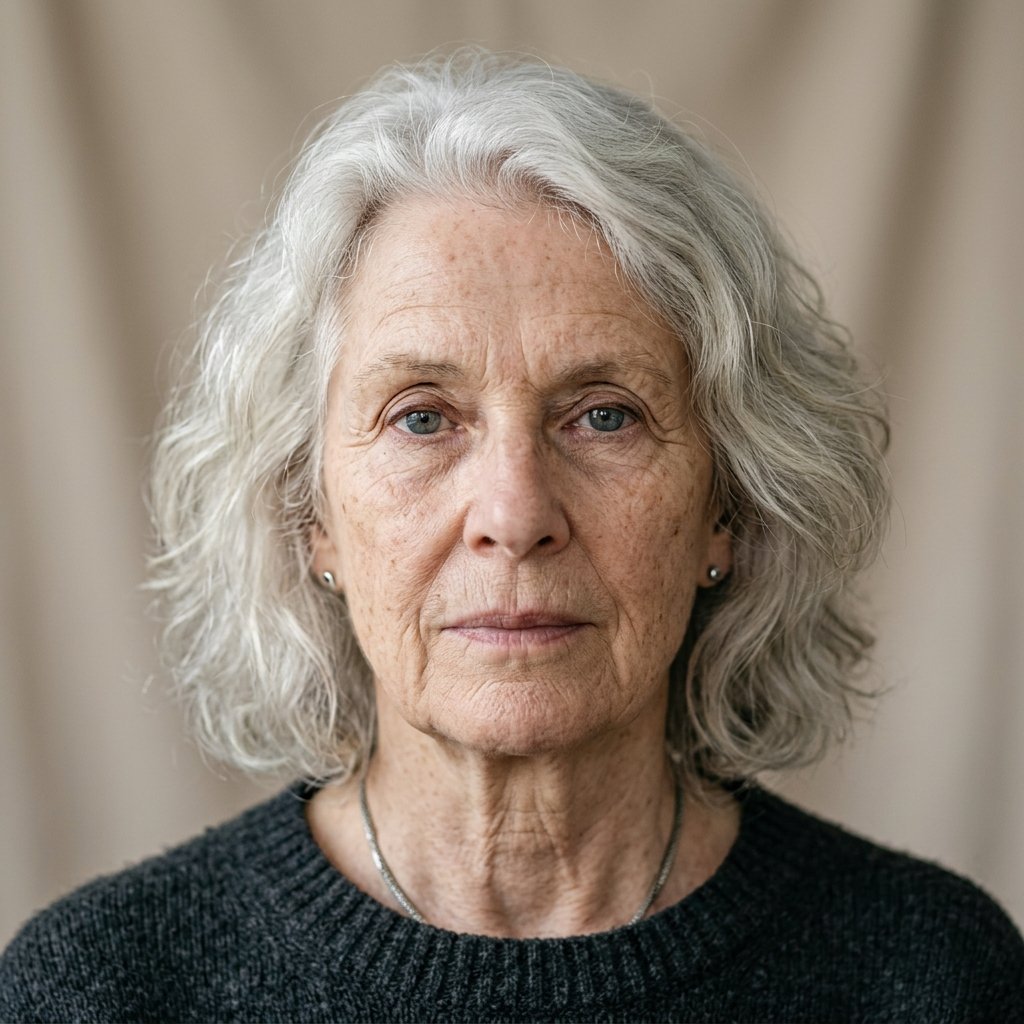
Her name was Eleanor. To the rest of the world she was just a quiet widow with silver hair and a soft voice. To me and my two brothers, she was the whole center of gravity we spent our childhoods orbiting.
And then, the way it happens to so many families, we scattered.
I took a job in Denver. My brother Thomas landed in Atlanta chasing a promotion. My youngest brother, Michael, followed a woman to Phoenix and never really came back.
We told ourselves it was normal. Children grow up. Children leave. That’s how it’s supposed to go.
But somewhere in all that leaving, we forgot to keep returning.
We called on birthdays, when we remembered. We sent cards at Christmas, the kind with the pre-printed message where you only sign your name. We visited when it was convenient, and the truth is, it was almost never convenient.
There was always a deadline. Always a soccer game. Always a reason that felt enormous at the time and looks so small to me now.
Meanwhile, my mother kept setting that table.
My aunt told me about it once, in a worried voice over the phone. “Robert, your mother cooks a full Sunday dinner every week. Enough for all of you. Then she just sits there.”
I remember feeling annoyed more than anything. I thought she was being dramatic. I thought she was trying to make us feel guilty from four hundred miles away.
“Mama, you have to stop this,” I said to her on the phone. “You can’t keep cooking for people who aren’t there. It isn’t healthy.”
There was a long pause. Then she said something I brushed off at the time and have never been able to forget since.
“A mother’s table is never empty, sweetheart,” she told me gently. “Not as long as she has hands to fill it.”
I thought she was living in the past. I thought grief had made her cling to a family that no longer gathered.
I was wrong about almost everything.
It was the spring I turned fifty-two when I finally drove back to Millbrook. My marriage had just quietly ended. The kids were grown. For the first time in decades, I had nothing pulling at my sleeve, and the silence in my own empty apartment had started to sound a lot like an accusation.
So I got in the car and drove twelve hundred miles to a house I hadn’t set foot in for almost four years.
I told myself I was ready for the worst. I pictured a frail, bitter woman. I pictured peeling paint and a cold, sad kitchen. I pictured a mother who would finally look me in the eye and tell me how badly I’d let her down.
Instead, I walked up the porch steps, pushed open that same slapping screen door, and heard something I hadn’t heard in years.
My mother, humming.
She was standing at the stove, a little smaller than I remembered, her silver hair pinned up the way it always was. She was stirring a pot of her chicken and dumplings, and the whole kitchen smelled like my entire childhood came rushing back at once.
She didn’t even turn around.
“I knew you’d come home eventually,” she said softly. “I always kept your plate warm.”
I stood in that doorway, a grown man, and I nearly wept right there.
We talked for hours that first afternoon. She didn’t scold me. She didn’t bring up the missed years or the unanswered calls. She just poured me coffee and asked about my life like no time had passed at all.
But it was later that evening, out on the porch, that I learned the truth that split my heart wide open.
Our old neighbor, Mr. Harmon, had seen my car in the driveway and wandered over to say hello. He was pushing eighty now, slower on his feet, but his eyes were still sharp.
He shook my hand, and then he glanced back toward the kitchen window where my mother was cleaning up, and his voice dropped low.
“You have any idea what your mama’s been doing all these years, son?” he asked me.
I shrugged. “Cooking for ghosts, I suppose,” I said. It came out more bitter than I intended.
Mr. Harmon shook his head slowly.
“No,” he said. “Not ghosts. Let me tell you something your mother would never tell you herself.”
And then he told me.
Every single Sunday, for eleven years, my mother cooked that enormous dinner. Enough for all five of us. And every single Sunday, when no one came through the door, she didn’t throw the food away and she didn’t sit alone crying into her plate.
She packed it up, carefully, into containers she’d washed and saved. And she carried it three houses down the street, to a young man named Danny Coleman.
Danny had grown up in the foster system. He’d bounced between homes his whole childhood, and when he turned eighteen, the state simply handed him a garbage bag of clothes and set him loose into the world with no family, no plan, and no one who cared whether he ate.
He’d landed in a rundown rental down the block, working two jobs, barely keeping the lights on.
My mother had noticed him the way she noticed everyone. She saw a young man with no place to belong. And she did the only thing Eleanor Whitmore ever knew how to do.
She fed him.
“First Sunday, she just showed up at his door with a plate,” Mr. Harmon told me. “Told him no boy should eat cold sandwiches over a sink. After that, it became every week. Rain, snow, didn’t matter. Your mother walked that food down there and she sat with him while he ate it.”
I could barely speak. “For eleven years?” I whispered.
“For eleven years,” he nodded. “That boy is the reason she got out of bed some mornings, son. You want to know the truth? He became the child who showed up when the rest of you couldn’t.”
I don’t remember walking back inside. I just remember standing in that kitchen, looking at my mother with completely new eyes.
All those years I had pictured her wasting away, clinging to a fantasy. But she hadn’t been waiting for us to fill her table.
She had simply refused to let it stay empty. She had taken all that love we couldn’t be bothered to receive, and she had poured it into a boy the whole world had thrown away.
The next morning, I asked her about Danny. Her whole face lit up.
“Oh, he’s a good boy,” she said, beaming. “He fixes my gutters now. Calls me Miss Ellie. Comes by even on the days I don’t cook.” She paused, and her voice went soft. “He needed somebody. And I had a whole lot of somebody left over.”
That afternoon, I met him. Danny was thirty now, broad-shouldered, with kind, tired eyes. When he realized who I was, he took my hand in both of his.
“Your mother saved my life,” he told me plainly. There was no anger in it, no accusation, though he would have had every right. “I was ready to give up on everything. And this woman I barely knew started treating me like I mattered. She never once made me feel like a second choice. She told me a mother’s table always has room.”
I had to look away so he wouldn’t see my face.
That night, I made some calls I should have made years earlier.
I called Thomas in Atlanta. I called Michael in Phoenix. I didn’t lecture them and I didn’t blame them, because Lord knows I was just as guilty. I simply told them the story of the table, and of Danny, and I said the words we’d all been avoiding.
“She’s not going to be here forever. And I think we’ve all been fools.”
The following weekend, for the first time in over a decade, all three of us came home to Millbrook. Together.
I’ll never forget my mother’s face when she opened that screen door and saw all three of her sons standing on the porch.
Her hand flew to her mouth. Her eyes filled. And she reached for the door frame to steady herself, because I think for one dizzy moment she truly wondered if she was dreaming.
“My boys,” she kept saying. “All my boys.”
That Sunday, she cooked her famous dinner one more time. But this time, when she set the table for five, every single chair got filled.
Because Danny sat right there with us. By then, he was family too, and no one would have dreamed of setting his place anywhere else.
Mama lit the candles she’d bought years ago and saved for exactly this day. Her hands trembled as she touched the match to the wicks.
Then she sat down at the head of the table, looked around at every occupied seat, at all four of her children, and she smiled the way a person smiles when a prayer they stopped daring to say out loud is suddenly, impossibly answered.
“See?” she whispered, mostly to herself. “I told you there was always room.”
We stayed three days. We laughed until our sides hurt. We looked through old photographs. We apologized, all of us, in the clumsy way men do, and she forgave us before we’d even finished the sentences.
My mother passed away that winter. Peacefully, in her own bed, with the quilt she’d made pulled up to her chin.
But she left this world knowing her table was full. Knowing her love had traveled all the way out into the world and circled right back home to her.
At her funeral, it was Danny who stood up first to speak. He called her the mother he’d waited his whole life to find. There wasn’t a dry eye in that little church.
I think about her every single day now.
I think about all the years I assumed she was fine, all the times I told myself there would be more Sundays, more chances, more time.
I think about how she never once guilted us, never called to complain about the empty chairs. She just quietly kept the porch light on and the plates warm.
We never truly understand how much our parents ache for us until that chair goes empty for good.
So if your mother or father is still here, still keeping a light on somewhere, waiting for a call that keeps slipping their mind, please. Make the drive. Pick up the phone.
Go sit at their table while there’s still someone at the head of it to say your name.