For forty years, I told everyone that my wife left me.
This morning, sitting alone at my kitchen table with cold coffee and a shaking hand, I finally said the truth out loud to an empty room. I was the one who drove her away.
My name is George Whitfield. I am seventy-eight years old, and I live in a small blue house on Maple Street in Cedar Falls, Iowa, that once held a whole family and now holds only the sound of a ticking clock.
When I was twenty-four, I married the prettiest girl in the county. Eleanor Hayes had a laugh that made grown men turn their heads, and eyes the color of the river in October.
I was a carpenter with sawdust in my hair and forty dollars in my pocket, and somehow she chose me.
We built a life the slow, honest way. I framed houses all day, and she taught piano to the neighborhood children in our front parlor.
In 1971, our daughter arrived. We named her Grace, because that is exactly what she felt like. A gift we hadn’t earned but were desperate to keep.
Those were the golden years, though I was too busy to notice they were golden.
Grace on my shoulders at the county fair. Eleanor humming in the kitchen while cornbread baked. Sunday drives with the windows down and all three of us singing off-key.
I thought it would last forever. I thought happiness was a thing you owned, not a thing you tended.
Then came the autumn of 1979, and everything I loved cracked down the middle.
It was a gray Tuesday. Eleanor was driving Grace home from her piano lesson across town.
At the intersection of Third and Bridge, a delivery truck ran the red light and struck the passenger side.
Grace was eight years old. The doctors told us she would live, but she would never walk the same again.
I remember standing in that hospital hallway, and something inside me went dark and mean.
I needed someone to blame. Grief is a wild animal, and it looks for the nearest throat.
So I looked at my wife, pale and trembling in a plastic chair, and I chose to blame her.
“You were driving,” I said, though the police report cleared her completely. “You should have seen him.”
The words left my mouth and I felt her flinch as if I had struck her.
I knew, even then, that it was a lie. The truck ran the light. Any judge in America would have said so. Eleanor did nothing wrong.
But I could not carry the pain alone, so I set half of it on her back and watched her buckle under the weight.
From that day forward, I built a wall out of silence.
I stopped kissing her goodbye. I ate my supper without a word and slept in the spare room down the hall.
When she cried, I turned up the radio. When she reached for my hand, I found a reason to leave the room.
I told myself I was strong. Really, I was a coward hiding behind my anger, because anger was easier than facing my own broken heart.
Eleanor tried. Lord, how she tried.
She left notes on my pillow. She cooked the meals I loved. She sat at the piano and played the songs from our courting days, hoping the music might reach the part of me that had gone cold.
It did reach me. I just refused to answer.
Grace, bless her heart, learned to walk again with a brace and a cane, but she could not mend the thing breaking between her parents.
One rainy morning in the spring of 1982, I came downstairs and found Eleanor standing by the front door with a single suitcase.
Her coat was buttoned to the throat. Her eyes were red but dry, the way eyes get when a person has finally run out of tears.
“I’m going to my sister’s in Des Moines,” she said quietly. “George, I have waited three years for you to look at me the way you used to. I only need one kind word. Give me one, and I’ll unpack this bag right now.”
I stood there, this proud fool, and I said nothing.
Not because I didn’t love her. Because I did, and I had convinced myself I no longer deserved to.
She waited a full minute. It felt like an hour. Then she nodded slowly, the way you nod at a grave, and she walked out into the rain.
The screen door clapped shut behind her. That sound has echoed in my chest for forty years.
Grace grew up and moved to Denver to become a schoolteacher. She married a good man and gave me two grandchildren I mostly knew through photographs.
Eleanor and I never divorced, not on paper. We simply lived as two people the law had joined and pride had torn apart.
Birthdays passed. Christmases passed. The decades slipped through my fingers like sawdust off a workbench.
I’d hear news of her now and then. She never remarried. She taught piano to a whole new town of children in Des Moines.
I’d start letters to her a hundred times. “Dear Eleanor, I was wrong.” Then I’d fold the page and put it in a shoebox in the closet, unsent, another coward’s monument.
That shoebox held forty-one letters by the end. Forty-one apologies she never got to read.
I grew old the way lonely men do. Slowly, then all at once.
My hands got stiff. My hair went white. The house grew quiet enough to hear the wallpaper peeling.
And every single night, I lay in that spare bed and thought about the woman who once played piano in my parlor.
Then, last Tuesday, the telephone rang.
It was Grace, and her voice was soft and careful, the way you speak when you’re holding something fragile.
“Dad,” she said. “I need to tell you something. Mom’s health has been failing. She’s in a care home now, over in Des Moines.”
My throat closed up. I gripped the counter to keep from falling.
“There’s more,” Grace went on. “I visited her last week. She’s been asking for you, Dad. And she showed me a box. She kept every card, every photo, every little thing from your life together. She never stopped loving you.”
Then my daughter said the words that finally broke the wall I’d spent forty years building.
“She said she’s just waiting to hear your voice one more time.”
I hung up the phone, and I wept like a child. Great, heaving sobs that shook my old bones.
That night I couldn’t sleep. Before dawn, I put on my good shirt, grabbed the shoebox of unsent letters, and got in my truck.
The drive to Des Moines took a little over nine hours the way I drive now, slow and squinting.
My hands shook the whole way, and it wasn’t the age. It was the fear.
What if she was too far gone to know me? What if she looked at me with the disappointment I had earned? What if I was, once again, forty years too late?
I walked into that care home clutching my hat like a nervous boy at a dance.
A kind nurse led me down a hallway that smelled of lavender and clean linen, to a room with a window full of morning light.
And there she was.
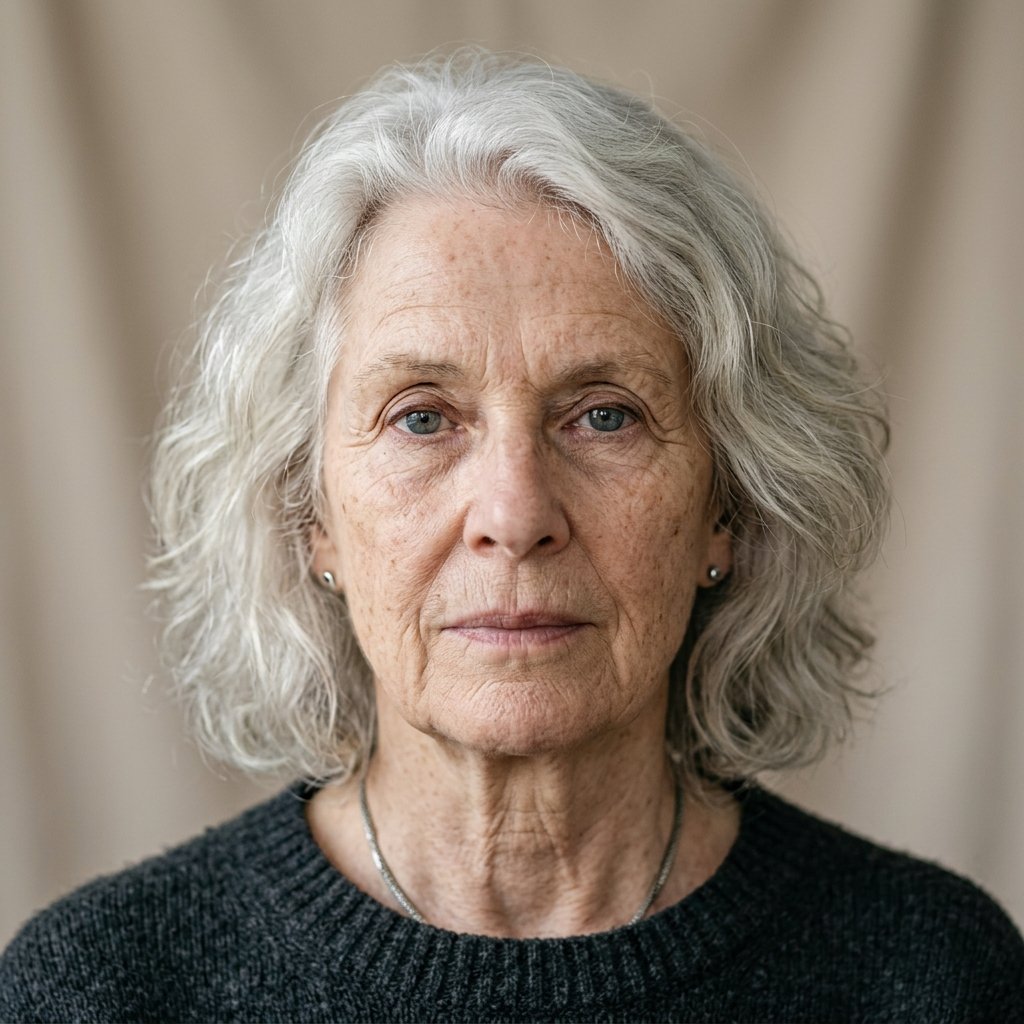
Eleanor. Smaller now, silver-haired, her hands folded on a quilt. But when she turned toward the door, I saw those same October eyes, and my whole life came rushing back.
“George,” she whispered, as if no time had passed at all. As if it were still 1982 and I’d only stepped out for the mail.
My legs gave out. This old man with two bad knees knelt right down beside her bed.
I took her hand, that soft, familiar hand I hadn’t held in four decades, and finally, finally, I said it.
“Eleanor, I’m so sorry. It was never your fault. Not for one second. I was a coward and a proud fool, and I lost the only thing that ever mattered to me. Can you ever forgive an old man for wasting our whole lives?”
She was quiet for a moment. A tear slid down her wrinkled cheek and landed on our joined hands.
Then she smiled, the very same smile that made me fall in love at twenty-four.
“Oh, George,” she said gently. “I forgave you a long, long time ago. I was only waiting for the day you’d finally forgive yourself.”
I put my head down on the quilt and cried, and she stroked my white hair like I was something precious, something worth keeping after all.
I stayed. Of course I stayed.
I read her those forty-one letters, one by one, and she laughed at some and wept at others.
Every afternoon I wheel her to the piano in the common room, and she plays the songs from our courting days with fingers that still remember every note.
We hold hands until the nurse dims the lights. Two gray heads leaning together, finally, gratefully, at peace.
I don’t know how many days the good Lord will give us. Not many, the doctors say.
But I have learned something in these final chapters that I wish I had known at twenty-four.
Love does not die when we stop feeding it. It waits. It sits quietly in a shoebox, in an old woman’s memory, in the space between two stubborn hearts, patient as a garden under snow.
It waits for us to be brave enough to come home.
I wasted forty years on pride. Forty years I could have spent listening to her play piano in our parlor.
If there is someone in your life you have pushed away over an old wound, someone you still love beneath all that hurt, please do not do what I did.
Do not wait until the obituaries. Do not wait until a phone call. Do not let one kind word go unsaid.
Pick up the phone today. Forgive them. Forgive yourself.
Because the door does not stay open forever. But sometimes, if you’re very lucky, it opens just wide enough for one last chance to walk through.
And I will thank God every remaining day of my life that I finally, finally walked through it.