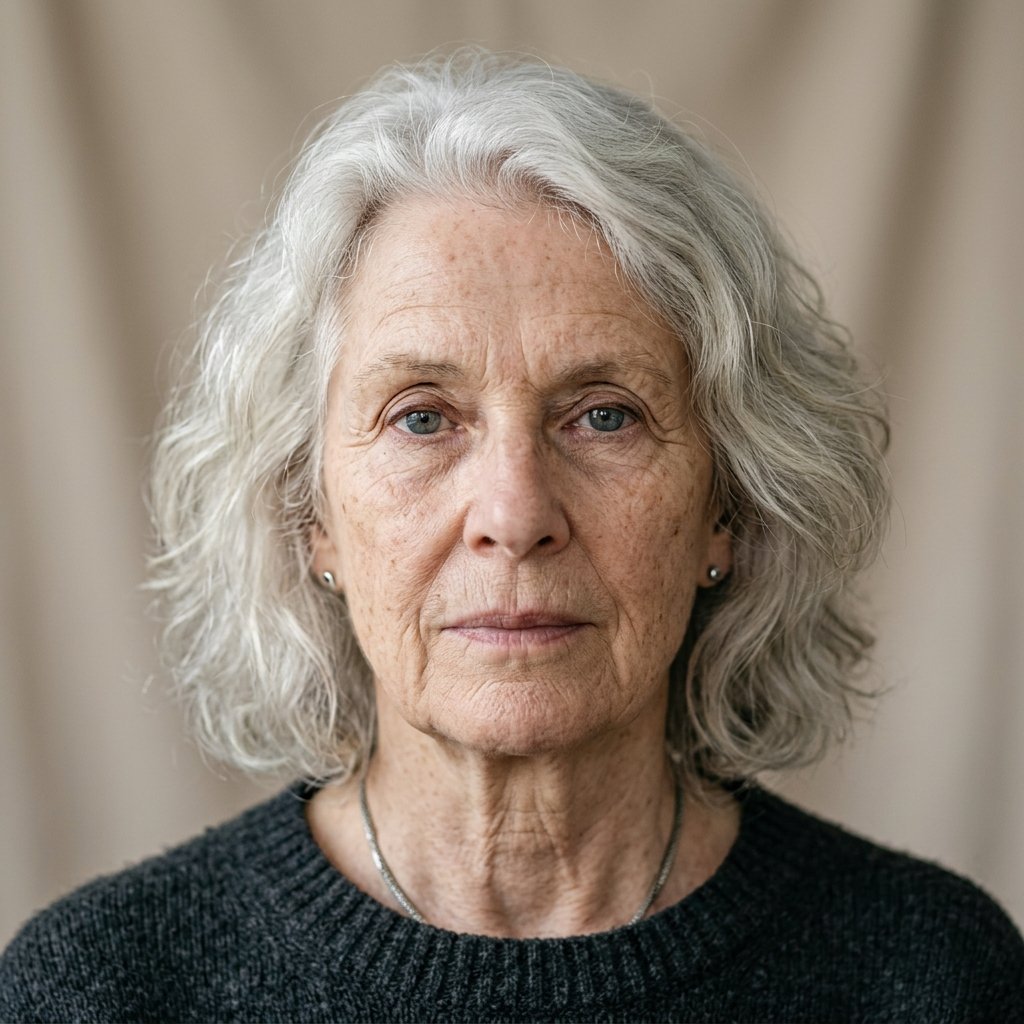
The night we buried my husband, I counted the money in my purse three times, hoping the number would change. It didn’t. Eleven dollars.
My name is Margaret Callahan, and I was thirty-four years old the day the world I trusted simply fell out from under me.
Daniel had been the strong one. The planner. The man who kissed my forehead every morning and said, “Don’t worry, Maggie. I’ve got us.”
Then one ordinary Tuesday, a heart attack took him at the kitchen table before the coffee had even finished brewing.
And just like that, it was only me, a small drafty house in Cedar Falls, Ohio, and three children who kept asking me when Daddy was coming home.
Thomas was ten. Sarah was seven. Emily had just turned four, and she still slept with the little wooden bird her father had carved for her.
I remember standing at his graveside, holding all three of their hands, thinking, “How on earth am I going to do this?”
I had no college degree. No savings to speak of. Daniel’s factory job had kept us afloat, but there was no cushion beneath us. There never had been.
So the morning after the funeral, I did the only thing I knew how to do. I got up, wiped my face, and went looking for work.
I found it scrubbing floors in other people’s homes. Fine houses on the good side of town, with gleaming banisters and pantries fuller than anything my children had ever seen.
I cleaned those homes in the daylight. And at night, after my own children were asleep, I sat at my mother’s old sewing machine and took in mending.
Hems and buttons and torn linings for the very families whose floors I had scrubbed that same afternoon.
My fingers cracked in the winter. My back ached in a way that never fully went away. But I kept the lights on, and that was all that mattered.
There were seasons that tested me more than I ever admitted out loud.
There were winters when I served my children their supper, sat down at the table with them, and told them I “wasn’t hungry tonight.”
The truth is, there simply wasn’t enough for four. So there was enough for three, and I made peace with the ache.
I never wanted them to carry the weight of our poverty. Children should worry about spelling tests and skinned knees, not whether the heat would last the month.
So I hid it. I patched the hole in my only good coat with tape and told them the silver strip was “a new style.”
Emily believed me. She even asked if she could have tape on her coat too. I laughed for the first time in weeks that night.
Money was scarce, but I decided love would never be. I read to them every night, even when my eyes burned from squinting at tiny stitches for twelve hours.
I showed up to every school play, every recital, every little league game, still smelling faintly of other people’s laundry soap.
And slowly, my children grew.
Thomas became serious and quiet, the kind of boy who fixed things without being asked. Sarah grew fierce and proud, ready to fight the whole world on my behalf.
And little Emily grew up believing that a grocery store birthday cake was the closest thing to magic that existed on this earth.
The years pressed forward the way they always do. There were setbacks. A broken furnace one Christmas that swallowed an entire month of savings.
A hospital visit when Sarah broke her arm, and the bill that followed like a shadow for two long years.
But we survived every one of them. Together. And one by one, my children began to rise.
Thomas earned a scholarship to study engineering. I cried in the bathroom so he wouldn’t see, then came out smiling and told him how proud his father would have been.
Sarah worked her way through nursing school, taking double shifts at a diner to cover what the loans didn’t.
Emily, my baby, the one who once wanted tape on her coat, went off to study accounting with that same wooden bird tucked into her suitcase.
And then the house went quiet.
I had spent nearly two decades filling every silence with lunchboxes and homework and bedtime stories. Now there was nothing but the hum of the refrigerator and the creak of the same old floors.
The phone calls came, but they grew shorter over time. “I’m swamped, Mom.” “I’ll call you this weekend, I promise.” “Can we do the holiday next year instead?”
I understood. I truly did. They were building their lives, the exact lives I had bled for.
But understanding something and not feeling lonely from it are two very different things.
On the coldest nights, I would sit by that same patched window, wrapped in a blanket, and a quiet thought would creep in that I hated myself for.
“Did any of it matter? All those meals I skipped. All those hours. Was it all just forgotten the moment they walked out the door?”
I never said it aloud. It felt ungrateful. But it sat there in my chest, heavy and cold, for years.
Then came my seventieth birthday.
I wasn’t expecting much. Emily had mentioned she “might try” to visit, and I had learned not to build my hopes too high.
I made myself a small pot of tea and sat on the porch, watching the maple tree drop its leaves the way it had every autumn for thirty-six years.
That’s when the first car pulled into the driveway.
It was Thomas. My serious, quiet Thomas, now a grown man with gray at his temples and his father’s exact way of walking.
Before I could rise from my chair, a second car turned in behind his. Sarah. Then, moments later, a third. Emily.
All three of them. On the same day. For the first time in longer than I could bear to count.
They walked toward me slowly, and I saw that all three of them already had tears standing in their eyes.
“What’s wrong?” I asked, my heart pounding. “Is everyone alright?”
Thomas knelt down in front of my chair and placed a folder in my lap. My hands were shaking too hard to open it, so he did it for me.
Inside were the papers to a small, warm house. A house near all three of them, with a real fireplace and no drafts and a garden out back.
“It’s yours, Mom,” he said, his voice breaking. “Fully paid. We did it together.”
I couldn’t speak. I couldn’t even breathe.
Sarah stepped forward and held out an old, faded photograph. It was me, thirty years younger, standing in the snow in that coat with the strip of tape across the sleeve.
“You thought we didn’t notice,” she said softly. “We noticed everything, Mom. We were just waiting until we could give it back the right way.”
And then Emily, my baby, knelt beside her brother. In her hands was the little wooden bird her father had carved, the one she had carried her whole life.
“You always told us you ‘weren’t hungry,'” she whispered, tears rolling freely now. “We were small, but we weren’t blind. We knew, Mama. We always knew.”
That was the moment the dam inside me finally broke.
I sat down right there on the cold porch step, seventy years old, and wept the way I hadn’t allowed myself to weep since the day we buried their father.
Except these tears were nothing like those. Those had been born of fear and loss and a future I couldn’t see.
These were something I had almost stopped believing in. These were the tears of being seen.
All those silent years, I had convinced myself that my love had simply vanished into thin air. That it had been spent and forgotten and left no mark at all.
But it hadn’t disappeared. Not one ounce of it.
It had been quietly growing all along, taking root in three grateful hearts, waiting for the season it could finally bloom.
Thomas told me later that they had been saving for four years. That every time they had to shorten a phone call, it was because they were working extra hours to make that day possible.
The distance I had mistaken for forgetting had actually been love, laboring in silence, the very same way I once had.
We moved my few belongings into that little house together, all four of us, laughing and arguing over where the couch should go.
That night, for the first time in longer than I could remember, the silence in my home was not empty. It was full.
I live near my children now. Emily brings her own little ones by on Sundays, and they call me Grandma Maggie and beg for stories about “the old days.”
Sometimes I tell them about the coat with the tape. They think it’s the funniest thing they’ve ever heard.
And sometimes, late at night, I take out that little wooden bird and hold it, and I talk to Daniel.
I tell him we made it. I tell him our children turned out kind and strong and true. I tell him he would be so proud.
I spent so many years afraid that my sacrifices had been swallowed up by silence and never mattered to a single soul.
But I have learned something I wish I could tell every tired parent who feels invisible tonight.
Love is never wasted. It may take years. It may pass through long, cold silences. But real love always finds its way home.
We are not defined by what the world takes from us. We are defined by what we keep giving anyway, even when we are certain no one is watching.
Someone was watching. Someone always is.
And sometimes, if you can just hold on long enough, they pull three cars into your driveway to prove it.