The morning my little brother signed away his half of our father’s farm, I swore I would never say his name again. I kept that promise for forty long years.
I was thirty-two then. Samuel was twenty-nine. And between us stood a lawyer’s desk and eighty acres of Ohio soil that our daddy had poured his whole life into.
Our father, Raymond Hensley, passed away that spring. The entire town of Fairview seemed to slow down the day we laid him to rest.
He was the kind of man who mended his neighbor’s fence before his own. The kind who never raised his voice, because he never needed to.
Samuel and I grew up on that farm like two halves of the same heart. We shared a bedroom, a rusty bicycle, and every secret a boy could carry.
I taught him how to bait a hook down at Miller’s Pond. He taught me how to keep laughing when the crops failed and the bank came knocking.
On summer nights, we sat on the porch and listened to Daddy hum old church songs while the fireflies rose out of the cornfield like tiny sparks.
I truly believed that nothing on this earth could ever come between us. I was wrong.
The end came slow. Daddy’s heart gave out over two hard winters. Samuel had already moved into the city by then, working long shifts at a factory, sending money home when he could.
I stayed on the land. I fed the animals, patched the roof, and sat beside our father’s bed every single night as his breathing grew thin.
When he passed, I held his hand and promised him the farm would stay in the family. It was the last thing I ever told him.
The will was read a week later, in a cramped office above the hardware store. The lawyer split everything evenly. Half the land to me. Half to Samuel.
I thought that was simple. I thought we would work the fields side by side, the way we always dreamed. Then my brother cleared his throat and said the words that shattered me.
“Walter, I want my share in cash. I need to sell my half.”
I felt the floor tilt under me. Sell it? Sell the ground our father was buried in? To me, it sounded like he wanted to sell Daddy’s grave.
I stood up so fast my chair fell backward. “You’d hand this land to strangers? Daddy isn’t even cold yet.”
Samuel wouldn’t look at me. He just stared at his hands, twisting his wedding ring around and around. “I have my reasons,” he said quietly. “You don’t understand.”
“Then help me understand,” I begged. But he said nothing. Not one word.
That silence lit a fire in me that would burn for four decades. I called him greedy. I called him a traitor to our father’s memory. I said things a brother should never say to a brother.
He signed the papers that afternoon. He took his money, packed his old truck, and drove out of Fairview before the sun went down.
He didn’t hug me goodbye. He just paused at the door, looked back once, and said, “One day you’ll know the truth, Walt. I hope you can forgive me then.”
I slammed the door on him. I told myself I was defending our father. I told myself I was the good son.
I was too proud to know how wrong I was.
The years rolled on. I worked that farm alone until my hands turned to leather and my back bent like an old fence post.
I met a gentle woman named Ellen at the church supper, and she agreed to be my wife. She brought laughter back to that empty farmhouse.
Samuel didn’t come to the wedding. I hadn’t invited him. When our first and only child, a girl we named Grace, was born, he never even knew.
Every time someone mentioned my brother’s name, I changed the subject. As far as I was concerned, Samuel Hensley had died the day he sold his birthright.
But the Lord had a hard lesson waiting for me.
When Grace was six years old, she started fainting in the schoolyard. Her lips would turn a frightening shade of blue.
The doctors in the city sat Ellen and me down in a cold white room and told us our little girl’s heart was failing. She needed an operation, and she needed it soon.
The cost was more money than a small farm could ever produce in ten good years. I remember driving home in silence, Ellen weeping beside me, our whole world crumbling.
I made the decision that very night. I would sell the farm. All of it. The land, the animals, everything Daddy left me. I would trade my broken promise for my daughter’s life without a moment’s hesitation.
I drove into town the next morning to sign the listing papers, my heart in pieces.
But when I got to the hospital that afternoon, the woman at the billing desk looked at me strangely. “Mr. Hensley,” she said, “there’s nothing owed. Your daughter’s surgery has been paid in full.”
I thought there was a mistake. I asked her to check again. She shook her head. “An anonymous donor covered every cent. They asked to remain unknown.”
I dropped into a plastic chair and cried like a baby right there in the lobby. I called it a miracle. I thanked God on my knees that night.
Grace had her operation. She grew strong and healthy, and she filled our home with sunshine. She became a schoolteacher, married a good man, and gave us two beautiful grandchildren.
And through all those blessed years, I never once thought to wonder who had saved her. I was too busy living the life that stranger’s kindness had given me.
All the while, the hatred for my brother sat in my chest like a cold stone I refused to put down.
I grew old. Ellen passed a few years back, and the house went quiet again. Grace visited every Sunday, but the evenings were long and lonely.
Then, last month, on a gray afternoon in early spring, I heard a knock on my porch door.
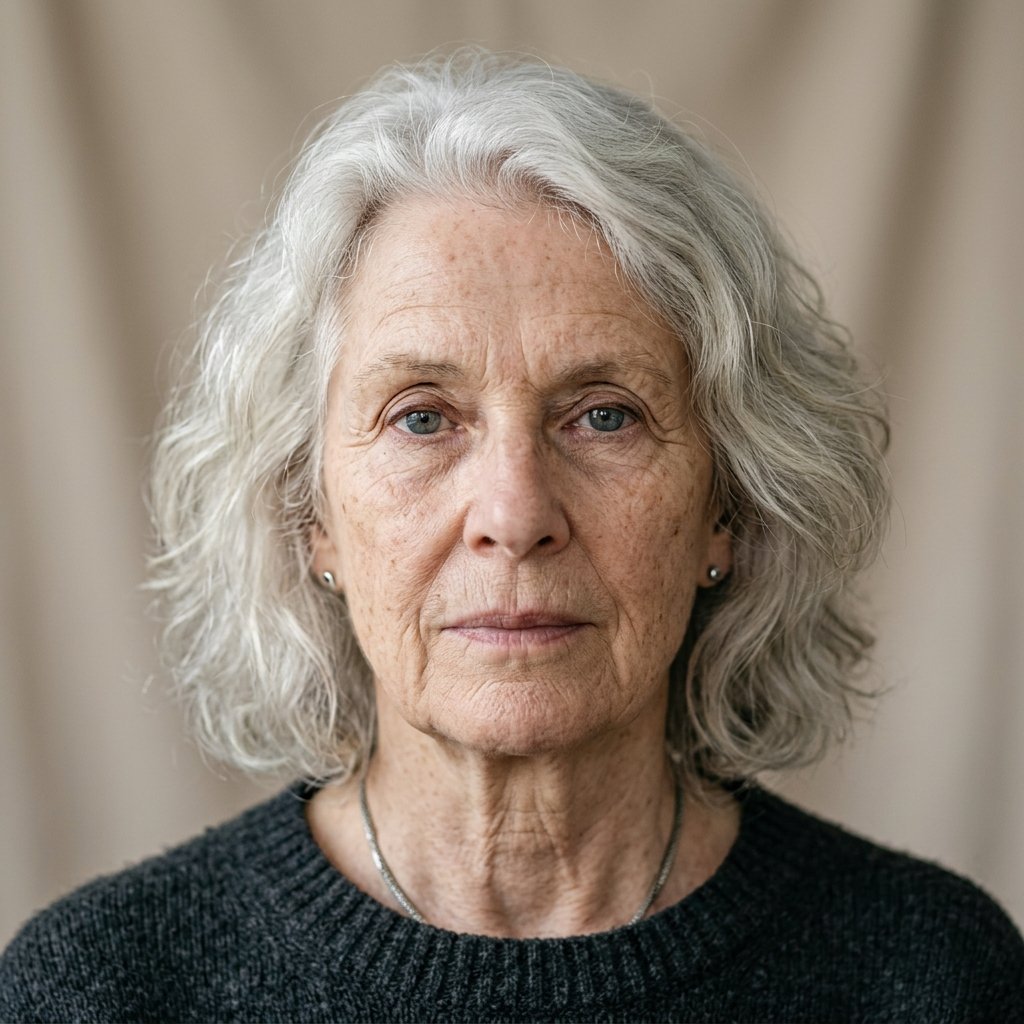
I opened it to find a thin, stooped old man with a cane and a face I hadn’t seen in forty years. It was Samuel.
His hair was white as snow. His hands trembled. And in his eyes I saw the same little brother who once taught me to laugh at hard times.
“Hello, Walt,” he said softly. “I know I’ve got no right to be here.”
Every instinct told me to shut the door. But something in his frail frame stopped me. He looked so tired. So sick.
“The doctors gave me a few weeks,” he said, reading my face. “I couldn’t leave this world with you still hating me. Not without you knowing.”
I let him in. We sat at the kitchen table where we ate breakfast as boys, two old men and forty years of silence between us.
With shaking fingers, he pulled a worn, yellowed slip of paper from his coat pocket and slid it across the table to me.
It was a bank receipt. A record of a wire transfer, made out to the children’s hospital in the city. The amount matched Grace’s surgery to the penny.
And the date. The date was the very week her heart was mended.
My hands began to tremble. I looked up at him, unable to speak.
“I never wanted that money for myself, Walt,” Samuel whispered, tears sliding down the deep lines of his face. “When Daddy passed, I had already learned my own boy was born sick, the same trouble that came for your Grace years later.”
“I sold my half of the farm to pay his doctors. I lost him anyway. And I couldn’t bear to tell you, because I couldn’t bear the pity.”
He took a slow, rattling breath. “So when I heard through an old church friend that your little girl was dying, and that you were about to sell everything Daddy loved to save her, I couldn’t allow it.”
“I had scraped together every dollar I owned. I sent it all. I gave it in secret because I knew your pride would never let you take a penny from the brother you called a traitor.”
I sat there frozen, the receipt shaking in my hand. Forty years. Forty years of hatred, built on a lie I had told myself.
He hadn’t sold the farm out of greed. He’d sold it to save a dying child. And when he had nothing left, he gave that nothing to save mine.
“I couldn’t watch you lose her,” he said, his voice breaking. “Even if you never forgave me for as long as you lived.”
Something inside me that had been clenched tight for four decades finally let go. The cold stone in my chest crumbled to dust.
I reached across that old table and grabbed my little brother’s frail hands. And the two of us, gray and bent and running out of time, wept together like the boys we used to be.
“Forgive me,” I choked out. “Sam, forgive me. I called you every terrible name, and all this time you were the best of us.”
He smiled through his tears. “There’s nothing to forgive, Walt. You were protecting Daddy. I always loved you for it.”
Samuel stayed with me after that. I moved him into our old bedroom, the very room where we once counted fireflies through the window.
Grace came and met the uncle she never knew existed. She held his hand and thanked him for the life he had quietly given her. He held our great-nieces and nephews and laughed until it hurt.
For three precious weeks, I had my brother back. We sat on that porch every evening, and I hummed the old church songs Daddy used to sing, and Samuel closed his eyes and smiled.
He passed away peacefully one Sunday morning, in that same bedroom, with my hand in his. But he left this world knowing he was forgiven. Knowing he was loved.
I buried him beside our father, on the land he thought he’d lost forever. The land he never stopped protecting in the only way he could.
I wasted forty years hating a man who quietly saved my entire world. Forty years I can never get back.
If there is anything my old heart has learned, it is this. Pride is a thief. It steals the people we love while we’re busy nursing our anger.
Don’t wait for a deathbed to say you’re sorry. Don’t let a grudge outlive the truth. Some silences cost far more than we could ever imagine.
I look at Grace now, alive and glowing, and I see my brother’s love in every smile. And every night, I thank God for giving me three short weeks to make things right.