The day I finally stopped hoping was the very same day her letter arrived on my porch.
My name is Walter Hensley. I am seventy-four years old, a retired carpenter from the small town of Millbrook, Ohio. My hands are worn, my back is bent, and my hearing isn’t what it used to be. But my memory is sharp as ever, especially when it comes to her.
Eleanor Prescott.
I was twenty-three the summer we planned to marry. She was twenty-one, with hair the color of autumn wheat and a laugh that could stop a whole room. We were going to say our vows under the old maple trees behind the Millbrook church, that October.
I had already built us a small house with my own two hands. A little white place with green shutters and a porch swing where I imagined us growing old together.
Then one gray morning in 1974, she was gone.
No note. No goodbye. No warning at all.
I knocked on her family’s door and her father told me flatly that she had left town and did not wish to see me again. He shut the door in my face before I could say another word.
I stood on that step for what felt like hours, waiting for someone to tell me it was a mistake. Nobody ever did.
For weeks, I couldn’t eat. I couldn’t sleep. I sat on that porch swing alone, listening to the chains creak, wondering what I had done wrong.
Eventually, life did what life always does. It moved on, whether I was ready or not.
Years later, I married a kind and gentle woman named Ruth. She knew my heart carried an old wound, and she never once made me feel ashamed of it. She loved me patiently, steadily, for forty-one years.
We raised two beautiful children. We had grandchildren who called me Grandpa Walt and climbed all over my knees.
Ruth passed away three years ago after a long illness. I held her hand until her final breath, and I meant every word when I told her I loved her.
But I will be honest with you, because at my age there is no use in lying.
On the quietest nights, when the house was empty and the wind moved through the maples, my mind would drift back to Eleanor. To the girl who vanished. To the question that never stopped haunting me: why did she leave?
I had made my peace with never knowing. I truly believed I would carry that mystery to my grave.
And then, last month, everything changed.
It was an ordinary Tuesday. I shuffled out to check the mailbox, expecting nothing but bills and grocery flyers.
Instead, tucked between the envelopes, there was a single letter. The handwriting on the front was shaky and uneven, the letters trembling like a leaf in the wind.
But I knew that handwriting. I would have known it anywhere, even after fifty years.
My legs went weak. I had to sit down right there on the porch steps before I fell.
I tore the envelope open with fingers that would not stop shaking.
“Dear Walter,” it began. “I am dying, and I cannot leave this world letting you believe I abandoned you.”
My breath caught in my throat. My eyes blurred so badly I had to wipe them again and again just to keep reading.
Eleanor wrote that in the summer of 1974, her father had discovered our plans to marry. He did not think a carpenter’s son was good enough for his daughter. He wanted her to marry a doctor’s boy from the next county over.
So he did something unforgivable.
Every letter I had written her, he intercepted and burned. Every message I sent through friends, he made sure never reached her.
Then he told her a lie so cruel it makes my chest ache to write it even now.
He told her that I had run off with another girl. That I had never truly loved her. That I had left town laughing about the foolish farm girl who thought I would actually marry her.
Eleanor, heartbroken and humiliated, believed him.
She couldn’t bear to stay in Millbrook and face the shame. So she packed a single suitcase and left in the night, thinking I had betrayed her first.
All those years. All that silence. All that pain.
Built on a single lie told by a proud, frightened man who convinced himself he was protecting his little girl.
I sat on those porch steps and wept like I hadn’t wept since I was a boy.
Fifty years of believing she didn’t love me. Fifty years of believing I wasn’t worth a goodbye. And it was all a lie.
At the bottom of the letter, she had written the name of a care home in a town four hours away, near the Kentucky border. She said if I ever wanted to hear her voice again, she would be waiting. But she warned me not to wait too long, for the doctors said she did not have much time left.
I did not sleep that night.
The next morning, before the sun was even fully up, I filled my old truck with gas and started driving.
My chest ached the entire way. My hands gripped the wheel so tightly they cramped. A thousand questions ran through my mind, and underneath them all was one single fear, that I would arrive too late.
Four hours later, I pulled into the parking lot of a quiet brick building surrounded by dogwood trees.
My legs felt like lead as I walked through the doors. A kind young nurse led me down a long hallway that smelled of clean linen and lavender.
And then, there she was.
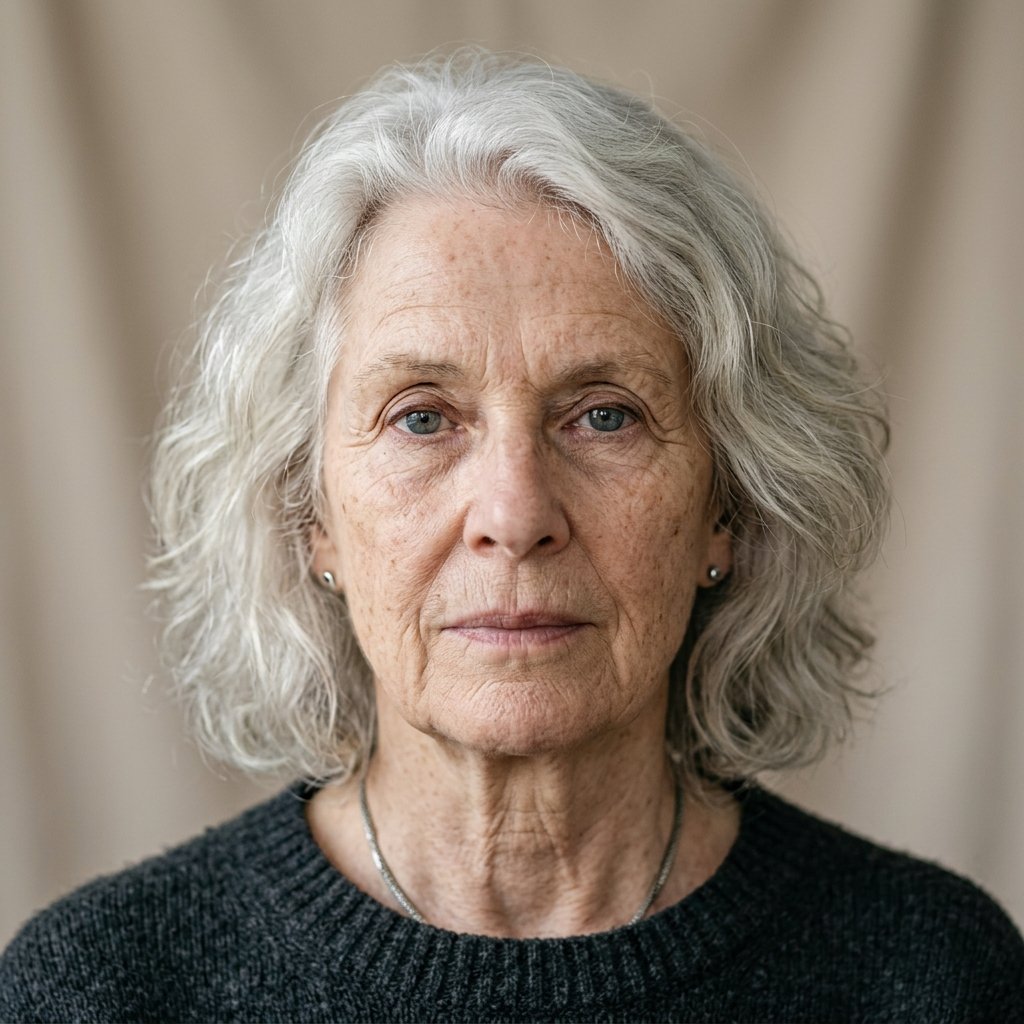
She lay in a narrow bed, so small and frail I almost didn’t recognize her. Her hair was silver now, thin against the pillow. Machines beeped softly beside her, and tubes ran along her thin arms.
But when she turned her head and saw my face, something remarkable happened.
She smiled.
It was the exact same smile from 1974. The one that used to stop a whole room. The one I had seen in my dreams for half a century.
“You came,” she whispered, her voice barely more than a breath.
I crossed the room in three steps and took her thin, cold hand in both of mine.
“Of course I came,” I said, my voice breaking apart. “Eleanor, I never stopped waiting. I never stopped wondering. I searched for you for years.”
Tears slipped down the deep lines of her face.
“I’m so sorry,” she wept. “I believed him. I should have known better. I should have fought harder to find the truth.”
I shook my head and squeezed her hand gently.
“There is nothing to forgive between us,” I told her. “And I forgive your father too. I forgive all of it. Holding onto anger now would only steal what little time we have left. I just needed to find you. That’s all I ever wanted.”
And right there, in that small room, fifty stolen years came pouring out of us like water breaking through a dam.
We talked for hours.
I told her about Ruth, and the children, and the little white house I built that we never got to live in together. She listened with tears in her eyes and told me she was glad I had known love, even if it wasn’t with her.
She told me about her own life. She had never married. She said her heart had closed the day she left Millbrook, and she never found a way to open it again.
That broke me more than anything.
We laughed together too, remembering the summer picnics and the porch swing and the silly songs we used to sing driving down country roads.
For a few precious hours, we were young again. We were the two people who had loved each other so fiercely, before a lie tore us apart.
I stayed by her side every day after that.
I held her hand while she slept. I read to her in the afternoons. I told her every single day that she was loved, and that she had always been loved, and that not one moment of her life had been unworthy.
Nine days after I found her, Eleanor passed away.
She was holding my hand when she went. Her face was calm and peaceful, and there was a soft smile resting on her lips.
Her last words to me were simple.
“Thank you for coming back to me, Walter.”
People who hear this story often shake their heads and say how terrible it is that we lost so many years. They ask how I can bear it. They ask how I can feel anything but rage at the man who stole our future.
But I will tell you the truth.
I don’t feel robbed anymore.
Because in the end, the truth found its way to us. And forgiveness gave us back what bitterness had buried for fifty long years.
I got to look into her eyes one final time. I got to tell her that she was never abandoned, never unloved, never forgotten.
And she got to leave this world in peace, knowing the truth at last.
If I had let anger fill my heart when I read that letter, I would have thrown away the most precious nine days of my life. I would have let a dying man’s old lie steal even our goodbye.
So I chose to forgive instead. And that choice gave me a gift I will treasure until my own final breath.
Sometimes love is not truly lost. Sometimes it is only hidden behind a lie, quietly waiting, hoping that someone will one day be brave enough and gentle enough to forgive, and finally set it free.
I am seventy-four years old, and I have learned this above all else.
Forgiveness does not erase the past. But it can heal the heart just in time to say the words that matter most.
And for that, I will be grateful for the rest of my days.