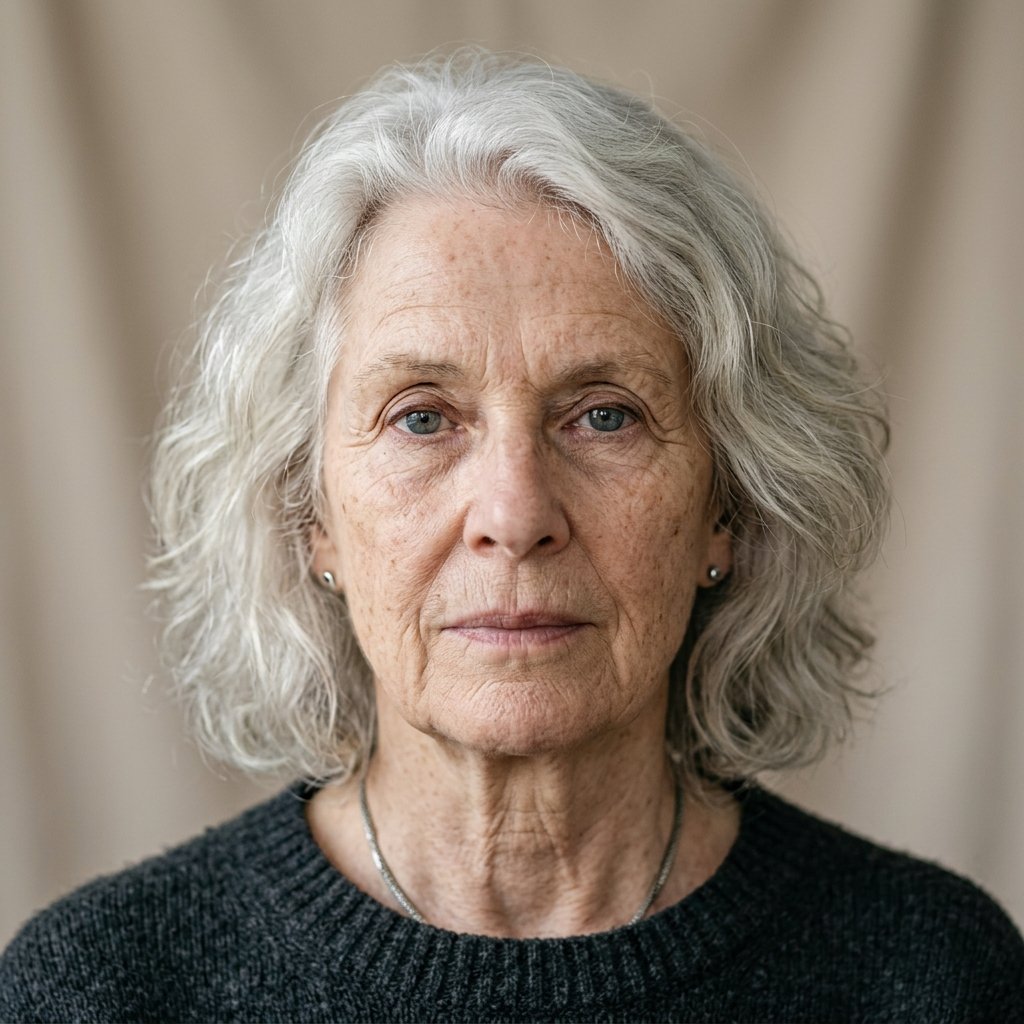
The day my daughter knocked on my door after two years of silence, I almost let her stand out there in the rain.
My name is Eleanor Dawson. I’m seventy-one years old, and I’ve lived in the same little house on Maple Street in Dayton, Ohio, for forty-three years.
My husband Frank and I raised two children under this roof. A son, Michael. A daughter, Katherine, though everyone called her Katie.
And for two long years, I told the entire world that I only had one child left.
I want you to understand something before I go on. I am not a cruel woman. At least, I never thought I was.
But grief does strange things to a person. It hollows you out. It makes you desperate for someone to blame.
And I found my someone. I found my Katie.
Frank passed away on a cold morning in February. Cancer. It took him slow, then all at once, the way those things do.
The funeral was the worst day of my life. The church smelled of lilies and candle wax, and I remember gripping the pew so hard my knuckles went white.
Michael stood beside me the whole time, one hand on my shoulder. My steady boy. My rock.
And Katie? Katie slipped out halfway through the service.
I saw her stand up, whisper something to no one in particular, and walk out the side door into the gray parking lot.
She didn’t come to the luncheon. She didn’t help me carry a single casserole dish. She didn’t hold my hand when they lowered her father into the ground.
She was just gone.
I sat there among two hundred mourners feeling like the loneliest woman on the face of the earth.
And that was only the beginning.
A week later, Michael sat across from me at this very kitchen table, stirring his coffee, and he said the words that broke what was left of my heart.
“Mom, I don’t know how to tell you this,” he began, staring down at his cup. “But Katie told me you’d be better off selling this old house fast. She said it’s just sitting here rotting, and she wants her share sooner rather than later.”
I felt the blood drain from my face.
“She said that?” I whispered. “Her father isn’t even cold in the ground.”
Michael nodded slowly, like it pained him to be the messenger. “I’m sorry, Mom. I didn’t want to be the one to tell you.”
Something inside me hardened that day. Something that had been soft for thirty-nine years.
My own daughter, circling like a vulture over my grief, counting the money before the flowers had even wilted.
I decided then and there that Katie had shown me who she really was.
So I did what a wounded, foolish, heartbroken old woman does.
I called my lawyer. I changed my will completely.
Every dime, the house, the savings, Frank’s old truck, all of it went to Michael. My loyal son. The one who stayed.
I blocked Katie’s number. I returned her letters unopened. When she left messages, I deleted them without listening.
When my friends at church asked, “How’s Katie doing these days?” I would lift my chin and answer, “I don’t have a daughter anymore.”
And oh, how they clucked their tongues and shook their heads and told me how sorry they were.
I wore my bitterness like a warm coat. It kept the grief away. It gave me somewhere to put all that pain.
Two years passed like that. Two Thanksgivings with an empty chair. Two Christmases I spent pretending I didn’t wonder where she was.
And then came last Tuesday.
It was pouring rain, the kind of cold spring downpour that rattles the windows. I was doing the supper dishes when I heard three soft knocks at the front door.
I dried my hands and shuffled over, expecting a neighbor or a delivery.
When I opened it, my heart nearly stopped.
There stood Katie.
But not the Katie I remembered. This woman was thin, painfully thin, with dark circles under her eyes and gray threading through hair that used to be chestnut brown.
She was soaked to the bone, shivering, and she was clutching an old shoebox to her chest like it was the only thing keeping her alive.
“Mom,” she said, her voice barely rising above the rain. “Before you slam this door, please. Please just look inside this box.”
Every instinct told me to shut it. To turn away. To protect the anger I’d nursed for so long.
But something in her eyes, something raw and pleading, made my hand freeze on the door frame.
“You have five minutes,” I said coldly. “Then you leave.”
She stepped into my living room, dripping onto the carpet, and set the shoebox on the coffee table with trembling hands.
“Open it,” she whispered.
I lifted the lid, expecting I don’t know what. Photographs, maybe. An apology letter.
Instead, the box was crammed full of receipts.
Dozens of them. Hundreds, maybe. Folded, wrinkled, some stained with coffee rings.
I picked one up with shaking fingers. It was a hospital billing statement. Dayton Regional Medical Center. Frank’s oncology treatment.
Paid in full. Payment made by Katherine M. Dawson.
I picked up another. And another. Chemotherapy. Radiation. The specialist in Columbus we drove to twice a month.
Every single one paid by my daughter.
“I don’t understand,” I breathed, sinking into my armchair. “Your father had insurance. The bills were covered.”
Katie knelt down in front of me, her wet coat pooling water on the floor.
“They weren’t, Mom,” she said gently. “The insurance ran out after the second round. Dad owed almost forty thousand dollars. He didn’t want you to know. He made me promise.”
My mouth went dry. “Forty thousand?”
She nodded. “So I took a second job. The night shift at the distribution center, loading trucks. I sold my car and started taking the bus. I did whatever I had to do to keep those bills paid, so you two could just focus on getting him well.”
I stared at her, my mind spinning.
“But the funeral,” I stammered. “You left. You walked out on your own father’s funeral.”
Her chin quivered, and tears finally spilled down her cheeks.
“A creditor called me that morning,” she said. “They were about to garnish Dad’s bank account before his final expenses cleared. The account you needed for the burial. I left to drive to the bank in person and stop it before noon. I made it with fifteen minutes to spare.”
She wiped her eyes with the back of her hand.
“I wanted to come back, Mom. I swear to God I did. But by the time I got there, everyone was gone. And you wouldn’t answer my calls after that.”
The room seemed to tilt around me.
“But Michael,” I said, my voice cracking. “Michael told me you wanted to sell the house. He said you called it a rotting old place. He said you wanted your share right away.”
Katie went very still. Then she let out a slow, heartbroken breath.
“Mom,” she said softly, “I never said any of that. I never wanted a dime from you. Not the house. Not the savings. Nothing.”
She looked me straight in the eyes.
“Michael needed you to hate me. Because he knew that as long as you loved me, I’d stand between him and everything he wanted.”
And suddenly, all the little pieces I’d ignored came crashing together.
The brand-new truck in Michael’s driveway three months after the will was signed. The kitchen remodel. The vacation to Florida.
The way his phone calls grew shorter and shorter once the paperwork was final, until they stopped coming at all.
I hadn’t heard from my “loyal” son in over four months.
My stomach turned to ice.
“Oh, Katie,” I whispered. “What have I done?”
She climbed up and sat on the arm of my chair, the way she used to as a little girl, and she wrapped her thin arms around me.
“You listened to the wrong person, Mama,” she said. “That’s all. You were hurting, and someone took advantage of it.”
We sat at that kitchen table until well past midnight.
We talked the way we hadn’t talked in years. Real talk. The kind that’s ugly and honest and healing all at once.
I told her about the loneliness. The empty chairs at every holiday. The nights I’d almost picked up the phone, then talked myself out of it.
She told me about the exhaustion. The bus rides at 4 a.m. The way she’d cried in the break room reading the letters I sent back unopened.
I learned that my daughter had been quietly protecting me the entire time, while I stood in front of God and everyone calling her a monster.
I wept until I had nothing left in me.
And through it all, she just held my hands and said, “I never stopped being your girl, Mama. I was just waiting for you to hear me.”
The next morning, I called Michael.
He didn’t pick up. He hasn’t picked up since. But I’ve already spoken to my lawyer again, and I’ve learned that some mistakes can still be corrected, even at seventy-one.
But that’s a heavy story for another day.
What I keep thinking about, what haunts me in the quiet hours, is how close I came to dying without ever knowing the truth.
How I nearly went to my grave believing a lie about the one person who sacrificed everything for our family.
All of that pain. Two wasted years. A destroyed relationship. And for what?
Because I listened to gossip instead of asking my own child one simple, direct question.
Because it was easier to accuse than to talk.
We don’t sit down and truly talk to each other anymore. We assume the worst. We take one twisted story from one wounded mouth and let it burn down forty years of love.
Katie moved back to Dayton last week. She stops by every evening now, and we cook supper together, just the two of us.
Last night she laughed at something I said, and for one shining moment, she sounded exactly like the little girl who used to sit on the arm of my chair.
I don’t deserve a second chance. But God, and my daughter, saw fit to give me one anyway.
So if there’s someone in your life you’ve written off, someone you’ve decided is guilty without ever letting them speak, I am begging you.
Open the door.
Ask the question.
Because the truth may be standing right in front of you, soaked to the bone, holding a shoebox full of everything you got wrong.