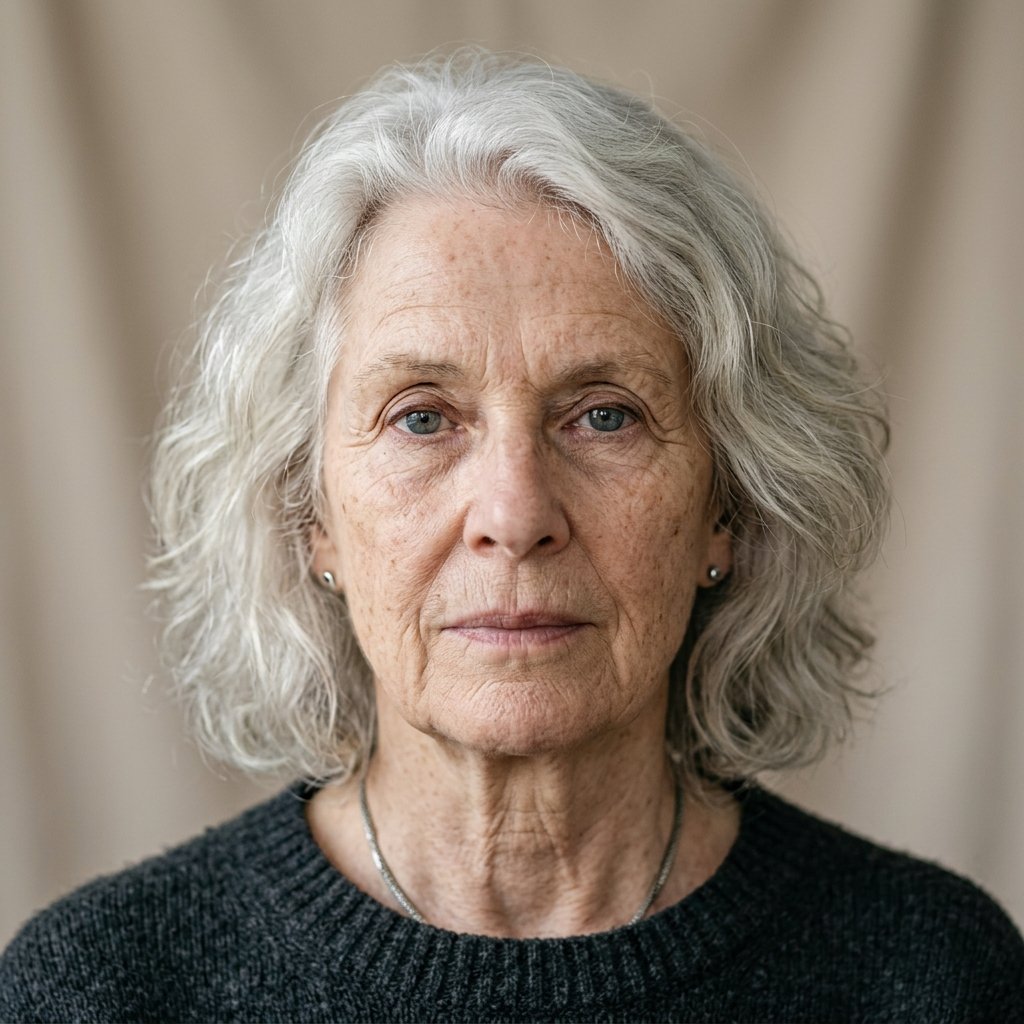
My phone shattered the silence of my bedroom at 2:46 in the morning, and before I even answered, my heart was already racing.
You see, as a detective in the Domestic Violence Unit, I know that good news doesn’t come at that hour. But when I saw the caller ID—Emily Harper, my twin sister—the world tilted.
Emily never calls me. Not anymore. Not since she married Mark Brennan.
I answered with a throat tight with fear. “Em? What’s wrong?”
But what came through the speaker wasn’t words. It was sobbing. Deep, desperate, gasping sobs that I’d heard a hundred times from victims. But this was my sister. My identical twin. The girl who shared a womb with me, who held my hand at our mother’s funeral, who cried on my shoulder when our father passed. And she was making sounds that broke me inside.
“Emily, talk to me. What’s happening? Are you safe?”
“Sarah, please… please come get me. Mark is—”
A deafening crash cut her off. Like something heavy slamming against a wall. Then a sharp, terrified gasp, and the unmistakable clatter of a phone hitting a hard floor. Then static. Then nothing.
I screamed her name into the dead line. Nothing.
My training kicked in, but my hands were trembling. I fumbled for my personal phone, the one I use for family, and dialed 911 dispatch while pulling on jeans with my other hand. I identified myself, gave the address—228 Willow Creek Lane, the house where Emily used to laugh and now only flinches—and reported a suspected domestic assault in progress. I made it clear: suspect Mark Brennan, white male, 34, approximately 190 pounds, possibly violent. I requested a patrol car and an ambulance, code 3. And I told them I was en route as well. I didn’t mention she was my sister. Not yet. I needed them to treat this like any other call. If they knew it was family, they might try to talk me out of going alone. And nobody was going to stop me.
I raced through the empty streets of Columbus, Ohio, running red lights I’d normally ticket someone for. The streetlights blurred past, but my mind was sharper than ever. All those signs I’d ignored came flooding back. The way Emily stopped visiting for Sunday dinners. The long sleeves in July at the barbecue. The flinch when someone reached out to hug her. The fading purple marks at her wrist that she said were from a gardening accident. But Emily hated gardening—she had a black thumb. And I, a trained detective, let my sister’s lies slide because I was afraid to push her away. I told myself she’d come to me when she was ready. What a foolish, dangerous gamble.
When we were little girls, Emily and I were inseparable. We had our own secret language, a mix of glances and half-sentences that our parents never understood. We slept in the same bed until we were twelve. When our mother passed from cancer, Emily held my hand through the funeral, her grip the only thing keeping me upright. When our father died of a heart attack six years later, I returned the favor. We promised each other we’d always be there, no matter what. But then Mark Brennan walked into her life, and everything changed.
He was charming at first. Handsome, soft-spoken, with a great job at a local accounting firm. He brought her flowers, opened doors, and looked at her like she was the sun. I was happy for her. I truly was. But after the wedding, she began to fade.
It started small. She skipped our weekly coffee dates, always with a quick text: “Mark needs me at home tonight.” Then she stopped picking up when I called. When I finally reached her, her voice was different—quieter, more careful. She’d pause before answering, as if checking to see who was listening. I visited her house once, and I noticed the way she kept glancing at him when she spoke, like she was seeking permission. I asked her if everything was okay, and she said, “Of course. I’m just tired.”
I should have pressed harder.
There was a day at a family barbecue a year ago. Emily wore a long-sleeved blouse in ninety-degree heat. I made a joke about her being cold-natured, and she laughed, but the laugh didn’t reach her eyes. Later, when she reached for a plate, her sleeve rode up just enough to reveal a dark bruise shaped like a handprint on her forearm. She saw me looking and immediately pulled the sleeve down, muttering something about bumping into a door. I wanted to ask more, but she turned away and busied herself with the potato salad. I rationalized it away, telling myself she’d tell me when she was ready. But victims often retreat deeper when they’re not ready. I knew that from my work. I just didn’t apply it to my own twin.
That night, at 2:46 a.m., the phone call changed everything. I was groggy but alert within seconds. I remember the sound of her voice, the raw panic. She said my name like a prayer, and then the crash. It was like a physical blow to my chest.
I drove faster than I ever had, my mind spinning with worst-case scenarios. I pictured her on the floor, beaten, alone. I pictured Mark standing over her, smug and untouchable. I felt a rage so pure and hot it nearly clouded my judgment. But I forced myself to breathe, to think like a detective, not just a terrified sister.
When I pulled up to their house, all the lights were off except the porch light. The quiet felt sinister. I could hear my own heartbeat as I walked up the path. I had my service weapon in its holster under my jacket, but I didn’t draw it. I didn’t want to escalate things before knowing the situation.
I knocked, and the door opened almost instantly.
Mark stood there, shirtless, his gray sweatpants hanging low. He was breathing evenly, not a hair out of place. And he smiled at me. A slow, condescending smile that made my blood boil.
“Sarah, this is a surprise,” he said, his voice smooth as silk. “Emily’s already asleep. Long night.”
I could barely keep my voice steady. “Where is she, Mark? I heard her call. She was crying for help.”
He leaned one shoulder against the doorframe, casually blocking my view inside. “We had a little argument, that’s all. Married people argue. You wouldn’t understand, since you live alone with your cats.” He smirked. “She gets emotional sometimes. She’s fine. I gave her something to help her sleep.”
My stomach turned. “What did you give her?”
“Just a glass of wine. She’s resting now.” He shifted, trying to close the door a little. “Look, I know you’re the big-shot detective, but this is private family business. You don’t have a warrant. You can’t just barge in.”
I almost laughed. This monster was quoting legalities at me while his battered wife was alone upstairs. “Move, Mark.”
He crossed his arms, that fake pleasant expression hardening. “No. This is my house, and I’m telling you she’s fine. Go home, Sarah, before you embarrass yourself.”
Then I heard it.
Faint, weak, but unmistakable—a moan. Not a cry. A pained, pitiful sound that barely reached us from the upstairs bedroom. It was Emily, and she was hurting.
I lunged forward, but Mark grabbed my wrist. His grip was strong, meant to intimidate. But I’d been training in defensive tactics for fifteen years. In one fluid motion, I twisted my arm, broke his hold, and slammed him against the wall, pinning his arm behind his back. He grunted in surprise.
“You assaulted a police officer,” I hissed near his ear. “And in about two minutes, the police are going to arrive. If you so much as look at me wrong, I’ll add resisting arrest. Nod if you understand.”
He nodded, but his eyes were still defiant, full of a cold fury.
I released him, not because he deserved it, but because Emily needed me more than he needed to be in handcuffs that very second. I sprinted up the stairs, my heart pounding so hard I felt it in my throat.
The bedroom door was half open. I pushed it aside, and the sight before me will haunt my dreams forever.
My sister—my beautiful, gentle twin—was crumpled on the floor beside the bed, like a discarded doll. Her arm was twisted awkwardly beneath her body. Dark bruises bloomed across her neck, shoulders, and arms, stark against her pale skin in the dim light from the hallway. One eye was swollen completely shut, the eyelid purple and puffy. A thin line of dried blood traced from the corner of her mouth down her chin. Her breathing was shallow, rasping, and she was barely conscious.
I dropped to my knees beside her. “Emily. Emily, I’m here. It’s me. Sarah’s here. You’re safe now.”
She stirred, her good eye fluttering open. When she saw my face, twin to her own, a tear slipped down her temple. “Sarah…” she whispered, her voice hoarse. “He said… nobody would believe me. He said you… wouldn’t believe me.”
I gently brushed her matted hair away from her face, careful not to touch the bruises. “Oh, sweetheart. I believe you. I’ve always believed you. I’m so sorry I didn’t come sooner.”
The sirens were growing louder outside. Red and blue lights began to pulse through the window blinds, casting an eerie glow on the scene.
From the doorway, Mark’s voice cut in: “She fell. She’d been drinking—she’s been under a lot of stress. I tried to help her up, but she got hysterical and started swinging at me.” His tone was calm, rehearsed. “I think she might have a concussion. I was just about to call an ambulance.”
I didn’t turn to him. My focus was purely on Emily. I held her hand and leaned close. “Emily, listen to me. Paramedics are almost here. You’re going to be okay. And you need to know something—”
That’s when my eye caught something on the floor. A few feet from Emily’s outstretched hand, her phone lay face-up, the screen shattered in a spiderweb of cracks. But it was still on. Still displaying something. A video recording app, still running. A red timer ticking away in the corner of the screen.
It had recorded everything.
The crash. The sounds of impact. Likely his voice, loud and threatening, then the blow, then her cries. All of it, preserved in digital memory.
I felt a surge of fierce, protective triumph. Mark had left behind his own condemnation.
I looked at Emily, my voice steady despite the chaos. “They don’t need to believe you blindly, Em. They just need to preserve what he left behind.”
The phone had caught it all—every word, every blow, every lie he told. And I, as a detective, knew exactly how to handle it.
Minutes later, the paramedics rushed in, young men with kind eyes and steady hands. They immediately began assessing Emily, their faces professional but tinged with shock at the extent of her injuries. I carefully handed the phone to the lead officer, a veteran named Sergeant Howard, and pointed out the recording. I explained it might contain the entire assault. His eyes widened, and he immediately gloved up, stopping the recording to preserve it as digital evidence.
Mark’s face went pale as he realized what was happening. He started to protest, his voice rising. “You can’t take that—it’s private property! She fell, I’m telling you!”
But Sergeant Howard had already heard enough. He read Mark his rights while another officer snapped handcuffs around his wrists. The click of those cuffs was one of the most satisfying sounds I’ve ever heard.
I rode in the ambulance with Emily, holding her hand the whole way. The paramedics worked around me, stabilizing her neck, starting an IV, murmuring reassurances. She drifted in and out of consciousness, but whenever she squeezed my hand, I squeezed back.
At the hospital, the doctors treated her for a mild concussion, two cracked ribs, and severe bruising across her torso and limbs. They said the eye would heal, but she might always have a faint scar on her eyebrow. A physical reminder. But she was alive. And she was free.
In the days that followed, I stayed by her side. I took leave from work to be with her. She told me everything, in halting, broken sentences. How Mark had controlled her finances, isolated her from friends and family, belittled her until she believed she was worthless. How the abuse had escalated from shoves to punches. How that night, he’d come home drunk and accused her of flirting with a neighbor, and when she denied it, he’d flown into a rage. She had managed to dial my number before he knocked the phone away. She didn’t even know it had landed face-up and started recording.
The recording was devastating to hear. I had to listen to it as part of the investigation, and I’ll never forget his voice—cold, cruel, utterly contemptuous—as he shouted insults and then the sounds of impact and her screams. But it was also the key piece of evidence that guaranteed his conviction.
Mark Brennan accepted a plea deal rather than face a jury. He’s now serving an extended sentence at a state correctional facility. He can’t hurt her anymore.
Emily moved in with me after she was released from the hospital. My spare bedroom became her sanctuary. We started going to therapy together, and she also sees a counselor on her own. It’s a long road, but every day, the light returns a little more to her eyes. She laughs again, cautiously, but it’s real. She’s rediscovering her love of painting, and she’s starting to talk about maybe adopting a dog someday. Small steps, but beautiful ones.
We’re rebuilding the closeness that Mark stole from us. Our twin bond, tested