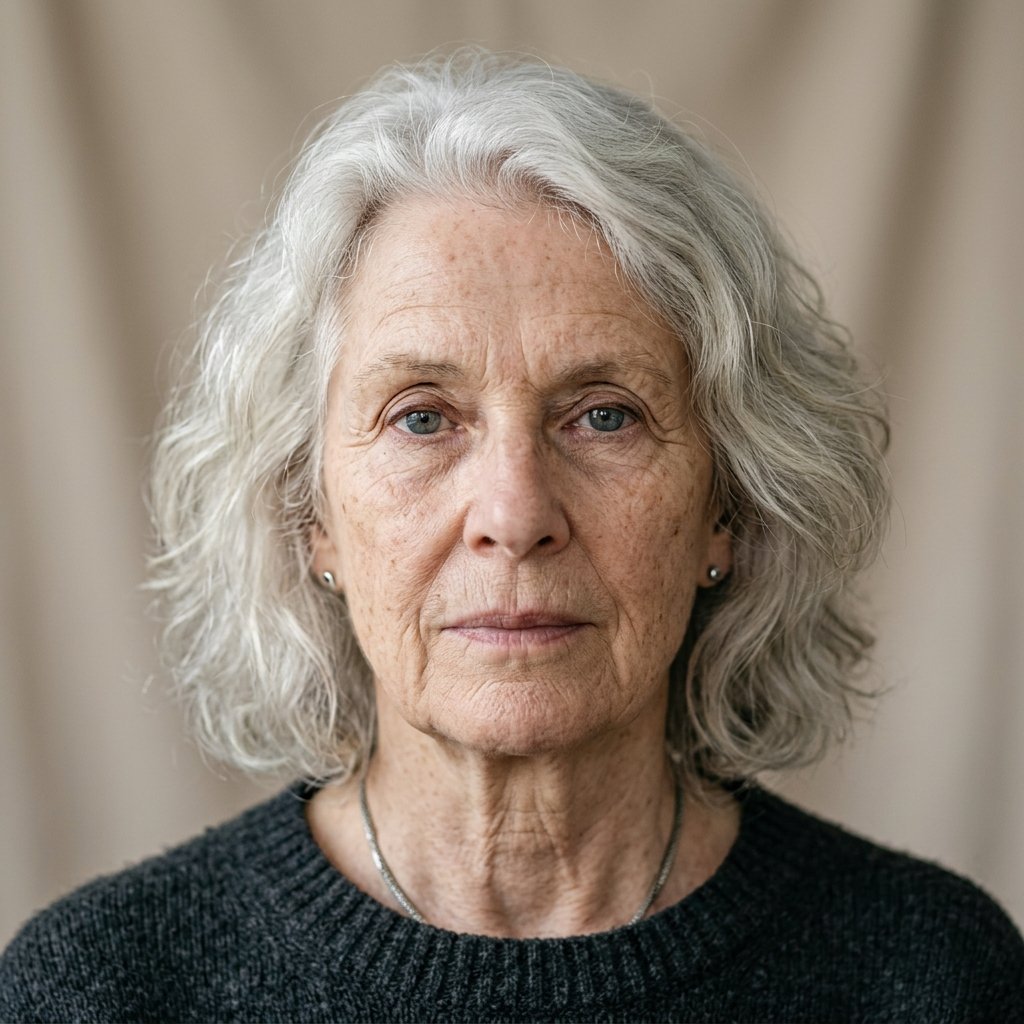
The night I sold my wedding ring, I stood in the gravel parking lot of a pawn shop and told myself it was just metal.
It wasn’t. It was the last thing James ever slipped onto my finger, the morning of our wedding, back when we still believed we’d grow old together on that little farm outside Cedar Falls, Iowa.
But belief doesn’t keep the lights on. And my three children hadn’t had a warm meal in two days.
So I walked in, laid the ring on the counter, and looked away while the man behind the glass counted out forty-one dollars.
I was thirty-four years old. A widow. An eighth-grade education and a pair of hands that had never known anything but work.
James had been gone eight months by then. A truck lost its brakes on Highway 20, and just like that, the man who used to sing off-key while he built kitchen cabinets was gone.
I didn’t have time to fall apart. Grief is a luxury for people who can afford to stop moving.
So I moved.
I cleaned houses before the sun came up. I scrubbed floors on my knees in homes finer than anything I’d ever live in, and I said thank you when they handed me my pay.
At night, I sewed. Dresses for other women’s daughters. Curtains. Torn work pants stitched back together for men who never learned my name.
My fingers cracked and bled in the winter. I kept a jar of petroleum jelly by the sewing machine and worked through the sting.
We lived in a rented house on Maple Street with a furnace that groaned like an old man and quit whenever the temperature dropped hardest.
Many nights, my three children slept in one bed, piled under every blanket we owned, while I sat in the kitchen doing arithmetic that never came out right.
Daniel was my oldest. Serious, watchful, ten years old going on forty.
Sarah was the middle one. Quiet as a Sunday morning, always with a book, always giving her portion to her little brother when she thought I wasn’t looking.
And Thomas, my baby, was five when his father died. He barely remembered James at all, and that broke my heart worse than anything.
One evening, Daniel found me at the kitchen table with an unpaid heating bill in my hand and tears running down my face.
I hadn’t heard him come in. I tried to wipe my cheeks, but it was too late.
He crossed the room and wrapped his skinny arms around my neck. “Don’t worry, Mama,” he whispered. “One day I’m going to take care of you. I promise.”
I held him and smiled and told him to go finish his homework.
I didn’t believe him. God forgive me, I didn’t.
I had stopped dreaming of good things for myself a long time ago. All I prayed for was that my children would survive long enough to build lives softer than mine.
There were nights I told them I’d already eaten so they wouldn’t see the pot was empty. I’d sip a glass of water and call it supper.
I wore the same two winter coats for eleven years. When the buttons fell off, I sewed new ones from a coffee can full of mismatched spares.
The hardest part was never the hunger. It was the whispers.
Cedar Falls was a small town, and small towns talk. I heard what they said about us at the grocery store, in the church pews, at the school gate.
“Those Whitfield kids don’t stand a chance.” “No father, no money, no future.” “It’s a shame, but that’s how it goes for families like that.”
One woman, the wife of the man who owned the hardware store, told me right to my face that I should think about giving my children up. That they’d have “a real shot” with a proper family.
I thanked her for her concern, walked home, and cried into a dish towel so my children wouldn’t hear.
Then I dried my eyes and kept going. Because that is the only thing a mother knows how to do.
I made rules in that house, poor as we were. We said grace before every meal, no matter how thin. We told the truth. We never took what wasn’t ours, and we never, ever spoke unkindly about people who had less than us.
“We may not have money,” I used to tell them, “but we have our name and our word. And those are worth more than anything you can buy.”
Daniel took a paper route at eleven. Sarah tutored younger children for pennies. Thomas collected bottles along the roadside and lined the coins up on the windowsill.
I watched my children grow up too fast, and I hated it and I loved them for it, both at the same time.
When Daniel got into college, we didn’t have the money. He got a scholarship, a job in the cafeteria, and a stack of loans that would follow him for years.
The day I drove him to campus in our rusted station wagon, he hugged me in the parking lot and said, “Remember what I promised you, Mama.”
I laughed and told him just to study hard. I still didn’t let myself believe.
Sarah went next. Then Thomas, who never cared much for classrooms, told me one morning that he was going to build something with his own two hands, the way his daddy used to.
And then the house on Maple Street went quiet.
For the first time in twenty years, I had no lunches to pack, no homework to check, no small feet running down the stairs.
I kept cleaning houses. I kept sewing. I told myself I’d done all I could, and now the world would decide what became of my children.
The years passed the way years do, faster than seems fair.
Daniel became a physician. Not the kind who chases money in the city, but the kind who opened a small clinic in a poor county where nobody else would go, treating folks who paid in eggs and gratitude.
Sarah, my quiet reader, became a teacher, and then something more. She opened a little school for children whose families couldn’t afford one, in a converted church basement, with mismatched desks and a heart the size of the sky.
And Thomas, my stubborn baby, took that used truck and turned it into a construction company that now builds homes across three counties.
But here is the thing about pride. When you’ve spent your whole life bracing for the next blow, you almost don’t know how to stand up straight when the good things finally come.
I still saw myself as the woman in the pawn shop parking lot. The woman the town wrote off. The mother who couldn’t even keep the furnace running.
Last month, the county held a dinner to honor Daniel. Twenty years of serving the poor, they said. A room full of doctors and officials and people in fine clothes.
Sarah bought me a dress, a soft blue one, the nicest thing I’ve owned in my life. She fixed my hair and told me I looked like a queen.
I sat at a table in the back, my hands folded in my lap, feeling like a servant who had wandered into the wrong room.
I thought about James. I thought about how he never got to see any of it.
Then my son walked up to the podium to accept his award.
He thanked the county. He thanked his colleagues. And then his voice changed, and he went quiet for a long moment, looking down at his notes.
“Everything I am,” he finally said, and his voice cracked wide open, “I owe to one woman.”
“A woman who cleaned houses before dawn and sewed dresses until midnight. A woman who told us she wasn’t hungry so we could eat.”
“A woman who sold her wedding ring, the last gift from the husband she lost, so that three children on Maple Street could have supper.”
The room had gone completely silent.
“She never once complained,” Daniel said, tears on his face now. “The whole town said we’d amount to nothing. She just kept working. Mama, are you here? Please. Please stand up.”
The lights felt like they turned toward me all at once. Every head in that room swiveled.
My knees were shaking so hard I wasn’t sure they’d hold me. Sarah gripped one arm, Thomas the other, and together my children lifted me to my feet.
And then the whole room stood up.
Hundreds of people, on their feet, clapping, some of them crying, for an old widow in a soft blue dress who had spent her whole life certain that nobody ever saw her at all.
I wept. I couldn’t help it. Twenty years of cold nights and empty pots and whispered cruelty broke loose all at once and poured down my face.
Daniel came down from the stage and put something small and cold in my palm.
It was a wedding ring. Not the one I’d sold, but a new one, plain gold, exactly like the one James gave me all those years ago.
“I bought it back a hundred times over,” he whispered, folding my fingers around it. “I kept my promise, Mama.”
I don’t tell this story for pity. My children saw to it that I’ll never want for anything again, and I thank God for them every single day.
I tell it because somewhere tonight, a tired mother is telling her children she isn’t hungry so they can have the last of the supper.
She thinks nobody sees her. She thinks it will never come back around.
So let me be the one to tell her, from the far side of a long, hard road:
I see you. God sees you. And one day, in ways you cannot imagine tonight, every quiet sacrifice you make will come home to you.
Hold on a little longer. The best chapter of your story hasn’t been written yet.