For one thousand and forty-three days, my grandfather set two plates at his kitchen table every single night.
One plate for himself. One for my grandmother, who had passed away three winters before.
Nobody in our family knew this. Nobody had ever bothered to ask.
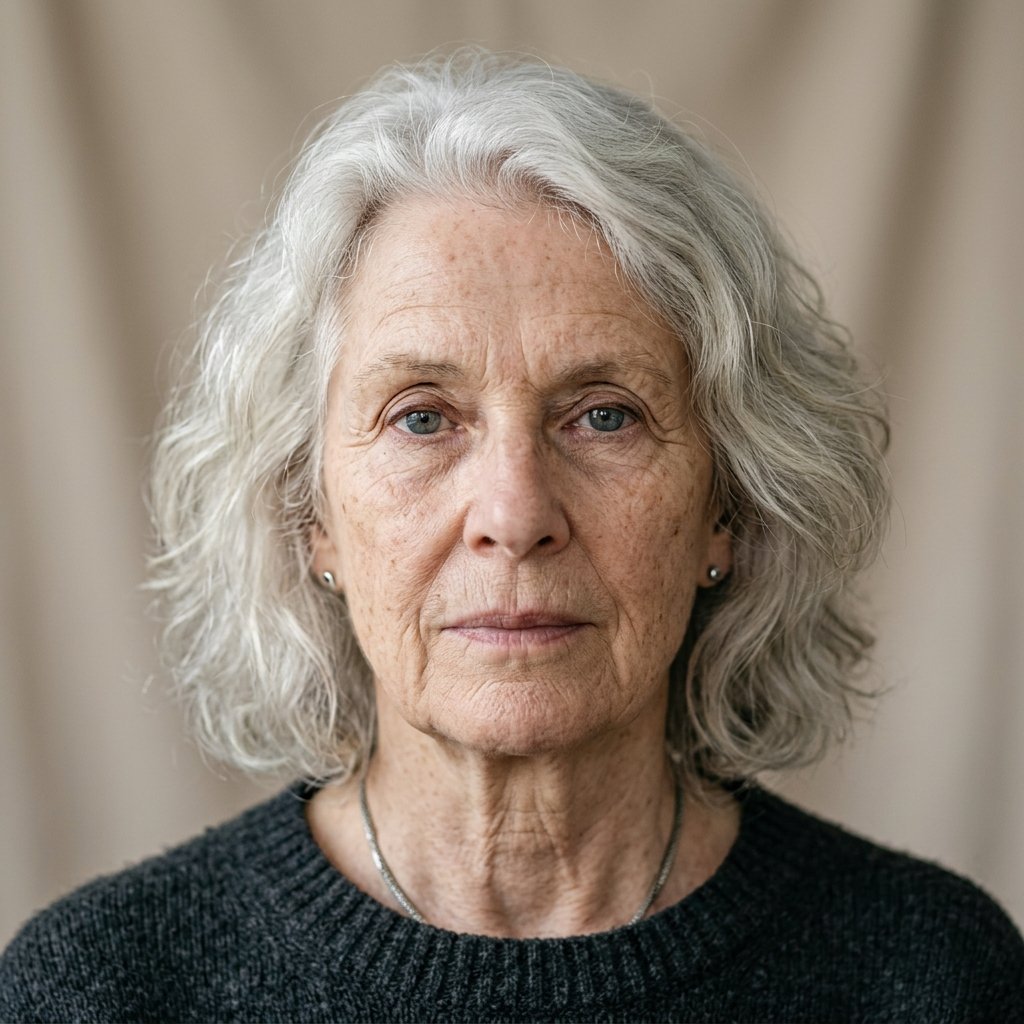
His name was Walter Hensley, and he lived at the end of a quiet lane in Millbrook, Ohio, in the same little white house he had built with his own two hands nearly sixty years earlier.
He was 81 years old. A retired carpenter with a spine bent by decades of good work and hands that looked like they’d been carved from old oak.
My name is Emma. I am his oldest grandchild, and this is the story of how we almost lost the best man I have ever known, simply because we were too busy to notice he was disappearing.
When my grandmother Ruth passed away, something in our family quietly broke, and none of us wanted to look at it.
My father, Daniel, threw himself into his law practice in Columbus. My aunt Karen buried herself in double shifts at the hospital. My uncle Tom moved even farther away.
Everyone agreed, in that easy way families do, that “Dad is fine on his own. He’s tough. He likes his space.”
We sent checks. We called on Thanksgiving and Christmas. We told ourselves that was love.
And Grandpa Walter, God bless him, never once complained.
On the phone he always sounded cheerful. “I’m doing just fine, sweetheart. Don’t you worry about your old grandpa. You go live your life.”
So we did. We lived our loud, hurried lives, and we let the phone calls grow shorter and further apart.
Then came the coldest January any of us could remember.
One gray morning, Grandpa went out onto the porch to sweep the ice off the steps, the way he always insisted on doing himself.
His boot found a patch of black ice. His feet went out from under him. He came down hard on his hip, and he could not get back up.
He lay there on the frozen boards for nearly three hours. Alone. Calling out to a street where no one was listening.
Here is the part that still makes my chest ache. It was not his son who found him. It was not his daughter.
It was Mr. Dole, the mail carrier, a stranger with a kind heart, who noticed two days of newspapers frozen on the walkway and had the good sense to look closer.
He found my grandfather barely conscious, lips blue, whispering my grandmother’s name.
By the time the hospital reached my father, Grandpa had been admitted with a fractured hip and severe exposure to the cold. The doctors were not sure, at first, that he would come through.
My father called me that night, and I had never heard him sound so small.
“Emma,” he said, “can you go out to the house? Somebody needs to check on things while he’s in the hospital. I can’t get away until the weekend.”
Even then. Even then, we were still too busy.
So the next morning I drove the two hours to Millbrook, expecting to grab some clothes and a toothbrush for him and be gone by lunch.
Instead, I walked into that little house and I found a life none of us had ever taken the time to see.
The first thing I noticed was the kitchen table.
Two places were set. Two plates, two glasses, two neatly folded napkins, exactly as if two people were about to sit down for supper.
But one chair had a thin layer of dust on it, and beside it sat my grandmother’s old blue cardigan, draped over the back the way she used to leave it.
He had been setting a place for her every night. For three years.
I stood there in that cold kitchen and I could not breathe.
Then I started to look around, really look, and everything I saw broke my heart into smaller and smaller pieces.
On the shelf in the living room were rows of worn spiral notebooks, the cheap kind you buy at the drugstore for a dollar.
I opened the first one, and I saw my grandfather’s careful, slanted handwriting filling every page.
They were not diaries of loneliness or complaint. They were something else entirely.
Every single day, he had written a short line about each of his grandchildren.
“Emma got that big promotion. I always knew she had her grandmother’s fire.”
“Called Tommy’s boy today. He is getting so tall. Reminds me of Daniel at that age.”
“Karen sounded tired on the phone. I hope she is sleeping enough. I said a prayer for her.”
Page after page. Year after year. Small, tender observations about lives that had drifted too far away for him to touch.
He had been keeping us close the only way he had left. On paper.
I wiped my eyes and I walked out to the garage, and that is where I truly fell apart.
Standing in a neat row were four beautiful rocking chairs, each one hand-carved from cherry wood, sanded smooth as glass.
On the bottom of each one, burned into the wood, was a name and a date. My name. My cousins’ names. The days we were born.
He had built one for each of us when we came into the world, and kept them safe, waiting.
And there, in the middle of the workbench, sat a fifth chair, only half finished, the wood still rough at the arms.
A scrap of paper was taped to it in his handwriting. “For the new little one, coming in the spring.”
My cousin was expecting her first baby in April. Somehow, at 81, with a body that was failing him, he had already started building that child a chair.
On the corner of the bench sat an old coffee can. Inside were envelopes, thick with folded cash, saved dollar by dollar over years.
Each envelope had a name on it. Mine. My cousins’. And on every one, the same three words. “For their futures.”
He had been going without so that we might have more, and he had never breathed a word of it.
But the thing that finally brought me to my knees on that concrete floor was the last notebook, the one still open on his reading chair.
The final entry was dated the morning before his fall.
And tucked inside was a folded letter from his doctor. A letter about a weak and failing heart, a diagnosis he had received two full years earlier.
He had known his heart was giving out. And he had hidden it from every one of us.
Beneath the letter, in that same steady hand, he had written his own words.
“I will not tell the children about my heart. They have their own lives and their own worries, and I refuse to be a burden to the people I love most in this world.”
“If they are too busy to come, then I raised them to be strong and independent, and that is enough for any father to be proud of.”
“I am not lonely. Ruth’s chair still sits beside mine. The roses she planted still bloom every June. And every night I fall asleep grateful for the family I was given, even if the house is quiet now.”
I sat on that cold floor and I cried until I had nothing left.
That night, I drove straight to the hospital instead of the empty house. I sat beside his bed, took his rough hand in mine, and I read those words aloud to my father, my aunt, and my uncle over the speakerphone.
There was a long silence on the line. Then I heard my father, a grown man of 55, begin to weep like a broken little boy.
“He was building a chair for a baby,” my aunt Karen whispered. “And we couldn’t even find an afternoon to drive out and see him.”
Something shifted in all of us that night. Something that should have shifted years before.
Within a week, my father had rearranged his entire practice. Aunt Karen cut her shifts in half. My uncle Tom booked a flight home the very next morning.
When Grandpa was finally strong enough to leave the hospital, there was no discussion, no debate about a nursing facility.
We moved him straight into my parents’ home, into a sunny room with a window facing the garden, and we took turns being there so he was never, ever alone again.
The grandchildren came every single weekend. The great-grandbaby, when she arrived that April, spent her afternoons asleep on his chest.
And slowly, with the warmth of his family finally surrounding him, the color came back to his face and the light came back to his eyes.
By early summer, with hands that trembled but never quit, he finished carving that fifth rocking chair.
We set it beside the other four on the back porch, all five of them in a row, filled with laughing children on Sunday afternoons.
He lived two more good years after that. Full years. Loud, crowded, joyful years, with a house that was never quiet again.
And he never once had to set two plates at his table, because there was never an empty seat left to fill.
We almost lost him to our own busyness. We almost let the kindest man I have ever known fade away in silence, still loving us with every quiet breath.
I think about all the older folks out there tonight, setting a place for someone who will not come, and never saying a single word about the ache of it.
So call them. Drive out to see them. Sit in the quiet with them before the quiet is all that’s left.
Because the ones who love us most are so often the ones who ask for the least.