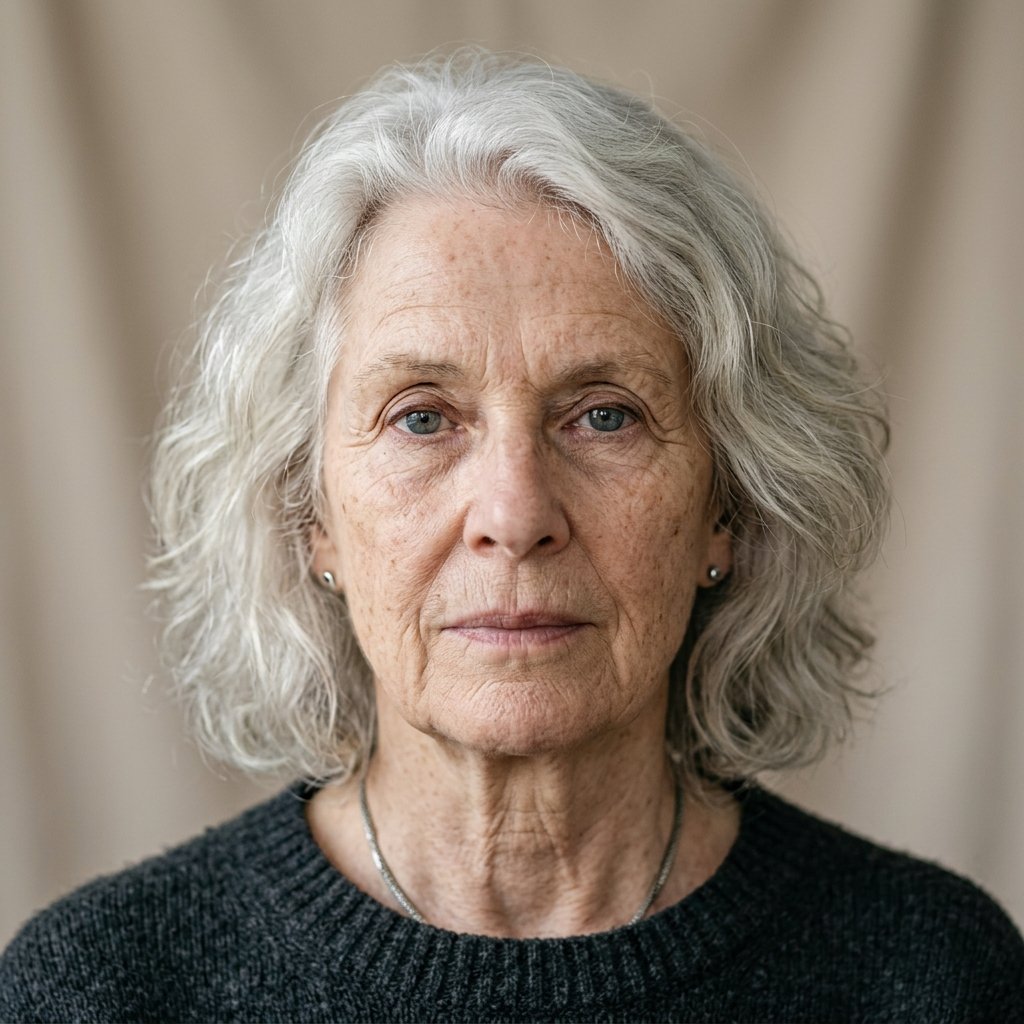
For six long years, the only voice I ever heard inside my own house was my own.
My name is Walter Hensley. I am seventy-nine years old, and I have lived my entire life in a small white house on Maple Street in Marietta, Ohio.
It is the same house where my wife Ruth and I raised our two children. The same porch where I taught my son Daniel to whittle a piece of pine. The same kitchen where my daughter Carol learned to bake her mother’s apple pie.
But for six years, that house had been nothing more than a museum of a life that used to be full.
Ruth passed away on a rainy morning in April. One moment she was there, humming by the window. The next, she was gone.
And when she left, it felt as though she took every ounce of warmth in the world with her.
I want to tell you about the day everything changed. But first, you have to understand how I ended up so terribly alone.
Ruth and I were married for fifty-one years. She was the glue that held our family together. She remembered every birthday, mailed every card, and called the children every Sunday afternoon like clockwork.
I was the quiet one. The one who worked long shifts at the mill, who showed love through fixing things instead of saying things. I always thought there would be more time to learn how to say the words that mattered.
I was wrong.
At Ruth’s funeral, I was not myself. Grief does something to a man. It reaches into your chest and turns you into a stranger.
My children came home for the service. Daniel flew in from Denver. Carol drove up from Phoenix with her husband.
And on that terrible day, standing beside the casket of the only woman I had ever loved, I said something I have regretted every single moment since.
They were trying to comfort me. They were talking about the future, about how they wanted to help, about maybe bringing me to live closer to them.
But all I heard was pity. All I felt was a house about to be emptied of the last thing I had.
And so I turned to my grown children and I said the cruelest words of my life.
“Just go. Go live your perfect lives out there and forget the old man. I don’t need anyone.”
The words came out sharp as broken glass. I saw the hurt land on their faces. Daniel’s jaw tightened. Carol’s eyes filled with tears.
I told myself I would call them the next day and take it all back. I told myself they knew I didn’t mean it.
But the next day I was too ashamed. And the day after that, too proud. And somehow, weeks turned into months, and months turned into years of silence.
The telephone became my enemy. I would stare at it, willing it to ring, but too stubborn to be the one to dial.
Pride is a strange and terrible thing. It builds walls faster than love can tear them down.
I convinced myself they had truly forgotten me. That they had taken my angry words as permission to move on. Every uncalled Sunday was proof, in my broken mind, that I no longer mattered.
So I settled into my loneliness the way you settle into an old, worn chair.
I ate my meals standing over the sink. I let the newspapers pile up on the porch. I talked to Ruth’s photograph like she could still hear me.
The days grew shorter. My back grew weaker. And the winter of my seventy-ninth year arrived, cold and gray and endless.
Then came the morning that saved my life.
It was early November, and the first hard frost had glazed the walkway white. I shuffled out to the mailbox in my slippers, foolish as that was, because checking the mail was the only appointment I still had.
My foot hit a patch of ice, and my legs went out from under me.
I came down hard on the frozen concrete. The wind was knocked clean out of me. When I tried to push myself up, my arms simply would not obey.
So there I lay, an old man crumpled beside his own mailbox, staring up at a sky the color of dishwater.
Minutes passed. Then more minutes. The cold crept through my thin robe and into my bones.
And I remember thinking, with a strange and quiet calm, that this might be how it ends. Alone. Unnoticed. Just as I had convinced myself I deserved.
A single tear rolled down into my ear, and I whispered, “Ruth, I think I’m coming home.”
And then I heard footsteps crunching quickly across the frost.
“Mr. Hensley! Oh my goodness, Mr. Hensley!”
It was Grace, the young woman who had been delivering our mail for the past year. She could not have been more than twenty-five, with a bright red scarf and a voice full of worry.
She dropped her heavy mailbag right there in the snow and knelt down beside me on the ice.
She took off her own gloves and wrapped my cold, shaking hands inside hers.
“I’ve got you,” she said. “You’re not alone. I’ve got you, do you hear me? Help is coming.”
She called for an ambulance with one hand while holding onto me with the other. And she never once let go.
A stranger in a red scarf said the words I had waited six years to hear from my own children.
You are not alone.
The fall left me with a badly bruised hip and a few cracked ribs. Nothing that wouldn’t heal. But something else was healing too, though I didn’t know it yet.
Because Grace didn’t stop caring the moment the ambulance drove away.
When I came home from the hospital days later, she was there. She had shoveled my walkway. She had salted the steps. She had even brought a pot of homemade chicken soup.
“I’m off at three,” she said simply. “I’ll be checking in on you.”
And she did. Every single day.
She noticed things no one had noticed in years. The cans of food I couldn’t open with my arthritic hands. The pills I forgot to take. The dust on the piano Ruth used to play.
One evening, as she washed my dishes, Grace looked around at all the framed photographs on my walls.
“You have such a beautiful family, Mr. Hensley,” she said. “Where are they now? Do they visit?”
The question hung in the air like smoke. I set down my spoon. And for reasons I still cannot fully explain, I finally told the truth to that young woman.
I told her everything. About Ruth. About the funeral. About the cruel words I had thrown at my own children in the darkest hour of my grief.
“I told them to forget me,” I said, my voice cracking. “And I suppose they did.”
Grace was quiet for a long moment. Then she dried her hands, sat down across from me, and looked me straight in the eye.
“Mr. Hensley,” she said gently. “I don’t think they forgot you. I think they’re waiting for the very same thing you are. For someone to knock on the door first.”
I shook my head. “It’s been six years. It’s far too late for that.”
“It’s never too late,” she said, “until it truly is. And you’re still here. So it isn’t.”
I didn’t have the courage to make that call. But it turned out I didn’t need to.
Because Grace found an old return address on a Christmas card that had been buried in a drawer. A card Daniel had sent that first year, that I had been too proud to open.
Without telling me, she tracked down my son’s phone number. And one quiet Tuesday, she picked up the phone and dialed.
She told Daniel that his father was alive. That he was lonely. That he had fallen on the ice and nearly died with no one to find him.
And then she told him the thing that broke the wall in two. She said, “Your dad has been sitting by that phone for six years, too ashamed to call. He never meant those words. He’s been waiting for you the whole time.”
There was a long silence on the line. And then, she told me later, my son began to weep.
Three days after that, I heard a knock on my front door.
I shuffled over slowly, expecting Grace with another pot of soup. But when I pulled the door open, my heart stopped in my chest.
Standing there on my frozen porch was Daniel. My son. Older now, gray at the temples, tears already streaming down his cheeks.
And right behind him stood Carol, my daughter, holding the hand of a little boy with Ruth’s very same eyes. A grandson I had never once met.
For a moment, none of us could speak.
Then Daniel’s voice came out in a whisper, shaking and small, like the little boy he used to be.
“We thought you didn’t want us, Dad. We thought you meant it.”
All the pride I had carried for six long years simply crumbled to dust right there in the doorway.
“I was a foolish, broken old man,” I said. “I never meant a single word of it. I’ve been so lost without you. Please. Please forgive me.”
And then my son wrapped his arms around me and held me the way I used to hold him. Carol pressed her face into my shoulder. And that little boy tugged on my sweater and asked, “Are you my grandpa?”
I knelt down as best my old bones would allow, and I said, “Yes, son. I’m your grandpa. And I am never going to disappear again.”
We stood in that cold doorway holding onto each other until the house behind us finally felt warm for the first time since Ruth had left it.
That was two winters ago now.
Today, my little house on Maple Street is loud again. My grandson’s crayon drawings cover the refrigerator door. Carol calls me every Sunday, just like her mother used to.
Daniel and I have learned to say the words we never knew how to say before. We say them often now, because we both understand how quickly the time can slip away.
And Grace, that young woman in the red scarf who refused to walk past a lonely old man lying on the ice, has a permanent seat at every single holiday dinner.
She says she just delivered the mail. But I know the truth. She delivered my family back to me.
I came so close to letting my own pride steal the rest of my life away.
Six years of silence, all of it ended by one stranger who simply chose to stop and care.
If you take anything from an old man’s story, let it be this. Do not let one hard moment become a wall you spend years hiding behind.
Make the call. Knock on the door. Say the words while there is still someone left to hear them.
Because the ones you love may be sitting by their own phone right now, just waiting for you to be brave enough to reach out first.