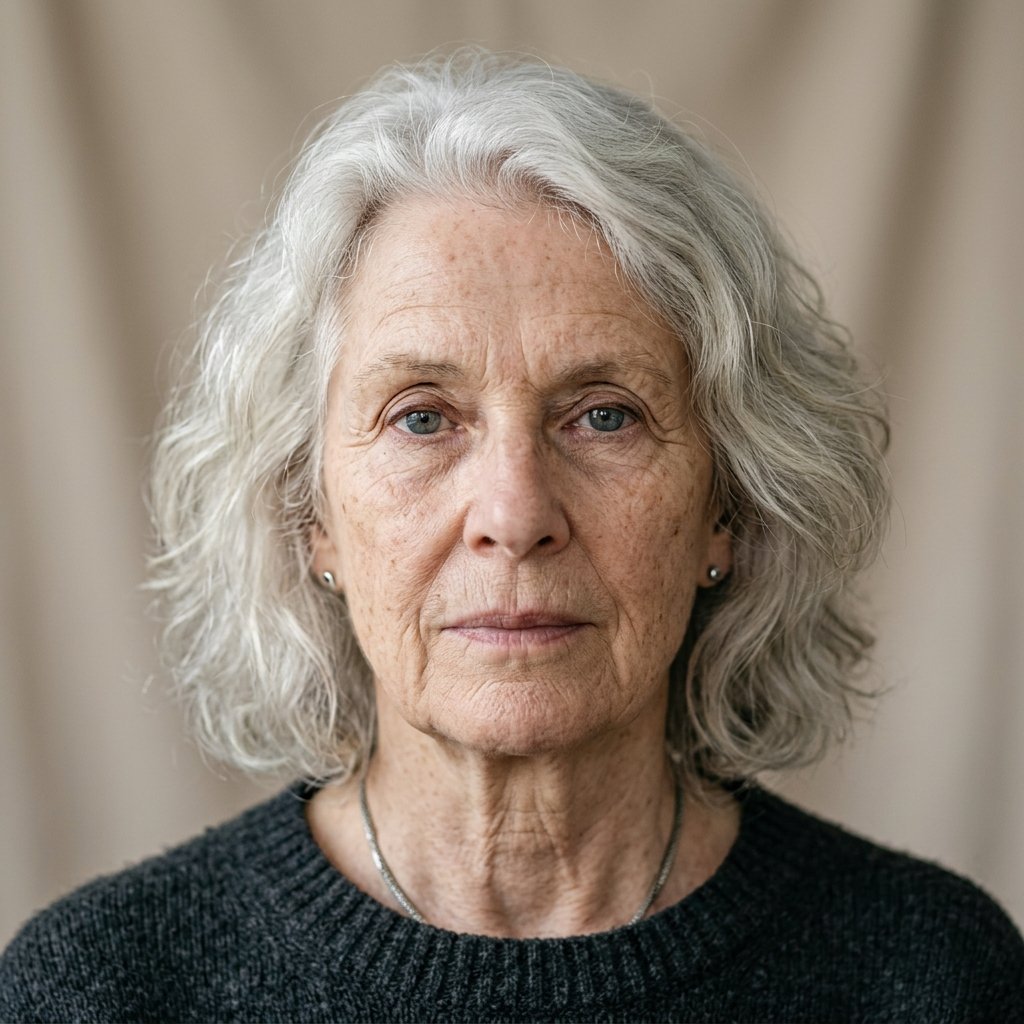
The morning after I buried my husband, I counted eleven dollars on the kitchen table and three small faces watching me from the doorway.
I was thirty-four years old. Thomas had been gone for two days, taken by an accident at the steel plant in Millbrook, Ohio, the town where we had planned to grow old together.
Now there was no we. There was only me, and Daniel who was eight, Sarah who was five, and little Michael who had just turned two and still reached for a father who would never walk through that door again.
People at the funeral kept saying the same thing. “If you ever need anything, Eleanor, you just call.”
I learned quickly that those words are a kind of goodbye. Nobody calls. Nobody comes. The casseroles stop after a week, and then the silence moves in like a tenant who never pays rent and never leaves.
So I did the only thing I knew how to do. I worked.
Before the sun came up, I cleaned the offices on Main Street. By nine, I was scrubbing floors in houses grander than anything I would ever own. In the afternoons I took in sewing, and at night, after I tucked my babies into bed, I worked the late shift at Dot’s Diner out on Route 9.
I want you to understand something. I was not a saint. I was tired. I was frightened. Some nights I sat on the bathroom floor with the water running so my children would not hear their mother crying.
But every single morning I stood back up. Because when you are all that stands between your children and the cold, you do not get the luxury of falling apart.
There was a January when Mr. Coleman, who owned our little house, knocked on the door with an eviction notice in his hand. I was two months behind.
I stood in that doorway with my children behind me, and I did not beg. I looked him square in the eye and said, “Give me thirty days, and you will have every cent.”
I do not know where those words came from. But something in my face must have told him I meant them, because he folded that paper back into his coat and nodded once.
I worked twenty-one days straight to keep that promise. I have never been so tired in my life. And I have never been so proud.
I wore the same brown coat for nineteen winters. The children never knew it was because every spare dollar went into a coffee can I kept hidden behind the flour, the one I had marked simply “Their Future.”
There were Christmases when the tree held more homemade ornaments than gifts. There were birthdays when the cake was just flour, sugar, and whatever love I could fold into the batter.
Daniel noticed things a boy his age should never have to notice. One night he found me darning the same pair of stockings for the third time, and he said, “Mama, when I grow up, I am going to buy you a hundred new ones.”
I laughed and told him I only needed one good pair. But I never once forgot those words.
Daniel was the serious one, the boy who read under the covers with a flashlight until the batteries died. He wanted to be a doctor from the time he was ten, and I never told him it was impossible, even when the guidance counselor gently suggested he aim for something more realistic.
When Daniel was in the sixth grade, his teacher, Mrs. Whitfield, asked to see me after school. My stomach dropped, the way any poor mother’s does when a teacher calls.
I was certain he was in some kind of trouble. Instead, she took my hand and said, “Mrs. Hayes, your boy has a real gift. Whatever it takes, do not let this world convince him he cannot.”
I walked home that night lighter than I had felt in years. Someone else had finally seen what I had always seen.
Sarah was fire and stubbornness wrapped up in pigtails. She argued with everyone, and I used to say the good Lord made that child for a courtroom. She wanted to be a lawyer, to fight for people who had no one else to fight for them.
She got suspended once for fighting. I marched down to that school ready to scold her something fierce.
Then I learned she had stood up for a small boy the older children were tormenting, a boy with a limp and no friends at all. She had planted herself between him and them and refused to move.
I did not scold her that day. I hugged her and told her that some fights are worth the trouble. I believe that was the day she decided exactly what she would become.
Michael, my baby, was the gentle one. He took things apart just to understand how they worked, then put them back together better than before. Engines, radios, broken toasters from the church sale. His hands were always moving, always building.
Michael was seven when he fixed our old radio with nothing but a bobby pin and a stubborn streak. That radio had been silent for a full year because I could not afford to repair it.
When music filled our kitchen again, my children danced on the worn linoleum, and for one whole evening we forgot we were poor. I danced with them, my baby beaming up at me, and I thought, this is wealth. This is what wealth truly is.
I made them a promise the night after the funeral, whispered so low they never heard it. I promised Thomas, wherever he was, that our children would have the life we had dreamed of, even if it cost me every hour I had left.
Getting them through school nearly broke me. I sold my wedding ring the winter Daniel started college. I told him I had lost it. He believed me because he needed to.
I took a second job I never mentioned. I skipped meals I told them I had already eaten. When my hands cracked and bled from the cold and the cleaning solvents, I wrapped them in cloth and I kept going.
I will be honest with you. There was one night I nearly gave up. A night when everything came due at once, and there was simply not enough of me to go around.
I stood at the stove too exhausted even to cry, and I whispered to the empty room, “Thomas, I cannot do this alone.”
And then, from down the hall, little Michael called out in his sleep. “Mama?” Just that. One word.
And I remembered why I could never stop. I answered, “I am here, baby. I am right here.” And I always was.
And then, one by one, my children flew.
Daniel became a doctor. I sat in the third row at his graduation in my brown coat, and when they called his name, I stood and clapped until my hands ached, and I did not care who stared.
Sarah passed the bar on her very first try and joined a firm in Columbus. Michael earned his engineering degree and took a position with a company that builds bridges across the country.
I had done it. Against every odd, every closed door, every whispered doubt, I had raised three successful children.
I thought that was the end of the story. I thought it was the happy ending I had bled for.
But life, I have learned, rarely ends where you expect it to.
Success has a strange way of building distance between people who once shared a single blanket to stay warm.
The phone calls grew shorter. The visits grew rarer. My children had entered a world of dinner parties and business trips and lives so full there did not seem to be room in them for a mother from a mill town.
I told myself it was only natural. This was what I had worked for, after all. I had wanted them to fly, and you cannot resent a bird for using its wings.
But the house grew quiet. So very quiet. I would set one plate at the table and remember when I could barely afford to fill three.
Sometimes I wondered if they were ashamed of me. Of my worn hands, my plain talk, the little house that still smelled of the same soap I had used for forty years.
I never said this to a living soul. A mother swallows those thoughts. She smiles on the phone and says, “Do not you worry about me, I am just fine.”
The year I turned seventy, I made my peace with spending the day alone.
I baked myself a small cake, the same recipe from all those lean years, and I set out two cups of tea, one for me and one for Thomas, the way I sometimes still did.
I had called each of the children the week before. Daniel had a conference. Sarah had a trial. Michael was somewhere over the ocean for work. All of them so sorry. All of them so busy.
I told them I understood. And I did. But understanding and hurting are not opposites. You can do both at the very same time.
That afternoon, I put on my brown coat, the same one, now soft and thin as tissue, and I walked to the cemetery to sit with the only person who had never left.
“Well, Thomas,” I said, brushing the leaves from his stone. “We did it. They turned out just like we hoped. I only wish you could see them.”
When I walked back to my street, dusk was settling, and I saw cars I did not recognize parked in front of my little house. My heart stumbled. For one terrible moment I thought something had gone wrong.
Then the front door opened, and there they were.
Daniel. Sarah. Michael. And behind them, grandchildren I had only seen in photographs, holding a banner that read, “Happy 70th, Grandma.”
I stood frozen on the sidewalk. Sarah, my fierce girl, came down the steps with tears already running down her face.
“There was never any trial, Mama,” she said. “There was no conference. No trip across the ocean. We needed you to believe you would be alone so we could surprise you.”
I could not speak. I pressed my hand to my mouth and I wept right there in the yard.
They led me inside, and the little house I had cleaned a thousand times had been transformed with candles and flowers and photographs from every year of our lives.
On the table sat a leather book. Daniel placed it in my hands. “Open it,” he said softly.
Inside were pages my children had kept without my knowing. The receipt from the pawn shop where I had sold my wedding ring. Daniel had found it years ago and bought the ring back.
He slid it onto my finger, and I gasped, because I never thought I would feel that band again.
There were photographs of my old coat. There was a note in Michael’s careful handwriting: “We always knew, Mama. We knew you ate last. We knew about the coffee can. We knew everything you thought you were hiding.”
Sarah handed me an envelope, yellowed with age. “The men at the plant gave this to us,” she said. “Daddy left it in his locker. It was meant for you, but you were so broken that year, they gave it to us to keep until the right time. We think this is the right time.”
My hands shook as I opened it. Thomas’s handwriting. After thirty-six years.
“My Eleanor,” it read. “If you are reading this, then I am gone, and I am so sorry to leave you with our babies and our dreams. But I know you. I have never met anyone stronger. You will not just survive. You will build something beautiful out of the pieces. And one day our children will rise, and they will know exactly who gave them their wings. All my love, always. Thomas.”
I could not stand. Michael caught me and held me the way I had held him a thousand nights.
Then Daniel spoke, his voice thick. “Mama, we did not just come to celebrate. We came to tell you that you never have to clean another floor, sew another hem, or work another night. Not ever again.”
They had pooled everything. They had bought the little house outright and restored it. They had set up an account so I would never again do arithmetic in the dark.
And Michael handed me a folded paper. It was a plane ticket, the first I had ever held, to the ocean I had told them once, long ago, that I dreamed of seeing before I died.
“We are all going,” Sarah said. “Together. Every one of us.”
That night, after the grandchildren fell asleep and the candles burned low, my three children sat around me on the floor, the way they used to when the electricity was shut off and I would tell them stories to keep them from being afraid.
I realized then that I had been wrong all those lonely years. My children had not forgotten me. They had been carrying me the whole time, the way I once carried them.
The distance I felt had never been shame. It had been love, growing quietly, preparing to come home.
I had spent forty years believing my sacrifices were invisible. But nothing given in love is ever truly lost. It waits. It grows. And when you least expect it, it comes back to sit at your feet and call you Mama.
I am seventy years old, and I finally understand what Thomas knew all along. I did not just raise three children. I raised the very hands that would one day hold me up.
And that, my dear friends, is the richest woman a single life can ever make.