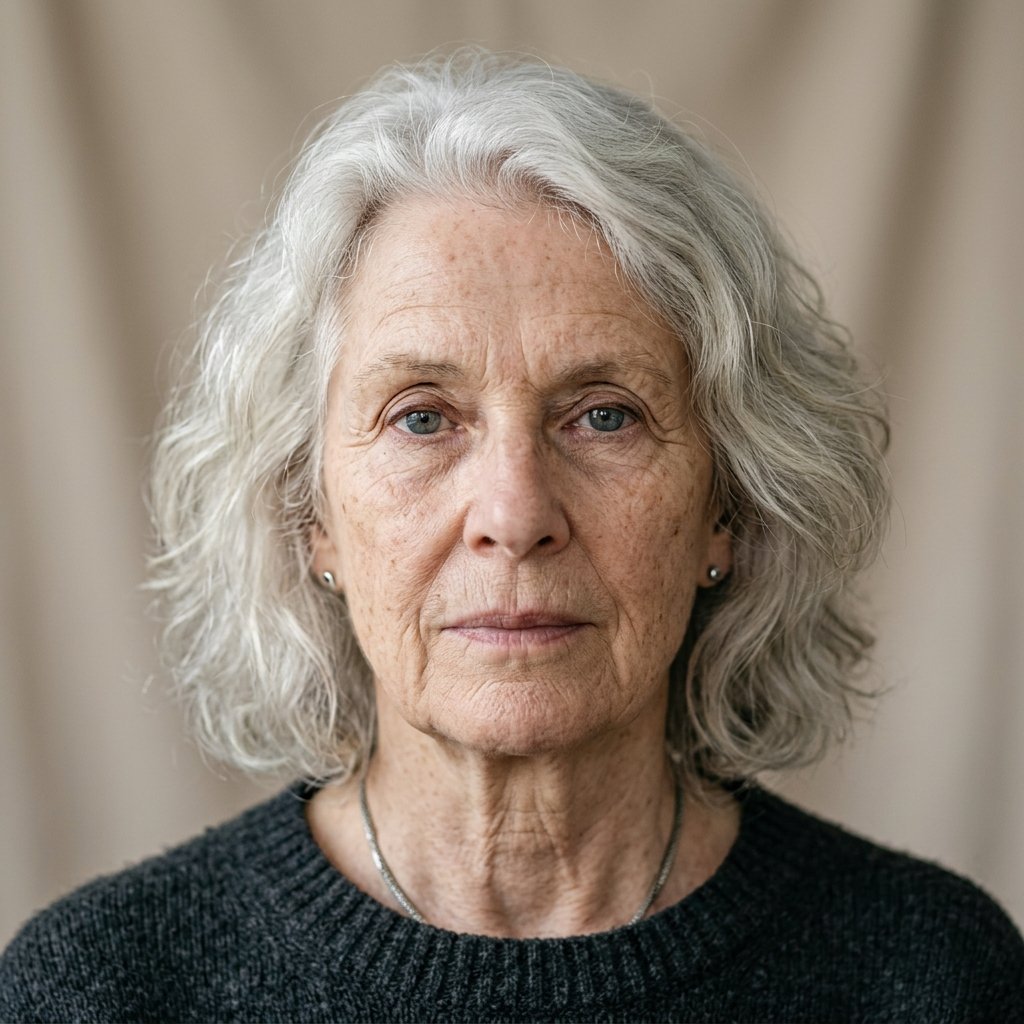
The day we lowered my husband into the ground, I had exactly eleven dollars folded inside my coat pocket and three small children clinging to my skirt, still whispering that Daddy would surely be home for supper.
I was thirty-one years old.
James had been a good man. A steady man. A machinist in our little town of Cedar Falls, Ohio, who never once missed a shift in fourteen years.
Then one gray Tuesday afternoon, his heart simply stopped while he sat eating a sandwich in the break room. And everything I had so carefully built came apart like wet paper in the rain.
I remember standing at the graveside, holding baby Michael on my hip while David, who was seven, and Sarah, who was five, stared up at me. They were waiting for me to explain something that had no explanation.
That night, after the casseroles had been eaten and the last neighbor had gone home, my brother-in-law Walter came into my kitchen and sat me down.
“Ruthie,” he said, folding his big rough hands on the table. “You can’t do this alone. Three children, no husband, no money coming in. You have to be reasonable.”
Then he made his offer. He would take David. His wife would take Sarah. Someone at their church, he was certain, would want the baby.
“Split them up,” he said, as gently as if he were doing me a great kindness. “Give them a real chance at a decent life.”
I looked at that man across my own kitchen table, the table my husband had built with his own hands, and something deep inside me turned to iron.
“No,” I said. My voice did not shake. “They stay together. They stay with me.”
He shook his head slowly, the way a person does at a foolish woman signing her own death warrant. “You’ll regret this, Ruth. You’ll come crawling back to me within the year.”
I never did.
Not once.
The first winter was the hardest thing I have ever lived through. The furnace gave out in December, and I could not afford to fix it, so we all slept in the front room around a single space heater, wrapped in every blanket we owned.
I took the baby into the bed with me for warmth, and David and Sarah curled up together on the floor like two kittens.
I would lie awake listening to their soft breathing, terrified of the morning and everything it would demand of me.
But when the sun came up, I got up too.
I started cleaning houses. Big fine houses on the east side of town, where the ladies had shining floors and quiet lives. I scrubbed on my hands and knees from six in the morning until the school bell rang.
Then I would run home, feed my children lunch, and head to the diner on Main Street, where I waited tables until nearly midnight.
When I finally got home, aching in every bone, I would sit at that kitchen table and take in mending and sewing, patching strangers’ clothes until my fingers cracked and bled onto the fabric.
There were nights, more than I care to remember, when I set three plates of supper on the table and told my children I had already eaten at the diner.
It was a lie. My stomach was empty as a drum. But watching them eat was a fuller meal than anything I could have swallowed.
The town noticed, of course. Small towns always do. I would hear the whispers in the grocery store.
“There goes the poor widow woman.”
“Those children will run wild with no father to guide them.”
“She should have listened to Walter. Pride goes before a fall.”
I heard every single word. I simply lifted my chin and kept walking, because a woman with three mouths to feed does not have the luxury of stopping to cry in the cereal aisle.
The years were long, but the children grew.
When David turned sixteen, he came to me one evening with a job application from the lumberyard. He wanted to quit school and go to work to ease my burden. My proud, gentle boy.
I took his young face in my two tired hands and looked straight into his eyes.
“Not one day,” I told him. “You will not quit. You will not throw away what your father and I have been building since before you can remember. You are going to college, David Callahan, if it is the last thing I do on this earth.”
He cried. And then he studied harder than any boy in that county.
Sarah was my quiet one, the reader, the girl who did her homework by candlelight during the power outages and never once complained. She wanted to help people. She wanted to fight for those who had no voice.
And then there was Michael. My baby. The one who never knew his father’s face.
He was fifteen when he started slipping. Skipping school, running with a rough crowd, coming home with anger in his eyes that I did not know how to reach.
The night the sheriff brought him home for the second time, half the town had already written my boy off as a lost cause. Even my own sister told me to let him go before he dragged the whole family down.
But I could not let him go.
I sat on a hard wooden chair outside his bedroom door every single night for three months. I did not yell. I did not beg. I just stayed, so he would know that no matter how far he wandered, there was always a light on and a mother waiting.
One night, at two in the morning, his door creaked open. He knelt down beside my chair, this boy nearly grown, and laid his head in my lap and wept like the little child he had once been.
“Why won’t you give up on me, Mama?” he whispered.
“Because I made a promise the day you were born,” I said, stroking his hair. “And your mother keeps her promises.”
That was the night my Michael came home for good.
The years kept turning, the way they do. My hands grew spotted and my hair went white, but I never once returned to Walter’s door.
David became a doctor. Can you imagine that? The boy who once wanted to quit at sixteen walked across a stage in a long black gown and became Dr. Callahan.
Sarah became an attorney, standing up in courtrooms for widows and orphans and folks the world had forgotten, just like she always dreamed.
And Michael, my Michael, started a small construction company with a borrowed truck and a handful of tools. Within fifteen years he was building homes and schools all across three counties.
But none of that is the reason I am telling you this story.
Last month, our little town of Cedar Falls held a dedication ceremony. My three grown children had done something I never knew about until the invitations went out.
They had pooled their money together, all three of them, and built a brand-new community medical clinic on the empty lot where our old church used to stand.
A clinic for families who had nothing. A place where a scared young mother with no money could bring her sick child and never be turned away.
The whole town came out that afternoon. Folding chairs on the lawn, ribbons on the doors, and a great white sheet covering the sign above the entrance.
I sat in the front row in my good blue dress, my hands trembling in my lap, not understanding why my children kept smiling at me so strangely.
Then David stepped up to the microphone, and the crowd fell silent.
“Many of you knew our father,” he began, his voice thick. “He was a good man, and this building will carry his name. But our father has been gone for forty years.”
He paused and looked right at me.
“Everything good in the three of us came from one woman. A woman who was told, the very night she became a widow, to give us away. To split us up. To quit.”
His voice broke.
“She refused. She cleaned floors and waited tables and went hungry so we would not have to. She never let go of a single one of us, not even when the whole world told her she should.”
Then Sarah and Michael walked to either side of him, and together my three children pulled down that white sheet.
The sign underneath read: THE JAMES AND RUTH CALLAHAN FAMILY CLINIC.
My name. Beside his. Carved in stone for the whole town to see.
I could not stand. I could not speak. I just pressed my old hands over my mouth as forty years of tears finally spilled free.
And then I noticed him.
Sitting quietly at the end of the front row was Walter. Old now, gray and bent, leaning on a cane.
After the crowd began to drift away, he shuffled over to me and reached for my hand with fingers that shook.
“You were right, Ruth,” he whispered, and the tears rolled down his weathered face. “All those years ago, I told you that you couldn’t do it. God forgive me. You were right, and I was a fool.”
I squeezed his hand. There was no anger left in me. Only a deep and quiet peace.
“We made it, Walter,” I said softly. “We all made it.”
That evening, I sat on my front porch as the sun went down over Cedar Falls, and I thought about the frightened young woman with eleven dollars in her coat pocket.
I wish I could go back and tell her something. I wish I could hold her shaking shoulders and promise her it would all be worth it.
Because here is the truth I have learned in seventy-one years of living.
I did not raise successful children. Titles and buildings fade, and money comes and goes like the seasons.
What I raised was loyal children. Kind children. Three human beings who never forgot where they came from or the woman who refused to let go of them.
And that, my dear friends, is the only fortune that has ever truly mattered to me.