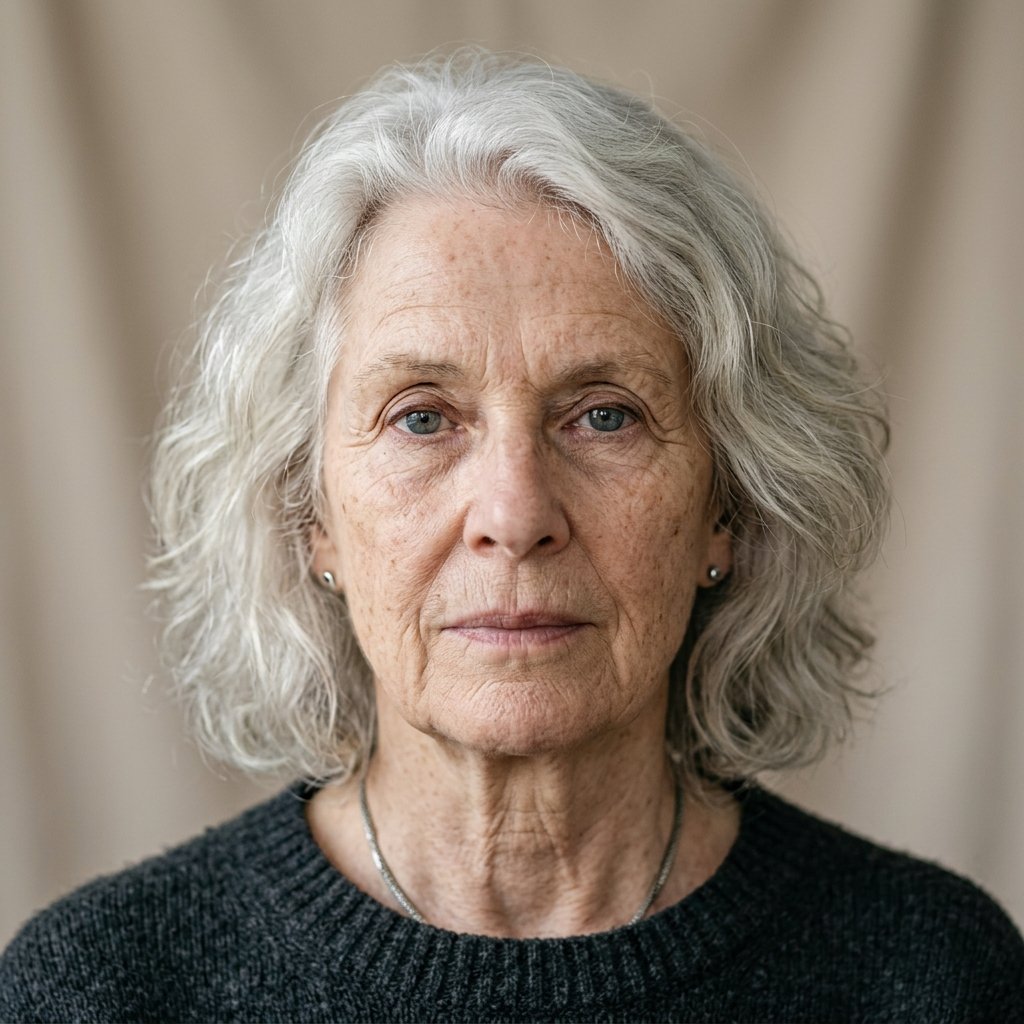
For three long winters, my father lived alone in the little white house on Maple Street, and not one of his children ever knocked on the door.
I want to tell you the whole story, because it changed everything I thought I understood about family, about time, and about the price of being too busy to love someone the way they deserve.
His name is Walter Hensley. He is 79 years old, a retired high school woodshop teacher from a small town in Iowa where everyone once knew his name.
My mother, Ruth, passed away six years ago. After she was gone, something in our family quietly came apart, and none of us noticed it happening until it was almost too late.
I am Nancy, his daughter. I live in Chicago, only four hours away by car. My brother Daniel lives in Denver, further off but still reachable by a single phone call.
And yet, in the year before this story truly begins, I had not spoken to my father in eleven months.
Eleven months. I still cannot say that number without my throat closing up.
It didn’t happen all at once. It never does. It happened one skipped Sunday call at a time.
Work was demanding. My kids had soccer and recitals. There was always a reason, always something more urgent than an old man sitting alone in a quiet house.
I told myself he was fine. Dad was strong. Dad was independent. Dad didn’t need us hovering over him.
The truth was, I had no idea what his days looked like. And I never asked.
Then came the January that broke my heart wide open.
It was one of those bitter Iowa mornings when the wind cuts straight through your coat and the ground is glazed with black ice.
My father shuffled out to his mailbox, the way he did every single day, hoping there might be a letter, a card, a sign that someone still remembered him.
He never made it back to the porch.
His foot slipped on the ice, and he went down hard, striking his hip against the frozen walkway. He could not get up.
He lay there in the freezing cold, calling out in a voice too weak to carry, for almost two hours.
Two hours. In the snow. And not a single soul came.
His children were miles away, living our loud, full lives, completely unaware that the man who raised us was slowly freezing on the ground he’d shoveled a thousand times.
And then, out of the gray morning, came a boy.
His name is Caleb. He was 14 years old, delivering the local newspaper on his bicycle before school, the way boys used to do in the towns we grew up in.
He saw my father lying in the yard and dropped his bike in the road.
He ran to him, this child, and knelt down in the freezing snow, and he took my father’s cold, trembling hand.
“I’ve got you, sir,” Caleb said. “I’m right here. I’m not going anywhere.”
He called 911 on his own phone. Then he took off his own coat and laid it over my father’s shivering chest.
And he stayed. He held that old man’s hand and talked to him and kept him awake until the ambulance arrived.
A stranger. A boy who owed my father nothing did what his own flesh and blood had failed to do.
The hospital found my number in my father’s worn leather address book, written in my mother’s handwriting from years before.
When my phone rang and a nurse said the words “your father has had a fall,” I felt the floor tilt beneath me.
I was in the car within twenty minutes, driving through the night, gripping the wheel with shaking hands, whispering the same prayer over and over. Please let him be alive. Please give me the chance to say I’m sorry.
I walked into that hospital room a little after midnight.
And there he was.
My strong, proud father, looking so small in that white bed. His hip was badly bruised, his skin pale, his hair thin and messy against the pillow.
When he saw me, his tired eyes filled with tears, and he tried to wipe them away before I could see, the way he always hid his feelings from us.
“Nancy,” he whispered, as if he wasn’t sure I was real. “You came. You actually came.”
That was the moment my heart broke into pieces I am still gathering to this day.
He said it like a man who had stopped believing anyone ever would.
On the little nightstand beside his bed sat a photograph. It was a picture of me at my sixth birthday party, gap-toothed and grinning, holding a balloon.
The wooden frame was worn smooth and pale along one edge, as if it had been touched by a thumb ten thousand times.
“You still keep this old thing?” I asked, my voice cracking.
He smiled softly. “I look at it every single night, sweetheart. It’s the only way I get to see your face anymore.”
And right there, in that quiet room, everything I had been too busy to feel came crashing down on me all at once.
Over the next few days, as I stayed by his side, the full picture of my father’s lonely life slowly revealed itself, and each detail was a fresh wound.
I learned that he ate the same canned soup alone every night, standing at the kitchen counter, because sitting at the empty dinner table was too painful.
I learned that he kept the porch light burning every evening, just in case someone decided to visit, though for three winters no one ever did.
I learned, from a kind neighbor, that he often sat in his chair and spoke out loud to my mother’s photograph, just so the house wouldn’t be completely silent.
My father, the man who taught half our town how to build birdhouses and bookshelves, had been quietly disappearing, one lonely evening at a time.
And we had let it happen.
That night I stepped into the hospital hallway and called my brother Daniel. I was crying so hard I could barely form the words.
I told him everything. The fall. The two hours in the snow. The soup. The porch light. The photograph.
There was a long silence on the line. Then I heard my strong older brother begin to weep too.
“I’ll be on the first flight,” Daniel said. “Nancy, I’ll be there tomorrow.”
For the first time in years, my brother came home.
When Dad was released from the hospital, we made a decision that should have been made a long time ago. We were not going to let him be alone anymore.
Daniel and I began taking turns staying at the house on Maple Street. My children came on weekends. The empty rooms started to fill with voices again.
And then there was Caleb, the boy who saved him.
The first Saturday after Dad came home, Caleb showed up at the door with a checkerboard tucked under his arm.
“I figured you might want a rematch, Mr. Hensley,” he said with a shy grin.
My father’s whole face lit up in a way I hadn’t seen in years.
From that day on, Caleb came every single Saturday. They played checkers for hours, and my father taught him how to carve small wooden figures in the garage, just like he used to teach his students.
Something beautiful had grown out of something so painful.
Word of what happened spread through our small town the way news always does. And people we had long forgotten began to remember.
Old neighbors started stopping by with warm casseroles and fresh bread. The pastor from the church my mother once loved began visiting on Wednesdays.
The little house that had grown so cold and quiet slowly filled back up with laughter, with the smell of home cooking, and with the sound of a screen door swinging open and shut.
My father was blossoming again, right before our eyes, like a tree that had almost frozen through finally feeling the sun.
Last month, we celebrated my father’s 80th birthday.
We crowded twenty-two people into that tiny living room. His children, his grandchildren, his neighbors, his pastor, and of course, Caleb and his whole family.
There was cake and old music and stories that made everyone laugh until they cried.
At one point, my father asked everyone to be quiet for a moment. He stood up slowly, leaning on the cane he now uses, and looked around the crowded, glowing room.
His eyes were wet and shining.
“For three long winters,” he said, his voice trembling, “I prayed every night for just one visitor. Just one person to knock on my door.”
He paused and swallowed hard.
“And now look at this. Look what God has given me. A whole house full of love.”
There wasn’t a dry eye in that room. I held my brother’s hand and wept openly, no longer ashamed of my tears.
I will carry the guilt of those three empty winters for the rest of my life. I know that now.
We nearly lost him, not to age or illness, but to our own busy, distracted lives. We let a good man believe he had been forgotten.
It took a stranger, a 14-year-old boy on a bicycle, to remind us of what we should have known all along.
Family is not something you get to be too busy for. Love is not something that waits patiently in an empty house forever.
My father forgave us completely, without a single word of blame. That kind of grace is a gift I am still learning to be worthy of.
These days, the porch light on Maple Street still burns every evening. But now it welcomes people through the door, instead of waiting for them in vain.
And every Saturday, without fail, a boy named Caleb rides his bicycle up the walk to play checkers with the old man he refused to leave behind in the snow.
So tonight, before another day slips away from you, please pick up the phone.
Call your mother. Call your father. Drive the four hours if you have to. Sit with them in the quiet.
Because somewhere out there, an old porch light might be burning, kept on just for you, by someone who is simply waiting to be remembered.
Don’t wait for a stranger to teach you what love already knows.