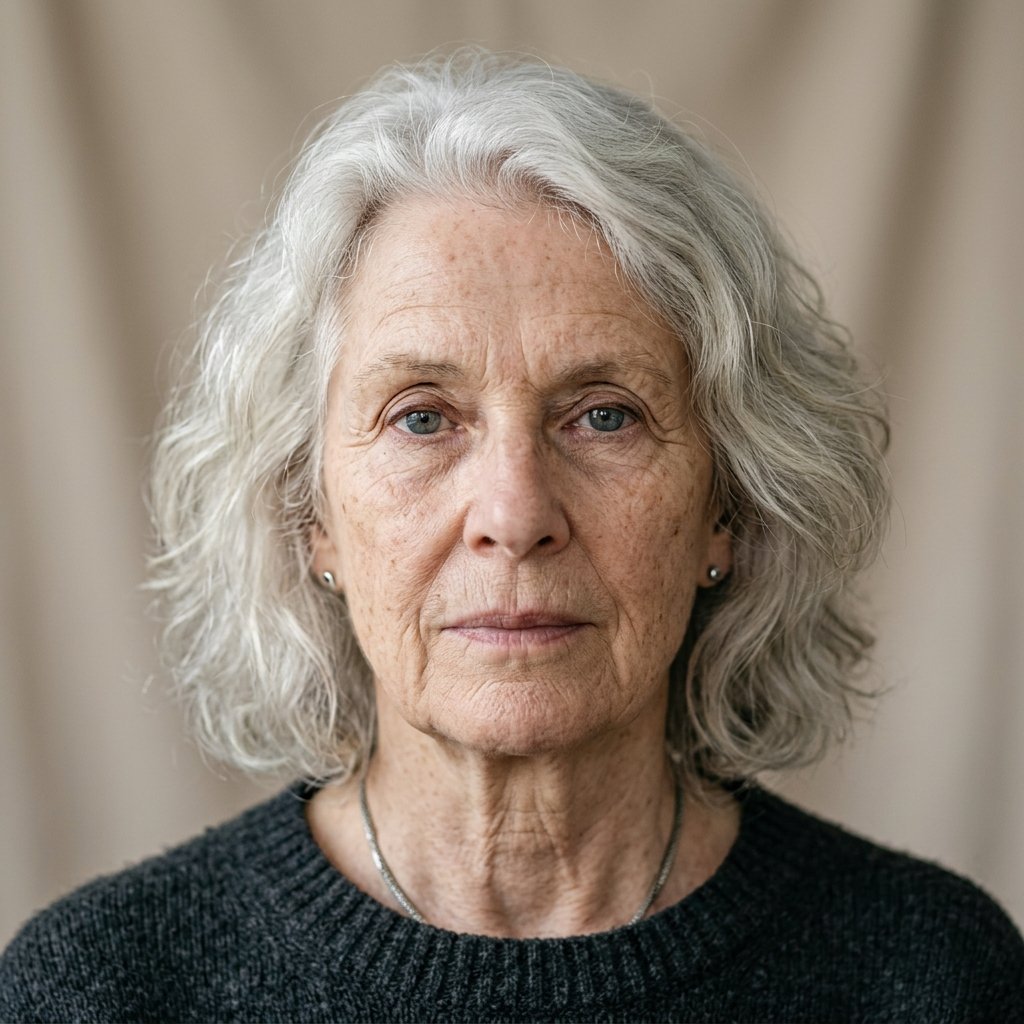
For fifty-two years, I believed the man I loved had abandoned me without so much as a goodbye.
I was seventy-four years old when I discovered the truth, and it broke open a wound I thought had healed decades ago.
My name is Ruth, and I grew up on a modest dairy farm just outside Millbrook, Ohio. Back then, life was slower. We measured our days by chores and church bells, and our dreams were small and honest.
I met Samuel the summer I turned nineteen. He was helping his uncle repair fences on the property next to ours, and I first saw him standing in a field with his sleeves rolled up, wiping his brow with the back of his hand.
He tipped his hat at me. That was all it took.
We courted for two years the old-fashioned way. Long walks after supper. Sunday picnics by the creek. He’d bring me wildflowers he’d picked himself, always a little crushed from being carried in his pocket.
Samuel wasn’t wealthy. He came from a family that had known hard times, and my mother never let me forget it.
“You can do better, Ruth,” she’d say, pressing her lips into that thin, disapproving line. “A man like that will keep you poor your whole life.”
But I didn’t want better. I wanted him.
The day he asked me to marry him, we were standing beneath the great oak tree behind my father’s barn. He got down on one knee in the dirt, nervous as could be, and I said yes before he even finished the question.
We had a plan. A good one, we thought.
Samuel had been offered work with the railroad out in Colorado. The pay was better than anything he could earn in Millbrook, and he wanted to save enough to give us a proper start.
“One year,” he told me, holding both my hands. “Give me one year, Ruth. I’ll write you every week, I promise. And when I come home, we’ll be married right here under this tree.”
I cried when his train pulled away. But I believed in us. I believed in him.
The first two weeks, I checked the mailbox at the end of our long gravel drive every single afternoon.
Nothing came.
My mother took to walking out to meet the mailman herself each morning, before I could. “I’ll save you the trip in the cold,” she’d say kindly.
Every day, she’d return and shake her head. “Nothing from Colorado today, sweetheart.”
A month passed. Then two. Then three.
I wrote to Samuel over and over, pouring my heart onto the page, begging him to answer. I told myself the mail was slow, that the railroad kept him too busy, that surely a letter was on its way.
But the silence stretched on, and it began to feel like an answer all its own.
“He’s moved on, Ruth,” my mother finally said one evening, her voice gentle but firm. “Men make promises they don’t keep. It’s a hard lesson, but the sooner you learn it, the sooner you can build a real life.”
I didn’t want to believe her. But what else was I to think?
The boy who swore he’d write every week had gone completely silent. In my young, wounded heart, silence meant he no longer wanted me.
So I did what a heartbroken girl does. I locked that love away in the deepest part of myself, and I tried to move forward.
Two years later, I married Harold Bennett.
Harold was a decent man, steady and quiet, who ran the feed store in town. He never made my heart race the way Samuel had, but he was kind, and he was there, and my mother approved.
We built a life together. We raised three beautiful children in a white farmhouse with a wraparound porch.
I learned to love Harold, in the calm, dependable way you love a man who never lets you down. And if a part of my heart stayed locked away in the past, well, I simply never opened that door.
For over fifty years, I kept it closed.
Harold and I grew old side by side. We watched our children marry and give us grandchildren. We danced slow in the kitchen on our anniversaries.
Then, four springs ago, Harold’s heart gave out in his sleep. Just like that, after fifty years, I was alone.
Grief has a way of making you tend to old business. And so, last autumn, I finally worked up the strength to clean out my late mother’s belongings, which had sat untouched in my attic since she passed years before.
Among her things was an old cedar chest, the one she’d kept at the foot of her bed my whole childhood. I remembered her guarding it, always telling me it held nothing but linens and keepsakes.
I lifted the heavy lid, expecting quilts and doilies.
Instead, tucked beneath a folded tablecloth in the very bottom, I found a bundle.
Forty-one letters. Tied together with a faded blue ribbon.
Every single one was addressed to me. Every single one was written in Samuel’s careful, familiar hand.
And every single one had never been opened.
I sank to the attic floor, my legs simply gave out beneath me. My hands trembled so badly I could hardly untie the ribbon.
The postmarks stretched across a full year. Colorado. Week after week, exactly as he had promised.
He had written. He had written faithfully, pouring out his love and his longing, wondering why I never answered him.
My mother had intercepted every one. She’d met the mailman each morning not to spare me the cold, but to steal my letters before I ever saw them.
And she had answered them too, I later realized, or rather, she had ensured Samuel believed my silence was my own.
I read them all right there on the dusty floor, weeping like the young girl I once was.
In the last letter, dated nearly a year after he left, his words shattered what was left of my heart.
“If I don’t hear from you by spring, Ruth, I’ll understand. I’ll believe you’ve chosen a different life, and I won’t trouble you again. But know this. I will love you until the day I die. Be happy, my Ruth. That’s all I’ve ever wanted for you.”
My mother had done this. The woman who raised me, who I’d cared for until her final breath, had stolen the entire life I was meant to live.
She believed Samuel wasn’t good enough. And so she made the choice for me, and she carried that secret to her grave.
For days, I was consumed by a fury I had never known. How could she? How many mornings had I cried myself to sleep, believing I’d been abandoned, when the truth sat locked in a chest twenty feet from where I slept?
But beneath the anger was a desperate, foolish hope.
Was Samuel still alive? After all these years?
I called an old friend from Millbrook who still kept up with folks. It took her a week, but she found him. He’d settled in a small town two hours south, she said. He’d been widowed himself for several years.
I didn’t sleep the night before I drove there. I stood in front of my mirror at dawn, an old woman with silver hair and wrinkled hands, and I felt exactly like that girl of twenty-two.
The drive was the longest of my life.
I found the house, a tidy little place with flower boxes in the windows. I sat in my car for twenty minutes, gathering courage I wasn’t sure I had.
Finally, I walked up the path, my heart pounding so hard I could feel it in my throat, the bundle of letters clutched against my chest.
I knocked.
The door opened slowly. And there he stood.
Older, of course. Thinner, leaning on a wooden cane, his hair as white as mine. But those eyes. Those same gentle, kind eyes that had tipped a hat at me across a field a lifetime ago.
He stared at me for a long moment, and then his voice cracked into a whisper.
“Ruth? Is it really you?”
I couldn’t speak. I simply held up the letters, the blue ribbon dangling, and the tears poured down my cheeks.
“I never got them,” I finally choked out. “Samuel, I swear before God, I never got a single one. I only found them last month. My mother hid them. All these years, I thought you left me.”
Understanding washed over his face, followed by a grief so deep it mirrored my own.
“And I thought you stopped loving me,” he said quietly.
He reached out and took my hand, and the warmth of it was like coming home after a lifetime lost in the cold.
“Come in, Ruth. Please. Come in.”
We sat on his back porch until the sun set behind the trees. We talked for hours, filling in fifty-two years of a story we should have written together.
He told me he’d waited three long years, holding out hope, before he finally married a widow named Grace. He’d had a good life, he said, a kind wife and no children, but not a day passed that he didn’t wonder about me.
I told him about Harold, about our children and grandchildren. I told him I’d had a good life too. Neither of us regretted the families we’d built.
But oh, the ache of what might have been.
As the stars came out, Samuel squeezed my hand and said the words that changed everything.
“We can’t get those years back, Ruth. Nobody can. But by some miracle, God has given us today. And maybe a few more. I don’t want to waste another single one being angry about the past.”
That was when I understood what I had to do.
The hardest part of all this was never forgiving Samuel. There was nothing to forgive. He had loved me faithfully the whole time.
The hardest part was forgiving my mother.
Sitting on that porch, I made a choice. I could spend whatever years I had left burning with resentment toward a woman already in her grave.
Or I could let it go.
I thought about how she’d truly believed she was protecting me. Wrong as she was, cruel as it was, she’d acted out of a twisted, misguided love. And carrying that hatred would only poison the gift I’d just been handed.
So I forgave her. Not for her sake, but for mine. And I felt something heavy lift off my chest that had been there for fifty-two years.
Samuel and I were married six weeks later.
There was no grand ceremony. Just two folding chairs, a preacher who lived down his road, my children and grandchildren, and an oak tree in his backyard that looked so much like the one behind my father’s barn that I wept all over again.
I wore a simple blue dress. He wore his best Sunday suit.
And when he slipped that ring onto my old, wrinkled finger, I felt the circle of a lifetime finally close.
We don’t know how much time we have. At our age, every morning is a gift we don’t take for granted.
But I wake each day and reach for his hand, and he’s there, right beside me, the way he was always meant to be.
Sometimes I think about all those wasted years, and it still stings. But then I look at him, and I remember the truth I learned too late and just in time.
Love doesn’t always die when we think it does. Sometimes it just waits, patient and quiet, for the truth to finally find its way home.
And forgiveness, I’ve learned, isn’t a gift we give to those who wronged us. It’s the key that finally sets us free.