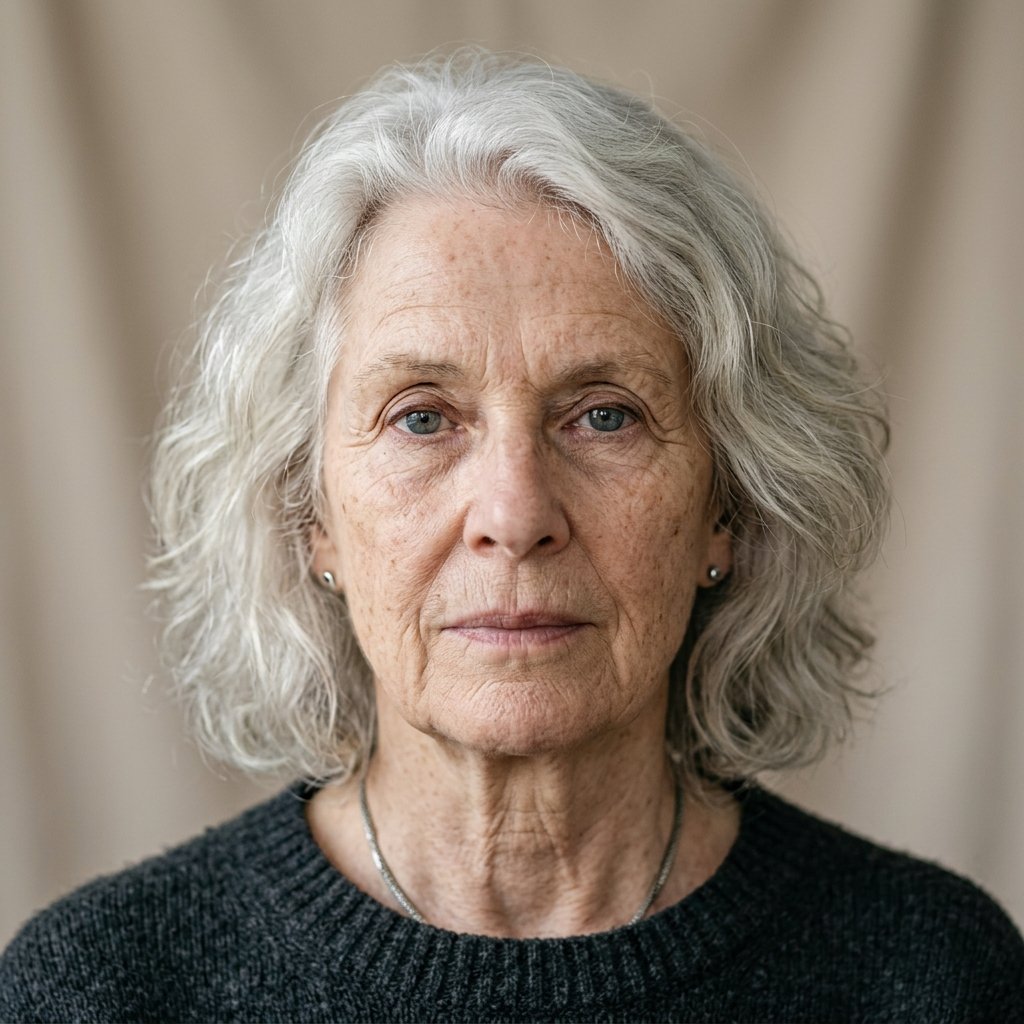
The morning they let me go, the frost was still on the windshield and I remember thinking it was going to be an ordinary Monday.
I’d made that same drive to Meridian Tool & Die in Dayton, Ohio, for thirty-four years.
My name is Raymond Callahan, but everyone on the floor just called me Ray, and for most of my life those three letters felt like enough.
Ray could fix anything. Ray never called in sick. Ray stayed late when a shipment had to go out.
I was sixty-one years old, and I believed I’d walk out of that building one day with a handshake and a cake, the way honest men were supposed to.
Instead, at 9:15 that morning, a supervisor named Kevin, a young fellow who couldn’t have been more than thirty, asked me to step into the glass office.
He wouldn’t quite look at me.
He slid a manila folder across the desk and said, “Ray, the company’s going in a different direction. Automation. Cutbacks. It’s nothing personal.”
Nothing personal.
Thirty-four years of my hands, my back, my mornings, and it was nothing personal.
I don’t remember standing up. I remember the sound of my own boots on the parking lot, and how loud everything seemed all of a sudden.
I sat in my truck for a long while before I could turn the key.
Here is the part I’m ashamed of.
I didn’t drive home. I couldn’t.
My wife Eleanor had packed my lunch that morning like she always did, a turkey sandwich and an apple, and the thought of walking through our door and telling her the man she married for forty years had just been thrown away, well, I couldn’t do it.
So I drove.
I drove past the diner where we had our first date. Past the church where we said our vows. Past the little league field where our son Michael used to play before he grew up and moved to Denver.
I drove for three hours, pretending I still had somewhere to be.
When I finally pulled into our driveway that evening, I turned the engine off and just sat there.
Through the kitchen window I could see Eleanor’s shadow moving, stirring something on the stove, humming the way she does.
And a sixty-one-year-old man, a grandfather, put his head against the steering wheel and cried like a lost child.
Eleanor knew the second I walked in. She always knows.
She didn’t say a word about it that night. She just held my face in her hands and said, “We’ll be alright, Raymond. We’ve been through worse.”
But the weeks that followed were the darkest I’ve ever known.
A man doesn’t realize how much of himself lives inside his work until it’s gone.
I would wake at 5 a.m. out of habit, dress, and then remember there was nowhere to go.
I’d sit at the kitchen table in my work boots with nothing to do but watch the coffee go cold.
The savings we’d built shrank a little more each month. The mortgage didn’t care that I’d been loyal. The medicine Eleanor needed for her heart didn’t cost any less.
I applied everywhere. Hardware stores. Warehouses. A big-box home center out by the highway.
Every form asked my age, and I could feel the door close before I ever finished writing.
One young manager actually smiled at me and said, “We’re really looking for someone with more energy.”
I thanked him and walked to my truck and I felt like I was disappearing.
Invisible. Used up. Like the whole world had quietly decided it was finished with me.
Then came the knock that changed everything.
It was a Saturday in late October, and I was out in the garage, not building anything, just standing among my old tools because it was the only place I still felt like myself.
A boy from three houses down, a skinny thirteen-year-old named Danny, stood in the doorway holding the pieces of a broken rocking chair.
“Mister Callahan?” he said. “My grandpa passed last spring. This was his chair. It’s all busted and my mom was gonna throw it out. Everybody says you can fix anything.”
Everybody says you can fix anything.
I hadn’t heard words like that in a long time.
I knelt down and looked at that chair, the loose joints, the split rail, the layers of worn paint, and something inside my chest that had gone quiet for weeks began to stir.
“Set it on the bench, son,” I said. “Let’s see what we’ve got.”
Danny didn’t leave. He pulled up a stool and watched every move I made.
And for the first time in months, my hands knew exactly what to do.
I showed him how to read the grain of the wood. How to feel where it wanted to hold and where it wanted to give.
I told him what my own father told me in 1978, that a broken thing is never a worthless thing, it’s just a thing that’s waiting for someone patient enough to understand it.
We worked on that chair for two weekends.
When it was finished, sanded smooth, the old oak glowing under a fresh coat of oil, Danny ran his hand along the armrest.
His eyes filled up, and he whispered, “It smells just like him again.”
And I had to turn away, because so did mine.
That night I told Eleanor about it over dinner, and I talked more than I had in weeks.
She reached across the table, squeezed my hand, and said something I’ll never forget.
“Raymond, that factory paid you for your hands. But God gave you those hands to teach.”
I didn’t sleep much that night, and it wasn’t the sad kind of sleepless. It was the other kind. The kind you get when an idea won’t leave you be.
The next week, Danny came back, and he brought two friends.
One of them, a quiet kid named Marcus, had a busted bicycle and a father in prison and eyes that had already seen too much.
The other had a skateboard that needed a wheel and a mother working two jobs who never had time.
I cleared off my workbench and told them to grab an apron.
Within a month, my garage was full of kids on Saturday mornings.
And then something happened I never expected.
George Whitaker showed up. George had run the drill press two stations down from me for twenty years, and Meridian had let him go the same week they let me go.
He stood in my driveway looking as hollow as I had felt.
“Heard you got something going on out here, Ray,” he said, trying to sound casual. “Wouldn’t mind keeping busy.”
I put a sander in his hands and I watched a dead man come back to life.
Word travels in a town like ours.
By Thanksgiving there were five of us older men and a dozen kids crammed into a two-car garage, and the whole thing was spilling out onto the lawn.
People started dropping off broken furniture, wobbly tables, dressers with stuck drawers, chairs nobody else would bother with.
We fixed them for whatever folks could pay, and if they couldn’t pay, we fixed them anyway.
Pastor Reynolds heard what we were doing and offered us the old fellowship hall behind the church, a big empty room that had been collecting dust for years.
We swept it out, hauled in our benches, and hung a hand-painted sign over the door.
Danny picked the name. He called it “The Second Chance Workshop.”
I cried again the day we hung that sign, and by then I’d stopped being ashamed of my tears.
Those Saturdays became the center of my whole life.
Boys who never had a grandfather learned to build birdhouses and bookshelves.
Men my age who thought they’d been thrown on the scrap heap found reasons to shave in the morning again.
We weren’t just repairing furniture. We were repairing each other, one joint and one hour at a time.
Marcus, the quiet boy with the father in prison, turned out to have the steadiest hands I ever saw.
One afternoon he looked up from the table he was building and said, “Mister Ray, is it okay if I come here even after I grow up?”
I told him he could come here for the rest of his life.
Then, eight months after they walked me out that glass door, the phone rang.
It was Meridian Tool & Die.
Their automation hadn’t gone the way they’d promised the shareholders. They needed experienced hands. They wanted me back, full salary, my old bench waiting exactly where I’d left it.
Eleanor watched my face while I listened.
I told them I’d come in and talk.
I drove down to that plant in the same truck I’d cried in, and I walked into the same glass office where a young man once told me it was nothing personal.
They smiled. They talked about pensions and stability and how much they’d missed my skill.
And when they finished, I folded my hands on the desk and I said the words I never in my life imagined I’d say.
“Thank you. I truly mean that. But no.”
The manager blinked. “No?”
“I’ve got work now,” I told him. “Real work. Work that fixes people, not just parts. I finally found something that matters more than a paycheck.”
I shook his hand, and this time I was the one who wouldn’t look back.
I drove straight to the church, and the whole crew was there waiting, sawdust in the air and Danny grinning from ear to ear.
Eleanor stood by the door with a plate of her lemon cookies, and when I walked in they all cheered like I’d won something.
And I suppose I had.
That’s the strange, beautiful truth about the worst day of my life.
Losing that job broke me clean in half for a season.
But it also cracked me open enough to become the man I was always meant to be.
I’m sixty-two now.
The Second Chance Workshop is a real nonprofit these days, with more volunteers than we can fit and a waiting list of kids and forgotten men who just need someone to believe they’re worth mending.
Danny wants to be a carpenter.
Marcus made the honor roll.
And George Whitaker laughs again, out loud, the way he used to before the world told him he was finished.
Sometimes I think about that manila folder sliding across the desk, and I don’t feel bitter anymore.
I feel grateful.
Because a man can spend his whole life believing his worth is measured by a job title, right up until life takes the title away and shows him what he was truly here to do.
I thought being let go was the end of everything I’d built.
It turned out to be the first honest page of the best story I ever lived.