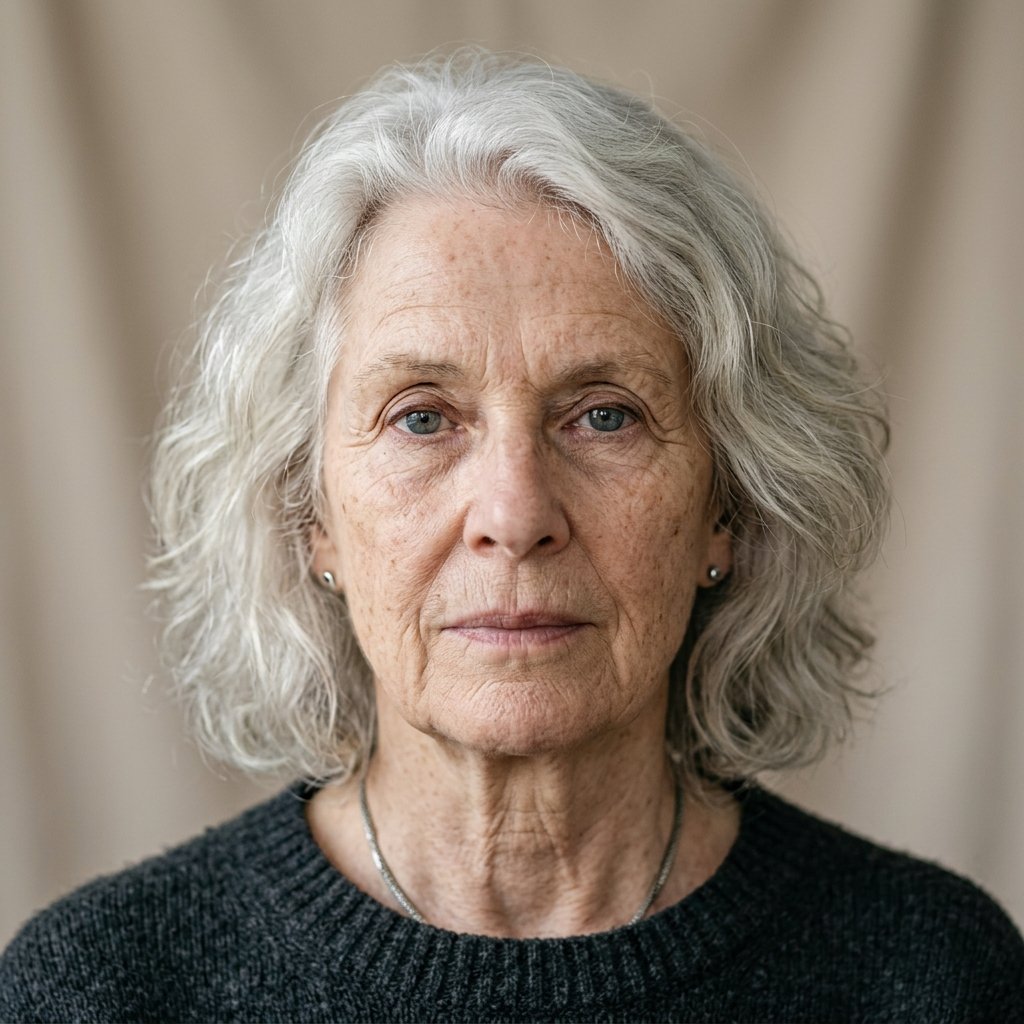
For thirty-one years, I was certain my father was the coldest man who ever lived.
Then I found an old shoebox on the top shelf of his bedroom closet, and every belief I had carried about him crumbled to dust in my hands.
My name is Emily, and my father was Walter Hollis. We grew up in a small brick house on Sycamore Street in Springfield, Ohio, with a screen door that never quite closed and a kitchen that always smelled of coffee.
When I was a child, my father laughed. I remember that clearly. He would spin me around the living room while my mother played the piano and my little brother Daniel banged a wooden spoon against a pot.
But when I was seven years old, my mother, Margaret, got sick. And a year later, she was gone.
Something in my father went quiet the day we buried her. It was as if the man who laughed had been lowered into the ground with her, and a stranger came home to raise us instead.
He stopped telling stories at dinner. He stopped humming while he shaved. He worked double shifts at the machine shop across town and came home late, smelling of oil and metal and exhaustion.
We were children. We didn’t understand grief. We only understood that our father had become a locked door.
The changes came fast, and they hurt.
First, he sold my mother’s piano. I came home from school one afternoon and the corner of the living room was simply empty, with four little dents in the carpet where the legs used to sit.
I cried for a week. He never explained. He just said, “We don’t need it anymore,” and walked out to the garage.
Then the small things began to pile up. My winter coat had a broken zipper for two whole years, and he told me to “make it work.”
When my class took a trip to Washington, my father told me there was no money, and I stood at the school window watching the bus pull away without me.
When Daniel wanted new cleats for baseball, my father handed him a roll of tape and a used pair from the thrift store.
Birthdays became small. Christmases became smaller. And through it all, my father wore the same gray coat with worn elbows and a hole slowly growing in the left sleeve.
We decided, in the cruel and simple math of children, that our father was cheap. That he was stingy. That losing our mother had turned him into a man who loved money more than he loved us.
“He’s just heartless,” Daniel said to me once, when we were teenagers hiding on the back porch. “He doesn’t feel anything anymore.”
And I believed it. God forgive me, I believed it for most of my life.
When it came time for college, I got into a good school two states away, and I was thrilled to leave.
I expected my father to complain about the cost, the way he complained about everything. Instead, he was strangely quiet. He drove me to the dormitory in his rusted pickup, carried my boxes up three flights of stairs without a word, and then stood in the doorway looking suddenly old.
“Study hard,” he said. “Don’t come back to this town unless you want to.”
I took it as rejection. I know now it was something else entirely.
Daniel followed two years later, and he had a harder time. His tuition had a gap the loans wouldn’t cover, and he called home in a panic.
My father told him, coldly, that he couldn’t help. That Daniel would have to work nights and figure it out like a man.
Daniel did figure it out, somehow, semester after semester, though he never quite understood how the numbers always ended up working. He resented our father for making him struggle.
So we both built our lives far from Sycamore Street. I became a nurse in Columbus. Daniel became an accountant in Cincinnati. We married, we had children of our own, and we let the distance between us and our father grow wide and comfortable.
We called on holidays. We sent cards. We told ourselves we were being dutiful.
But we never sat with him. We never asked him how he was. We had already decided who he was, and we saw no reason to look closer.
The years passed the way years do, quietly and then all at once.
Last winter, a neighbor called to tell us my father had collapsed in his driveway while shoveling snow. His heart, the doctors said, was failing. There wasn’t much time.
Daniel and I drove back to Springfield through a gray February storm, and we barely spoke the whole way. I think we were both afraid of what we would feel.
The house was exactly as I remembered it, only smaller and colder. My father was in the hospital, but he had begged to be brought home, and so we set up a bed in the living room, in the very corner where the piano used to stand.
He was so thin. His hands, once strong enough to lift an engine block, now trembled when he reached for a glass of water.
He slept most of the day. And so, to keep myself busy, and perhaps to avoid sitting with my own guilt, I began to clean.
That is when I climbed the step stool in his closet and found the shoebox.
It was worn soft at the corners, held shut with a rubber band that snapped the moment I touched it. I almost put it back. I’m so grateful I didn’t.
Inside were papers. Hundreds of them, folded and flattened and saved for decades.
The first thing I unfolded was a hospital bill. It was dated the year I turned seven, the year my memory has always been strangely blank.
It was for me. A long stay, an emergency, a fever and an infection that, according to the doctor’s note stapled behind it, had nearly taken my life.
I never knew. I had no memory of almost dying. But my father had carried it for both of us.
The bill was enormous. And clipped to it was a payment ledger in my father’s careful handwriting, tracking a tiny payment made every single month for eleven years, until it was finally marked “PAID.”
My hands started to shake.
Underneath were pawn tickets. One for his wedding ring. One for his father’s pocket watch. One for a piano, sold three weeks after that hospital bill arrived.
He hadn’t sold my mother’s piano because he was cold. He sold it to keep me alive.
I sat down hard on the closet floor and kept reading, because I had to know all of it now.
There was an envelope with Daniel’s name on it. Inside was his old college financial aid letter, and behind it, receipts.
My father had quietly paid Daniel’s tuition gap. Every semester. All four years. Then he had looked his own son in the eye and told him there was no help coming, so that Daniel would never feel like he was taking a handout.
He wanted us to be strong. He wanted us to believe we had done it ourselves. And he was willing to be hated for it.
There were more receipts still. A payment plan for my grandmother’s nursing home, the one we assumed the state had covered. Small donations to the church fund that helped families with heating bills, made anonymously, in cash.
And there, folded at the very bottom, was a letter. It was addressed to Daniel and me, but it had never been sent.
My father’s handwriting was shaky even then. It read:
“To my children. I know you think I am cold. I know you think I do not love you. It breaks me, but I understand why you believe it.”
“I could not give you a father who laughed after your mother left us. I did not have it in me. But I could give you a future without debt hanging over your heads.”
“So I gave up the things that did not matter. A ring. A watch. A warm coat. A trip. I am sorry for the trip, Emily. I sat in the truck that day and I cried.”
“Someday, when the bills are finally gone, I will explain everything. I only ever wanted you to have more than I did. That is all a father wants.”
“Love, Dad.”
He never got the chance to explain in time. But God, in His mercy, gave me the chance to finally listen.
I carried that shoebox into the living room. My father was awake, watching the snow fall past the window with tired, patient eyes.
I knelt beside his bed, and I held up the hospital bill, and I could not speak for a long moment.
“Daddy,” I finally whispered, my voice breaking apart, “the piano. The coat. You did all of it for us. And we never knew.”
His eyes filled slowly with tears. He reached out one trembling hand and touched my cheek, the way he must have touched it at that hospital door thirty years ago.
“I didn’t want you to know,” he said softly. “A child shouldn’t carry a father’s worries.”
“But we hated you,” I sobbed. “We called you heartless. We stayed away. How can you ever forgive us?”
He smiled then. It was the first real smile I had seen on his face since my mother died, and it made him look young again.
“There is nothing to forgive,” he said. “You grew up strong. You grew up kind. That was the whole point.”
“You were always worth every penny, sweetheart. Every single one.”
I called Daniel into the room, and I put the letter in his hands. My brother, this steady grown man with children of his own, read three lines and then folded forward, sobbing into the blanket like a boy.
“I’m sorry, Dad,” he choked out. “I’m so sorry. I said terrible things. I stayed away.”
And our father just laid his frail hand on Daniel’s head and said, “I’m proud of you, son. I have always been proud of you.”
We did not leave his side after that day. We took turns sleeping in the chair beside him.
We fed him soup and told him about his grandchildren and asked him all the questions we should have asked years before.
He told us about the day he met our mother at a church picnic. He told us she had been the one who played the piano so beautifully, and that selling it had felt like burying her twice.
For three weeks, we finally knew our father. And it was the greatest gift of my life.
He passed away peacefully on a quiet morning in March, with the first hint of spring light coming through the window, and both of our hands wrapped around his.
I keep that gray coat now, the one with the hole in the sleeve. It hangs in my own closet, and sometimes I press it to my face and I swear I can still smell the machine shop.
I spent thirty-one years resenting a man who was quietly breaking his own back to carry the weight of my whole life.
He let me believe he was cold, so that I would never feel the cold myself.
How many of us judge our parents for what they would not give, never once imagining what they silently gave up?
Hold your loved ones close while you still can. Ask the questions now. Because the coldest people are so often the ones burning quietly on the inside, keeping the rest of us warm.