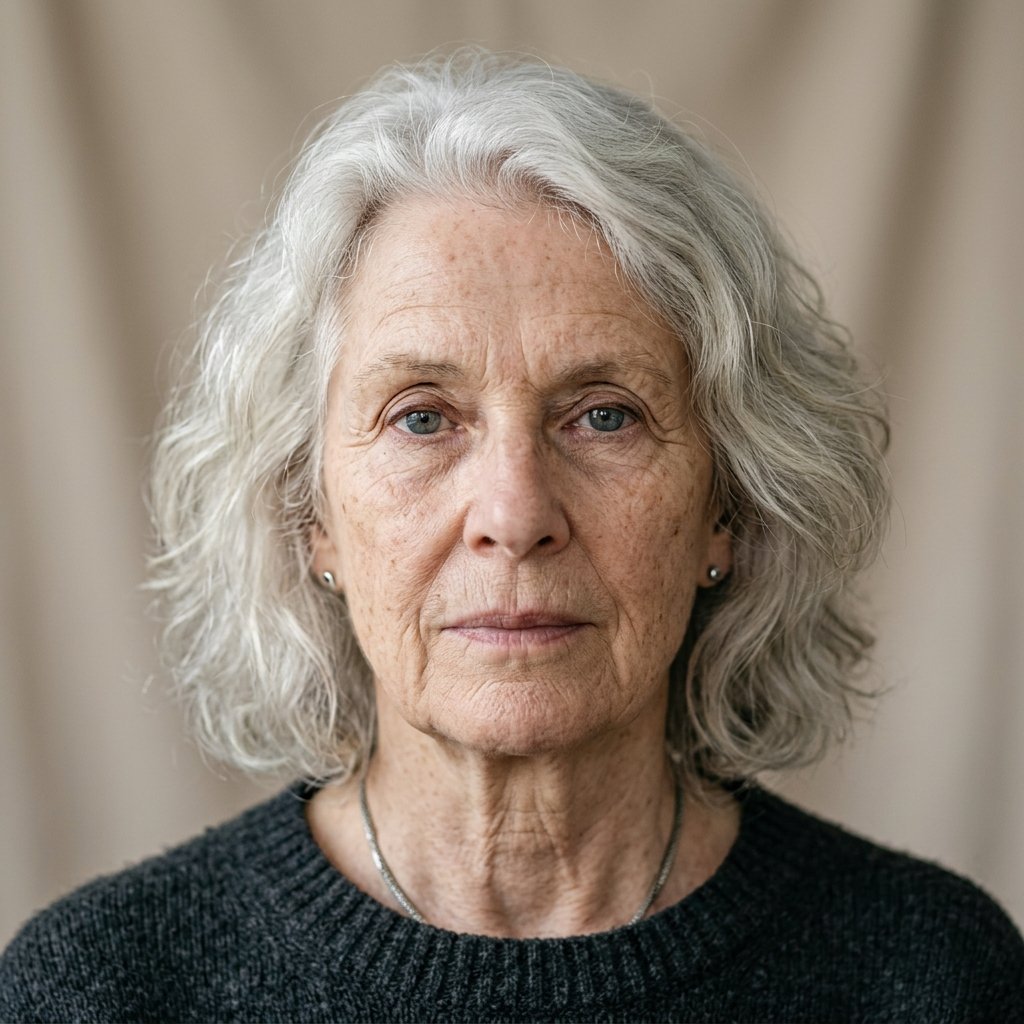
I never thought the man I married would become my jailer.
His name was Dr. Nathan Hayes, and he was the most respected neurologist at the University of Michigan Hospital in Ann Arbor.
Elegant. Soft-spoken. The kind of doctor who makes you feel small and ignorant with just a gentle smile.
When I started my master’s program in clinical psychology, I was a nervous wreck.
Nathan told me I was overly anxious, that my mind was working against me.
‘You need rest, Emily,’ he would whisper, handing me a white capsule and a glass of water. ‘This little pill will help you sleep and focus. I designed it for you.’
I believed him.
Every single night, after we finished dinner, he would place that capsule on my nightstand.
‘Take it in front of me, honey.’
It seemed like love at first.
Then it became a command.
If I hesitated, his eyes would darken. If I asked what exactly was in it, he would change the subject or kiss my forehead and say, ‘Trust your husband. I’m a doctor, remember?’
I would wake up the next morning feeling like I had been lost in a fog.
There were small, unexplained bruises on my arms.
My skin sometimes smelled faintly of rubbing alcohol.
My hair would be damp, even though I had no memory of a shower.
And in my notebook, there would be sentences scrawled in handwriting that didn’t look like mine.
One morning, I found this: ‘Don’t let Nathan know you remember.’
I stared at those words until my vision blurred.
When I asked him about it, he laughed softly and said, ‘Your mind is playing tricks, sweetheart. It’s the stress of your studies. Maybe you wrote it yourself and forgot.’
I wanted to scream, but I stayed silent.
Because deep down, something felt horribly wrong.
One afternoon, while washing our sheets, I noticed a tiny red light blinking inside the smoke detector above our bed.
It wasn’t the normal power light. It was a tiny camera lens, pointed directly at my pillow.
My blood turned to ice.
I didn’t confront him. Instead, I waited until he left for the hospital and then searched his home office.
In his trash can, I found empty blister packs for capsules that weren’t FDA approved.
And a folded piece of paper with my name at the top: ‘Patient E.D. Stable nocturnal response. Phase 3.’
Patient.
Not wife.
My hands trembled so badly I could barely hold the paper.
That night, I decided to find out the truth.
After dinner, Nathan handed me the capsule as usual.
I placed it on my tongue and lifted the glass of water to my lips. I even smiled at him.
But I didn’t swallow.
I felt the capsule dissolve slightly, bitter and chalky, and I pressed it against the roof of my mouth.
When he turned toward the bathroom, I spit it into a tissue and shoved it under my pillow.
Then I lay back, closed my eyes, and breathed slowly.
Very, very slowly.
I had watched enough of Nathan’s medical lectures to know how to mimic deep sedation.
Every muscle in my body went limp.
The room fell silent.
At exactly 2:47 AM, the bedroom door opened.
It didn’t creak. He must have oiled the hinges long ago.
Nathan walked in barefoot, wearing black nitrile gloves and holding a small penlight.
He pressed two fingers to my wrist, checking my pulse.
Then, with the same gentle touch he used when he proposed, he lifted my eyelid and shone the light into my eye.
I wanted to scream, to flinch, to do anything, but I stayed frozen.
‘Good,’ he whispered. ‘No resistance today.’
He pulled out a black leather notebook and scribbled something down.
Then he reached into his pocket, pulled out a small digital recorder, and placed it next to my ear.
He pressed play.
A woman’s voice filled the room. Sweet. Older. Broken.
‘Emily, my daughter… if you are hearing this, wake up. Your husband didn’t save you. He found you.’
My heart slammed against my ribs.
Daughter.
That wasn’t my mother’s voice. My mother died of cancer when I was five. Nathan had told me that story a hundred times. He even had a photo of her on our mantle.
But this voice, it cut through me like a knife made of light.
Nathan turned off the recording immediately.
‘Still nothing,’ he muttered. ‘She’s still blocked.’
Then he walked toward my closet.
He pushed aside my dresses and pressed his palm against the back wooden panel.
It slid open with a soft hiss, revealing a narrow hallway I had never seen before.
My mind was reeling. How long had that door been there? How many nights had he taken me through it?
He came back to the bed and slid his arms under my back and knees.
I went completely limp, as if I weighed nothing.
He carried me down that hidden hallway into a windowless room glowing with hospital lamps.
It was cold and sterile, with white tile floors and a smell of antiseptic.
On the walls were monitors displaying my sleeping face from different angles, going back months.
There were file cabinets stuffed with papers, and photographs of me walking around the house with a vacant stare.
And right above a metal gurney, a large timeline was pinned to the wall.
It read, in Nathan’s precise handwriting: ‘Accident.’ ‘Amnesia.’ ‘Marriage.’ ‘Pharmacological control.’ ‘Pending inheritance.’
Inheritance.
My stomach lurched.
He laid me on the freezing gurney and didn’t bother to strap me down. He was that confident in his drug.
He walked to a wall safe, spun the dial, and pulled out a red folder.
The cover said: ‘Sarah Mitchell Case. Missing since 2016.’
Sarah Mitchell.
That name hit me like a bolt of lightning.
I didn’t know why, but my eyes burned with tears that I fought desperately to hold back.
Nathan pulled out his cell phone and dialed a number.
‘She’s ready,’ he said, his voice dead calm. ‘Tomorrow she signs the transfer, and we’re done.’
A woman’s voice answered on speakerphone. ‘What if she remembers before then?’
Nathan looked at me on the gurney and smiled. It was a smile I had never seen before, full of cold, clinical satisfaction.
‘She won’t remember. I’ve spent two years erasing Emily every single night.’
The hidden door opened again.
My mother-in-law, Patricia Hayes, walked in wearing a long wool coat and carrying a leather bag.
She was a formidable woman, a retired hospital administrator, and she had never liked me.
‘Don’t underestimate that woman,’ Patricia said, her voice sharp. ‘Her mother didn’t seem dangerous either, and look what happened.’
Her mother.
The woman from the recording.
Patricia set the bag on the table and opened it. Inside, I could see a fake marriage certificate with my forged signature, a power of attorney document, and an old photograph.
The photo showed a fifteen-year-old girl in a school uniform, with my eyes and my nose, but with a different name embroidered on the blazer: ‘Sarah Mitchell.’
Nathan picked up a pen and gently placed it between my limp fingers.
‘We just need her signature,’ he said. ‘One little movement, and then we can give her the final dose.’
Patricia leaned close to my face, studying me. I could feel her breath on my cheek.
‘And what if she doesn’t wake up after the final dose?’ she asked.
Nathan didn’t hesitate.
‘Then Emily Davis disappears exactly as she existed: without a family, without a past, and without questions.’
I couldn’t stop it.
A single tear slid from the corner of my eye, trailing down my temple.
It was so small, but Patricia’s eyes locked onto it instantly.
‘Marcus!’ she hissed. Wait, no, ‘Nathan!’
He spun around. His face shifted from calm to something dark and furious.
My eyes flew open.
And before I could scream, a video call lit up the large monitor on the wall.
A woman with a face full of scars appeared on the screen. She was older, but her eyes were the exact same shape as mine. Her voice was the one from the recording.
She was crying. Her hands pressed against the camera lens.
‘Sarah, my baby,’ she sobbed. ‘You’re awake. It’s me. It’s your mother. I never stopped looking for you. Never.’
I couldn’t speak. I couldn’t move. I just stared at that face, and something inside me, something locked away for years, began to crack open.
Nathan stumbled backward. Patricia dropped the documents.
The room was silent except for the sound of that scarred woman crying from a place of love that had survived everything.
I was not Emily Davis.
I was Sarah Mitchell.
And my real mother was alive, and she had just found me.
In that moment, I understood that every memory I had was a lie, but the truth was finally clawing its way to the surface.
If you enjoyed this story, please like and follow our page, and share it with someone who needs to hear it.