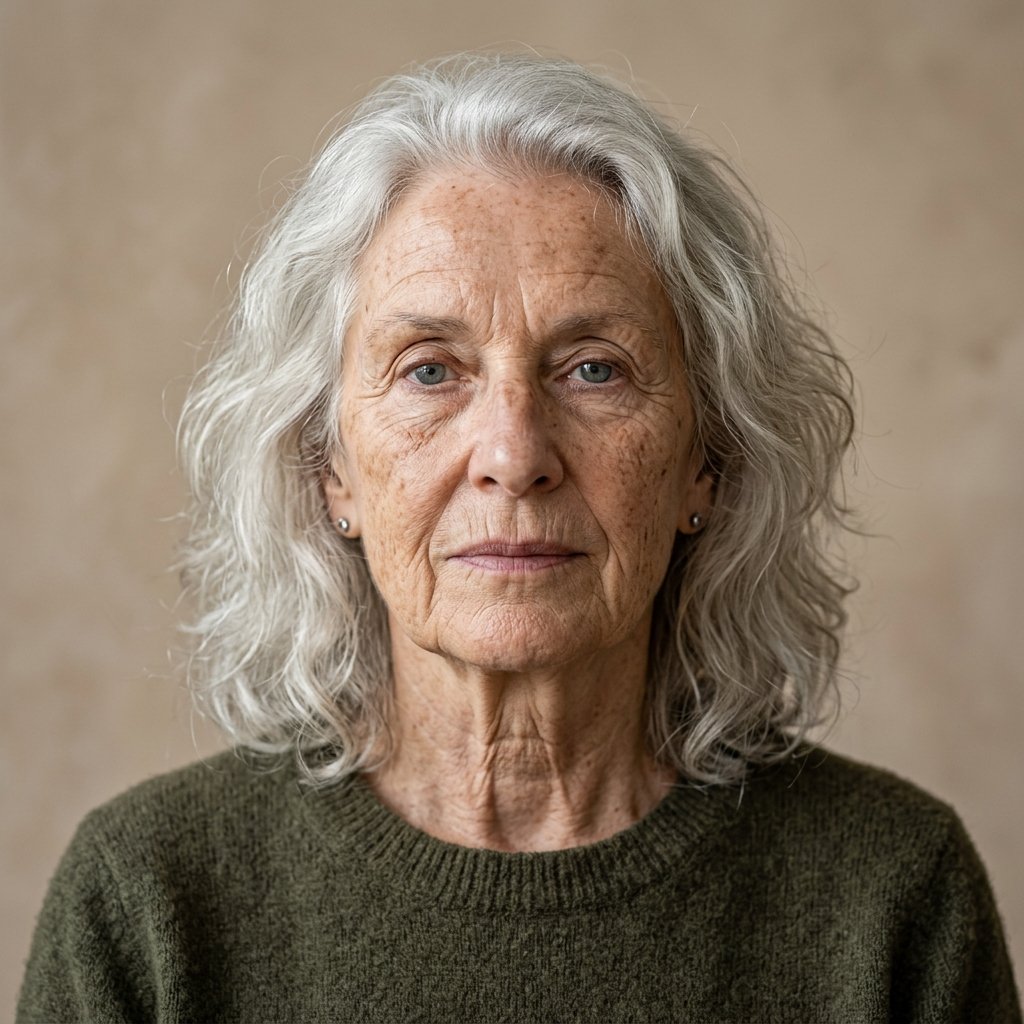
I never thought my sixtieth birthday would begin with a private investigator’s phone number in my hand and a thermos full of questions.
My name is Dorothy Whitfield, and I am fifty-nine years old.
Six years ago, I stood in a little chapel in Charleston, South Carolina, and married a man named Nathaniel Brooks. He was twenty-eight. I was fifty-three. Thirty-one years between us, but when he looked at me, I felt like a girl again.
We met at a gentle yoga class held in a sun-drenched studio on King Street. I had just retired from teaching literature at a small college, and my body was betraying me after my husband Richard passed. My back ached from grief. My heart felt hollow. Nathaniel was one of the instructors—tall, with sandy hair and the kindest brown eyes. He moved through the room with a quiet strength that made you feel safe.
“Mrs. Whitfield, let me help you adjust your posture,” he said during my first class. His hands were warm and steady on my shoulders.
I laughed softly. “Please, call me Dorothy. I haven’t been Mrs. Whitfield to anyone but my bank manager since Richard died.”
He smiled, and that smile was like a porch light on a dark street. “Dorothy,” he said, as if tasting the word. “That’s a beautiful name. It means gift of God, you know.”
No one had spoken to me that way in years.
Over the following weeks, he would bring me tea after class. Then it was walks along the Battery, with Spanish moss drifting overhead like sleeping ghosts. He asked about my life, and I found myself telling him things I hadn’t spoken aloud—the way Richard’s hand felt when it grew cold, the loneliness of eating dinner alone in a house built for a family, the guilt of inheriting enough money to last three lifetimes while feeling utterly bankrupt in spirit.
I owned a historic three-story home on Legare Street, two very healthy trust accounts, and a little cottage on the Outer Banks of North Carolina. Richard had been a careful man, a provider. His last gift to me was security. But Nathaniel never once asked about the money.
When I mentioned that the beach cottage needed a new roof, he simply said, “I know a good contractor. I can call him for you, if you’d like.” No hint of interest beyond helping.
Still, the warnings came. They always do.
My daughter, Patricia, flew down from Richmond and sat at my kitchen table, her brow furrowed like a thundercloud. “Mama, he’s younger than I am. You’re still grieving. Men like that don’t fall for women our age unless there’s a dollar sign attached.”
I sipped my tea and looked out at the camellias blooming in the garden. “Patsy, when I’m with him, I don’t feel old. I don’t feel like a widow. I feel like someone who still has chapters left.”
She left frustrated, and I felt the first splinter of doubt.
But then Nathaniel would come over and cook shrimp and grits from his grandmother’s recipe, and he’d rub my aching shoulders as the evening light turned gold, and all those doubts melted like butter in a hot pan. He would kiss my forehead and call me his “little dove.” Not his little wife, not his sugar mama—just his little dove, soft and beloved.
We married quietly in that little chapel, and I believed I had found the rarest treasure: a peace so profound it felt sacred.
Every night, without fail, Nathaniel prepared my bedtime drink. Warm water, a spoonful of local wildflower honey, and a sprinkle of dried chamomile flowers from a jar he kept in the pantry. He said it was an old family remedy from his grandmother in the Lowcountry.
“Drink it all, baby,” he’d whisper as he handed me the ceramic mug. It was the same mug every night—a chipped blue one I’d bought at a market in Asheville years ago. “It settles the spirit. I can’t rest easy if you don’t finish it.”
And so I drank. The liquid was sweet and herbal, warming me from the inside out. Within minutes, I’d feel a heavy, velvet drowsiness that pulled me under, deep and dreamless. I always slept through the entire night, never stirring until the morning.
I thought it was a ritual of love. A sacred attention to my wellbeing.
Until the night my intuition screamed louder than my trust.
It was a Thursday in October, and the air had that crisp apple bite that makes you want to light a fire. Nathaniel was in the kitchen after dinner, his sleeves rolled up, humming a tune I didn’t recognize.
“I’m going to stay up late making some herbal desserts for the yoga retreat this weekend,” he said, glancing over his shoulder. “You go on up to bed, little dove. I’ll bring your water in a bit.”
I nodded, kissed his cheek, and climbed the stairs. The wood creaked under my feet, a familiar song. I changed into my nightgown and slipped under the quilt, expecting to drift off as usual.
But my mind would not quiet.
A thought, small and sharp as a splinter, lodged itself in my brain. I replayed his words: “I’ll bring your water.” But he always made it right before bed, while I watched. Tonight, for the first time, he’d sent me away. Why?
I stared at the ceiling, my heart beginning to tap a nervous rhythm. The house settled around me, and I heard the distant clink of a spoon from the kitchen.
I got up. Barefoot, I padded across the bedroom floor and into the hallway. The old oak boards were cold. I moved as quietly as a whisper, until I could see the kitchen through the crack of the door.
Nathaniel stood at the counter, his back to me. The overhead light was off, and only the soft glow of the under-cabinet lights illuminated him. He was humming again, that strange little tune.
I watched.
He poured warm water from the kettle into my blue mug. Steam rose in a gentle curl. Then he did something I had never seen before. He reached into the top cabinet—the one above the refrigerator where we kept the good china, the cabinet I could barely reach without a step stool—and he pulled out a small amber glass bottle.
The bottle looked old, with a black rubber dropper on top. He unscrewed it carefully, his movements unhurried and deliberate, as if he had done this a thousand times.
He tilted the bottle over my mug.
One drop.
Two drops.
Three drops.
A clear liquid, colorless and silent, fell into the warm water and dissolved instantly.
My stomach clenched so hard I nearly gasped. I pressed my hand over my mouth. My vision tunneled until all I could see was that little bottle disappearing back into the cabinet, and Nathaniel’s hands adding the honey and the chamomile flowers, stirring slowly.
He had to be putting something in my drink. Something I never knew about.
My mind raced. Was it poison? Something to make me sleep so deeply that I wouldn’t notice… what? Was he stealing from me while I lay unconscious? Was he planning something worse?
I wanted to burst into the kitchen and scream, but an older, wiser voice inside me said: Wait. Gather the truth first. Then act.
I crept back to bed, my legs trembling. I pulled the covers up to my chin and closed my eyes, forcing my breathing to slow. Every sound was amplified: the soft footsteps on the stairs, the creak of the bedroom door, the clink of the mug being set on the nightstand.
“Here you go, little dove,” Nathaniel said, his voice tender as a lullaby.
I opened my eyes, feigning sleepiness. “Oh, thank you, sweetheart. I was just drifting off.”
He smiled, and for the first time in six years, that smile sent a chill down my spine. “Drink it while it’s warm. I’ll join you in a moment.”
I took the mug and brought it to my lips. The familiar sweet steam touched my nose. But I stopped. “I think I’ll sip it slowly tonight. My stomach’s a little unsettled.”
His expression flickered—just for an instant—something sharp and searching in his eyes. Then it smoothed. “Of course, baby. But don’t let it get cold. Cold chamomile isn’t nearly as effective.”
He went into the bathroom to brush his teeth, and I stared at the mug. My hands shook. This liquid, which I had consumed hundreds of times, was no longer comfort. It was evidence.
When I heard the water running, I acted. I set the mug down quietly, opened my nightstand drawer, and pulled out the small stainless steel thermos I used for my afternoon walks. With a careful twist, I unscrewed the cap and poured every drop of the warm honey water into it. I sealed it tight and hid it behind my extra shoes in the closet, then returned the empty mug to the nightstand as if I had drained it.
Nathaniel came out, saw the empty mug, and smiled. “Good girl,” he said softly. He kissed my forehead, and I forced myself to kiss him back.
That night, he fell asleep almost immediately, his breathing slow and even. I lay beside him, rigid as a plank, staring into the darkness. Hours passed. I didn’t sleep a wink.
The next morning dawned gray and cool. I dressed in a simple blouse and slacks, telling Nathaniel I needed to run errands—groceries, maybe a stop at the library. He barely looked up from his phone. “Take your time, dove.”
I retrieved the thermos from the closet and placed it in my purse, the weight of it heavy with dread. I drove through the streets of Charleston, past the historic homes and the blooming crepe myrtles, until I reached a small private medical clinic on the edge of town. It was a place I’d gone once before for a routine blood test, quiet and discreet.
The receptionist was a kind-eyed woman named Mrs. Simmons. “Mrs. Whitfield, what can we do for you today?”
I set the thermos on the counter. My voice came out steadier than I felt. “I need this liquid tested. I believe it may contain a substance that has been added without my knowledge. Something that might be… harming me.”
Mrs. Simmons’ eyes widened. She didn’t ask unnecessary questions. “I’ll have the lab technician come speak with you. Please, take a seat.”
A young man in a white coat appeared moments later. He introduced himself as Daniel, the lab manager, with a calm professionalism that steadied my nerves. He held the thermos as if it were a fragile artifact. “Mrs. Whitfield, we can run a full toxicology panel. It will take a few days for the results. Can you tell me anything about what might be in this?”
I felt tears prick my eyes. “I don’t know. I only know my husband adds something from a little amber bottle before he gives it to me every night. He says it’s just honey and chamomile. But last night, I saw him put in drops. Three clear drops. And I have no idea what they are.”
Daniel nodded, his expression grave. “We’ll find out exactly what it is, ma’am. You did the right thing bringing this in.”
I filled out the paperwork with trembling fingers. My address. My insurance information. The name of an emergency contact—I listed my daughter, Patricia, and felt a wave of shame so hot I nearly crumpled. She had tried to warn me. I hadn’t listened.
As I left the clinic, the autumn wind lifted my hair, and I looked back at the building that now held the answer to the most terrifying question of my life. I was a woman who had survived loss, who had raised a daughter alone, who had thought she was wise enough to see the truth of a person. Yet here I stood, sixty years old, driving home to a man who might be my betrayer, waiting for a phone call that could shatter everything.
And I wondered, as I started the car, if the love I had believed in was nothing but a delicate poison poured into a chipped blue mug, night after night, by the hands that once held me so tenderly.
If you’ve ever felt the ground shift beneath your feet in a moment of stunned realization, please know you’re not alone. This story is unfolding even now, and I’m gathering the courage to share what happens next. If my journey touched your heart or made you hold your breath, I would be so grateful if you would kindly Like this page, Follow our updates, and Share this story with someone who might need to hear it. Your support means the world to me in this uncertain time.