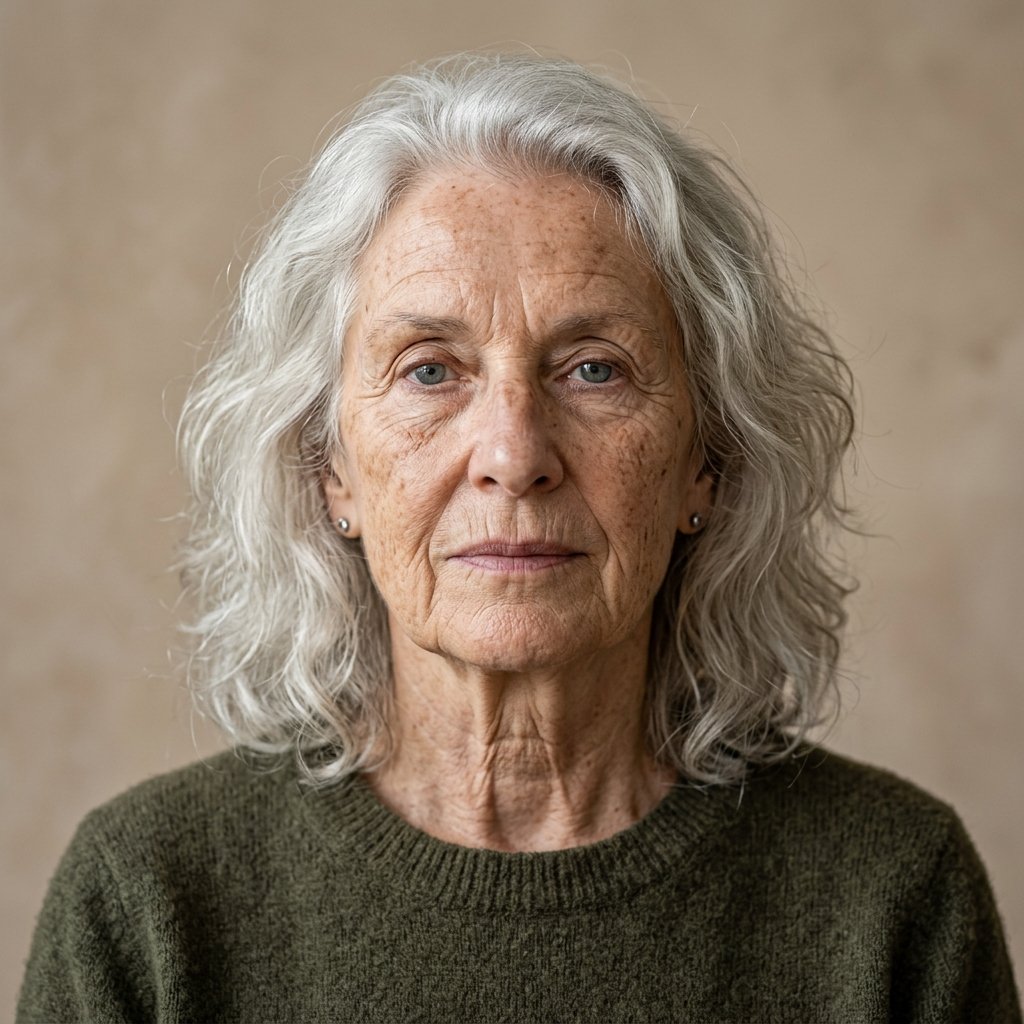
The day my sister appeared on my doorstep, I almost didn’t recognize her.
The last time I saw that face, it was round and soft with childhood, stained with tears as she pressed her tiny hands against the screen door, begging me not to go.
Now, ten years later, the woman standing in front of me looked hollowed out.
Her cheekbones were sharp, her eyes ringed with darkness, and her hair hung limp and uncared for, and yet I knew her instantly.
It was Chloe.
My baby sister.
And before I could even form a word, she crumbled.
“Emily,” she choked out, her voice cracking like old wood. “Mom and Dad…”
I didn’t let her finish.
I didn’t need to.
Something inside me, some dormant instinct I thought I had buried a decade ago, reached out and pulled her into my arms.
She smelled like bus exhaust and cheap soap and pure exhaustion, and she sobbed into my shoulder with the same helplessness she’d had at thirteen.
To understand what brought her to my door that Tuesday afternoon, I have to take you back to the night everything fell apart.
I was eighteen years old and three months pregnant.
The stick had barely finished displaying those two pink lines before my world began to cave in on itself.
I wasn’t a bad kid.
I got good grades, I went to church every Sunday, I babysat Chloe after school while our parents worked.
But none of that mattered the moment I sat them down at the kitchen table in our little house in Springfield, Ohio.
“I have something to tell you,” I said, my hands trembling beneath the table.
My father, Robert, a stern man with a crew cut and a permanent scowl, looked at me over his glasses.
My mother, Linda, folded her napkin and waited.
“I’m pregnant.”
The silence that followed was deafening.
My father’s face went from red to purple so fast I thought he might collapse.
“You what?” he whispered, but it wasn’t a whisper of disbelief.
It was fury.
“How could you do this to us?” my mother hissed, her voice tight and venomous. “After everything we gave you. The shame you’re bringing on this family is unforgivable.”
I tried to explain, but there was no explaining to people who saw a child not as a blessing but as a scandal.
“Who’s the father?” my father demanded.
“His name is David,” I said. “He’s a good person, he wants to help.”
“Help?” my mother laughed, a cold, brittle sound. “That boy is nineteen and works at a gas station. You think he can support a family? You’re a child yourself, Emily. An embarrassment.”
“Then I’ll do it alone,” I said, my voice breaking. “I’ll work. I’ll figure it out.”
My father stood up so fast his chair scraped against the linoleum.
“Not under this roof, you won’t,” he said, each word like a nail in a coffin. “You made your choice. Now you live with it. Pack your things. Tonight.”
I looked at my mother, searching for any trace of maternal mercy.
She turned her face away.
“Mom, please,” I begged. “I’m eighteen. I don’t have anywhere to go. I have nothing.”
“You should have thought about that before,” she said without looking at me.
So I packed.
I remember the sound of my own footsteps on the stairs, heavier than they’d ever been.
I remember the feeling of my heart cracking into a thousand tiny pieces as I threw clothes into a duffel bag.
And I remember Chloe.
Sweet, innocent Chloe, only thirteen years old, standing in the doorway of my bedroom with her stuffed rabbit clutched to her chest.
“Where are you going, Emily?” she whispered.
I couldn’t look at her.
If I looked at her, I would shatter completely, and I needed to be strong enough to walk out that door.
“I have to go away for a while,” I said, my voice barely steady.
“But why? Because of the baby?”
She was too young to understand the cruelty of what was happening.
Too young to know that the parents who tucked her in at night were the same people throwing her sister into the street.
“Yes, sweetie,” I said. “Because of the baby.”
She started to cry.
Not the theatrical crying of a child who wants a treat, but deep, desperate sobs that shook her whole body.
“Don’t go, Emily. Please don’t go. I’ll help you, I’ll take care of you and the baby, just please don’t leave me here.”
That nearly broke me.
I knelt down and wrapped my arms around her, memorizing the feel of her small frame, the scent of strawberry shampoo in her hair.
“You’re going to be okay,” I told her, even though I didn’t believe it for myself. “I love you so much. Never forget that.”
Then my father’s voice boomed from downstairs: “Time’s up. Get out.”
I kissed Chloe’s forehead, picked up my bag, and walked down the stairs without looking back.
She followed me to the front door.
As I stepped onto the porch, she pressed her palms and her tear-streaked face against the screen, her cries muffled but piercing.
“Emily! Emily, please!”
I kept walking.
I walked all the way to the bus station with nothing but a duffel bag and a broken heart and a tiny life growing inside me that I already loved more than I had ever loved myself.
And I never looked back at that house again.
For the next ten years, I had no contact with my parents.
I changed my phone number.
Moved to a small town in Indiana, far enough away that I wouldn’t accidentally run into anyone who knew my family’s name.
David, the father of my baby, tried to stay, but we were both too young and the pressure was too much.
He lasted until our daughter, Grace, was two.
Then he packed his own bag and left, just like my parents had.
I wasn’t surprised.
Disappointment had become my oldest companion.
But I was not a quitter.
I worked two jobs, took night classes online, and slowly, painstakingly, built a life.
I became a certified medical assistant, then a nurse.
Grace grew up in a tiny apartment with secondhand furniture and homemade birthday cakes, but she never went without love.
Every night I told her she was the greatest gift I’d ever received.
And gradually, the wound left by my parents began to scar over.
I thought of Chloe constantly.
On her birthdays, I would buy a small cake and light a candle, just for me and Grace, and I would whisper a prayer for my little sister.
I imagined her growing up, going to high school, then college.
I hoped she was happy.
I hoped she was safe.
But I was too afraid to reach out.
Afraid that my parents would intercept any message.
Afraid that Chloe hated me for leaving.
Afraid that the scab would tear off and I would bleed all over again.
So I stayed silent.
And I heard nothing.
Until that Tuesday in late October.
I was in the kitchen, folding laundry while Grace, now nine years old, did her homework at the table.
The leaves outside our window were brilliant shades of orange and red, and I remember thinking how peaceful everything felt.
Then came the knock.
It was tentative, almost hesitant, not the confident rap of a delivery driver but something far more fragile.
I wiped my hands on a towel and walked to the door.
When I opened it, the world stopped.
Standing on my porch, drenched in the golden light of late afternoon, was Chloe.
She looked nothing like the thirteen-year-old girl I’d left behind.
But I would have known her anywhere.
Her eyes were the same deep brown, even though now they were sunken and ringed with purple.
Her hair was the same chestnut shade, but it hung limp and greasy, like she’d been traveling for days without a brush.
She wore a thin jacket that was far too light for the October chill.
And she was trembling violently.
“Chloe?” I breathed, my voice a ghost of itself.
She opened her mouth, but no words came out.
Instead, her face crumpled like a piece of paper, and she burst into tears.
Not delicate, pretty crying.
Raw, ugly, soul-tearing sobs that seemed to come from a place deeper than I knew existed.
“Mom and Dad,” she finally gasped, the words jagged and broken. “They’re… they’re gone, Emily.”
My blood turned to ice.
“What do you mean gone?”
“There was a car accident,” she choked out. “On the interstate. A truck crossed the median. Dad was driving, Mom was in the passenger seat. They… they didn’t make it. It was over in seconds, they said.”
I didn’t know what to feel.
These were the people who had thrown me into the street when I needed them most.
The people who had called me a disgrace and shut the door on my face.
But they were still my parents.
The man who taught me to ride a bike.
The woman who sang me lullabies before the judgment hardened her heart.
And now they were just… gone.
“When?” I whispered.
“Two weeks ago,” Chloe said. “The funeral was last Monday. I stood there alone, Emily. There was no one else. Just me and two coffins.”
The guilt slammed into me like a freight train.
I had abandoned her.
Not intentionally, but that’s what happened.
I had left her to face that nightmare all by herself.
“Chloe, I’m so sorry,” I said, my own tears finally spilling over. “I should have been there. I should have…”
She shook her head frantically.
“No, you don’t understand,” she said. “I’m not here because I’m angry. I’m here because I have nowhere else to go. After they died, the bank took the house. Mom and Dad had debts I didn’t know about. I’ve been sleeping on friends’ couches, but I can’t do it anymore. I don’t have a job, I don’t have money, I don’t have anyone left in the world except you.”
She looked at me with those big, broken eyes, and I saw the same thirteen-year-old girl who begged me not to leave.
“Can I stay?” she whispered. “Just for a little while, until I figure things out. Please, Emily. I promise I won’t be a burden.”
A burden.
This girl, my flesh and blood, my baby sister, was standing on my doorstep asking for permission to exist near me, and she actually thought she might be a burden.
I pulled her into my arms with a force that surprised us both.
“You are never a burden,” I said, my voice thick with tears. “You’re my sister. And I am so sorry I wasn’t there for you all these years. But I’m here now. I’m not going anywhere.”
Grace had come to the door by then, watching with wide, confused eyes.
“Mommy, who is that?”
I pulled back from Chloe just enough to look at my daughter, and for the first time in a decade, I felt something that resembled hope.
“Grace,” I said, “this is your Aunt Chloe. She’s going to be staying with us for a while.”
Grace, bless her generous heart, immediately smiled.
“Hi, Aunt Chloe,” she said. “Do you like pancakes? I make really good pancakes.”
Chloe let out a laugh that was half a sob, and she knelt down to Grace’s level.
“I love pancakes,” she said.
And just like that, the wall that had separated us for ten years began to crumble.
That night, I made a big pot of soup, and the three of us sat at the table together.
Chloe told me everything.
How after I left, our parents never mentioned my name again.
How they threw away any photo that included me and told everyone I had run off and they didn’t know where I was.
How Chloe grew up in a house that felt like a mausoleum, heavy with unspoken grief and anger and shame.
“I tried to find you,” she said, staring into her bowl. “When I was sixteen, I searched online for hours. But you had changed your last name after you got your nursing license, and I couldn’t track you down.”
“I’m sorry,” I said again. “I was so scared. Scared of Mom and Dad, scared of getting hurt again.”
“I was never mad at you, Emily,” she said softly. “I was just sad. I missed you every single day.”
I reached across the table and took her hand.
“I missed you too. Every single day.”
The days that followed were not easy.
Chloe was carrying a heavy burden of trauma and loss.
Some nights she would wake up screaming from nightmares about the accident.
Some mornings she could barely get out of bed.
But we were together.
I helped her find a grief counselor, and she started taking small steps toward healing.
She got a part-time job at a bookstore downtown, and slowly, her smile began to return.
One evening, about a month after she arrived, we were sitting on the front porch, watching the sunset.
Grace was playing in the yard, chasing fireflies.
“I used to dream about this,” Chloe said quietly.
“About what?”
“Being with you again. Having a family again.”
I put my arm around her shoulders.
“You always had a family, Chloe. You just had to find your way back to it.”
She leaned her head against my shoulder, and for the first time in ten years, I felt whole.
Life has a way of coming full circle.
The sister I thought I had lost forever was now an irreplaceable part of my daily life.
She became Grace’s favorite person, the aunt who taught her to paint and read her stories and cheered the loudest at her school plays.
And I became the older sister I should have been all along, protective and present and fiercely loyal.
Sometimes I think about my parents.
I think about the choices they made, the love they withheld, the bitterness they allowed to consume them.
And I feel a strange mix of sorrow and forgiveness.
They were wrong about so many things, but their mistakes gave me a kind of strength I never knew I had.
Their cruelty taught me exactly what kind of mother and sister I wanted to be.
And every time I look at Chloe and Grace laughing together in the kitchen, I know that in the end, love won.
It took a tragedy to bring us back together.
But it was the love that had never died that kept us that way.
If this story touched your heart, I would be so grateful if you could show your support.
Please give this page a ‘Like’ so you don’t miss any of our future stories.
Follow us for more true tales of resilience, loss, and the incredible power of family.
And if you know someone who might need a reminder that it’s never too late to reconnect with the people you love, please share this with them.
Your engagement helps us keep telling these meaningful stories, and I thank you from the bottom of my heart.
Blessings to you and your loved ones.