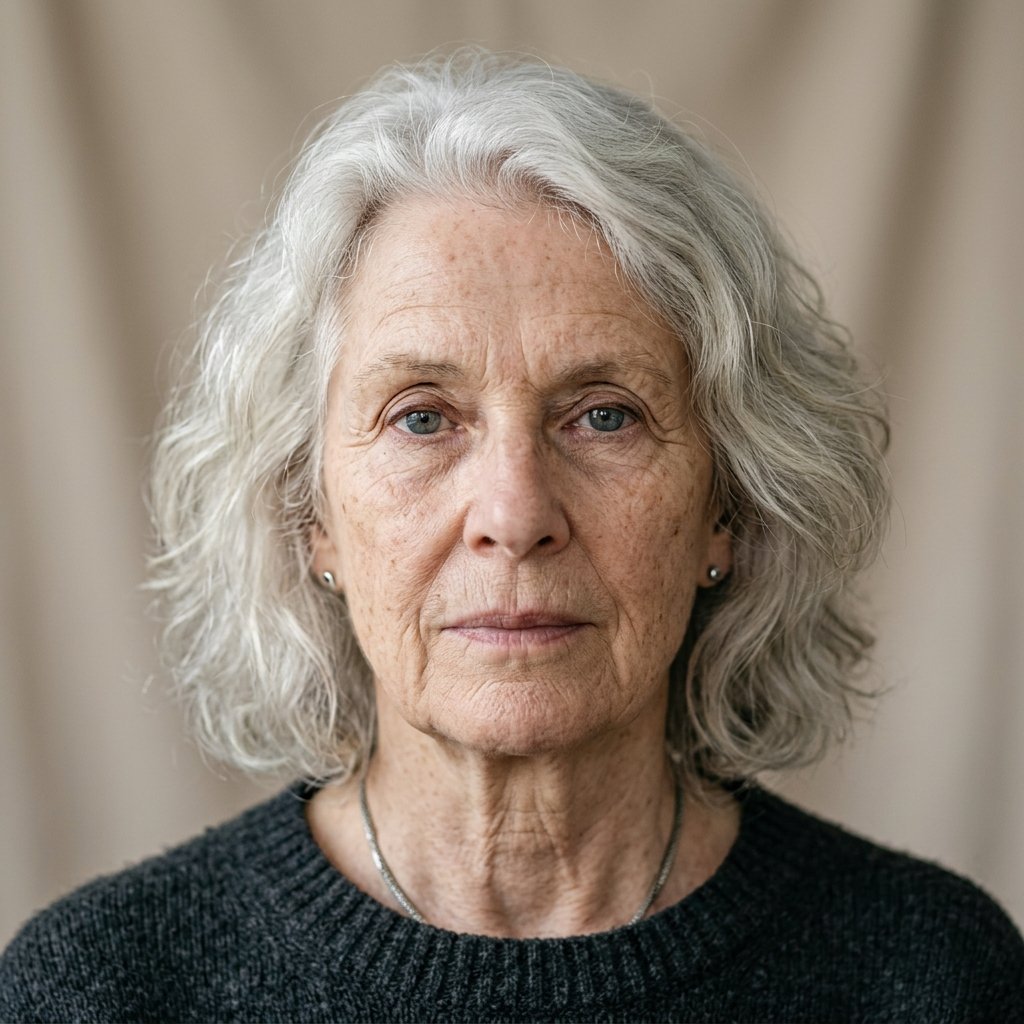
I thought Michael was going to propose.
Every sign was there. The way he insisted on a luxury Valentine’s dinner at The Gold Coast Steakhouse on Michigan Avenue, the way he’d been acting secretive all week, the way he held my hand across the white linen tablecloth and told me I looked stunning in my red dress.
I was so sure.
We’d been together for two years. Michael was a successful architect, always polished, always a gentleman. He opened doors, pulled out chairs, and never forgot a special occasion. I was a high school English teacher, and our worlds seemed to fit together like puzzle pieces the universe had designed.
When he called me that morning, his voice was thick with excitement. ‘Diane, I’ve booked us a table at the most exclusive place in the city. Wear something unforgettable. Tonight is going to change everything.’
I spent three hours getting ready. I curled my hair just the way he liked, slipped on the ruby earrings my grandmother gave me, and dabbed Chanel No. 5 behind my ears. My heart was drumming so hard I could barely breathe. This was it. The night every woman dreams about.
He arrived in a black town car, holding a single long-stemmed red rose. ‘For my future,’ he whispered as he handed it to me. I melted right there on my apartment doorstep.
The restaurant was a cathedral of muted gold light and velvet shadows. A pianist played soft jazz in the corner. Crystal chandeliers dripped from the ceiling. The maître d’ called us ‘Mr. and Mrs. Callahan’ by mistake, and Michael just smiled at me, his eyes twinkling.
‘Soon enough,’ he murmured.
I nearly fainted with joy.
We were seated at a private booth with a view of the glittering city skyline. He ordered champagne without even glancing at the price. We talked about our first date at a little diner in Oak Park, about the trip we took to the Smoky Mountains, about how he wanted three children and a golden retriever. He kept reaching across the table to squeeze my hand, his thumb tracing circles on my palm.
‘You’re the best thing that ever happened to me,’ he said, his voice low and earnest.
‘You’re my everything,’ I replied, barely able to speak through the emotion clogging my throat.
The meal was extraordinary. Lobster bisque so smooth it felt like drinking silk. Filet mignon that melted on my tongue. A chocolate lava cake for two that arrived with a sparkler and a swirl of raspberry sauce. We shared bites and secret smiles and talked about forever.
Then the check came.
The waiter placed it in a leather folder right in the center of the table. $380. Not an unreasonable amount for a night like this, I thought, as Michael reached for it.
But he didn’t open it.
He pushed it toward me.
‘Diane,’ he said, his tone shifting subtly, ‘I think it’s only fair if we split this tonight.’
The world stopped.
I blinked, sure I’d misheard over the soft strains of the piano. ‘What?’
‘Split the bill,’ he repeated, his face unreadable. ‘You pay half, I pay half. It’s the modern thing to do.’
I laughed, a short, startled sound. ‘Michael, you invited me. You chose this restaurant. You’ve been talking about tonight for weeks. You can’t be serious.’
He leaned back, crossing his arms. ‘I am serious. Relationships should be equal, Diane. Why should I shoulder everything?’
My champagne glass hovered in midair. ‘Because it’s Valentine’s Day,’ I said, my voice rising. ‘Because you insisted on this place. Because I would have been happy with a pizza and a movie, but you wanted this.’
‘I wanted to see something,’ he said quietly. ‘I wanted to see if you were as committed as I thought you were.’
I felt heat flood my cheeks. ‘This is a test?’
‘Call it what you want. I’m asking you to pay your fair share. It’s $190. That’s not going to break you.’
It wasn’t about the money. It was about the principle. About the romance, the tradition, the fact that this man had spent the entire evening building my hopes to a fever pitch only to throw a cold bucket of reality in my face. I had a good job, but $190 was still a lot for a meal I hadn’t chosen. More than that, it felt like betrayal.
‘No,’ I said, and I heard the steel in my own voice. ‘If this is a test, you fail it as much as I do. You don’t promise someone the world and then hand them a bill.’
His expression didn’t change, but something flickered behind his eyes. Without another word, he opened the folder, placed his credit card inside, and signaled the waiter. The transaction was over in seconds.
Then he stood up.
‘Goodbye, Diane,’ he said, and his voice was completely flat. No anger, no sadness. Just emptiness.
He walked toward the door, his broad shoulders cutting through the candlelit shadows, and I sat frozen, my mouth open, the blood roaring in my ears. People at nearby tables turned to stare. The pianist faltered on a chord.
I couldn’t move. I couldn’t speak. I just watched the man I loved walk out of my life.
The waitress appeared at my elbow almost instantly. She was young, with kind eyes and a trembling voice. ‘Ma’am, I can’t stay quiet,’ she whispered, leaning close. ‘Your boyfriend actually left a note for you. He told me to give it to you after he left. I’m so sorry.’
She pressed a folded piece of paper into my palm and retreated.
My heart dropped into my stomach. I stared at that little white square as if it were a ticking bomb. Then, with trembling hands, I unfolded it.
The handwriting was Michael’s, precise and elegant, the same handwriting that had written me love letters and left sweet notes in my lunch bag. But the words on this paper were nothing like those.
‘I came here tonight with one plan in mind,’ it began. ‘I had a ring in my jacket pocket. A one-carat diamond, the one you pointed out in the window at Richter & Phillips six months ago. I was going to get down on one knee, right here in front of all these people, and ask you to be my wife. I’ve been planning this for three months.’
A sob ripped out of me, loud and ugly. I clamped my hand over my mouth and kept reading.
‘But after what happened with the check, I can’t do it. I needed to know you were a partner, not a passenger. I needed to know you would stand beside me through thick and thin, not just when things were easy and free. Your refusal told me everything I need to know. You weren’t willing to invest in us, not even $190. So how could I trust you with a lifetime?’
The words blurred as tears flooded my eyes. The ring. The proposal. The three months of planning. It had all been real.
‘I’ve paid the bill. Consider it my parting gift. I hope you find someone who can give you the fairy tale you want. But for me, I need a partner. Goodbye, Diane. Don’t try to call. I’ve already made up my mind.’
The note fluttered from my fingers and landed in a puddle of spilled champagne.
I clutched the edge of the table, gasping for air. The waitress rushed back with a glass of water and a napkin. ‘Ma’am, are you okay? Can I call someone?’
‘He had a ring,’ I choked out, the words barely audible. ‘He was going to propose, and I ruined it. I ruined everything.’
The waitress knelt beside me, her hand on my arm. ‘Maybe he’ll come around. Maybe he just needs time.’
But I knew Michael. When he made a decision, he never wavered. That’s one of the things I’d loved about him. And now it was the thing that was destroying me.
I sat there for what felt like hours, watching the candles burn down and the other couples leave hand in hand, laughing and stealing kisses. I was the ghost at the feast, the cautionary tale hidden in the romance.
Finally, I gathered my coat and my shattered heart and stepped out into the cold February air. Michigan Avenue glittered with lights and lovers. A couple walked past me, the woman twirling a new ring on her finger, and I had to lean against the building to keep from collapsing.
I walked all the way home, miles in my high heels, my feet aching and blistered, because I couldn’t bear to sit in a cab and cry. When I finally pushed open my apartment door, I saw the rose he’d given me, still lying on the entryway table. I threw it in the trash and collapsed on the floor.
The next three days were a blur of tears and unanswered phone calls. I tried his number twenty times, but it went straight to voicemail. I sent texts, emails, even a handwritten letter I dropped in his mailbox. Nothing.
His sister finally responded to one of my desperate messages. ‘He’s hurt, Diane. He feels like you only wanted him for what he could give you. Give him space.’
I wanted to scream that it wasn’t true. That I would have paid a thousand dollars if I’d known what was at stake. That I wasn’t a gold digger—I was just a woman who believed in romance and tradition and that a man who loved her wouldn’t turn Valentine’s dinner into a financial negotiation.
But I couldn’t say any of that. Because I’d had the chance to show him I was a partner, and I’d blown it.
Weeks passed. Spring came to Chicago, the ice melting along the lakefront. I threw myself into my teaching, trying to forget the feel of his hand in mine. But every time I saw a couple laughing in the hallway, every time a student talked about their parents’ wedding anniversary, the wound ripped open again.
I started seeing a therapist. Dr. Baker was a gentle woman with gray-streaked hair and wise eyes. She listened to the whole story, from the champagne to the note, without interruption.
‘Do you think you were wrong to refuse to pay?’ she asked once.
‘Yes and no,’ I said, twisting a tissue in my hands. ‘In principle, I don’t think you should test people you claim to love. But if I could go back, knowing what I know now, I would have paid it without a second thought. A hundred times over.’
‘What do you think the real lesson is here?’
I thought about that for a long time. ‘Maybe love isn’t about tests. Maybe it’s about trust. And he didn’t trust me enough to just talk to me. If he had questions about our future, he should have sat down and had a conversation, not engineered some elaborate gotcha moment.’
Dr. Baker nodded slowly. ‘Or perhaps,’ she said, ‘you both had different expectations of partnership, and neither of you communicated them until it was too late.’
That conversation stayed with me. I began to see that the tragedy wasn’t simply about $190. It was about two people who loved each other but were terrified of vulnerability. Michael needed proof I was all in, and I needed proof he wasn’t just looking for an admirer. Neither of us got what we needed, because neither of us knew how to ask.
Six months later, I ran into him at a coffee shop on State Street. I was grading papers, and he walked in with a woman I didn’t recognize—a tall, athletic blonde with a easy laugh. He saw me, and our eyes locked for a single, electric moment. Then he guided the woman to a table on the far side of the room.
I sat perfectly still, my heart hammering. After ten minutes, while the blonde was in the restroom, he walked over.
‘Diane.’
‘Michael.’
He looked older, tireder. ‘I’m sorry about how things ended. I handled it badly.’
‘You did,’ I said, and my voice was steadier than I felt. ‘But so did I. I’m sorry too.’
He nodded, shoving his hands in his pockets. ‘She’s not my girlfriend, by the way. Just a colleague. I’m not seeing anyone.’
‘Neither am I.’
A pause. Then he said, ‘I still think about you. About that night.’
‘So do I. Every single day.’
‘I should have talked to you instead of testing you. I was so afraid of making a mistake that I made the biggest one of my life.’
I looked down at my coffee. ‘I would have paid that bill a hundred times if it meant keeping you.’
‘I know that now,’ he whispered. ‘I knew it the second I walked out the door, but I was too proud to turn around.’
We stood there in the bustling coffee shop, two people who had loved each other deeply and broken each other carelessly. And I realized that some doors, once closed, cannot be reopened without both people being willing to walk through together.
‘I don’t know if I can trust you again,’ I said honestly. ‘And I’m sure you feel the same about me. But I’m willing to try, if you are. Slowly. With a lot of conversations, no tests.’
He smiled for the first time. It was a small, cautious smile, but it was there. ‘I’d like that. Can we start with a cup of coffee? And this time, I promise, no hidden bills.’
‘Only if we split it,’ I said, and we both laughed—wet, fragile laughter that carried more hope than I’d felt in months.
We sat down across from each other, two mugs of coffee between us, and began the hard work of rebuilding. It wasn’t a fairy tale. It was messy and uncertain and slow. But it was real.
Sometimes, the most expensive lessons in life aren’t about money at all. They’re about the cost of pride, the price of unspoken expectations, and the immense value of a second chance.
If you’ve ever lost love over a misunderstanding, or if you’ve learned that communication is the most precious currency in any relationship, please like this post. Follow our page for more stories that touch the heart and remind us what truly matters. And if this story resonated with you, share it with someone who needs to hear that it’s never too late to try again.