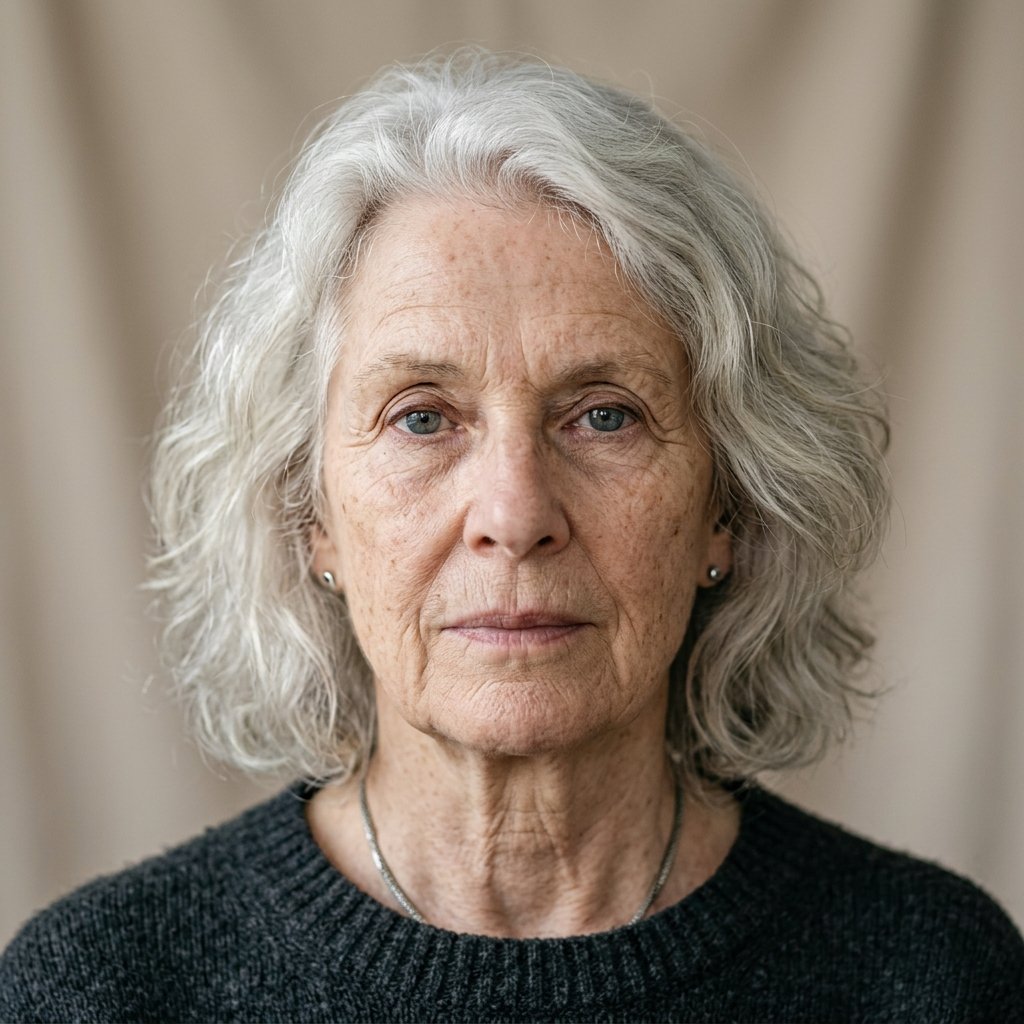
The morning I decided to end my marriage, I still made two cups of coffee out of habit. Then I stood at the sink and poured one straight down the drain, and something inside my chest quietly cracked.
Thirty-four years. That is how long I had been married to Walter Hale.
We met in a hardware store in Springfield, Ohio, back when milk cost less than a dollar and he wore a flannel shirt that smelled like sawdust and rain.
He asked me to a church dance, and I told him no. He came back the following week and asked again. That was Walter. Patient. Steady. The kind of man who fixed things instead of throwing them away.
So how on earth had we ended up here? Two strangers sharing a house on Maple Street, passing each other in the hallway like ghosts of the people we used to be.
It didn’t happen all at once. That is the thing nobody warns you about. Love doesn’t usually leave in a single loud slam of the door. It leaves the way water leaves a garden in a dry summer, one quiet day at a time.
For most of our marriage, we were good. We raised two children, Daniel and Emily, in that little house with the crooked porch step Walter always promised to fix.
He worked at the lumberyard for thirty years. I taught second grade. We were never rich, but on Sunday nights the whole family gathered around a pot roast, and I truly believed we had everything a person could need.
Then Walter retired. And a stranger moved into my husband’s body.
The man who once whistled while he made pancakes went silent. He stopped meeting my eyes across the table. When I asked what was wrong, he’d say, “Nothing, Margaret. I’m just tired.”
But it was more than tired. He grew short with me. He picked fights over nothing at all, the burnt toast, the thermostat, the way I folded the towels.
Some mornings he would leave right after breakfast and be gone for hours. He never said where he went. And when he came home, there was a smell on his coat I couldn’t place. Clean, sharp, almost like a hospital.
I told myself I was imagining things. A wife tells herself a lot of stories to keep the peace.
Then came the afternoon that changed everything.
I was hanging up his winter coat when my hand brushed against a thick fold of paper in the inside pocket. I don’t know what made me pull it out. Maybe some part of me already knew.
Receipts. Dozens of them. A medical office two towns over, in a place we had no reason to be. Payments I didn’t recognize, week after week, stretching back months.
My legs went weak, and I sat right down on the edge of our bed.
All I could think was the worst thing a heart can think. Another woman. Secret meetings. A man rebuilding his life two towns away while I made his coffee and folded his towels.
It explained everything, didn’t it? The distance. The lies about where he’d been. The way he flinched whenever I got too close.
I didn’t confront him. I was too frightened of the answer. Instead, I did the one thing I had promised, on our wedding day, that I would never do.
The next morning, while Walter was out on one of his mysterious errands, I drove downtown and I walked into a lawyer’s office. My voice barely worked when I said the words.
“I’d like to file for divorce.”
The young attorney, a kind woman named Sarah, slid a box of tissues across her desk. I hadn’t even realized I was crying.
We drew up the papers over the next two weeks. Every night I lay beside a man I had loved my whole adult life and felt like I was lying next to a locked door.
When I finally told Walter I wanted to end it, he didn’t shout. He didn’t argue. He just nodded slowly, and something in his eyes went dark and distant, like a light being switched off in a far room.
“If that’s what you want,” he said quietly. That was all. And somehow his calm hurt worse than any fight ever could.
The day came for us to sign.
We drove to the office together, which felt strange and sad, two people ending a marriage in the same car they’d once driven home from the hospital with a newborn.
Sarah laid the documents out on the polished table. She handed Walter the pen first.
His hand was shaking. It shook so badly he couldn’t hold the pen steady. I watched it tremble, and for one wild second I felt sorry for him, this man I was supposed to be furious with.
Then he set the pen down. He pressed both hands flat against the table as if he were trying to hold the whole world in place.
“Margaret,” he said. “Before you sign, there’s something I should have told you a long time ago.”
I braced myself. Here it comes, I thought. Her name. The truth I already knew.
But what came out of my husband’s mouth was nothing I had prepared for.
“The doctor’s office,” he began. “The one on all those receipts you found. I know you found them. I saw they’d been moved.”
My face went hot.
“There’s no other woman, Margaret. There never was.” His voice broke. “I’ve been seeing a specialist. For eight months now.”
He finally lifted his eyes to mine, and they were full of tears he’d clearly been holding back for a very long time.
“They told me my memory is slipping. It’s the early stage of dementia. It’s only going to get worse from here.”
The room seemed to tilt. All the anger I’d been carrying, all the certainty, drained out of me and left me hollow.
“Why?” I whispered. “Why didn’t you tell me? Why push me away?”
And then he said the words I will carry with me until my own last breath.
“Because I couldn’t stand the thought of you watching me disappear. I picked those fights on purpose. I went cold on purpose. I wanted you to leave while you still hated me, Margaret. Not stay out of pity and have to watch me forget your name. You gave me thirty-four beautiful years. I wasn’t going to make you spend the last ones cleaning up after a man who couldn’t even remember them.”
He wiped his face with the back of his rough, familiar hand.
“I thought if I let you go now, you could still have a good life. That was the only gift I had left to give you.”
I sat in that quiet office and I looked at the man I had almost thrown away, not because he had stopped loving me, but because he loved me so much he was willing to break both our hearts to protect me.
All those cold mornings. All those cruel little arguments. They were never rejection. They were the desperate, clumsy love of a frightened man trying to set me free.
And I had come one signature away from letting him.
I reached across the table. I didn’t sign.
Instead, I picked up the divorce papers with both hands, and slowly, deliberately, I tore them in half. Then I tore them again.
Sarah, bless her, quietly stood and left the room to give us a moment.
“Walter Hale,” I said, my voice trembling, “you stubborn, foolish, wonderful man. You don’t get to decide how our story ends. We made a promise. In sickness and in health. I didn’t say those words for the easy days. I said them for exactly this.”
He broke down then, right there in that office, shoulders shaking the way I hadn’t seen since we buried his mother. I came around the table and held him, and for the first time in almost a year, I felt like his wife again.
We drove home in silence. But at every red light, he reached over and held my hand, just like he used to when we were young and the whole future was still ahead of us.
We started over that very week.
We couldn’t change the diagnosis. But we could change how we lived with it. And so we chose to build a new life inside the old one.
We put little notes on the refrigerator. I labeled the photo albums with names and dates in big, clear letters. We moved his favorite armchair by the window so he could watch the birds.
Every morning we take a slow walk down Maple Street. He holds my hand and tells me the same stories, and I listen every time as if I’m hearing them fresh, because someday I will be the only one who remembers them.
We say “I love you” out loud now. We don’t assume the other one just knows. We learned the hard way how dangerous it is to leave the most important things unspoken.
Some days are difficult. He forgets what he ate for breakfast. He calls me by his sister’s name. Once, he wandered to the corner and couldn’t recall the way home, and I found him on the neighbor’s steps, so scared it broke my heart.
But he still remembers the hardware store. He remembers the flannel shirt, and the church dance, and the girl who told him no twice before she said yes.
On the hardest nights, when the fear creeps in, he squeezes my hand in the dark and says, “Thank you for tearing up those papers, Margaret.”
And I always tell him the truth. “Thank you for finally trusting me with the truth. A family should never break apart over the very thing that ought to bring it closer.”
Our children come by more often now. Daniel fixed the crooked porch step his father never got to. Emily brings the grandchildren, and Walter lights up like a Christmas morning when he hears them at the door, even on the days he can’t recall their names.
We are not the couple we were at twenty-five. We are something quieter and, I think, something deeper. Two people who looked over the edge of goodbye and chose, on purpose, to walk back home together.
I almost let fear and wounded pride write the final chapter of a love story that took a lifetime to build.
Thank God I read that last page wrong. And thank God I stayed to write a better one.
So before you assume you already know the whole truth about someone you love, ask yourself this: what if the coldness you’re seeing is really just love, terrified and trying to protect you? What would you have done if you’d been sitting in that office, holding that pen?