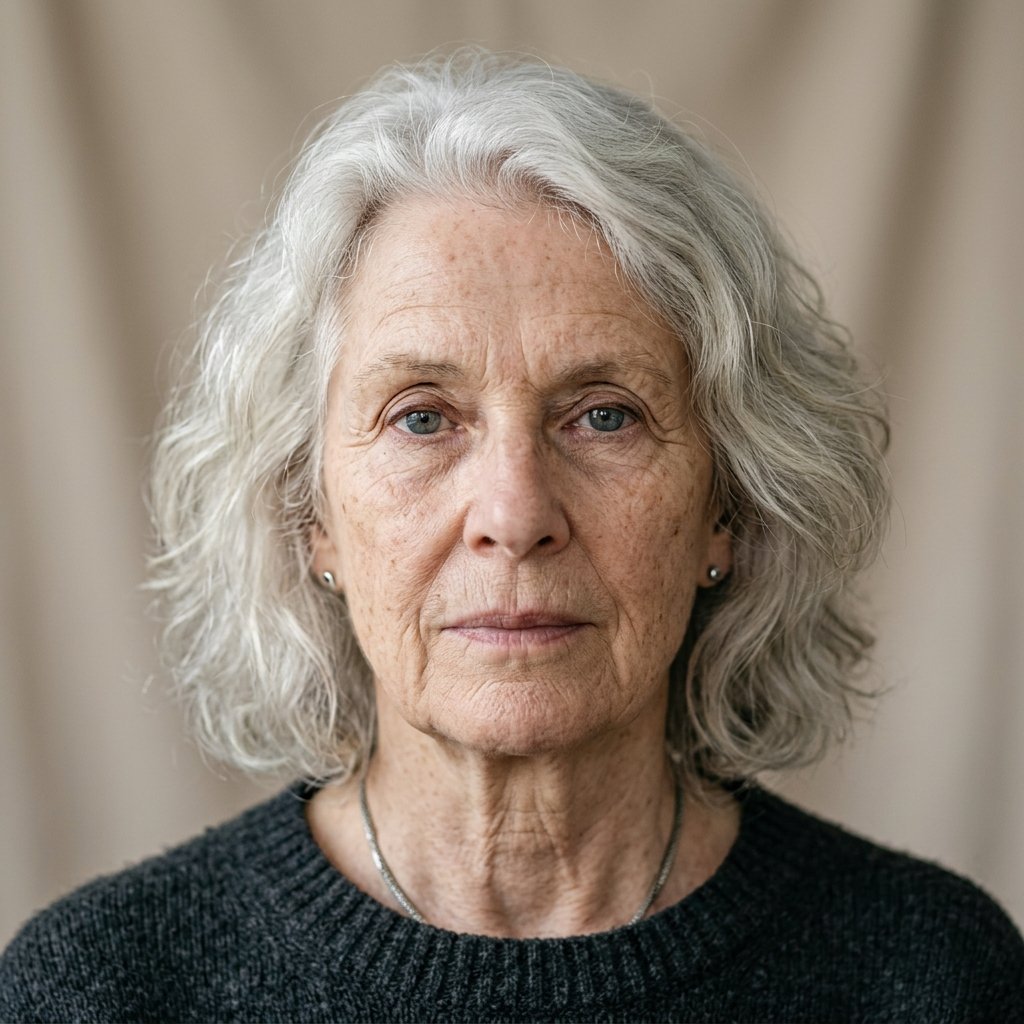
The divorce papers had been sitting on our kitchen table for three whole days, and neither Harold nor I could bring ourselves to pick up the pen.
Forty-one years. That is how long we had been married. And somewhere along the way, we had become two strangers who happened to share a coffee pot every morning.
We lived in the same house in Cedar Falls, Ohio, the little blue house where we had raised our children and buried both our parents. But the rooms had gone quiet. Too quiet.
The kids were grown and gone. The dog had passed the winter before. And when the last child moved out, Harold and I finally looked across the dinner table and realized we had absolutely nothing left to say to each other.
It wasn’t hatred. I want you to understand that. There was no screaming, no thrown plates, no other man or woman. It was something quieter and sadder than all of that.
We had simply forgotten how to be together.
So one gray afternoon in November, sitting at that same worn table, I said the words out loud. “Harold, maybe it’s time we let each other go.”
And he didn’t argue. He just nodded slowly, staring into his coffee, and said, “Maybe you’re right, Margie.”
That was it. Forty-one years, folded up like an old bedsheet and put away.
We agreed to be civil. We agreed to sell the house and split what little we had. We even agreed to keep it friendly for the sake of our children, though truthfully, our children were the reason we had drifted so far apart.
Because you see, we had a son named Daniel. Our firstborn. A wild, brilliant, stubborn boy who left home at nineteen after a terrible fight with his father over choices we didn’t understand.
Words were said that night that could never be taken back. Harold told him not to come home until he grew up. Daniel told us he never would.
And he kept that promise. For eight long years, we heard almost nothing. A postcard once. A wrong number that hung up when I answered. Silence that ate away at both of us like rust.
I blamed Harold for being too hard. He blamed me for being too soft. And that old wound, the loss of our boy, sat between us in that house like a third person we never spoke about.
The divorce, I think now, was really just the two of us finally giving up on the family we used to be.
So there we were. The papers signed by our lawyer, ready for our signatures. We planned to sign them together the following morning and mail them off. A clean ending.
That night, it was raining hard. The cold kind of November rain that soaks through to your bones. I remember I had made a small pot of soup, and we ate it in silence with the television murmuring in the background.
Then, at almost ten o’clock, there was a knock at the door.
Harold and I looked at each other, puzzled. Nobody comes knocking that late in a quiet town like ours.
He got up, pulled his cardigan tighter, and opened the front door. I stood behind him in the hallway, wiping my hands on a dish towel.
On our porch stood a woman in a wet raincoat holding a clipboard. And beside her, half hidden behind her leg, was a little girl. She couldn’t have been more than seven years old.
The child was clutching a black garbage bag stuffed with clothes. Her hair was damp and tangled. Her shoes were too big, clearly hand-me-downs.
But it was her eyes that stopped my heart. Big, dark, and impossibly familiar. They were Harold’s eyes. They were Daniel’s eyes.
“Good evening,” the woman said gently. “My name is Susan. I’m with county family services. Are you Harold and Margaret Bennett? The parents of Daniel Bennett?”
My legs went weak. Harold gripped the doorframe.
“Yes,” he whispered. “Daniel is our son. Is he… is something wrong?”
The woman’s face softened into that careful, practiced kindness that always means bad news is coming.
“I’m so sorry to be the one to tell you this,” she said. “Daniel passed away last week. He had been ill for a long time. He listed you as next of kin.”
The hallway seemed to tilt. I reached for the wall. My son. My beautiful, stubborn boy, gone. And we hadn’t even known he was sick.
We hadn’t gotten to say we were sorry. We hadn’t gotten to say we loved him. Eight wasted years, and now there would be no more chances at all.
Then the woman gently placed her hand on the little girl’s shoulder.
“This is Lily,” she said. “She’s Daniel’s daughter. Your granddaughter. Her mother left years ago, and Daniel raised her alone. With him gone, you’re the only family she has left in this world.”
I could not breathe. A granddaughter. We had a granddaughter, and we never even knew she had been born.
All those years we spent grieving the son we lost, and there had been a whole little life out there, a piece of him, growing up without us.
The child looked up at Harold. And in a small, trembling voice she said, “Are you my grandpa? My daddy told me you build birdhouses.”
I watched my husband, this proud, quiet man who had not cried in front of me in decades, sink slowly to his knees on that cold floor.
He opened his arms. He didn’t say a word. He couldn’t.
And that frightened little girl dropped her garbage bag of clothes and walked straight into his arms as though she had always known him. As though she was finally, finally home.
Harold wrapped himself around her and wept. Deep, shaking sobs that came from somewhere I hadn’t seen in years. And I stood there in the doorway crying too, the dish towel pressed to my mouth.
Somewhere in heaven, I like to believe Daniel was watching. And I like to believe he was at peace.
We signed the papers Susan needed us to sign that night, but they weren’t divorce papers. They were papers taking custody of our granddaughter.
The divorce papers stayed forgotten on the kitchen table, buried under a stack of Lily’s things.
That first night was chaos, the good kind. Harold and I hadn’t worked together on anything in years, but suddenly we were a team again.
He carried the old crib down from the attic while I dusted off the spare room. I warmed a cup of milk while he dug out a nightlight. We whispered to each other so we wouldn’t frighten her, moving through the house like young parents again.
When we finally tucked her into bed, she looked up at us and asked, “Are you going to keep me?”
Harold smoothed the blanket over her small shoulders and said, “Sweetheart, we are never letting you go.”
And he meant it. I could hear it in his voice, that steel I had fallen in love with all those years ago.
The days that followed changed everything. Our silent house filled up with noise again. Crayon drawings appeared on the refrigerator. Cartoons played on Saturday mornings. There were tiny shoes by the door and a booster seat at the table.
Harold, who had barely spoken to me in months, was suddenly alive. He taught Lily to feed the birds. He learned to braid her hair with those big, clumsy, gentle hands of his, and when the braids came out crooked, they laughed together until they both cried.
And me? I remembered what it felt like to be needed. To pack a lunch. To sing a lullaby. To feel a small hand slip into mine on the walk to school.
One morning, about two weeks in, I was taking out the trash when I noticed something. The divorce papers. Harold had thrown them away.
He came up behind me on the porch, holding two cups of coffee, and handed me one.
I held up the crumpled papers. “You threw these out.”
He looked at me for a long moment, and there was that old warmth back in his eyes.
“We can’t fall apart now, Margie,” he said quietly. “That little girl needs us whole. And besides…” He paused, his voice cracking. “I think I forgot how much I need you too.”
I set down my coffee and I hugged my husband on that porch in the cold, and I felt forty-one years of distance melt away in an instant.
We had spent so long grieving what we had lost that we forgot to fight for what we still had.
It is strange, isn’t it, how life works. We thought Daniel was gone from us forever. We thought our marriage was over. We thought our family had been broken beyond any hope of repair.
But in his final act on this earth, our son handed us the one gift that could put us back together. He sent us his daughter. He sent us a reason.
Lily calls us Grandma and Grandpa now, and she says it like it’s the most natural thing in the world.
She has Daniel’s laugh. When she throws her head back and giggles, Harold has to leave the room sometimes because it’s so much like our boy.
We hung Daniel’s photograph in the hallway, and every night Lily blows it a kiss on her way to bed. “Goodnight, Daddy,” she says. “I found them. Just like you promised.”
And that is how I know he never stopped loving us. Even angry, even distant, even sick and alone, he told his little girl that if anything ever happened, she should find the grandparents who build birdhouses.
He trusted us. After everything, he trusted us with the only thing that mattered to him.
Harold and I are not young anymore. Some mornings our backs ache and we move a little slower than we used to. But we have never felt more alive, or more together, than we do now.
The family that was one signature away from ending forever got a second chance. And we did not waste it.
So if you are reading this, and you feel like your family is falling apart, please hold on. Please leave a little room in your heart for a miracle.
Because sometimes the very thing you think is broken beyond repair is just waiting quietly for one reason to become whole again.
And that reason knocked on our door one rainy night, holding a garbage bag of clothes and looking up at us with our son’s eyes.