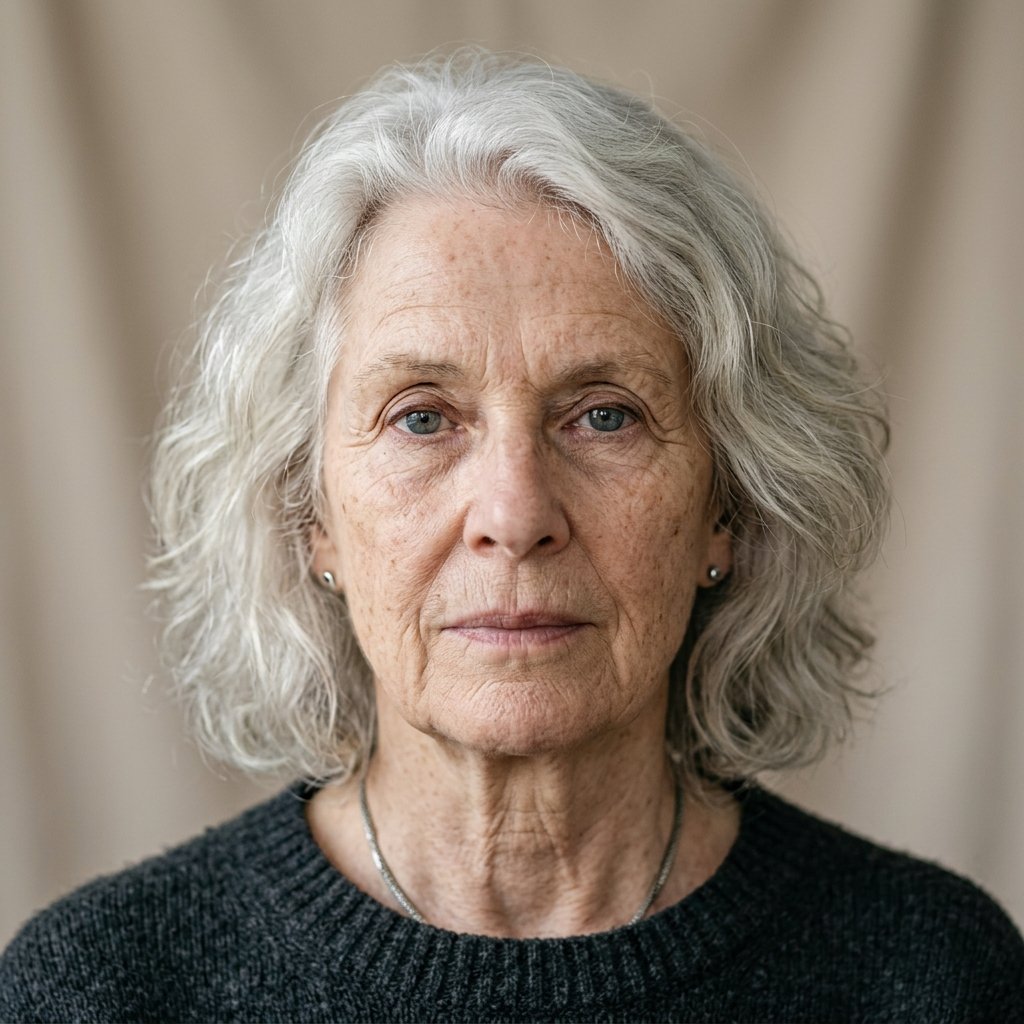
That phone call still echoes in my soul, late at night when the house falls silent and I’m left alone with my thoughts.
It was 2:37 a.m. the first time my daughter Ellie called me, her voice trembling with a terror I had never heard in all her 23 years.
“Momma…I need you…please come get me.”
The words were a jagged whisper, raw and broken, like she’d been crying for hours before she dialed my number.
I sat straight up in bed, my heart slamming against my ribs.
“Ellie? Baby, what’s wrong? What’s happened?” I asked, my own voice cracking with sudden fear.
The silence on the line stretched for what felt like an eternity, punctuated only by her shallow, hitching breaths.
“I can’t say…I’m just so tired…and I’m scared, Momma. I don’t want to be here. I don’t want to be with them anymore.”
Them.
Her in-laws.
Ellie had married a boy from Pine Ridge just a year earlier, a quiet young man named Dale who seemed polite enough, if a little distant.
She’d been so full of hope when she moved into that old brick farmhouse with his family—his parents and his two older brothers.
And now, just ten days after giving birth to her first child, a beautiful baby girl she named Lily, she sounded like a soul who had been hollowed out.
“Where’s the baby? Is Lily okay?” I pressed, my mind reeling with the worst possibilities.
“She’s with me…she’s always with me…but Momma, please. Please just come. I can’t take another night here.”
Before I could ask another question, I heard a door creak in the background and Ellie gasped sharply.
“I have to go,” she whispered, and the line went dead.
I called back immediately, again and again, but the phone just rang and rang into some unanswering void.
My husband William stirred beside me, groaning as he reached for the lamp.
“Martha? What’s goin’ on? Who was that at this hour?”
“It was Ellie,” I said, and the tears started streaming down my face before I could stop them.
“She’s terrified, William. She’s beggin’ me to come get her. Something’s wrong in that house—I just know it.”
William sat up and rubbed his eyes, his gray hair sticking up in tufts.
He was a good man, my husband, a retired schoolteacher with a gentle heart, but he had an old-fashioned belief that once a woman married, her place was with her husband’s family, come what may.
“Now, now,” he said, patting my hand. “You know how new mothers are. The baby blues, they call it. Your own mother told me you cried for two weeks straight after our son was born. It’s normal for her to be emotional.”
“That wasn’t baby blues,” I said, my voice rising. “That was pure fear. My daughter is scared for her life, William.”
“Scared of what? Those people have been good to her. Dale’s mother, Mrs. Harlowe, she seems like a fine, God-fearing woman. You’re just missin’ her and readin’ too much into a little weepiness.”
I wanted to scream at him, but I held my tongue.
I loved my husband, but in that moment, I saw just how blind he was to the darkness that could hide behind closed doors.
So I just lay back down, my body trembling, and I prayed harder than I had ever prayed in my life.
The next night, the call came again.
And the night after that.
Every single evening, between two and three in the morning, my phone would buzz with her name, and I would snatch it up before the first ring was halfway done.
Each time, Ellie’s voice was a little more broken, a little more desperate.
“Momma, I can’t do this anymore. Please. I’m so tired. My body hurts and my heart hurts and I just want to come home.”
“I’m comin’, baby. I’m gonna figure this out. Just hold on,” I’d promise, my own voice thick with helpless tears.
But when the sun came up, practical matters closed in.
I didn’t drive, not since my eyesight started failing, and William was the one with the car.
Every morning I would plead with him, and every morning he would sigh and shake his head.
“Martha, you have to let this be. Her place is with her husband now. If you go rushin’ in, you’ll just stir up trouble and make things harder for her. Trust in the Lord and let time do its work.”
And every morning, I relented, sick with guilt but paralyzed by my own weakness.
I told myself I was being dramatic.
I told myself the Harlowes were good Christian folk who would never let harm come to Ellie.
I told myself the dark circles under her eyes were just exhaustion from nursing.
But on the ninth night, I heard something that shattered every one of those flimsy reassurances.
Ellie’s call came at 2:48 a.m., and from the moment I answered, I knew something was different.
She wasn’t just crying anymore.
She was gasping for air between sobs, the kind of desperate, gulping breaths that come when the body is in shock.
“Momma…I don’t think I can breathe…they won’t let me sleep…they keep sayin’ things…bad things…and Lily is cryin’ and I can’t make her stop and—”
“What do they say? Ellie, what are they sayin’?”
A man’s voice barked in the background, muffled but full of anger, and Ellie let out a tiny yelp of terror.
“I have to go,” she whimpered, and the call cut off like a candle flame pinched between two fingers.
This time, I didn’t try to call back.
This time, I got out of bed and began to pack.
William woke to find me throwing clothes into a worn-out suitcase, my hands shaking so violently I could barely grip the zipper.
“What in tarnation are you doin’?”
“I’m goin’ to get my daughter,” I said, and my voice was as hard and flat as a blade. “You can take me, or I’ll walk. But I ain’t spendin’ one more night ignorin’ her screams.”
He stared at me for a long moment, and I think he saw something in my eyes he’d never seen before—something wild and fierce that came from the deepest part of my mother’s heart.
“Alright,” he said quietly. “I’ll get the car.”
We left Little Rock before the sun came up, the city lights fading in the rearview mirror as we headed east on Highway 270 toward Pine Ridge.
The drive takes about 45 minutes on a good day, past fields of cotton and pine forests, but that morning, every mile felt like a hundred years.
I sat in the passenger seat, clutching that old photograph of Ellie on her wedding day, the one where she’s laughing in her white dress with yellow roses in her hair.
She looked so happy then, so full of life, and the memory of that laughter now sounded like a requiem.
“Whatever we find, we’ll handle it,” William said, his big hands tight on the steering wheel. “We’ll bring her home for a good visit, let her rest. It’ll be alright.”
I didn’t answer.
I just kept staring at that photograph, a cold dread wrapping itself around my spine like iron bands.
The arrival is something I will relive until my last breath.
We turned off the highway onto a dirt road, dust billowing up in great clouds behind our old Buick, and there it was: the Harlowe farmhouse.
It was a solid, two-story building of faded red brick, with a wide front porch and a tin roof that gleamed dully under the gray morning sky.
But what I saw in the yard made my blood run so cold I thought my heart would stop.
In the center of the hard-packed dirt, where chickens usually scratched and pecked, were two coffins.
Two small, white coffins, side by side, resting on wooden trestles.
They were covered with a cascade of fresh marigolds and white carnations, and smoke from incense sticks curled upward in thin, lazy spirals.
From somewhere inside the house, a funeral trumpet began to play a mournful, wailing tune that cut through the morning air like a knife through silk.
I didn’t remember opening the car door.
I didn’t remember my feet touching the ground.
All I knew was that suddenly I was standing there, swaying, with those two coffins filling my entire world.
The world went gray at the edges.
I heard a sound like a wounded animal and realized it was coming from my own throat, a keening wail that rose higher and higher until it pierced the funeral music.
“Ellie…” I whispered, and then the name became a scream. “ELLIE!”
William was beside me, his face a mask of horror, and he grabbed my arm just as my legs buckled.
I fell, not gracefully, but like a sack of stones, my knees hitting the dirt with a force that sent pain shooting through my old bones.
The last thing I saw before the darkness swallowed me was the expression on my husband’s face—an expression of such terrible understanding—and his voice crying out in anguish, “Oh God…Ellie!”
I came to a few moments later, flat on my back in that dusty yard, with William kneeling over me and Mrs. Harlowe standing a few feet away, her apron stained and her eyes hollow.
But I couldn’t look at her.
All I could do was turn my head toward those two little coffins, and the truth tore my soul apart with a pain so immense, so absolute, that I wanted to die right there beside them.
Because one of those coffins was big enough for my daughter.
And the other was just big enough for a ten-day-old baby.
Mrs. Harlowe started to speak, something about a fever that came on so fast, something about how they’d called the doctor but it was too late, but the words were just noise, a meaningless buzz that couldn’t penetrate the shattering of my very being.
I didn’t ask any questions.
I didn’t scream or accuse or weep.
I just lay there in the dirt, staring at those two white boxes, and I understood that every night I had waited, every morning I had been too weak to act, had led to this.
My baby had called for me, night after night, begging me to save her.
And I had failed her.
The funeral trumpet kept playing, its notes curling around my broken heart, and I reached out a trembling hand toward the coffins as if I could somehow pull them back to me across all that distance of loss and regret.
But they stayed where they were, silent and still, and all that was left was the echo of Ellie’s voice on the phone, asking her momma to come, and my own voice, too late and too small, whispering to the sky, “I’m here, baby…I’m here now.”
But she couldn’t hear me anymore.
And she never would again.
If this story moved you, if it reminded you of the preciousness of the people we love, I would be so grateful if you would Like this post, Follow our page for more stories that touch the heart, and Share it with someone who might need to hear it. Let’s hold our loved ones a little closer today.